
Apocalypse Tapestry Gallery Design in Angers France
Explore the Apocalypse Tapestry gallery design in Angers. Learn about lighting, climate control, and architectural features for this medieval treasure in 2025.
On this page
The Apocalypse Tapestry gallery design offers a unique look into medieval art and modern museum engineering in France. This special space sits within the ancient walls of the castle and protects a massive woven masterpiece from history. Visitors travel to the city of Angers to see this incredible display of silk and wool from 2025. The gallery provides a safe home for the tapestry while allowing people to study the fine details closely. It is a vital part of the Château d'Angers architectural features that tourists love to explore. You will find that the atmosphere inside is quiet and respectful of the religious story being told here. The building uses clever techniques to keep the ancient fabric safe from the elements and the sun. This guide will explain how the design works to preserve one of the greatest treasures of the world.
History of the Apocalypse Tapestry Gallery Design
The original gallery was built in 1954 to house the massive tapestry after many years of poor storage. Architect Bernard Vitry created a space that could fit the one hundred meters of woven fabric in Angers. The design focused on keeping the room dark to prevent the colors from fading due to natural light. This was a pioneering effort in textile conservation during the middle of the twentieth century in Western Europe. The walls were constructed using local materials to match the style of the historic castle ruins and walls. Builders utilized schist and limestone masonry to ensure the new building felt like part of the medieval site. The interior layout was meant to guide people in a specific order through the long religious narrative scenes. This historic structure has undergone several updates to meet modern museum standards for the current year of 2025. Scientists and architects worked together to improve the airflow and the stability of the large display walls inside. Today the space remains a model for how to display large ancient textiles without causing any physical harm. You can see how the architecture supports the art by providing a neutral background for the colorful scenes. Each decade brings new technology that helps the museum staff keep the gallery in the best possible condition. The history of the building is just as interesting as the tapestry because of its focus on protection.
Innovative Lighting for Textile Preservation
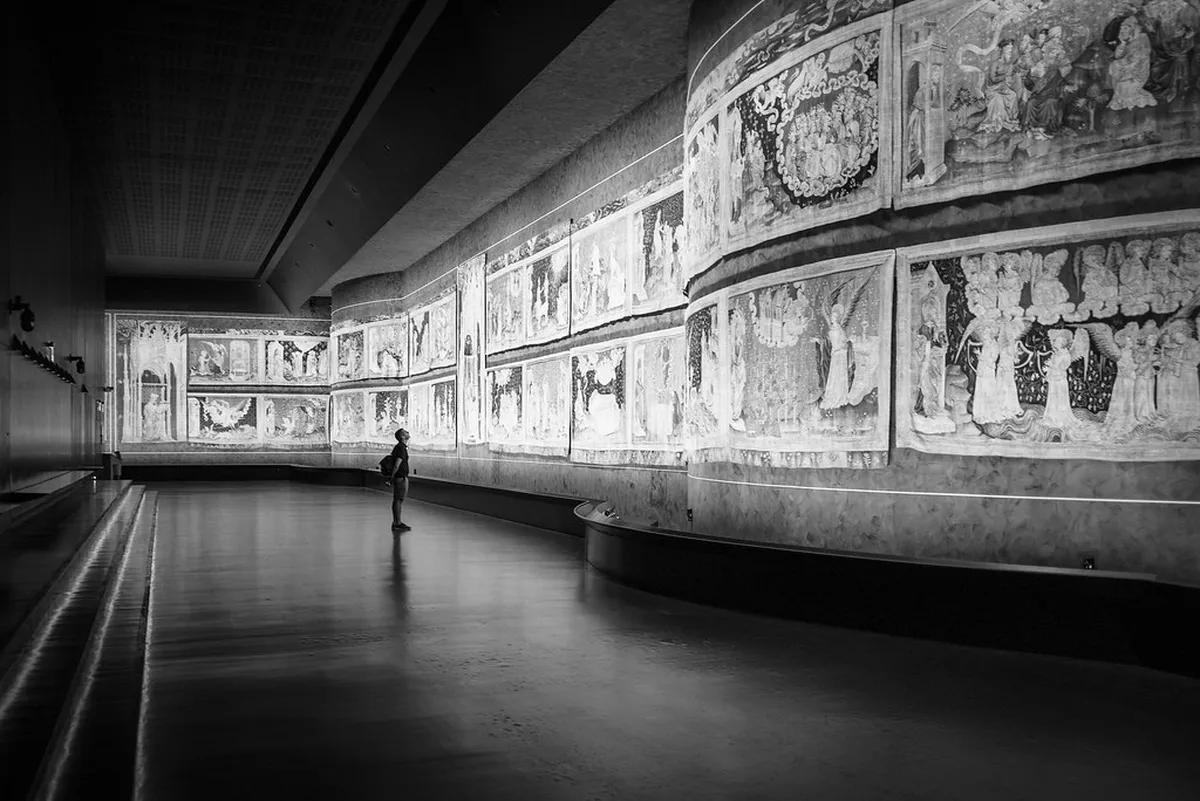
The Apocalypse Tapestry gallery design relies on very low light levels to keep the silk threads from falling apart. Experts use special light bulbs that do not emit any heat or harmful rays toward the old fabric. This creates a moody and dark atmosphere that helps visitors focus on the glowing colors of the artwork. The lighting is carefully placed to highlight the most important panels of the Book of Revelation story. Designers chose colors for the walls and floors that do not reflect light back onto the delicate woven surfaces. This technique ensures that the natural dyes remain vibrant for many more generations of visitors to enjoy today. Sensors throughout the room monitor the lux levels every hour to prevent any accidental overexposure to bright light. If the light becomes too strong the system automatically adjusts the levels to protect the ancient medieval treasure. You will notice that there are no windows in the main display hall to block all outside solar. This complete control over the environment is a hallmark of the sophisticated Apocalypse Tapestry gallery design in France. Visitors often remark on how the darkness makes the experience feel more intimate and spiritually moving for them. The soft glow of the spotlights makes the metallic threads in the tapestry shine like they did long ago. It takes a high level of engineering to balance visibility for the public with safety for the old art.
Climate Control and Atmospheric Stability
Maintaining a steady temperature is the most important job of the current Apocalypse Tapestry gallery design and layout. The room stays at a constant nineteen degrees Celsius to keep the natural fibers from expanding or shrinking too much. Moisture in the air is kept at exactly fifty percent to prevent the growth of mold or fungus. High tech sensors hidden in the walls send data to the museum office every minute of the day. This data helps the conservation team react quickly if the weather outside changes the conditions inside the gallery. The thick stone walls of the castle help to insulate the room from the heat of the summer. During the winter the heating system works slowly to avoid sudden changes that could stress the ancient silk panels. Air filters remove dust and pollution that could settle on the tapestry and cause damage over a long time. These invisible systems are crucial for the long term survival of the largest medieval tapestry in the world today. Modern visitors in 2025 can appreciate how silent the climate control system is during their quiet walking tour. You can feel the coolness of the air as soon as you step through the heavy entrance doors. This stable environment is why the tapestry looks so good even after more than six hundred years of history. Every piece of equipment is designed to be as quiet and efficient as possible for the best experience.
Structural Layout and Visitor Flow Management
The layout of the gallery follows a horseshoe shape that stretches for many meters along the castle walls. This design allows the massive tapestry to be hung at a height that is easy for everyone to see. The walking path is wide enough for large groups to move through without feeling cramped or rushed at all. Benches are placed at regular intervals so people can sit and contemplate the complex scenes of the apocalypse. The Apocalypse Tapestry gallery design includes clear signage that explains the history and the meaning of each woven panel. Information is provided in several languages to help international tourists understand the significance of this French national treasure. The entrance and exit are separated to keep the flow of people moving in one direction through the building. This prevents bottlenecks and ensures that every person gets a clear view of the art without any modern distractions. Security cameras and guards are positioned discreetly to protect the artwork while keeping the atmosphere relaxed for the public. The floor is made of durable materials that reduce the sound of footsteps as people walk along the display. You will find that the transition between the outdoor castle grounds and the indoor gallery is very smooth today. The structural design successfully combines a large scale display with an intimate and personal viewing experience for every visitor.
Modern Upgrades and Future Conservation Goals
In 2025 the gallery will feature new digital tools that enhance the Apocalypse Tapestry gallery design and visitor experience. Tablets and audio guides provide deeper context about the manufacturing process of the tapestry in the fourteenth century. These modern additions do not interfere with the historical feeling of the gallery or the safety of the art. The museum plans to install even more advanced sensors to monitor the physical tension of the hanging fabric panels. This will help curators adjust the mounting systems to prevent any sagging or tearing of the old woven threads. New educational zones near the exit allow students to learn about the science of textile conservation in real time. These upgrades ensure that the gallery remains a world class facility for researchers and art lovers from every country. You can see how the city of Angers invests in its cultural heritage by keeping this building updated. The goal is to make sure the tapestry lasts for another six hundred years without losing its incredible beauty. Following an Angers architecture walking tour itinerary will help you see how this gallery fits into the city. The blend of ancient stone and modern technology makes this one of the most interesting buildings in all France. Architects continue to study the site to find ways to make the gallery even more sustainable and energy efficient. The future looks bright for this amazing piece of history and the building that keeps it safe today.
Frequently Asked Questions
What is the best time of day to visit the tapestry?
The best time to visit is early in the morning when the gallery is very quiet and peaceful. You can enjoy the Apocalypse Tapestry gallery design without the crowds that usually arrive in the late afternoon. This allows you to stand close to the glass and see the fine details of the medieval weaving.
How long should I plan to stay inside the gallery?
Most visitors spend about one hour walking through the long hall to see all the different woven panels. You might want to stay longer if you use the audio guide to hear the full religious story. The gallery is designed for a slow and steady pace so you can absorb the scale of work.
Is the gallery accessible for people with limited mobility?
Yes the gallery is fully accessible with ramps and wide paths for wheelchairs and strollers to move easily. The museum staff is happy to help any visitors who need extra assistance during their tour of the site. Everyone can enjoy the beauty of the tapestry regardless of their physical ability or their age group.
The Apocalypse Tapestry gallery design is a masterpiece of modern museum architecture that serves a vital historical purpose. By controlling light and air it keeps a six hundred year old treasure safe for us to see. You should visit the Château d'Angers in 2025 to experience this incredible blend of art and science yourself. Make sure to book your tickets in advance to ensure you have plenty of time for your tour. This visit will give you a deep appreciation for the craft of medieval weavers and modern conservation experts. We hope you enjoy your time exploring the beautiful city of Angers and its many architectural wonders this year.
Key Takeaways
- The gallery uses a constant temperature of 19 degrees Celsius for protection.
- Low lighting levels are essential to prevent the natural dyes from fading over time.
- The horseshoe layout guides visitors through 100 meters of medieval woven panels.
Related reads: architecturebycity.com, architecture in angers, military defensive architecture of duke of anjou.