
Discover the Majestic Architecture in Avignon
Discover the stunning architecture in Avignon in 2025. Explore the Palais des Papes, ancient walls, and Gothic churches with our expert travel guide today.
On this page
The stunning architecture in Avignon reflects centuries of religious power and artistic excellence in the heart of Provence. Walking through the narrow streets reveals limestone buildings that have stood firm since the middle ages. These historic structures tell the story of a city that once served as the center of Christianity. You can explore the famous Palais des Papes architecture to see this history firsthand in 2025. Every corner of the city displays a unique blend of Romanesque, Gothic, and Baroque design elements today. The local stones glow with a warm golden hue during the legendary sunsets of southern France.
Visitors often feel like they have traveled back in time while exploring the well-preserved city center walls. The urban layout remains largely unchanged since the popes established their sovereign residence here during the fourteenth century. You will find massive fortresses standing right next to delicate private mansions from the later Enlightenment period. This mix of styles creates a visual feast for anyone interested in European design and historic preservation. Planning a trip to see the architecture in Avignon requires plenty of time to appreciate every detail. This guide provides all the practical information you need to explore these iconic landmarks during your visit.
The Gothic Grandeur of the Palais des Papes
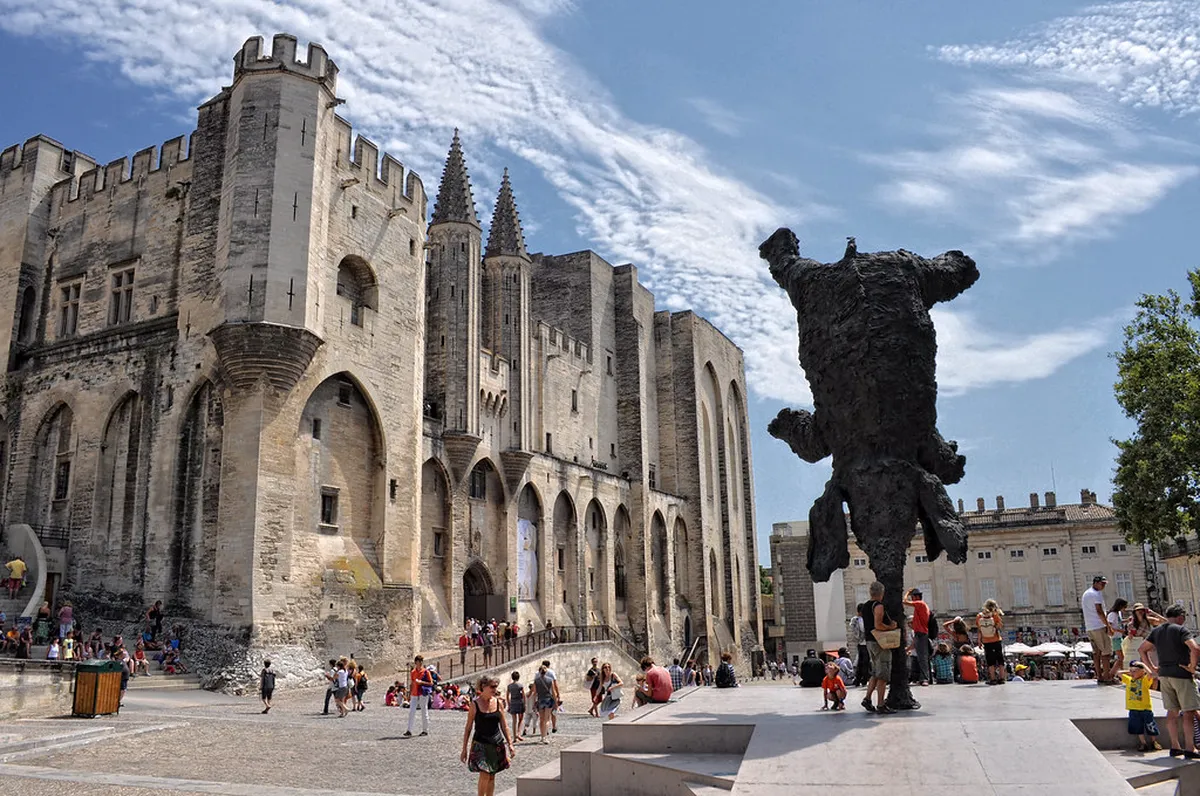
The Palais des Papes stands as the most significant example of Avignon Gothic architecture found in the world. It is actually two buildings joined together to form one of the largest medieval fortresses in Europe. The Old Palace was built under Pope Benedict XII in a very austere and functional style. It features high walls and massive towers that were designed primarily for defense and religious seclusion. The New Palace followed shortly after with much more decorative and flamboyant architectural details and grand halls.
Architect Pierre Peysson designed the original structure with thick limestone walls to protect the papal court from threats. Later additions by Jean de Loubières introduced elegant rib vaults and intricate stone carvings throughout the main residence. The palace covers fifteen thousand square meters of floor space and took less than twenty years to complete. You can see the evolution of fourteenth-century building techniques by comparing the different wings of the palace. The sheer scale of the fortress wall is meant to display the absolute power of the papacy.
The interior spaces are just as impressive as the exterior fortifications and massive stone facades seen from outside. The Grand Tinel served as the primary banquet hall where the popes hosted the most important European dignitaries. It features a stunning wooden roof shaped like an inverted ship hull to span the wide room. High pointed windows allow natural light to illuminate the space while highlighting the height of the stone walls. These rooms were once covered in colorful frescoes that depicted scenes from nature and holy religious texts.
Visiting the palace today costs approximately twelve euros for an adult ticket during the regular 2025 tourist season. You should allow at least three hours to explore the various courtyards, chapels, and private papal apartments properly. Audio guides are available in several languages to explain the complex history of each room and architectural feature. Wear comfortable walking shoes because the stone floors and stairs can be uneven and quite tiring for visitors. The views from the roof terrace provide a spectacular perspective of the entire city and the river.
The Iconic Pont Saint-Benezet and Medieval Design
The Pont Saint-Bénézet is a world-famous bridge that showcases the peak of Pont Saint-Benezet construction history and engineering. It was originally built during the twelfth century to connect the city with the neighboring town of Villeneuve. Legend says a young shepherd named Bénézet received a divine vision to build the bridge across the river. The structure originally had twenty-two stone arches spanning the wide and often dangerous Rhone River in southern France. Only four of these arches remain standing today after centuries of floods and significant structural damage.
The bridge features a small chapel dedicated to Saint Nicholas built directly onto one of the supporting stone piers. This chapel combines Romanesque and Gothic styles because it was rebuilt several times throughout the busy middle ages. You can see the sturdy masonry work that allowed the bridge to survive the powerful currents for centuries. The narrow roadway on top was designed for pedestrians and pack animals rather than large modern vehicles. The remaining arches provide a striking silhouette against the blue sky of Provence for every visiting photographer.
Engineering such a long bridge in the twelfth century was a massive technical achievement for the local workers. They used large blocks of local limestone and advanced hydraulic lime mortar to secure the underwater foundations firmly. The arches were designed with a slightly pointed shape to distribute weight more efficiently across the stone supports. However, the changing course of the river eventually undermined the foundations and led to multiple structural collapses. Maintenance costs became too high for the city to justify further repairs by the late seventeenth century.
Today you can walk on the bridge for a small fee of five euros during your city visit. It is open every day from ten in the morning until six in the evening for curious tourists. The site offers a digital tablet experience that shows how the bridge looked in its complete architectural form. Standing on the final arch provides a unique view of the massive city ramparts from the water level. This location is perfect for capturing the classic sunset photos that make Avignon so famous around the world.
Elegant Private Mansions and Baroque Splendor
Avignon is home to many stunning hotels particuliers of Avignon built by wealthy aristocrats and high-ranking church officials. These private mansions were mostly constructed during the seventeenth and eighteenth centuries after the popes left the city. They feature hidden inner courtyards and ornate stone facades that are often tucked away behind heavy wooden doors. The Rue Banasterie is one of the best places to see these architectural gems while walking around. Many of these buildings now serve as public museums, luxury hotels, or private administrative offices for the city.
The Baroque style in Avignon is characterized by theatrical entrances and curved balconies decorated with intricate ironwork details. Architects often used classical columns and pediments to give these urban houses a sense of grandeur and social status. The limestone facades were often carved with family crests and mythical figures to impress people passing in the street. Inside, grand stone staircases were designed to lead guests toward the formal reception rooms on the main floor. High ceilings and large windows allowed plenty of southern light to fill the living spaces during the day.
One of the finest examples is the Hôtel de Caumont, which now houses a major art collection and museum. It features a perfectly symmetrical facade and a beautiful garden that follows strict formal French design principles. The transition from medieval narrow houses to these spacious mansions changed the entire character of the city center. You can find several of these grand buildings located near the Place de l'Horloge in the city. Many are free to view from the street, but some require a ticket for interior tours and exhibitions.
Religious Architecture and the Avignon Cathedral
The Avignon Cathedral architecture offers a beautiful look at the Romanesque style that dominated the region before the Gothic era. Also known as Notre-Dame des Doms, the cathedral was first built during the twelfth century on a hill. It sits prominently next to the Palais des Papes and overlooks the entire Rhone valley with great authority. The most striking feature is the massive gilded statue of the Virgin Mary placed on top in 1859. This golden figure can be seen from many miles away and serves as a landmark for the city.
The interior of the cathedral is much more intimate and quiet compared to the massive halls of the palace. It features a single wide nave and several side chapels that were added during the following centuries of use. The papal tombs located inside are masterpieces of medieval stone carving and show the wealth of the church. You can see intricate marble details and religious sculptures that have been preserved for hundreds of years here. The atmosphere inside is very peaceful and provides a welcome break from the busy tourist crowds outside.
Architecturally, the cathedral uses thick walls and small windows to keep the interior cool during the hot summers. The bell tower features a heavy, square design that is typical of the fortified churches found in Provence. Many of the original Romanesque elements were restored during the nineteenth century to maintain the structural integrity of the building. Entry to the cathedral is free for all visitors who wish to see the architecture and historic art. It remains an active place of worship, so please remember to be quiet and respectful during your tour.
Defensive Walls and the City's Fortified Heritage
The Avignon city walls and ramparts are among the best-preserved examples of medieval military architecture in France. These limestone walls stretch for over four kilometers around the old city to provide a complete defensive circle. They were built during the middle of the fourteenth century by the popes to protect against roving bands of soldiers. The ramparts feature thirty-nine massive towers and several heavily fortified gates that allowed controlled access into the city. Walking along the base of these walls gives you a true sense of medieval security and urban planning.
The walls are nearly three meters thick in some places to withstand the impact of early siege engines and weapons. Machicolations were built into the top of the walls to allow defenders to drop heavy objects on any attackers. Each gate was designed with a portcullis and double doors to create a series of obstacles for enemies. You can still see the arrow slits that provided protected positions for the papal archers during times of conflict. The ramparts are now a UNESCO World Heritage site and are carefully maintained by the French government today.
You can actually walk on top of certain sections of the ramparts to see the city from above. This path offers great views of the gardens, the river, and the historic buildings located inside the old center. The best place to start your walk is near the Pont d'Avignon or the Rocher des Doms park. Most of the wall is free to access, but some parts are restricted for safety or preservation reasons. It takes about an hour to walk a significant portion of the walls and appreciate their massive scale.
Modern and 19th Century Developments in Avignon
While famous for its medieval history, there is also plenty of modern architecture in Avignon to discover during your walk. The nineteenth century brought major changes to the city with the construction of the Rue de la République. This grand boulevard was modeled after the Haussmann style found in Paris to modernize the ancient city center layout. It features elegant apartment buildings with uniform facades and decorative balconies that reflect the wealth of the industrial age. The Opera House on Place de l'Horloge is another great example of this more decorative and theatrical style.
The twentieth century introduced newer styles like Art Deco and Modernism to the areas located outside the ancient walls. You can find the Le Palace cinema which features classic Art Deco lines and a very distinctive geometric facade. Architects in the post-war era focused on creating functional housing and public buildings for the growing local population here. Some of these newer structures use concrete and glass to contrast with the traditional limestone of the old city. Exploring these areas provides a more complete picture of how the city has evolved over the last century.
Today, modern architects are working on sustainable projects that respect the historic heritage of this very old French city. New cultural centers and transport hubs are designed to blend into the landscape without overshadowing the medieval landmarks nearby. You might see modern glass extensions on old stone buildings that create a very interesting visual dialogue between eras. This commitment to architectural evolution ensures that Avignon remains a living city rather than just a museum. Visiting these newer districts allows you to see the local life of the people living in Avignon today.
Practical Tips for Architecture Tours
The best way to see the architecture in Avignon is by walking through the pedestrian-friendly old town center. Most of the major landmarks are located within easy walking distance of each other in the historic district. You should start your tour at the Place de l'Horloge and work your way toward the palace. Many of the streets are paved with cobbles, so wearing sturdy shoes is essential for a comfortable day. Consider joining a guided walking tour to learn about the specific architects and history behind each stone building.
Photography is excellent in the early morning when the light is soft and the crowds are very thin. The golden hour just before sunset turns the limestone buildings into glowing orange structures that look truly magical. You can find great panoramic views from the Rocher des Doms park located right next to the cathedral. From here, you can see the bridge, the river, and the distant hills of the beautiful Provence region. Bring a wide-angle lens if you want to capture the full scale of the palace and walls.
Frequently Asked Questions
What is the most famous architectural style in Avignon?
The most famous style is the Gothic architecture seen at the massive Palais des Papes. This structure is a masterpiece of fourteenth-century design and serves as a symbol of the city. You can see both austere and flamboyant Gothic details within its massive stone walls today.
Is it possible to walk on the medieval city walls?
Yes, you can walk on several sections of the ramparts to see the city from above. The most popular path is located near the bridge and offers views of the Rhone River. Access is generally free for most of the public sections of these historic defensive walls.
How long should I spend exploring the architecture in Avignon?
You should plan to spend at least two full days to see the major architectural sites. One day is needed for the palace and bridge, while the second is for the mansions and walls. This pace allows you to appreciate the details without feeling rushed through the historic streets.
Are the historic buildings in Avignon accessible for everyone?
Many historic sites like the Palais des Papes have installed elevators to help visitors with limited mobility. However, some narrow medieval streets and the top of the ramparts may still be difficult to access. Always check the official website of each monument for specific accessibility details before you visit.
The architecture in Avignon is a testament to the city's rich history as a center of European power. From the massive Gothic palace to the elegant Baroque mansions, every building tells a fascinating and unique story. Exploring these landmarks in 2025 offers a deep connection to the past and the artistry of ancient builders. Make sure to visit the ramparts and the bridge to experience the full scale of this historic city. Book your tickets in advance to enjoy the best architectural wonders that southern France has to offer today.
Key Takeaways
- Visit the Palais des Papes to see the largest Gothic palace in the world.
- Explore the seventeenth-century hotels particuliers for a taste of French Baroque elegance.
- Walk the medieval ramparts for a unique view of the city's defensive architectural heritage.
Related reads: place de lhorloge historic buildings, avignon architectural walking tour.