
Architecture in Montpellier: A Complete 2025 Guide
Discover the best architecture in Montpellier from Gothic gems to modern icons. Plan your 2025 trip and explore French design with our expert guide.
On this page
Montpellier blends a rich history with bold modern visions for every curious traveler to enjoy in 2025. You will find ancient narrow streets standing beside futuristic glass towers throughout this vibrant southern French city. The architecture in Montpellier captures the eyes of design lovers from every corner of the world today. This comprehensive guide explores the most iconic buildings and historic districts in this beautiful Mediterranean destination.
Walking through the city feels like traveling through different centuries in a single afternoon of exploration. You can start your morning in a medieval alley and end your day at a futuristic skyscraper. The city serves as a living museum where old stones meet innovative glass and steel structures. It is a place where tradition and creativity live together in perfect visual harmony for all to see.
Medieval Roots of the Historic Écusson District
The historic center of the city is known locally by residents as the ancient Écusson district. It features a dense network of winding paths and tall buildings made of warm local limestone. Many of these sturdy structures date back to the Middle Ages and show centuries of continuous use. You can feel the deep history of the region in every stone and narrow corridor here.
The Cathedrale Saint Pierre stands out as the most dominant landmark within the old city walls. This massive fortress-like church showcases the unique characteristics of the Southern Gothic style of building. Its two giant pillars at the entrance create a powerful and unforgettable impression for every passing visitor. The interior remains cool and quiet even during the hottest summer days in southern France.
Close to the cathedral, you will find the historic buildings of the famous Faculty of Medicine. This institution is one of the oldest medical schools still active in the entire western world today. The architecture reflects centuries of academic growth with its heavy wooden doors and hidden inner courtyards. It remains a symbol of the intellectual heritage that defined the city for many generations.
Small private courtyards hide behind many of the heavy doors found along the quiet side streets. These elegant spaces belong to the famous Montpellier hôtels particuliers built by wealthy merchants. They offer a rare and peaceful glimpse into the luxurious lifestyle of the 17th-century local elite. Many of these courtyards feature ornate stone carvings and beautiful sweeping staircases from the Renaissance era.
The medieval street layout provides natural shade which keeps the city center comfortable during the summer. Visitors enjoy the cool air while they explore the hidden shops and small cafes in the alleys. It is the perfect place for a slow walk to discover the textures of the ancient city. Every corner reveals a new detail that tells a story about the long history of Montpellier.
Classical Grandeur of the Promenade du Peyrou
The Promenade du Peyrou offers some of the most grand and classical vistas in the entire city. It sits at the highest geographic point of the historic center for everyone to see clearly. This large park was designed in the 17th century to honor the powerful King Louis XIV. It serves as a majestic urban balcony with views stretching toward the distant Mediterranean Sea.
You cannot miss the impressive Porte du Peyrou which looks like a smaller French Arc de Triomphe. This arch marks the old entrance to the city and features very detailed stone carvings throughout. The carvings celebrate various military victories and important moments from the long reign of the Sun King. It stands as a proud gateway between the old town and the newer parts of the city.
At the far end of the long promenade sits a beautiful water tower called the Château d'Eau. This structure features a unique hexagonal shape and is surrounded by elegant stone Corinthian columns. It once played a vital role in distributing fresh water to the residents of the entire city. The neoclassical design makes this functional utility building look like a royal palace or ancient temple.
The Saint Clement Aqueduct connects directly to this famous water tower at the edge of the park. This 18th-century stone bridge stretches for many kilometers across the valley in a series of double arches. It resembles an ancient Roman engineering feat and shows the skill of the builders from that era. The massive scale of the arches is truly impressive when viewed from the park below.
Sunset is the best time to visit this area to see the limestone glow in the light. The golden sun hits the stone surfaces and creates a warm and inviting atmosphere for all visitors. Locals often gather here in the evening to enjoy the panoramic views and the fresh sea breeze. It remains a highlight of any architectural tour of the city because of its sheer beauty.
The Neoclassical Vision of the Antigone District
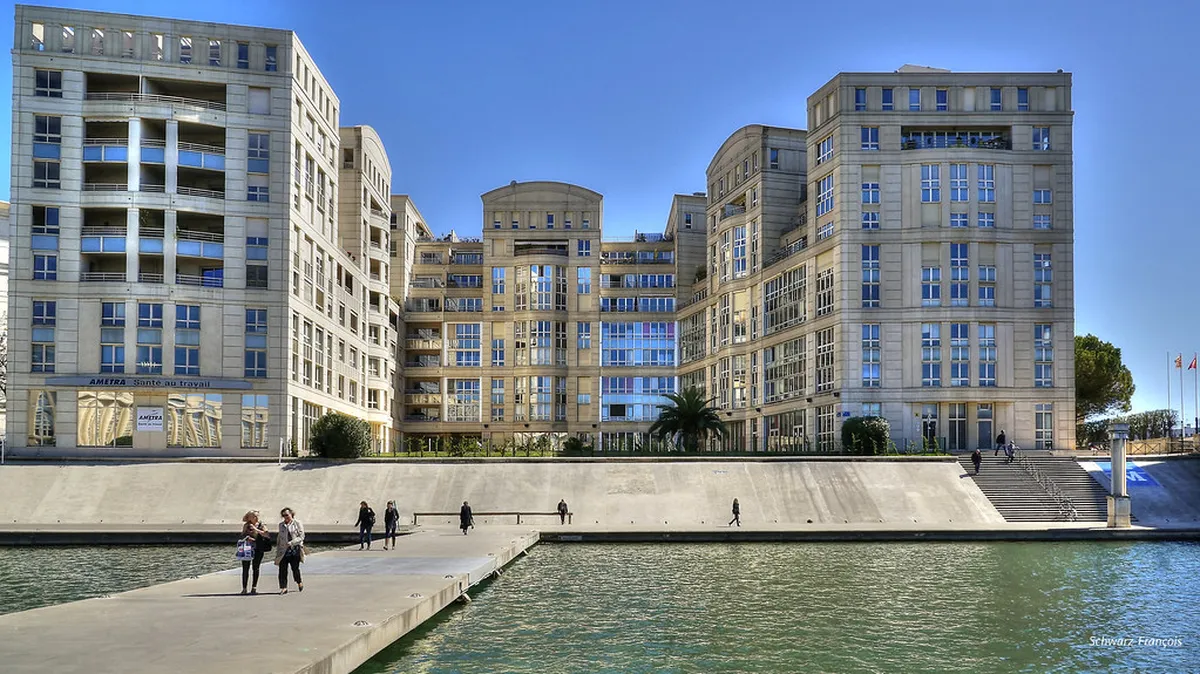
The Antigone district represents a bold and dramatic shift in the architectural style of the modern city. The famous Spanish architect Ricardo Bofill designed this entire area starting in the late 1970s. He used modern pre-cast concrete to mimic the grand forms of ancient Greek and Roman architecture. The result is a theatrical and unified urban space that feels unlike any other place.
Walking through the streets of Antigone feels like you are entering a giant and symmetrical movie set. The buildings feature massive columns and large pediments that create a sense of scale and power. Everything follows a long central axis that leads the eye toward the distant river Lez. This design contrasts sharply with the irregular and narrow streets of the nearby medieval city center.
The Place du Nombre d’Or is the primary focal point for this expansive architectural project. This circular plaza perfectly demonstrates the grand scale of the neoclassical vision created by Bofill. Thousands of residents live in these unique apartments that combine modern living with ancient aesthetic styles. It proves that bold and artistic design can also serve a very practical everyday purpose.
This unique district stretches all the way from the shopping mall to the banks of the river. It creates a seamless pedestrian link between the old city and the newer development zones. The wide paths and open plazas make it very easy for visitors to explore on foot. You will find many popular shops and restaurants built into the base of these grand structures.
Photography fans love the sharp lines and deep shadows created by the buildings in this area. The warm orange tones of the concrete look beautiful against the bright blue sky of southern France. Antigone remains one of the most famous large-scale housing projects in all of Europe today. Its influence on modern urban planning and postmodern design continues to be studied by experts.
Contemporary Icons in the Port Marianne Area
The Port Marianne area showcases the very best of 21st-century architectural brilliance and innovation today. This new district focuses heavily on environmental sustainability and creating striking visual landmarks for the city. Modern architects from around the world have turned this former marshland into a global design hub. It represents the exciting future of architecture in Montpellier for the next generation of residents.
You must visit the L’Arbre Blanc building to see one of the most famous towers in France. This white residential tower features incredibly long balconies that look like the branches of a tree. Sou Fujimoto designed the structure to maximize the outdoor lifestyle enjoyed in the sunny Mediterranean climate. It is a true masterpiece of modern engineering and has become a symbol of the city.
The nearby City Hall was designed by the world-renowned architect Jean Nouvel in a bold style. This massive blue glass cube reflects the surrounding water and the changing colors of the sky. It uses light and transparency to create a sense of modern openness and civic accessibility. The building stands as a powerful symbol of local pride and the city's forward-thinking attitude.
Another major landmark in this district is the Pierresvives building designed by the late Zaha Hadid. This structure houses a public library and government archives in a very futuristic concrete form. Its fluid lines and complex curves are typical of the signature style used by Hadid. It feels like a giant silver ship has come to rest on the edge of the city.
The area around the river Lez is always buzzing with energy and new creative projects. Many smaller architectural gems called "Folies" continue to appear in the parks and along the streets. These experimental buildings push the limits of what is possible with modern materials and design concepts. They provide a sharp and exciting contrast to the historic stones found in the city center.
Artistic Transit and Public Design Innovation
Even the public transport system in the city is treated as a high-quality work of art. The tram lines are world-famous because each line features a completely unique and colorful design. Different famous artists and designers were hired to create the visual themes for each individual route. They turn a simple daily commute into a beautiful and engaging visual experience for all passengers.
The Christian Lacroix tram design is particularly famous for its bright colors and bold patterns. One line features vibrant flowers while another depicts sea creatures in a very stylish way. These artistic choices make the entire city feel more vibrant and full of creative energy. They reflect the commitment of the local government to bringing high design into everyday public life.
The Le Nuage building by Philippe Starck is another example of modern design in public spaces. This fitness and wellness center looks like a soft glowing cloud made of inflatable plastic. It sits in the heart of the modern district and attracts many visitors with its unique shape. It shows that even a gym can be an architectural landmark in this creative city.
The Place de la Comédie serves as the primary social heart for the entire local community. It is a massive pedestrian plaza surrounded by beautiful 19th-century buildings in the Haussmann style. The Opera Comédie acts as the centerpiece of this bustling square with its very ornate facade. This area is the perfect place to see how different eras of design meet in one spot.
Various architectural styles coexist peacefully throughout the different neighborhoods of the city today. You can walk from a medieval alley to a futuristic glass tower in just a few minutes. This incredible diversity is what makes the architecture in Montpellier so unique and special for travelers. It offers a fascinating lesson in how cities can grow and evolve over many centuries.
Frequently Asked Questions
What is the most famous modern building in Montpellier?
Many people consider L’Arbre Blanc to be the most famous modern structure in the city. It is known for its unique white balconies that look like tree branches. This building has won many awards for its innovative design and engineering. It is located in the Port Marianne district near the river.
Who designed the Antigone district in Montpellier?
The Spanish architect Ricardo Bofill designed the entire Antigone district starting in the late 1970s. He wanted to create a grand neoclassical space that felt both historic and modern. The district uses pre-cast concrete to create massive pillars and arches. It remains one of the largest projects of its kind in Europe.
Is the architecture in Montpellier easy to see on foot?
Yes, much of the city is very pedestrian-friendly and easy to explore by walking. You can easily walk from the historic Peyrou park to the modern Antigone district. The colorful tram system is also available for reaching further spots like Port Marianne. Walking allows you to see the small details on the historic stone buildings.
The architecture in Montpellier offers a rich and diverse experience for every visitor in 2025. From the medieval Écusson to the futuristic Port Marianne, the city is a masterpiece of design. You will find inspiration in every district as you explore the blend of old and new styles. Plan your visit today to see these incredible French landmarks for yourself in person. It is a destination that every fan of urban design should see at least once. Related reading: our Montpellier walking itinerary.
Key Takeaways
- Visit the Écusson district to see historic Gothic architecture and narrow medieval streets.
- Explore the Antigone district for a unique neoclassical experience designed by Ricardo Bofill.
- Do not miss L'Arbre Blanc, a world-famous modern tower with branch-like white balconies.