
Cathédrale Saint-Pierre History: Montpellier Guide
Discover the rich Cathédrale Saint-Pierre history in Montpellier. Explore Gothic architecture and plan your 2025 visit with our expert guide. Read more!
On this page
The Cathédrale Saint-Pierre stands as a powerful symbol in Montpellier. This massive stone structure dominates the skyline of the historic center. Visitors often marvel at its unique fortress-like design. Understanding the Cathédrale Saint-Pierre history reveals the city's deep religious roots.
Construction began in the 14th century under the guidance of Pope Urban V. It remains the largest Gothic building in the entire city. Today, it serves as a central hub for both locals and international travelers. You can explore the medieval Montpellier historic center to find this iconic landmark easily.
The 14th Century Origins and Papal Influence
The cathedral started as a humble monastery chapel in 1364. Pope Urban V personally oversaw the early phases of construction. He wanted a grand space for the Saint-Benoît monastery. This foundation laid the groundwork for the impressive structure we see today.
Early builders used local limestone to create the thick, protective walls. The design initially focused on security and monastic simplicity. It only became a cathedral in 1536 when the bishopric moved here. This move changed the building's status within the regional church hierarchy forever.
The location was chosen for its strategic height within the city. It overlooked the growing residential quarters of the medieval era. Monks lived and worked within these cold stone walls for centuries. Their daily rituals shaped the spiritual atmosphere of the building during its youth.
During this period, the cathedral lacked much of its later ornamentation. The focus remained on the high ceilings and narrow windows. These features provided a sense of divine height and safety. You can still feel this ancient solemnity when walking through the nave today.
Unique Montpellier Gothic Architecture Features
The cathedral is a prime example of the Montpellier Gothic architecture style. Its most striking feature is the massive porch held by two pillars. These twin towers look like defensive turrets from a medieval castle. They give the building a distinctive military appearance that is rare for churches.
The pillars measure nearly five meters in diameter at their base. They support a large vaulted ceiling over the main entrance. This architectural choice reflects the need for strength in the Middle Ages. It sets the cathedral apart from the more delicate cathedrals of northern France.
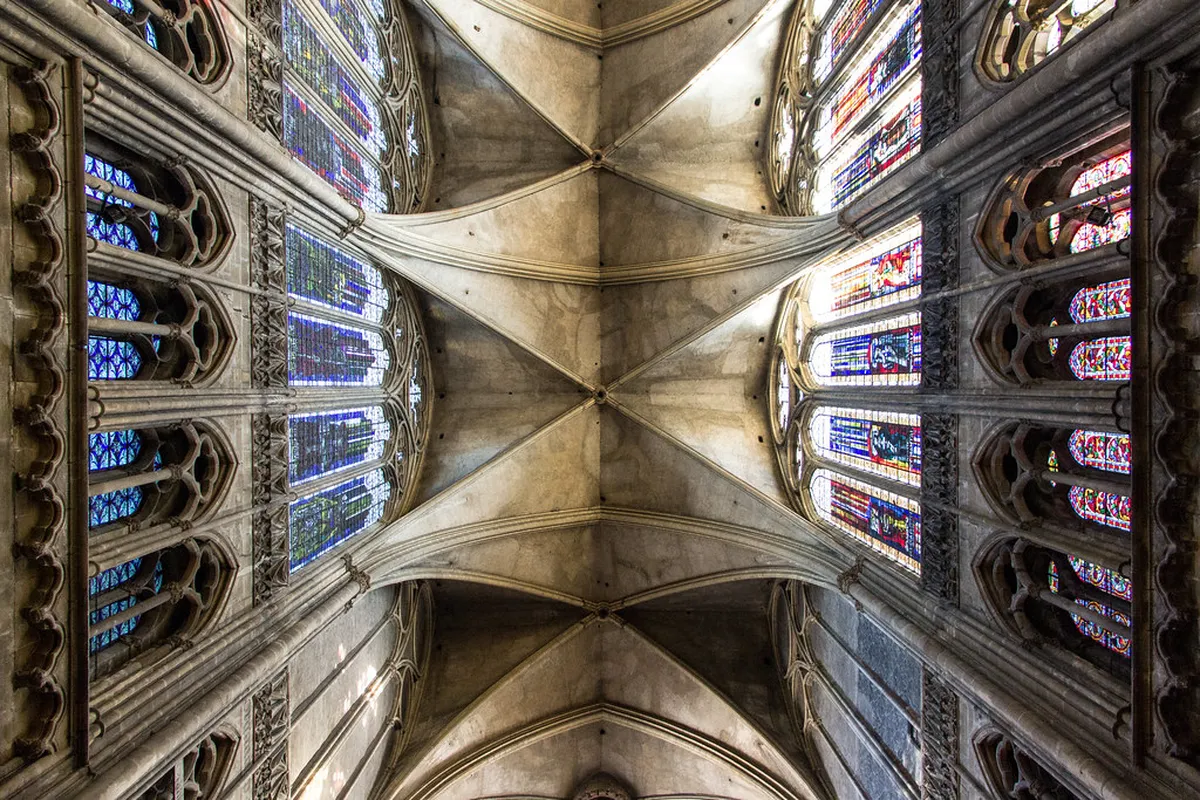
Inside, the single wide nave creates a vast sense of open space. This layout is a hallmark of the Meridional or Southern Gothic style. Large side chapels line the walls between the heavy interior buttresses. Each chapel contains unique artwork and dedicated altars for various saints.
- Porche du Midi: The famous entrance featuring the massive stone pillars.
- Rose Window: A stunning glass feature that filters soft light into the nave.
- Stone Carvings: Detailed sculptures depicting biblical scenes near the high altar.
The use of light is also quite significant in this specific design. Small windows high up in the walls let in narrow beams of sunshine. This creates a dramatic effect against the dark, heavy stone interior. Architects in 2025 still study these light patterns for their spiritual impact.
Destruction During the French Wars of Religion
The 16th century brought significant turmoil to this historic religious site. The Wars of Religion caused extensive damage to the building's facade. Protestant forces attacked the cathedral several times during the late 1500s. They viewed the structure as a symbol of Catholic power they opposed.
In 1561, a major siege led to the destruction of the bell towers. Much of the original stained glass was smashed during these violent conflicts. The cathedral sat in a state of partial ruin for several decades. It served more as a defensive fort than a place of worship.
Reconstruction efforts began in the early 17th century under King Louis XIII. He wanted to restore the Catholic presence in the rebellious southern city. Workers rebuilt the choir and the main nave using original stones. This era of restoration helped define the current Southern Gothic style characteristics seen now.
Many parts of the cathedral had to be completely redesigned from scratch. Architects tried to match the original 14th-century aesthetic as closely as possible. However, some Baroque influences crept into the interior decorations during this time. These layers of history make the building a fascinating study for researchers.
The 19th Century Expansion and Modern Era
The 1800s saw another major phase of transformation for the cathedral. Architects added a new transept and an enlarged sanctuary to the back. These additions allowed for larger congregations during major religious festivals. The work maintained the fortress-like appearance of the older sections perfectly.
During this period, the city also renovated the nearby Faculty of Medicine. The cathedral and the medical school are physically connected by a stone arch. This proximity highlights the link between faith and science in Montpellier. It remains one of the most photographed spots in the city today.
Inside, the massive organ was restored to its full musical glory. It features over 5,000 pipes and creates a powerful wall of sound. Concerts are still held here regularly for the public in 2025. The acoustics within the vaulted stone ceiling are considered world-class by many musicians.
Today, the building is protected as a national monument of France. Modern conservation teams work year-round to clean and repair the limestone walls. They use traditional techniques to ensure the building survives for future generations. Visiting the cathedral is now a mandatory stop for any cultural traveler.
Practical Tips for Your 2025 Visit
Visiting the Cathédrale Saint-Pierre is free for all guests in 2025. The doors usually open at 9:00 AM and close around 6:00 PM. Please remember to dress respectfully when entering this active place of worship. You should avoid wearing hats or very short clothing inside the sanctuary.
The cathedral is located at Place Saint-Pierre in the heart of Montpellier. You can easily reach it by taking the Line 1 or 4 tram. Get off at the Albert 1er stop for a short walk. The walk takes you through charming narrow streets filled with local boutiques.
Guided tours are available for those wanting deeper insights into the history. These tours often cost around 10 to 15 Euros per person. You can book them at the local tourist office near Place de la Comédie. Expect to spend at least one hour exploring the various chapels.
Photography is allowed but you must turn off your camera flash. Be mindful of ongoing masses or private prayer sessions during your visit. The best time for photos is early morning when the light is soft. The courtyard between the cathedral and the university is especially beautiful then.
Frequently Asked Questions
Is the Cathédrale Saint-Pierre free to visit in 2025?
Yes, entry to the main cathedral remains free for all visitors in 2025. Some special exhibitions or guided tours might require a small fee. You can explore the nave and chapels without spending any money at all.
What is the most famous feature of the Montpellier cathedral?
The most famous feature is the massive 14th-century porch. It consists of two giant stone pillars that resemble defensive towers. This gives the cathedral its unique and recognizable fortress appearance in the city center.
How old is the Cathédrale Saint-Pierre in Montpellier?
The building's origins date back to the year 1364 when construction first began. It has stood in Montpellier for over 660 years through many different eras. Significant additions were made in both the 17th and 19th centuries.
The Cathédrale Saint-Pierre is a masterpiece of history and architecture. It tells the story of Montpellier through its resilient stone walls and towers. Whether you love history or art, this landmark offers a truly unique experience. Plan your visit to this incredible site in 2025 to see its beauty firsthand.
Key Takeaways
- The cathedral was founded in 1364 by Pope Urban V.
- It features a unique fortress-style porch with massive twin pillars.
- Entry is free for the public and it is located near the university.
- The interior houses a world-famous organ with over 5,000 pipes.
- It is the best example of Southern Gothic architecture in the city.
Related reads: architecturebycity.com, architecture in montpellier.