
Explore the Unique Architecture in Clermont-Ferrand
Discover the volcanic architecture in Clermont-Ferrand in 2025. Explore Gothic spires and Romanesque gems. Plan your trip to this black city today!
On this page
Clermont-Ferrand is a unique city in the heart of France. Its most striking feature is the dark volcanic stone. This material defines the local identity and the stunning architecture in Clermont-Ferrand. You will find buildings that look black against the bright blue sky. This aesthetic comes from the nearby Chaîne des Puys volcanoes.
Walking through the city center feels like a journey through time. You will see ancient churches and narrow medieval streets. Modern industrial sites also play a huge role in the urban landscape. This guide explores the best examples of the volcanic Gothic style of Clermont-Ferrand Cathedral. Discover why this French city is an architectural hidden gem.
The city consists of two historic centers, Clermont and Montferrand. These two towns joined together in the 17th century. Each area offers a distinct architectural personality for visitors to enjoy. You can spend days exploring the diverse styles found here. From Romanesque vaults to brutalist concrete, the variety is truly impressive.
The Gothic Majesty of the Black Cathedral
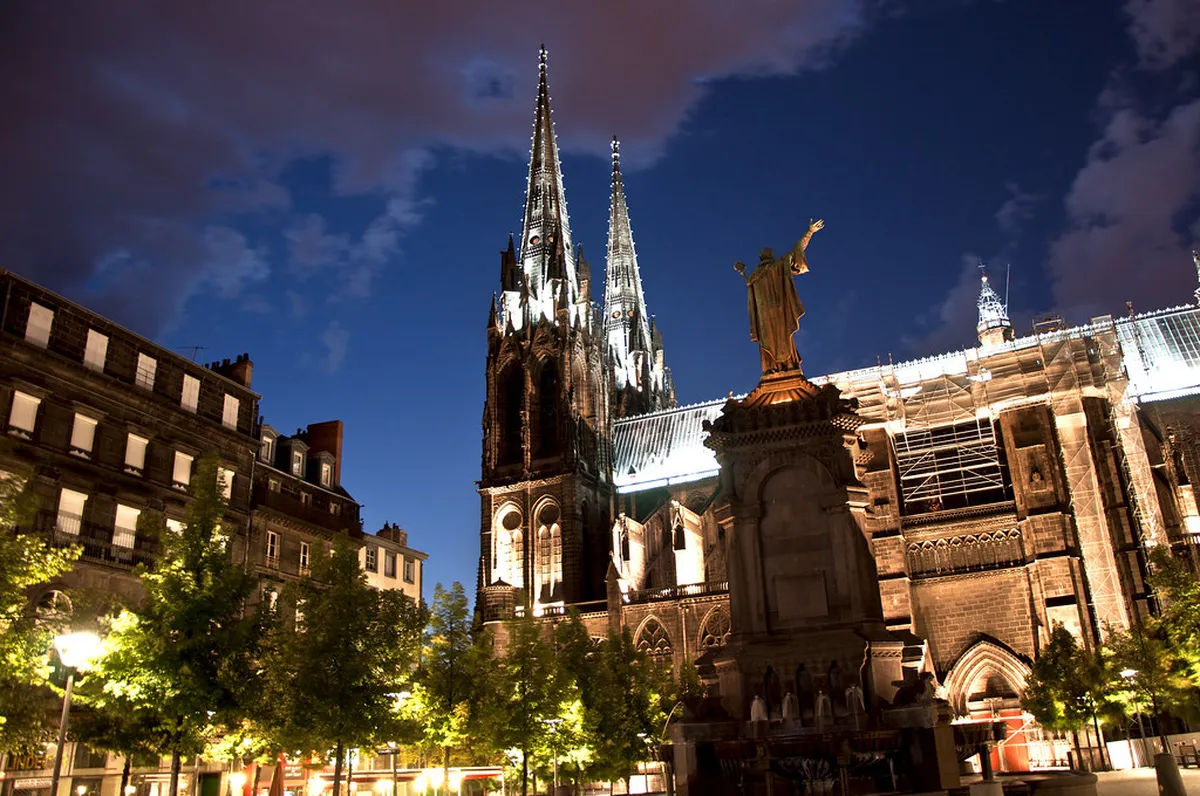
The Cathedral of Our Lady of the Assumption dominates the city skyline. It is the only cathedral in France built entirely from black lava stone. This stone is known as Pierre de Volvic. It is very strong but surprisingly easy to carve. Construction began in 1248 but took centuries to finish properly.
The dark color creates a dramatic and slightly mysterious atmosphere. Its twin spires reach 96 meters into the sky. You can see these landmarks from almost anywhere in the city. The contrast between the black stone and colorful stained glass is breathtaking. Most of the glass dates back to the 13th and 14th centuries.
The famous architect Viollet-le-Duc worked on the cathedral in the 19th century. He designed the west facade and the iconic twin spires. His work followed the original medieval spirit of the building. In 2025, visitors can climb the Bayette Tower for a small fee. The panoramic views of the surrounding volcanoes are absolutely spectacular.
Inside, the cathedral feels tall, narrow, and incredibly elegant. The volcanic stone allows for thin columns and wide arches. This technical feat was very advanced for the medieval period. Take time to study the intricate gargoyles on the exterior walls. They show the incredible skill of the local stone masons.
Romanesque Gems and the Notre-Dame du Port
The Basilique Notre-Dame du Port is a masterpiece of Romanesque design. It is a UNESCO World Heritage site located near the city center. This church uses arkose, a lighter sandstone, rather than dark volcanic rock. This choice of material makes the building glow in the sunlight. It represents the Romanesque heritage of Basilique Notre-Dame du Port perfectly.
The church features a complex eastern end with many small chapels. Its layout is typical of major pilgrimage churches in this region. The interior is famous for its highly detailed sculpted capitals. These stone carvings tell stories from the Bible with great emotion. Many art historians consider them the best examples in France.
Recent restoration work has cleaned the interior stone surfaces. The church now looks much brighter than it did decades ago. You can visit the crypt to see the ancient black madonna. This statue is a focal point for many religious visitors. Entry to the basilica is free for everyone in 2025.
The surrounding streets are very narrow and full of history. You can find small squares that offer great views of the roofline. The geometry of the octagonal bell tower is particularly striking. It shows the balance and harmony of Romanesque construction. This site is a must-see for any lover of historic architecture.
Medieval Wonders of the Montferrand District
Montferrand was once a powerful rival to the city of Clermont. It retains a very clear medieval grid layout today. Walking here feels like stepping back into the 14th century. The district is one of the oldest protected areas in France. You will find the medieval architecture of Montferrand district very well preserved.
The streets feature many half-timbered houses with overhanging upper floors. These structures were built to save space on the ground level. Some buildings still have their original stone shop fronts. You can imagine the busy markets that once filled these squares. The district is much quieter than the modern city center.
Many houses belong to wealthy merchants from the late Middle Ages. They often have hidden inner courtyards and stone towers. Look for the Maison de l'Eléphant on Rue des Cordeliers. It is a famous example of a medieval urban residence. The stone carvings on the facade are still visible today.
The city government invests heavily in preserving these historic structures. You will see ongoing renovation projects throughout the year 2025. These efforts keep the timber and stone from decaying. Exploring Montferrand offers a peaceful break from the bustling modern city. It is a highlight for anyone interested in urban planning.
Renaissance Mansions and Hidden Courtyards
During the 16th century, Clermont became a center for law and trade. Wealthy families built impressive mansions called 'hotels particuliers'. These buildings often hide their beauty behind plain street facades. You must enter the large wooden gates to see the courtyards. Many of these spaces feature elegant Renaissance staircases in Clermont-Ferrand houses.
The Hotel de Savaron is a prime example of this style. It features a beautiful courtyard with multiple levels of balconies. The stone carvings here are much more delicate than medieval work. They show the influence of Italian design on French builders. These mansions prove that volcanic stone can look light and graceful.
Another notable site is the Fontaine d'Amboise near the cathedral. This fountain dates back to 1511 and is highly decorative. It is made from the same dark Volvic stone. The intricate tiers show mythological figures and floral patterns. It remains a popular meeting spot for locals today.
Many of these mansions are now used as government offices. Some are open to the public during heritage days in September. You can also book specialized tours to see private interiors. The mix of dark stone and Renaissance symmetry is very unique. It adds a layer of sophistication to the city's character.
Michelin and the Industrial Urban Legacy
The Michelin tire company changed the face of the city. Their industrial presence began in the late 19th century. Huge factory complexes were built using brick and steel. This created a new architectural language for the local area. You can learn about this at the L'Aventure Michelin museum design site.
Michelin also built entire neighborhoods for their thousands of workers. These are known as 'Cites Michelin' and follow specific layouts. The houses are simple, functional, and often have small gardens. They were designed to provide a high quality of life. This social architecture is a key part of the city's history.
Modern Michelin buildings use glass and metal to look futuristic. The company headquarters at Place des Carmes is very impressive. It features a large water mirror and sleek modern lines. This building connects the industrial past with a high-tech future. It is a symbol of the city's ongoing economic power.
In 2025, some old factory sites are being repurposed. They are becoming art galleries, offices, and trendy apartments. This adaptive reuse helps preserve the industrial soul of the city. It prevents old buildings from becoming empty ruins. The scale of these industrial sites is truly massive.
Modernism and Brutalist Concrete Landmarks
Clermont-Ferrand also embraced 20th-century modernism with great energy. Architects like Valentin Vigneron designed many significant buildings here. He often mixed concrete with local volcanic stone to create contrast. These structures show how the city expanded after the world wars. The style is bold, functional, and often quite grand.
The Maison de la Culture brutalist architecture is a major local landmark. It features large concrete surfaces and geometric shapes. While some find it harsh, others admire its powerful presence. It serves as a hub for theater, dance, and music. The building is a classic example of French post-war public design.
The University of Auvergne campus also has interesting modern sections. These buildings use modular designs to house thousands of students. You can see the shift from stone to glass in these areas. The architecture reflects the city's role as a major educational center. Many of these sites offer great views of the older districts.
Current projects in 2025 focus on sustainable and green architecture. New buildings include living walls and energy-saving solar panels. Architects are trying to blend modern needs with the historic black stone. This ensures that the city continues to evolve in a beautiful way. The skyline is constantly changing with these new additions.
Frequently Asked Questions
Why are the buildings in Clermont-Ferrand black?
Most buildings use a local stone called Pierre de Volvic. This is a dark volcanic rock from nearby volcanoes. It is very durable and resistant to weather damage. This material gives the city its famous and unique appearance.
Are there guided tours for architecture fans?
Yes, the tourist office offers many architectural walking tours of Clermont-Ferrand daily. These tours cover Gothic, Romanesque, and even industrial sites. Most tours cost around 10 Euros per person in 2025. You can also find self-guided maps at the visitor center.
What is the best time of year to see the city?
Spring and autumn offer the best light for architectural photography. The low sun creates deep shadows on the dark stone buildings. Summer can be very hot on the paved city streets. Winter often brings snow, which looks beautiful against the black cathedral.
Is the Montferrand district easy to reach?
You can reach Montferrand easily by using the city's modern tramway. The 'A' line connects the two historic centers in ten minutes. It is a very cheap and convenient way to travel. The tram itself is a piece of modern design worth seeing.
Clermont-Ferrand offers a visual experience unlike any other French city. The mixture of black volcanic stone and historic styles is truly captivating. You can explore thousand-year-old churches and modern industrial wonders in one day. Plan your visit in 2025 to see this volcanic city for yourself. Do not forget to bring your camera for the amazing views.
Key Takeaways
- Clermont-Ferrand is famous for its dark buildings made from Volvic lava stone.
- The cathedral is a Gothic masterpiece and a unique black landmark in France.
- Montferrand offers a perfectly preserved medieval experience for history lovers.
- Michelin's industrial legacy shaped the city's modern urban layout and housing.
- The city is easy to explore using the efficient and modern tramway system.