
Exploring Beaune Wine Cellar Architecture in 2025
Discover the history of Beaune wine cellar architecture in 2025. Explore vaulted tunnels and medieval design in Burgundy's wine capital. Plan your tour today!
On this page
Beaune wine cellar architecture defines this historic town in eastern France. Visitors in 2025 can explore miles of underground tunnels today. These structures protect Burgundy's most famous and valuable wines. Let us dive into the unique design of these vaults.
The town sits on a massive limestone plateau in Burgundy. This soft stone allowed builders to carve deep into the earth. Medieval engineers created vast networks of cool, damp storage spaces. These cellars remain essential for aging world-class Pinot Noir and Chardonnay.
Exploring these subterranean wonders offers a glimpse into local history. You will see how architecture and viticulture grew together here. The city above rests on centuries of clever underground engineering. Every arch and pillar tells a story of French craftsmanship.
The Evolution of Subterranean Vaults
The story of Beaune wine cellar architecture began centuries ago. Roman settlers first recognized the value of the local limestone. They dug shallow pits for storage and basic shelter needs. Later, medieval monks expanded these pits into complex tunnel systems.
During the Middle Ages, the demand for Burgundy wine surged. Merchants needed massive spaces to store and age their heavy barrels. They used subterranean vault construction in Burgundy to expand downward. This method saved valuable surface space within the city walls.
The architects focused on structural stability and thermal regulation. They built thick stone walls to support the city's weight. These vaults maintain a constant temperature of 12 degrees Celsius. Such stability is perfect for long-term wine maturation in France.
By the 18th century, the networks became incredibly sophisticated. Builders added ventilation shafts to control humidity and air flow. They also connected private cellars to create long corridors. Today, these tunnels form a hidden city beneath the streets.
Medieval Architectural Techniques in Beaune
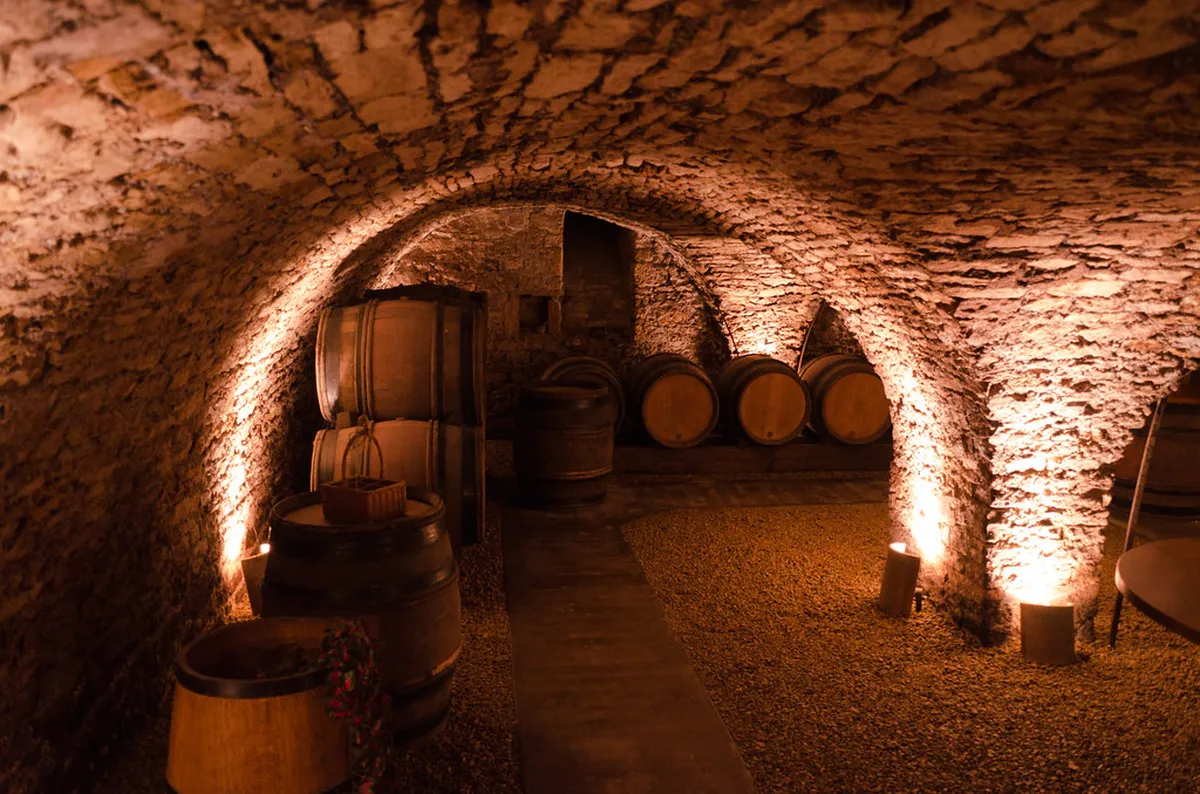
Medieval builders used specific techniques for cellar durability and safety. They favored the barrel vault for its simple strength. This curved ceiling design distributes weight evenly across the walls. You can still see these smooth stone arches today.
Large support pillars were necessary for the widest cellar rooms. These columns were often carved from single blocks of limestone. Architects placed them carefully to avoid collapsing the buildings above. Many historic wine merchant mansions in Beaune rely on these supports.
- Limestone Blocks: Sourced locally for easy transport and carving.
- Lime Mortar: Used to seal joints against underground moisture.
- Corbeling: Technique used to create small niches in walls.
- Ventilation Soupiraux: Vertical shafts connecting to the street level.
The floors often consist of packed earth or gravel. This choice helps maintain the high humidity wines require. Moisture levels stay between 70 and 80 percent year-round. This natural climate control is a feat of ancient engineering.
The Labyrinth of Patriarche Père et Fils
Patriarche Père et Fils offers a premier look at architecture. Their cellars are the largest in all of Burgundy today. They span five kilometers beneath the center of historic Beaune. The network includes former convent vaults from the 17th century.
Visitors can take Patriarche Pere et Fils labyrinth tours to see this. The architecture features vast vaulted galleries and narrow winding paths. It feels like a cathedral built entirely for aging wine. The scale of the masonry is truly impressive to see.
The lighting in these cellars highlights the stone textures. Soft orange glows reflect off the damp, mossy wall surfaces. You will notice how different eras used different stones. Some sections use rough-hewn rock while others feature smooth blocks.
Walking through these tunnels reveals the sheer density of Beaune. You are walking under churches, homes, and public squares alike. The builders had to navigate around existing foundations and wells. This created the complex maze-like layout visitors enjoy now.
Romanesque and Gothic Design Elements
Many cellars reflect the religious architecture of their time. You will find Romanesque arches in the oldest storage areas. These are semi-circular and rely on massive, thick wall structures. They provide a sense of timeless weight and incredible security.
Later sections display the transition into the elegant Gothic style. Pointed arches appear in larger communal cellars and tasting rooms. This style allowed for higher ceilings and much wider spaces. It mirrors the design found in Hospices de Beaune architectural history nearby.
Some merchant cellars even feature small decorative carvings on pillars. These details showed the wealth and status of the owner. Even in the dark, craftsmanship was a high priority. The stone reflects a deep respect for the local terroir.
The integration of stairs is another fascinating architectural detail. Stone spiral staircases connect the deep vaults to the surface. They are often narrow to preserve the cellar's thermal seal. Engineers placed them strategically for efficient barrel movement during harvest.
Modern Innovations in Winery Construction
Newer wineries near Beaune are blending tradition with technology. Architects now use glass and steel alongside ancient limestone blocks. This creates a striking visual contrast for visitors to enjoy. These modern winery architecture near Beaune projects win awards globally.
Sustainability is the main focus for 21st-century cellar design. Designers use gravity-flow systems to move wine without heavy pumps. This requires building wineries on multiple levels into hillsides. It mimics the natural cooling power of the old vaults.
Modern tasting rooms often sit directly above the aging cellars. Large glass floors allow guests to view the barrels below. This connects the consumer to the architectural heart of production. It makes the wine experience more educational and visually stunning.
Even new buildings use local stone to honor the past. Architects want their structures to age gracefully like the wine. They combine natural insulation with advanced climate control systems. This ensures the perfect environment for Burgundy's delicate grape varieties.
Frequently Asked Questions
Can you visit the wine cellars in Beaune?
Yes, many historic wine houses offer public tours. You can book tastings that include walks through vaults. Most tours require an advance reservation during the summer. Wear a jacket because the cellars remain quite cold.
How deep are the wine cellars in Beaune?
Most cellars are between five and ten meters deep. Some multi-level systems reach even further into the earth. This depth ensures the temperature stays cool and constant. It protects the wine from vibration and temperature spikes.
What is the best time to tour cellars?
The cellars are a great year-round activity in France. They provide warmth in winter and cooling in summer. Fall is the busiest time during the local harvest. Spring offers smaller crowds and more personal tour experiences.
Are the Beaune wine cellars handicap accessible?
Accessibility varies greatly between the different historic wine houses. Older cellars often have steep stairs and uneven floors. Some modern facilities include elevators for guests with mobility needs. Always check with the winery before booking your tour.
Beaune wine cellar architecture is a testament to French ingenuity. These underground marvels have preserved Burgundy's liquid gold for centuries. Visitors in 2025 will find a perfect blend of history. Plan your trip to see these incredible vaults today. You will appreciate every glass of wine much more.
Key Takeaways
- Limestone bedrock allowed for massive underground expansion.
- Constant temperatures of 12°C are ideal for aging.
- Cellars feature a mix of Romanesque and Gothic styles.
- Modern wineries blend ancient stone with sustainable technology.