
Louis XII Wing Flamboyant Gothic Features Guide
Discover the Louis XII wing flamboyant gothic features at Château de Blois. Learn about royal architecture and history in 2025. Plan your visit now!
On this page
The Louis XII wing flamboyant gothic features define the grand entry to Château de Blois in France. This architectural masterpiece marks a vital transition in French history. Visitors in 2025 can explore the intricate stonework and royal symbols here. It remains a primary example of late medieval design in the Loire Valley.
King Louis XII commissioned this wing at the end of the 15th century. It showcases the wealth and power of the French monarchy at that time. The style blends traditional gothic elements with early artistic shifts toward the Renaissance. You will find this structure at the heart of the royal city of Blois.
Defining the Louis XII Wing Flamboyant Gothic Features
The Louis XII wing flamboyant gothic features are visible in the ornate window tracery. These designs look like flickering flames carved directly into the white stone. This specific style was very popular in France during the late middle ages. It added a sense of movement and lightness to heavy stone buildings.
You will see these flame-like patterns on the tall dormer windows of the roof. Builders used limestone from the local region to create these delicate shapes. The stone allows for high levels of detail in every single archway. These elements create a rhythmic pattern across the entire length of the wing.
The windows also feature complex mullions that divide the glass into smaller sections. These vertical bars provide structural support while enhancing the overall beauty. You can admire how the light hits these sharp edges during the afternoon. Every window represents hours of skilled labor by medieval French stonemasons.
The roofline itself acts as a crowning jewel for the flamboyant gothic style. It features high-pitched slopes covered in dark slate tiles from local quarries. Small stone pinnacles rise from the edges to reach toward the sky. These pointed decorations give the building a sense of verticality and grace.
The Evolution of Château de Blois Architectural Styles
The castle showcases a diverse mix of Château de Blois architectural styles from different eras. The Louis XII wing represents the final stage of the gothic period. It sits next to wings built during the Renaissance and Classical periods. This unique layout provides a visual timeline of French royal history.
This wing was built over much older structures from the 13th century. It replaced the rugged walls of the medieval castle foundations in Blois during its construction. The King wanted a home that felt more modern and comfortable. He moved away from the defensive nature of earlier fortress designs.
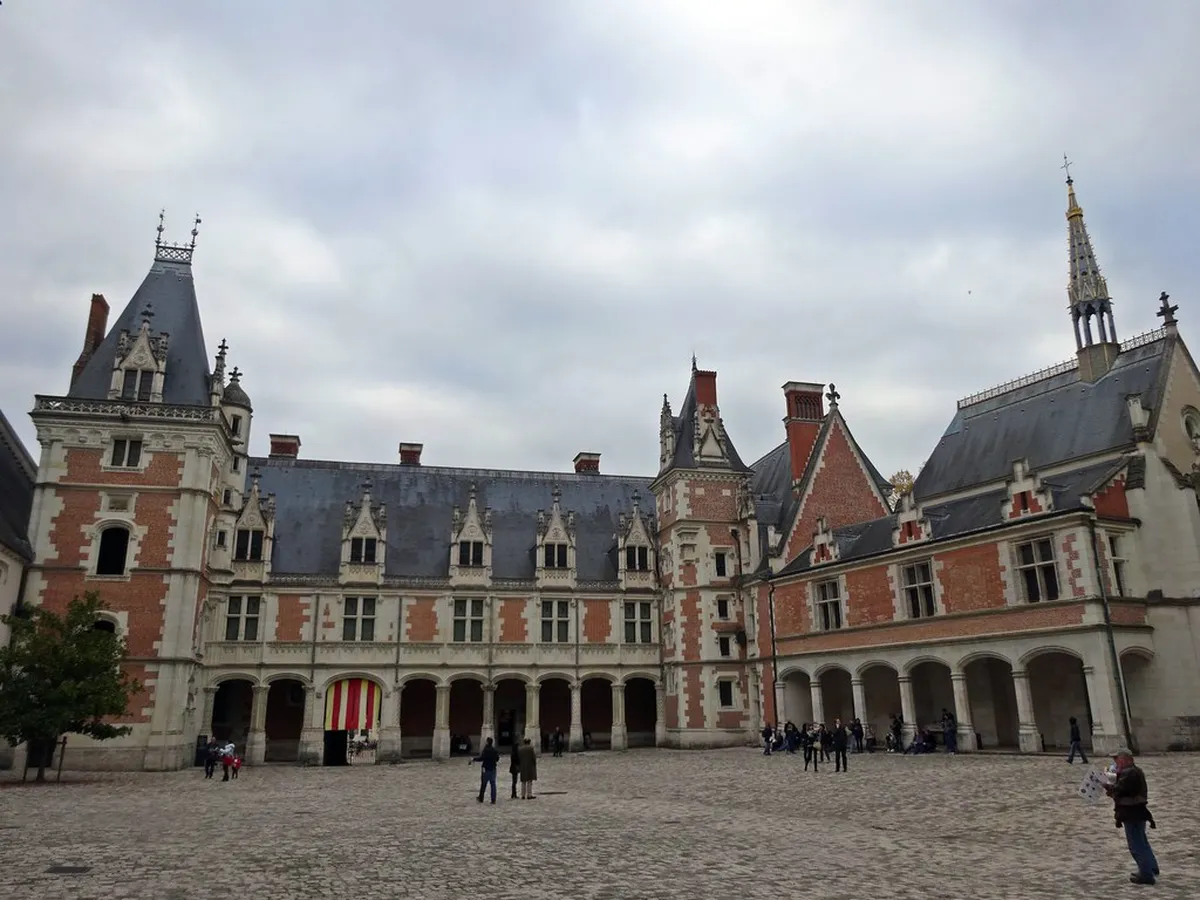
The exterior uses a beautiful combination of red brick and white stone. This color palette was very trendy among the French nobility in 1500. It created a warm look that differed from the grey stone of the past. The bricks are arranged in subtle diamond patterns for extra visual interest.
The courtyard side of the wing offers a more intimate architectural perspective. Here, the galleries provide covered walkways for the royal court to use. The arches show a slight shift toward the rounded shapes of Italy. However, the overall soul of the wing remains firmly rooted in gothic tradition.
The Influence of the Equestrian Statue and Portal
A grand portal serves as the main entrance to the royal courtyard. Above this gate sits a famous equestrian statue of King Louis XII. He is shown in full armor riding a powerful horse. This statue highlights his status as a warrior and a ruler.
The niche surrounding the statue features rich flamboyant gothic carvings. You will see the porcupine emblem which represents the King himself. This animal symbolizes his ability to wage war at a distance. It is a unique detail found only on his personal buildings.
Fleur-de-lis symbols are also carved into the stone surrounding the royal gate. These lily flowers represent the French crown and its divine right to rule. The carvings are deep and create strong shadows in the morning sun. This entrance was designed to impress every visitor who arrived at court.
The portal uses a basket-handle arch which is typical of the era. It is wider and flatter than the older pointed gothic arches. This change shows the early influence of Italian design on French builders. It creates a welcoming space for horses and carriages to pass through.
Decorative Elements of the Red Brick Facade
The use of polychrome masonry is a key feature of this wing. Builders used dark blue bricks to create patterns against the red bricks. These geometric shapes add a layer of texture to the flat walls. It makes the building look like a woven tapestry of stone.
Large mullioned windows break up the brickwork at regular intervals. Each window is framed by white stone that pops against the red. This contrast helps define the vertical lines of the structure. It draws the eye upward toward the decorative roof and chimneys.
The chimneys themselves are works of art with complex stone carvings. They rise high above the roof to ensure smoke cleared the courtyard. Even these functional parts of the building received artistic attention in 1500. They add to the jagged and interesting silhouette of the castle.
Look closely at the corner towers of the Louis XII wing. They contain spiral staircases that allowed for private movement between floors. The exterior of these towers features slim windows and decorative moldings. These towers ground the building while adding to its regal appearance.
Transitioning from Medieval to Early Renaissance Style
The Louis XII wing serves as a bridge between two major eras. It retains the vertical energy of the medieval gothic period. However, it also introduces the symmetry found in the early Renaissance. This mixture makes it a fascinating study for architecture fans in 2025.
The open galleries in the courtyard are a very new feature for 1500. They allowed people to enjoy the fresh air while remaining protected. This focus on leisure and comfort was a major change in design. It shows the King was looking toward a more peaceful future.
You can see Italian influence in the small decorative shells and pilasters. These details were brought back to France after the Italian Wars. They appear alongside the traditional gothic gargoyles and pointed pinnacles. This hybrid style is often called the First French Renaissance.
Exploring this wing helps you understand how styles slowly change over time. No style disappears overnight when a new one arrives in a city. The Louis XII wing proves that old and new can live together. It remains one of the most beautiful sites in the Loire Valley.
Frequently Asked Questions
What are the main Louis XII wing flamboyant gothic features to see?
Look for the flame-like stone carvings on the dormer windows and portals. The equestrian statue of the King is also a major highlight. You should also notice the intricate brick patterns on the exterior walls. These features define the unique style of the late 15th century.
How much does it cost to visit the Louis XII wing in 2025?
A standard adult ticket to the Château de Blois costs about 15 Euros. This price includes access to all the royal wings and the museum. Discounts are often available for students, children, and large families. You can buy tickets online to skip the lines at the entrance.
Is the Louis XII wing different from other architecture in Blois?
Yes, this wing is much more ornate than the surrounding town buildings. It uses expensive materials like brick and fine limestone for decoration. Most local houses from that era use half-timbered construction instead. This wing was built specifically to show off the King's royal wealth.
When is the best time of day to photograph the wing?
Early morning offers the best light for the main exterior facade. The sun hits the red bricks and white stone at a perfect angle. For the courtyard, try visiting in the late afternoon for soft shadows. This timing helps capture the depth of the flamboyant gothic carvings.
The Louis XII wing flamboyant gothic features offer a glimpse into a royal past. This structure is a masterpiece of transition and artistic skill in France. You should visit Blois in 2025 to see these details in person. It is a highlight of any trip to the historic Loire Valley.
Key Takeaways
- The wing features a unique blend of red brick and white stone.
- Flamboyant gothic style is defined by flame-like stone carvings.
- The equestrian statue of Louis XII is a primary landmark.
- The building marks the transition from medieval to Renaissance design.
- Visitors can see royal emblems like the porcupine and fleur-de-lis.
Related reads: architecturebycity.com, francois i staircase architecture.