
Maison des Acrobates History: A Blois Landmark Guide
Explore the Maison des Acrobates history in Blois. Learn about medieval architecture and carvings on your 2025 trip. Discover this French gem today!
On this page
Blois is a city rich in French history. The Maison des Acrobates history attracts many curious travelers. This building stands near the impressive Saint-Louis Cathedral. It remains one of the oldest residences in the city.
The house was built during the reign of Louis XI. This period saw a rise in urban construction. Builders used local materials to create lasting structures. The Maison des Acrobates serves as a perfect example of this.
Visitors to Blois in 2025 will enjoy the atmosphere. The narrow streets offer a glimpse into the past. This house is a highlight of the historic district. It showcases the architectural style of the 15th century.
You can find the house at Place Saint-Louis. It sits at a crossroads of ancient city life. Many people stop here to take photographs. The facade holds many secrets from the medieval era.
The Medieval Origins of the Maison des Acrobates
The Maison des Acrobates history begins in the late 1400s. Historians believe the house was built around 1470. This was a time of growth for Blois. The city was a favorite residence for French kings.
The house was originally built for the cathedral clergy. These religious officials lived near their place of work. Saint-Louis Cathedral is located just a few steps away. This proximity made the house very prestigious.
This structure is a prime example of medieval half-timbered houses in Blois. It has survived wars and urban changes for centuries. The house managed to escape damage during many historical conflicts. Its survival is a miracle of preservation.
The building represents the wealth of the medieval church. Clergy members often had comfortable and stylish homes. This house was meant to impress the local community. It remains a sturdy link to the medieval past.
Walking past this house feels like traveling through time. You can imagine the busy square five centuries ago. The atmosphere in Place Saint-Louis remains very traditional. It is a must-see for history lovers in Blois.
Timber Framing Techniques of the 15th Century
The construction of this house uses traditional timber framing. Craftsmen used heavy oak beams for the main structure. These beams were joined with mortise and tenon joints. This method allowed the house to remain flexible and strong.
The gaps between the beams were filled with cob. Cob is a mixture of clay, straw, and sand. This material provided excellent insulation for the residents. It kept the house warm during the cold French winters.
These techniques define the unique architecture in Blois from this period. The upper floors of the house overhang the street. This design is known as an encorbellement. It protected the lower walls from rainwater damage.
Builders also used stone for the ground floor base. This prevented moisture from rotting the wooden pillars. The combination of stone and wood is very common here. It shows the practical skills of medieval French builders.
Each beam was carefully selected for its specific purpose. The master carpenters used ancient tools to shape the wood. You can still see the marks of their work today. These details add to the charm of the building.
The Symbolic Meaning of the Acrobatic Carvings
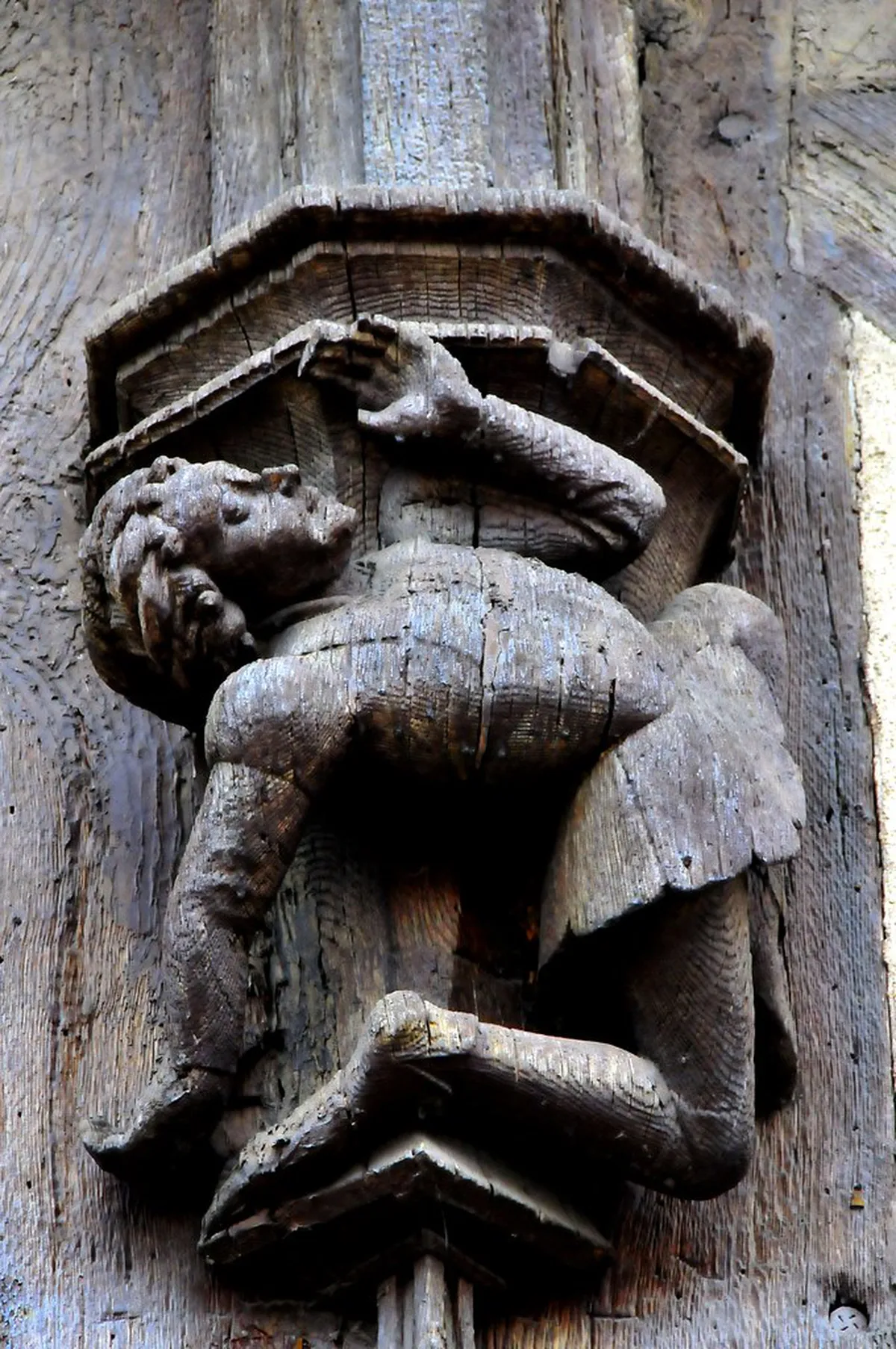
The name of the house comes from its carvings. The wooden pillars feature many small and intricate figures. These figures represent acrobats, jugglers, and street performers. They are carved directly into the vertical support beams.
Some figures are shown in very difficult physical poses. They wear traditional medieval clothing from the 15th century. These carvings highlight the importance of street entertainment. Festivals were a key part of life in medieval Blois.
Scholars believe these images have deeper symbolic meanings. They may represent the struggle between order and chaos. Some figures appear to be mocking the passing crowds. This sense of humor is common in gothic art.
The carvings also served a social purpose for the church. They showed that the clergy appreciated popular culture. It helped bridge the gap between the church and people. The detail on these small statues is truly remarkable.
Photographers often spend a long time capturing these figures. The light changes their appearance throughout the day. Early morning light reveals the most subtle carving details. It is a favorite spot for artists and historians.
Social History of Clergy Housing in Blois
During the 1400s, Blois was a center of power. The clergy held significant influence over the city's development. Living in such a house was a sign of status. Only high-ranking church officials could afford these residences.
The interior of the house was surprisingly spacious for the time. Large fireplaces provided heat for the main living rooms. Windows were small to keep the heat inside the house. The floors were likely covered in rushes or simple tiles.
This house was part of a larger religious complex. Many similar houses once stood around the cathedral square. Today, the Maison des Acrobates is the best survivor. It helps us understand how the elite lived.
The relationship between the town and the church was complex. These houses stood as physical reminders of church authority. Yet, the playful carvings showed a lighter side of life. This balance is reflected in the Maison des Acrobates history.
Visiting this site helps connect the dots of Blois history. You see the overlap of religion, art, and daily life. It is more than just a beautiful old building. It is a story of a thriving community.
Structural Preservation and Architectural Integrity
Maintaining a 500-year-old wooden house is a difficult task. The city of Blois works hard to preserve its heritage. Experts regularly inspect the timber for signs of rot. They use traditional methods to repair any damaged sections.
The facade was carefully restored in the recent past. Workers cleaned the wood to reveal the original carvings. They used natural oils to protect the oak from weather. This ensures the house will stand for many more years.
Modern laws protect the Maison des Acrobates from major changes. It is listed as a historical monument in France. Owners must follow strict rules for any maintenance work. This keeps the architectural integrity of the building intact.
Preservation efforts also focus on the surrounding square. Place Saint-Louis has been kept free of modern clutter. This allows the medieval house to remain the central focus. The lack of modern signs helps maintain the historic vibe.
Public support for these projects remains very high in Blois. Residents take great pride in their architectural history. They understand that these buildings attract tourism and business. It is a collective effort to save the past.
Tips for Visiting Place Saint-Louis in 2025
Planning a trip to see this house is easy. You should join a Blois architecture walking tour for the best experience. These tours provide expert context on the carvings. Guides can point out details you might otherwise miss.
The house is located at 3 Place Saint-Louis. It is always free to view from the outside. Please remember that the house is a private home. Visitors cannot enter the interior rooms at this time.
The best time to visit is during the spring months. April and May offer mild weather and clear skies. You will find fewer crowds than in the summer. This makes it easier to take perfect facade photos.
Nearby, you can visit the Saint-Louis Cathedral for free. There are also several small bakeries in the square. Enjoy a pastry while you admire the medieval woodwork. It is a relaxing way to spend an afternoon.
Check the local tourism office for updated event schedules. Sometimes the square hosts medieval markets or light shows. These events bring the Maison des Acrobates history to life. It is a highlights of any Blois itinerary.
Frequently Asked Questions
Can you go inside the Maison des Acrobates?
No, you cannot go inside the building. It is currently used as a private residence. However, the exterior is easily visible from the public square. You can admire all the famous carvings from the street.
How much does it cost to see the house?
Viewing the exterior of the house is completely free. It is located in a public square in Blois. You can visit at any time of day. Most people spend about twenty minutes looking at the carvings.
What is the best way to reach the house?
The house is in the center of the old town. It is a short walk from the Chateau de Blois. You can also walk up from the Loire river. The walk involves some hills and stone stairs.
Why is it called the Maison des Acrobates?
It is named after the carvings on the facade. The wooden pillars show figures doing stunts and tricks. These acrobats have been a local icon for centuries. The name has been used since the medieval era.
The Maison des Acrobates history is a treasure of Blois. It offers a unique look at 15th-century life and art. Make sure to include this site in your 2025 travel plans. You will gain a deeper appreciation for French medieval craftsmanship. Visit the official tourism office for more information on walking tours.
Key Takeaways
- The house was built in 1470 for cathedral clergy.
- The name comes from detailed carvings of street performers.
- It is a rare surviving example of timber framing in Blois.
Related reads: architecturebycity.com, timber framing techniques in loir et cher, restoring historic facades in blois.