
Base Sous-Marine Bordeaux Architecture Guide 2025
Explore the historic Base Sous-Marine Bordeaux architecture. Discover this massive WWII bunker turned art center in 2025. Visit this brutalist icon in France!
On this page
The Base Sous-Marine Bordeaux architecture stands as a powerful monument to industrial strength and dark history. This massive concrete fortress dominates the landscape of the northern Bacalan district in Bordeaux. Visitors today experience a unique blend of wartime engineering and modern artistic expression. It remains one of the most imposing examples of architecture in Bordeaux from the twentieth century.
Constructed by German forces during World War II, the base served as a protected submarine harbor. Its sheer scale and raw materials create an atmosphere unlike any other building in France. In 2025, it serves as a center for immersive digital exhibitions and cultural events. The structure provides a haunting backdrop for contemporary light shows and music festivals.
The Historical Origins of the Bunker
Construction of the base began in 1941 to support the German navy during the Atlantic campaign. Thousands of forced laborers worked in harsh conditions to complete this massive military project. They used over 600,000 cubic meters of reinforced concrete to ensure the structure was indestructible. This site is a key part of the WWII bunkers in Bordeaux history. The base was finished in 1943 and housed the Italian and German submarine fleets.
The engineering requirements for a submarine base were extremely demanding for the time period. Engineers designed the facility to withstand the heaviest Allied aerial bombardments possible. Its strategic location on the Garonne River allowed submarines to enter the pens secretly. The project required massive logistics and a constant supply of raw industrial materials. Today, the history of this labor remains a somber reminder for all modern visitors.
Military planners divided the interior into eleven separate submarine cells for maintenance and storage. Each cell could house several vessels at once while providing protection from overhead attacks. The interior humidity and darkness created a claustrophobic environment for the sailors stationed there. Massive steel gates once regulated the water levels inside each of these large pens. These engineering features highlight the specialized nature of Base Sous-Marine Bordeaux architecture during the war years.
The base fell into disuse shortly after the liberation of France in 1944. For decades, the massive structure stood empty and silent along the industrial waterfront. Its indestructible nature made demolition far too expensive for the local city planners to consider. This forced the city to find creative ways to repurpose the site for peaceful uses. It eventually transitioned from a military relic into a unique cultural landmark for the public.
Brutalist Design and Massive Scale
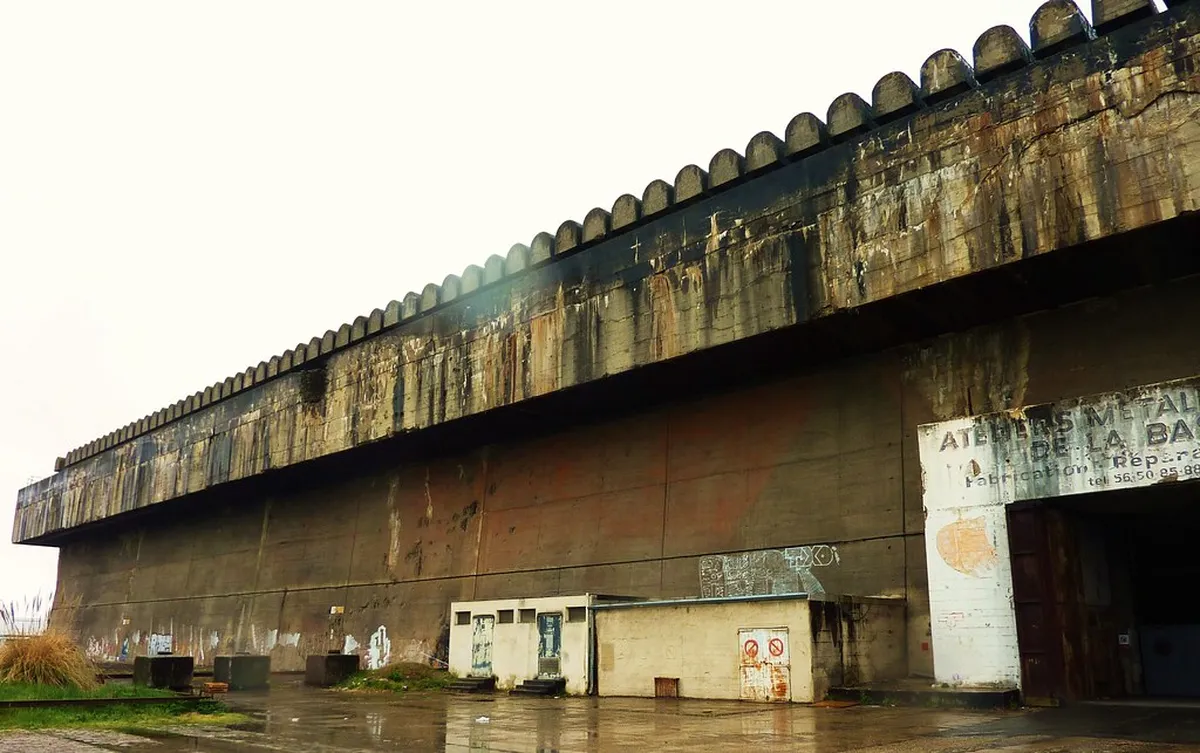
The structure measures 235 meters in length and 160 meters in width. Its roof consists of several layers of concrete totaling nearly nine meters in thickness. This incredible density was necessary to deflect bombs and protect the valuable submarine fleet. The brutalist aesthetic is defined by raw concrete surfaces and sharp, functional geometric shapes. You can see the original wooden formwork impressions left in the dried concrete walls.
Walking through the base reveals the immense scale of mid-century industrial engineering projects. The ceilings soar high above the dark water pools that still fill the submarine pens. These vertical spaces create echoing acoustics that enhance the sensory experience for every visitor. The lack of traditional windows creates a sense of complete isolation from the outside world. This architectural design focuses entirely on strength, protection, and utilitarian naval functions.
Designers utilized a "Fangrost" roof system to dissipate the energy of falling bombs. This system involved placing concrete beams in a lattice pattern above the main roof. The gaps between these beams allowed blast pressure to escape without damaging the internal structure. This clever engineering solution is a hallmark of German military design from that specific era. It demonstrates the technical complexity hidden within the simple, grey exterior of the building.
The following features define the architectural impact of the base:
- Massive Thickness: The walls and roofs are designed for maximum physical resistance.
- Submerged Pens: The structure interacts directly with the river water and tides.
- Raw Textures: The unpainted concrete shows every detail of its fast construction.
- Functional Layout: Every corridor and room served a specific military or technical purpose.
Transformation into Les Bassins des Lumières
In recent years, the base has found a new life as a premier digital art destination. The space now hosts the Bassins des Lumières, the world's largest digital art center. This transformation honors the Bassins de Lumieres building history while looking toward the future. Huge projectors cast vibrant images onto the concrete walls and the surface of the water. This creates a mesmerizing reflection that doubles the visual impact of the art.
The contrast between the dark, heavy concrete and the colorful lights is truly spectacular. Visitors walk along elevated gangways to view the exhibits from many different angles. The sound systems utilize the natural echoes of the bunker to create immersive audio environments. Each show focuses on famous artists like Monet, Van Gogh, or Klimt. This adaptive reuse project has brought thousands of new tourists to the northern part of Bordeaux.
Renovating such a massive concrete structure presented unique challenges for modern architects and engineers. They had to install miles of specialized cabling without compromising the integrity of the walls. Climate control systems were necessary to protect the expensive projection equipment from humidity. These modern additions are carefully hidden to preserve the original industrial atmosphere of the base. It is a perfect example of how old structures can gain new purpose.
The entry price for these exhibitions usually ranges from 13 to 15 Euros per adult. It is highly recommended to book your tickets online before arriving at the site. The exhibitions are open daily, usually from 10:00 AM until 7:00 PM in the evening. Check the official website for specific seasonal hours during your 2025 trip to France. The experience typically takes about one hour to complete from start to finish.
Exploring the Bacalan District in 2025
The Base Sous-Marine is located in the heart of the rapidly changing Bacalan district. This neighborhood was once a gritty industrial hub focused on shipping and heavy manufacturing. Today, the area is undergoing a significant process of Bacalan district urban renewal and growth. Modern apartment buildings and trendy offices now stand next to old shipyard warehouses. This mix of old and new creates a dynamic urban atmosphere for locals.
Getting to the base is easy using the efficient Bordeaux public transportation system. Take the Tram Line B toward Berges de la Garonne and exit at the Cité du Vin stop. From there, it is a pleasant ten-minute walk through the modernized docklands area. You will pass several other interesting architectural sites along the way to the bunker. The district is also home to excellent local markets and craft breweries.
Nearby attractions include the Cité du Vin, a striking modern building dedicated to wine culture. The contrast between its metallic curves and the bunker's grey blocks is visually stunning. Visitors can easily spend an entire day exploring this northern section of the city. There are many waterfront restaurants that offer fresh seafood and views of the river. This area represents the modern, forward-thinking spirit of 2025 Bordeaux architecture.
Safety and accessibility have improved greatly in this district over the last decade. Wide sidewalks and bike lanes make the area very friendly for pedestrians and cyclists. The city has invested millions in lighting and landscaping to make the docks more inviting. You will find many families and young professionals enjoying the open spaces during the weekends. It is a vibrant community that successfully integrates its heavy industrial heritage.
Industrial Aesthetics and Modern Preservation
Preserving the Base Sous-Marine Bordeaux architecture requires constant maintenance and careful monitoring. The salty river air and high humidity can cause the internal steel reinforcements to rust. Experts use specialized techniques to treat the concrete and prevent further degradation over time. These efforts ensure that the building remains safe for the public to visit. Maintaining such a large site is a significant financial commitment for the city.
The raw aesthetic of the bunker has influenced many local designers and modern builders. You can see similar themes in various examples of contemporary architecture in Bordeaux today. Many new projects use exposed concrete and industrial materials to pay homage to the city's past. This creates a cohesive visual identity that links different eras of construction together. The bunker serves as a permanent reference point for the local architectural community.
Photographers are drawn to the base for its unique play of light and shadow. The massive columns and dark water create dramatic compositions that are perfect for artistic photography. Many film directors have also used the site as a location for gritty, industrial scenes. Its timeless quality makes it feel both ancient and futuristic at the same time. This visual appeal is a major reason for its continued popularity among creative professionals.
Future plans for the base include expanding the cultural spaces to include local artists. There is talk of creating more permanent workshops and studios within the dryer sections. This would further integrate the building into the daily life of the Bordeaux creative community. The goal is to keep the site active and relevant for generations to come. It remains a shining example of successful industrial heritage preservation in Europe.
Frequently Asked Questions
What is the history of the Base Sous-Marine Bordeaux architecture?
The base was built during World War II by German forces to house submarines. It used massive amounts of reinforced concrete to survive heavy Allied bombing raids. Today, the Base Sous-Marine Bordeaux architecture is a protected cultural landmark. It has been transformed into a world-class center for digital art and music.
How much does it cost to visit the Base Sous-Marine in 2025?
Tickets for the digital art shows usually cost between 13 and 15 Euros for adults. Reduced rates are often available for students, children, and large groups of visitors. It is best to purchase tickets online to avoid long queues at the entrance. The experience offers great value for the unique atmosphere and high-quality projections.
Is the Base Sous-Marine accessible for visitors with limited mobility?
Yes, the main exhibition areas are accessible for those using wheelchairs or strollers. The city has installed ramps and lifts to ensure everyone can enjoy the art. Some areas may have dim lighting, so visitors should move carefully through the space. Staff members are always available to assist with any specific accessibility needs during your visit.
The Base Sous-Marine Bordeaux architecture is a must-see destination for any fan of history or design. It successfully bridges the gap between a dark military past and a bright cultural future. In 2025, this site continues to inspire visitors with its scale and artistic innovation. Plan your visit today to witness the incredible transformation of this brutalist icon. You will leave with a deep appreciation for the unique engineering and history of Bordeaux.
Key Takeaways
- The base is one of the largest brutalist structures in Europe.
- It now houses the world's largest digital art center.
- Visitors can experience WWII history through a modern artistic lens.
- The site is easily accessible via the Bordeaux tram system.
Related reads: architecturebycity.com, bordeaux neoclassical architecture.