
Pont de Pierre Photography Guide: Capture Bordeaux
Master our Pont de Pierre photography guide for 2025. Learn the best angles and times to capture iconic Bordeaux city views and viewpoints with ease.
On this page
Bordeaux is a city of light and stunning stone architecture. The Pont de Pierre stands as its most famous historic bridge. This Pont de Pierre photography guide helps you find the best shots. You will learn how to capture the bridge in various lighting conditions.
Napoleon Bonaparte commissioned this grand structure in the early nineteenth century. It spans the wide Garonne River with seventeen graceful arches. These arches correspond to the number of letters in Napoleon's name. It is a central part of any Bordeaux city views and viewpoints tour.
Today, the bridge is reserved for pedestrians, cyclists, and the local tram. This makes it a safe and quiet place for photographers to work. You can take your time to set up the perfect shot. Follow this guide to improve your travel photography skills in 2025.
History of the First Bridge in Bordeaux
The Pont de Pierre was the first bridge to cross the Garonne River. Before its construction, people used boats to cross the water. The currents were often too strong for safe travel. Napoleon wanted a bridge to move his troops more quickly.
Construction began in 1810 and faced many difficult engineering challenges. The river is deep and the current is very powerful at this point. Workers finished the bridge in 1822 after many years of labor. It remains a masterpiece of architecture in Bordeaux today.
The bridge features elegant brick and stone construction along its entire length. Look closely at the white stone medallions on the sides. These celebrate Napoleon and the city of Bordeaux itself. These details look wonderful when captured with a macro or zoom lens.
Each arch has a slightly different shape due to the river flow. The symmetry of the seventeen arches creates a rhythmic pattern for photos. This pattern is perfect for creating a sense of scale in images. You can see the city skyline through the arches at low tide.
Best Times for Golden Hour Photography
Timing is the most important factor for great bridge photos. Golden hour provides a soft and warm glow on the red bricks. In summer 2025, this usually happens around 20:00 or 21:00. Winter months offer golden light much earlier in the afternoon.
The sun sets behind the city skyline on the left bank. This creates a beautiful silhouette of the bridge against a colorful sky. You should arrive at least thirty minutes before the sun disappears. This gives you time to find a good spot on the riverbank.
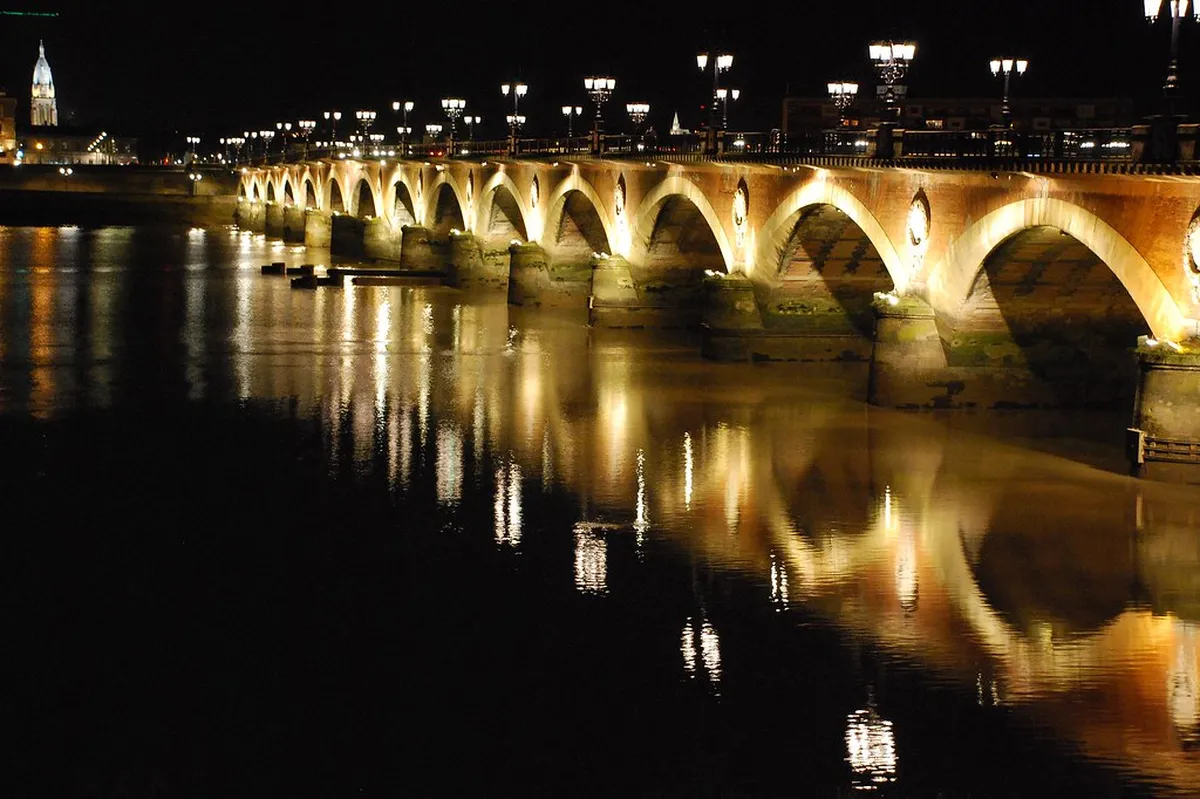
Blue hour follows immediately after the sun sets below the horizon. The sky turns a deep indigo color for a short period. The bridge lamps turn on and cast a warm yellow light. This contrast between blue and yellow creates a very dynamic image.
Early morning is another fantastic time for quiet and peaceful photography. Mist often rises from the Garonne River during the cooler months. You will find very few people on the bridge at sunrise. The soft morning light highlights the texture of the old stone.
Top Composition Angles for Scenic Views
Start your shoot on the Rive Droite or the right bank. This side offers the best wide-angle view of the bridge. You can capture the bridge leading toward the city center. This angle highlights the classic Bordeaux skyline and its many church spires.
Try shooting from a low angle near the water's edge. This makes the arches look much larger and more powerful. Use the river rocks or grass as foreground interest in your frame. This technique adds depth to your scenic landscape photographs.
Walk to the center of the bridge for a different perspective. Point your camera down the long line of tram tracks. The tracks create perfect leading lines that draw the eye into the distance. Wait for a modern tram to pass for a shot of old and new.
Visit the nearby Water Mirror at the Place de la Bourse. You can sometimes see the bridge reflected in the thin layer of water. This creates a perfectly symmetrical composition that looks very professional. It is one of the most popular photo spots in the city.
A Practical Pont de Pierre Photography Guide
Technical settings depend on the time of day you choose to shoot. Use a low ISO of 100 for the cleanest possible images. This prevents digital noise from ruining the details of the brickwork. A small aperture like f/11 will keep the whole bridge in focus.
Long exposures are essential for capturing smooth water in the Garonne. Use a tripod to keep your camera steady during slow shutter speeds. A ten-second exposure will turn the river into a silky mirror. This makes the bridge lights look like long streaks on the water.
Always use a remote shutter release or the camera timer. This prevents camera shake when you press the button manually. Sharpness is vital for professional travel photos of historic landmarks. Check your focus on the nearest arch for the best results.
Bring a wide-angle lens to capture the entire span of the bridge. A 16mm or 24mm lens is perfect for this specific location. A telephoto lens is also useful for capturing the distant city spires. Switch between lenses to get a variety of different shots.
Exploring Nearby Neoclassical Landmarks
The area around the bridge is full of historic beauty. You can walk from the bridge to the Porte Cailhau in five minutes. This medieval gate looks like a fairy tale castle in photos. It provides a sharp contrast to the bridge's design.
The riverfront buildings showcase stunning bordeaux neoclassical architecture from the eighteenth century. These uniform limestone facades glow golden in the late afternoon sun. They provide a sophisticated background for any photo taken from the bridge. The harmony of the architecture is a key feature of the city.
Follow the river path toward the Quinconces for more photo opportunities. You will find large fountains and statues along the way. These landmarks are free to visit and easy to access by foot. The entire riverfront is a UNESCO World Heritage site for a reason.
The cost of a tram ticket is only €1.80 in 2025. This allows you to move between different viewpoints very quickly. Use Line A to reach the bridge from the main city center. This saves your energy for carrying heavy camera gear all day.
Frequently Asked Questions
When is the best time for Pont de Pierre photography?
The best time is during the golden hour or blue hour. These times provide the most dramatic light and color for your shots. Arrive early to find a good spot on the right bank.
Where can I find the best bridge views?
The Rive Droite offers the best panoramic views of the structure. You can see the bridge and the city skyline together from there. The Place de la Bourse also offers great reflection shots.
Do I need a tripod for night shots?
Yes, a tripod is necessary for sharp night photography on the bridge. It allows for long exposures that make the water look smooth. Use a timer to avoid any camera movement during the shot.
Is the bridge open for pedestrians in 2025?
The bridge is fully open to pedestrians and cyclists in 2025. Cars are no longer allowed to cross the bridge. This makes it a very safe place for photographers to work.
The Pont de Pierre is a must-see for every photographer in Bordeaux. Use this guide to plan your visit and capture the best views. Remember to bring your tripod for those stunning night and blue hour images. Start your photo adventure in Bordeaux today and share your best work online.
Key Takeaways
- Shoot from the Rive Droite for the best panoramic views.
- Use a tripod for long exposures to smooth the river water.
- Visit during blue hour to capture the glowing bridge lights.
- Utilize the tram tracks as leading lines in your composition.
- Check the sunset times for 2025 before planning your shoot.
Related reads: architecturebycity.com, climbing pey berland tower.