
Richard-François Bonfin Architect Works in Bordeaux
Explore Richard-François Bonfin architect works in Bordeaux. Learn about Palais Rohan architecture and his neoclassical legacy in 2025. Read our expert guide.
On this page
Richard-François Bonfin shaped the grand streets of Bordeaux during the late eighteenth century. His elegant designs define the city unique neoclassical charm today. Many tourists admire Richard-François Bonfin architect works without knowing the creator name. This guide explores his most famous buildings and lasting influence.
He arrived in Bordeaux during a period of significant urban growth and transformation. The city wanted to reflect its wealth through monumental public and private structures. Bonfin rose to the occasion by blending classical styles with local needs. Visitors can still see these stunning structures across the historic city center.
The legacy of this architect extends beyond individual buildings into general urban planning. He understood how light and space interact with heavy local limestone. His projects helped Bordeaux earn its reputation as a center of French enlightenment. This article details his career and his most iconic architectural achievements.
The Rise of Richard-François Bonfin in Bordeaux
Richard-François Bonfin was born in Paris but found fame in the southwest. He moved to Bordeaux in the 1770s to join the city construction boom. His early training allowed him to master the complex rules of neoclassical design. He quickly gained favor with local elites and government officials.
In 1781, he became the official city architect for Bordeaux. This prestigious role gave him control over many major public projects. He was responsible for maintaining the aesthetic harmony of the growing city. His vision focused on symmetry, balance, and refined ornamentation.
He worked closely with other famous architects like Victor Louis during his career. While Louis designed the Grand Théâtre, Bonfin focused on civic and residential structures. Their combined efforts turned Bordeaux into a showcase of modern eighteenth-century style. Today, historians study his blueprints to understand the era urban evolution.
Bonfin faced the challenge of working during the turbulent French Revolution. He managed to keep his professional status despite the changing political climate. His ability to adapt ensured that his projects continued to progress through the years. He remained a central figure in Bordeaux architectural scene until his death.
Palais Rohan Bordeaux Architecture Masterpiece
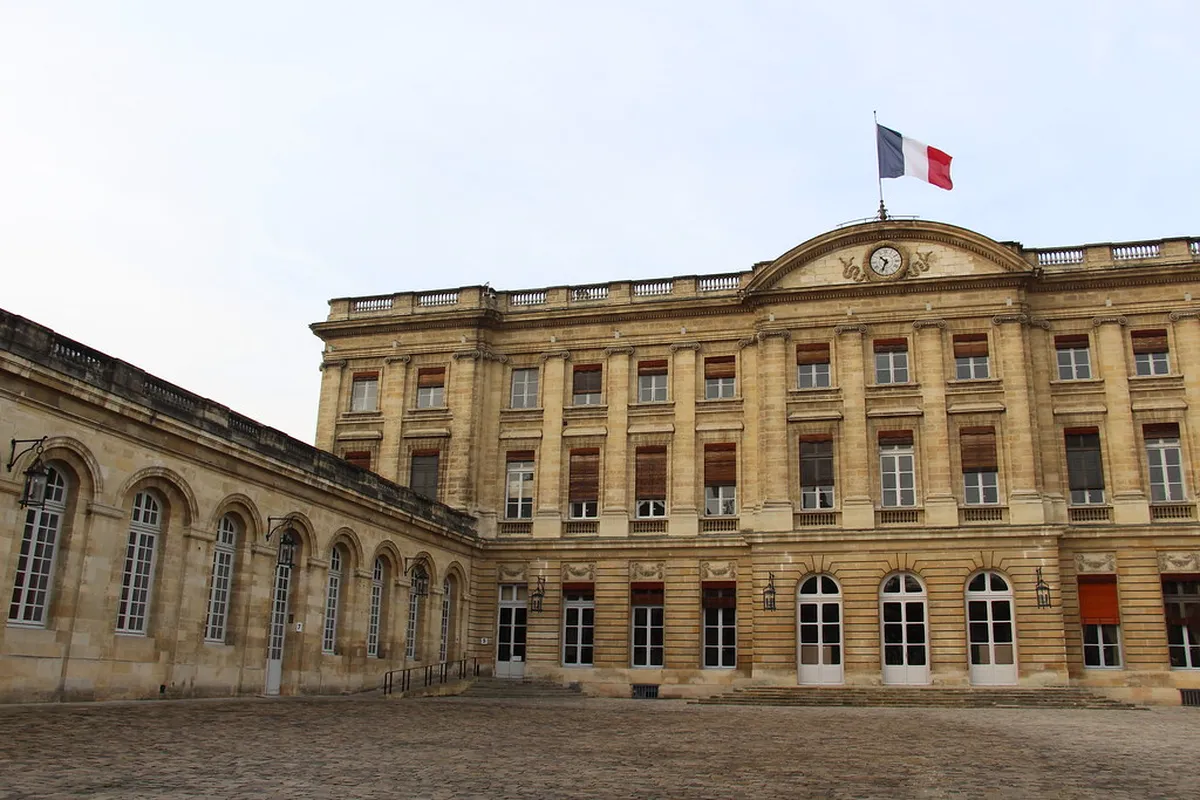
The Palais Rohan Bordeaux architecture is often considered Bonfin finest individual achievement. It was originally built as a palace for Archbishop Ferdinand-Maximilien-Mériadec de Rohan. Construction began in 1771 and took over a decade to complete. It now serves as the Hotel de Ville or City Hall.
The building features a massive courtyard and a strictly symmetrical facade. Bonfin used the Corinthian order to provide a sense of dignity and power. The interior includes a grand staircase that is a marvel of masonry work. Visitors in 2025 can still admire the intricate woodwork and period paintings.
The palace garden side offers a different but equally impressive architectural view. It reflects the transition from baroque luxury to neoclassical restraint and order. The cost of construction was immense for the time period. However, the result was a structure that rivaled the finest palaces in Paris.
Practical Details for Visitors:
- Location: Place Pey-Berland, 33000 Bordeaux
- Hours: Guided tours are usually available on Wednesdays and Fridays
- Cost: Tours typically cost 5 euros per person
- Booking: Reservations are highly recommended for interior access
Characteristics of Richard-François Bonfin Architect Works
The style found in Richard-François Bonfin architect works is deeply rooted in antiquity. He favored clean lines and avoided the excessive decorations of the previous Rococo era. His buildings often feature flat roofs and prominent pediments. This Bordeaux neoclassical architecture created a cohesive look for the city.
Bonfin was a master of using local cream-colored limestone. This stone is soft when quarried but hardens significantly over time. It allows for detailed carving while maintaining structural integrity for centuries. His facades often play with light and shadow through rhythmic window placements.
He emphasized the importance of the courtyard in residential and public design. Many of his works feature a central open space that provides light and air. This layout was practical for the climate in southern France. It also allowed for privacy in the middle of a bustling city center.
The use of ironwork is another signature of his era and personal style. You will see beautifully crafted balconies on many of his residential projects. These details add elegance without distracting from the main architectural forms. His work represents a perfect balance between function and decorative beauty.
Notable Private Residences and Urban Designs
Beyond public buildings, Bonfin designed many private mansions for wealthy wine merchants. These houses are known as 'hôtels particuliers' and dot the historic districts. He tailored each design to the specific needs and social status of the owner. These homes often featured hidden gardens and elaborate stables in the rear.
His influence on the street layout of Bordeaux was also significant. He worked on the alignment of new avenues to improve traffic and aesthetics. This planning made the city more navigable and pleasant for pedestrians. His urban vision helped connect the riverfront to the inner city neighborhoods.
He was involved in the design of the Place de la Comédie surroundings. This area serves as the heart of social life in modern Bordeaux. Bonfin ensured that the surrounding buildings complemented the nearby Grand Théâtre. This created one of the most harmonious urban squares in all of Europe.
Many of these private works have been carefully restored in recent years. They now house luxury shops, hotels, or government administrative offices. Walking through the Chartrons or Saint-Pierre districts reveals many of his subtle influences. The city maintains strict heritage laws to protect these historic architectural treasures.
Visiting Bonfin Structures in 2025
A walking tour is the best way to see Richard-François Bonfin architect works. Start your journey at the Place Pey-Berland to see the Palais Rohan. From there, you can walk toward the river to see his urban planning. Most sites are within easy walking distance in the pedestrian-friendly city center.
Modern travelers will appreciate the excellent preservation of architecture in Bordeaux today. The city has invested heavily in cleaning the stone facades of historic buildings. In 2025, the limestone glows with a vibrant honey hue in the evening. This creates a magical atmosphere for late-night strolls and photography.
Consider hiring a local guide who specializes in eighteenth-century history and design. They can point out subtle details that casual tourists often miss. You will learn about the social history behind the stones and the carvings. Many tours include access to private courtyards not open to the general public.
Travel Tips for 2025:
- Wear comfortable walking shoes for the uneven cobblestone streets.
- Visit the Palais Rohan early in the morning for the best light.
- Check the local tourism office for special architectural heritage days.
- Use the modern tram system to reach outer districts quickly and easily.
Frequently Asked Questions
What is the most famous Richard-François Bonfin architect work?
The Palais Rohan is his most famous and celebrated work. It currently serves as the Bordeaux City Hall and is a neoclassical masterpiece. You can visit the courtyard for free most days. Interior tours are available but require advance booking.
When did Richard-François Bonfin live and work?
He was active during the late eighteenth and early nineteenth centuries. He moved to Bordeaux in 1770 and became city architect in 1781. His career spanned the final decades of the French monarchy. He continued to work through the revolutionary period as well.
Is the Palais Rohan architecture open to the public?
The main courtyard and the gardens are generally open to the public. However, the interior offices and grand rooms require a guided tour. These tours are usually held on specific days like Wednesdays. You should check the official Bordeaux tourism website for current 2025 schedules.
What architectural style did Bonfin use?
He primarily used the neoclassical style throughout his professional career. This style emphasizes symmetry, classical columns, and refined proportions. It was a reaction against the decorative excesses of the earlier Rococo period. His work is characterized by its monumental and timeless appearance.
Where can I see more of his work in Bordeaux?
You can find his influence in many private mansions in the city center. Look for the elegant facades near the Place de la Comédie. His urban planning also shaped many of the major avenues today. Walking through the historic districts will reveal his lasting impact on the city.
Richard-François Bonfin remains one of the most influential figures in French architectural history. His work in Bordeaux transformed a medieval port into a neoclassical gem. Visitors in 2025 can still experience the grandeur of his vision today. Plan your visit to see the Palais Rohan and discover his legacy yourself.
Key Takeaways
- Richard-François Bonfin was the official city architect of Bordeaux starting in 1781.
- The Palais Rohan is his primary masterpiece and serves as the current City Hall.
- His style defined the neoclassical look that Bordeaux is famous for today.
- You can visit many of his works for free while walking the city center.
- The year 2025 is an excellent time to see his newly restored facades.
Related reads: architecturebycity.com, hotel de ville bordeaux tour booking.