
Wallace Fountains of Clermont-Ferrand: 2025 Guide
Discover the iconic Wallace fountains of Clermont-Ferrand in 2025. Learn about their history and find free drinking water on your next walking tour today.
On this page
The Wallace fountains of Clermont-Ferrand offer a unique glimpse into the rich history of public water in France. These beautiful green structures stand as symbols of generosity and classic French design across the city streets. You can find several of these cast-iron gems while exploring the historic center and the local parks. Sir Richard Wallace donated these fountains to provide free drinking water to all citizens during the late nineteenth century.
Today, these fountains remain a vital part of the city landscape and offer refreshment to thirsty travelers. They provide a striking visual contrast to the dark volcanic stone buildings that define this unique French destination. Visiting these monuments is a great way to experience local heritage while staying hydrated during your 2025 summer travels. You will find them tucked away in charming squares and near popular architectural sites throughout the downtown area.
The Legacy of Sir Richard Wallace
Sir Richard Wallace was a wealthy British man who lived in Paris during the late nineteenth century. He wanted to help the people of France after the difficult times of the Franco-Prussian War. Clean drinking water was very hard to find for the poor residents of many French cities back then. Wallace decided to fund the creation of beautiful public fountains to solve this serious health problem safely.
The fountains were designed to be both functional and beautiful so they would improve the urban environment. Wallace worked with a talented sculptor named Charles-Auguste Lebourg to create the iconic four-caryatid design. These figures represent the virtues of Kindness, Charity, Sobriety, and Simplicity which Wallace valued very highly. He donated dozens of these fountains to Paris and eventually many others appeared in cities like Clermont-Ferrand.
Clermont-Ferrand adopted these fountains to enhance its public spaces and provide essential services to its growing population. The presence of these metal structures showed the city's commitment to modern urban planning and social welfare. They helped to prevent the spread of diseases by offering a reliable source of filtered water. Today, they are cherished as historic landmarks that tell a story of international philanthropy and local progress.
The durable nature of cast iron allowed these fountains to survive for over one hundred years in public squares. Each fountain is a testament to the industrial skills of the nineteenth-century foundries that produced them. You can still see the intricate details of the sculpture despite the many years of constant use. These fountains are much more than just water taps; they are pieces of street art for everyone.
Understanding the history of these fountains makes your visit to the Auvergne region much more meaningful and interesting. They remind us of a time when access to clean water was a luxury for many urban people. Now, they serve as a bridge between the past and the modern needs of twenty-first-century tourists. Take a moment to appreciate the legacy of Richard Wallace as you refill your water bottle here.
The Design of Wallace Fountains
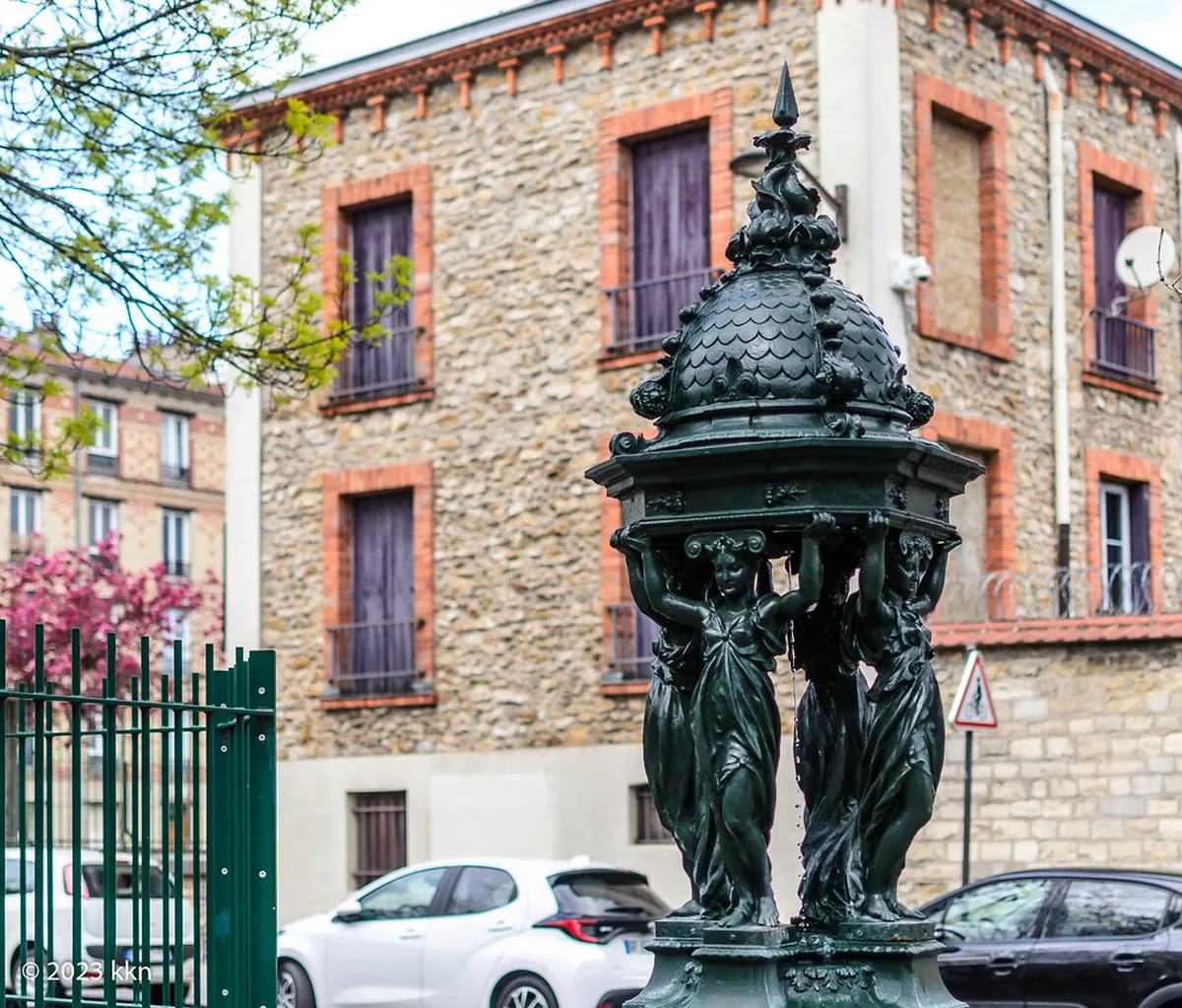
The design of the Wallace fountains is instantly recognizable because of its unique shape and deep green color. Each fountain features four female figures called caryatids that support a heavy dome on their sturdy heads. These figures are not identical and each one has a slightly different pose and unique clothing style. This variety adds a level of artistic depth that is rare for functional public utility structures.
The material used for these fountains is high-quality cast iron which was very modern for the late 1800s. This material is incredibly strong and can withstand harsh weather conditions throughout the different French seasons. It also allows for very fine details to be included in the decorative patterns of the base. The green color was chosen to blend in with the trees and grass of city parks and gardens.
In Clermont-Ferrand, the green iron provides a beautiful visual break from the heavy volcanic stone fountains and public monuments nearby. While most city structures use dark lava rock, these fountains bring a touch of Parisian elegance to the streets. The contrast between the dark stone and the bright metal makes them very easy for visitors to spot. They represent a blend of industrial technique and classical artistic themes from the French Renaissance period.
Water flows from the center of the dome into a small basin located at the waist level. In the past, small metal cups were attached to the fountains by chains for the public to use. These cups were eventually removed for hygiene reasons but the water flow remains active for everyone today. The base of the fountain is also decorated with sea creatures like dolphins and other aquatic symbols.
These fountains were built to be the same height as a person to make them very accessible. The scale of the design ensures that they do not overwhelm the smaller squares where they are placed. They provide a sense of harmony and balance to the urban landscape of Clermont-Ferrand in every season. Photographers often enjoy capturing the way the light hits the metallic surfaces during the golden hour.
Top Locations for Fountains in Clermont
You can find one of the most famous Wallace fountains located right in the heart of the city. It sits near the Place de la Victoire which is a bustling hub for both locals and tourists. This location is perfect for a quick drink while you admire the massive black cathedral nearby. The fountain is easy to find because it stands out against the dark volcanic architecture of the square.
Another great spot to see these fountains is near the beautiful Jardin Lecoq which is the main city park. This park is a favorite place for families to relax and enjoy the green spaces of the town. Seeing a Wallace fountain here feels very natural because the design was made for park-like settings originally. It is a popular meeting point for students and workers during their lunch breaks in the sun.
If you take architectural walking tours of Clermont-Ferrand, you will likely pass several of these historic water points. The city has carefully maintained these fountains to ensure they continue to serve the public effectively today. Some are located in quieter residential neighborhoods that offer a peaceful atmosphere away from the main crowds. Each location provides a different perspective on the urban layout of this historic French mountain city.
Checking a local map of public water points can help you plan your route through the winding city streets. Many of the fountains are located near major landmarks so you will never be far from a drink. This makes exploring the hilly terrain of the city much more comfortable during the warm summer months. Keep an eye out for the distinctive green shape as you walk through the various districts.
The fountains are usually active from spring until late autumn before the winter frost arrives in the mountains. During the winter, the city might turn off the water to protect the iron pipes from freezing. However, the structures remain in place for you to admire their artistic beauty all year long. Seeing these fountains in different settings helps you understand how the city has evolved over the decades.
Modern Importance and Public Water Access
In 2025, the importance of free public drinking water is higher than ever for sustainable urban travel. Using these fountains helps to reduce the number of single-use plastic bottles that end up in landfills. Travelers can carry a reusable bottle and refill it for free while they explore the city landmarks. This practice saves money and protects the beautiful environment of the Auvergne region for future generations.
The water provided by the Wallace fountains of Clermont-Ferrand is perfectly safe and tested for high quality. Local authorities maintain the plumbing systems regularly to ensure that the water remains fresh and clean for everyone. This service is a great example of how historic monuments can still provide practical value today. It reflects a modern commitment to public health that started with Sir Richard Wallace long ago.
When you are visiting historic buildings in Clermont-Ferrand, these fountains serve as convenient rest stops for your group. They encourage people to spend more time outdoors and enjoy the public squares of the city together. The sight of people gathering around a fountain creates a friendly and welcoming atmosphere for all visitors. It is a simple but effective way to bring the community together in a shared space.
The city often includes these fountains in its green initiatives to promote a more walkable and healthy urban environment. Accessible water points are essential for making a city comfortable for pedestrians and bike riders alike. By preserving these fountains, the city honors its history while addressing the modern challenges of climate change. They are small but powerful tools for creating a more liveable and sustainable city for everyone.
You can often find local residents filling up their own bottles at these fountains during the day. This shows that the fountains are still a functional part of daily life and not just museum pieces. Witnessing this local use gives you a more authentic feeling of the city and its vibrant culture. Be sure to join in and experience this long-standing French tradition of public water access yourself.
Photography Tips for the Wallace Fountains
Capturing the beauty of these green fountains requires a little bit of planning and some creative photography techniques. The best time to photograph them is during the early morning when the city is quiet and still. This allows you to get a clear shot without too many people blocking the view of the fountain. The soft morning light also highlights the fine details of the cast-iron sculptures very beautifully.
Try to frame your shot so that the dark volcanic stone of the city appears in the background. This contrast between the green metal and the black stone creates a very dramatic and interesting visual effect. You can also experiment with close-up shots of the caryatids to show their unique expressions and clothing. These details are often missed by casual observers but look great in a high-quality travel photo.
During the spring, the flowers in the nearby parks can add a splash of color to your fountain pictures. The blooming trees in Jardin Lecoq provide a wonderful natural frame for the classic Wallace fountain design. In the autumn, the orange and yellow leaves on the ground complement the green color of the iron. Every season offers a new way to look at these timeless monuments through your camera lens.
Using a wide-angle lens can help you capture the fountain within its larger architectural context in the square. This shows how the fountain fits into the daily life and movement of the people in Clermont-Ferrand. Alternatively, a portrait lens can blur the background and make the fountain the sole focus of your image. Do not forget to take a picture of the water flowing to add movement.
Night photography can also yield some stunning results if the fountain is located near city street lamps. The artificial light creates long shadows and makes the green paint look deep and mysterious against the night. Just be sure to use a tripod to keep your photos sharp in the low light conditions. These fountains are truly one of the most photogenic features of the entire city landscape.
Exploring More Public Monuments Nearby
Clermont-Ferrand is filled with many other public monuments that you should explore after seeing the Wallace fountains. The city is famous for its large collection of statues made from local dark lava stone. You can find grand fountains that tell the story of the city's ancient Roman and medieval past. These structures provide a much more massive and imposing presence than the delicate Wallace fountains.
The Fontaine d'Amboise is another must-see water monument located very close to the historic city center. It features intricate Renaissance carvings and is also built from the dark volcanic rock found in Auvergne. Comparing this stone fountain to the metal Wallace fountains shows the architectural diversity of the city over time. Both types of fountains play an important role in the identity of Clermont-Ferrand today.
You should also visit the large monuments dedicated to local heroes like Vercingetorix in the main square. These statues are often the focal points of the city and host many public events and festivals. Walking between these different monuments allows you to see how public art has changed over the centuries. It is a great way to learn about the history of the region while enjoying a walk.
Many of these public monuments are located within easy walking distance of each other in the downtown area. This makes it simple to create your own self-guided tour of the city's most famous landmarks. You can start at a Wallace fountain and end at the massive cathedral for a full day of sightseeing. Don't forget to take breaks at the local cafes along your chosen walking route.
The blend of volcanic stone and cast iron creates a unique urban aesthetic that you won't find elsewhere. Clermont-Ferrand takes great pride in maintaining all of its public monuments for the enjoyment of its citizens. By exploring these sites, you support the preservation of French heritage and local artistic traditions. Make sure to add these diverse monuments to your travel itinerary for a complete city experience.
Frequently Asked Questions
Are the Wallace fountains in Clermont-Ferrand safe to drink from?
Yes, the water from these fountains is perfectly safe for drinking. The city of Clermont-Ferrand maintains the water quality to high standards for the public. You can refill your water bottle here without any worries during your trip. The water is the same fresh municipal supply that serves the local homes.
Who designed the Wallace fountains?
The fountains were designed by the French sculptor Charles-Auguste Lebourg. He was commissioned by Sir Richard Wallace to create a design that was both beautiful and useful. Lebourg created the four distinct caryatids that represent the human virtues of kindness and charity. His design has become a classic symbol of French urban furniture worldwide.
Why are the Wallace fountains painted green?
The dark green color was chosen to help the fountains blend in with urban parks and trees. This color was a standard for many types of street furniture in nineteenth-century France. It looks elegant and stays clean-looking even after years of exposure to the city air. Today, this specific shade of green is a hallmark of the original Wallace design.
How many Wallace fountains are in Clermont-Ferrand?
There are several Wallace fountains scattered throughout the city of Clermont-Ferrand. The most popular ones are located in the historic center and inside the Jardin Lecoq park. While not as numerous as in Paris, they are well-placed for visitors to find easily. You can often find them near major pedestrian routes and tourist landmarks.
Is the water in the fountains available year-round?
The fountains usually provide water from early spring until the first major freeze of late autumn. In the winter, the city often turns off the water to prevent the pipes from bursting. However, the cast-iron structures remain in their places for everyone to see and photograph. The water service typically returns in March or April as the weather warms up.
The Wallace fountains of Clermont-Ferrand are a wonderful blend of history, art, and public service. They offer a refreshing stop for any traveler exploring the unique volcanic architecture of this French city. By choosing to use these fountains, you support sustainable travel habits and honor a long tradition of philanthropy. Make sure to look for these green icons during your next visit to the Auvergne region in 2025. They are a true treasure of the French streets that everyone should experience at least once.
Key Takeaways
- The fountains provide free and safe drinking water for all visitors.
- They were donated by Sir Richard Wallace to improve public health in the 1800s.
- The iconic design features four caryatids representing different human virtues.
- The green cast iron contrasts beautifully with the local dark volcanic stone.
- You can find them in central locations like Place de la Victoire and Jardin Lecoq.
Related reads: architecturebycity.com, architecture in clermont ferrand, fontaine damboise renaissance history.