
Fernand Pouillon Architecture in Marseille Guide
Explore Fernand Pouillon architecture in Marseille. Discover his stone masterpieces and post-war urban designs. Plan your 2025 architectural walking tour today!
On this page
Marseille is a legendary Mediterranean city defined by its vibrant light and ancient stone. Much of its modern soul comes from the Fernand Pouillon architecture in Marseille. This visionary architect rebuilt the heart of the city after the second world war. He rejected cold concrete in favor of warm, natural limestone and classical order. His buildings stand as monuments to human comfort and timeless urban beauty today. You can still feel his influence while walking through the busy streets near the harbor. This guide explores his most famous works and his lasting impact on the city.
Understanding Pouillon requires looking at the history of architecture in Marseille over the decades. He was a rebel who challenged the dominant modernist trends of his own era. While others used steel, Pouillon insisted on using massive blocks of carved stone. This choice created a unique aesthetic that feels both ancient and remarkably fresh. Travelers visiting in 2025 will find his projects integrated perfectly into daily local life. His buildings are not just museums but active homes and offices for thousands. Let us dive into the legacy of this controversial and brilliant French master.
The Post-War Reconstruction of the Old Port
The reconstruction of the harbor is perhaps the most famous example of his work. German forces destroyed the historic district north of the water during the year 1943. Fernand Pouillon led the team tasked with rebuilding this vital cultural and commercial center. He designed a series of stone buildings that frame the water with grand proportions. His work defined the post-war reconstruction of Marseille Vieux Port for future generations. These structures provide a harmonious backdrop for the many boats and local markets.
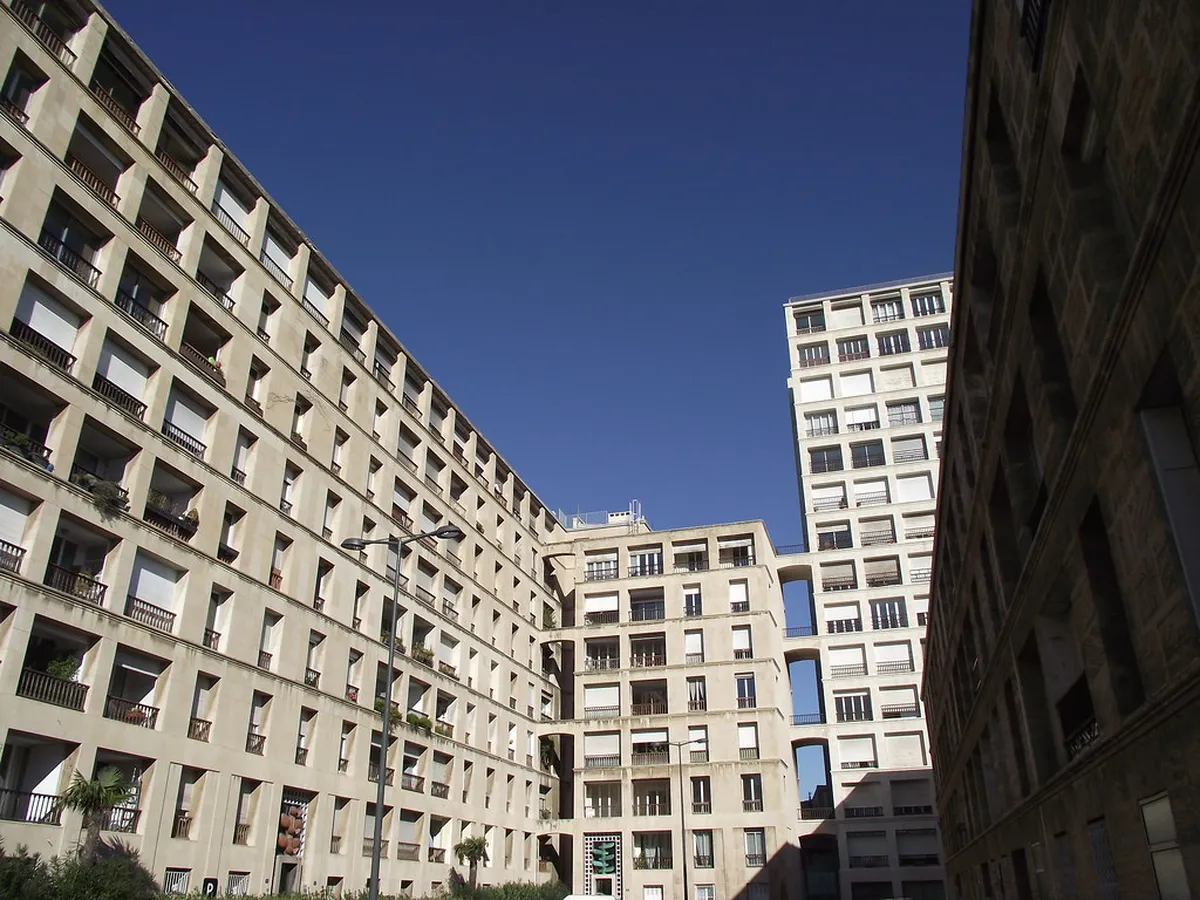
Pouillon used massive blocks of stone to create a sense of permanence and weight. He believed that residents deserved to live in buildings that felt solid and noble. The facades feature repetitive windows and elegant loggias that catch the bright southern sun. These design elements help regulate the temperature inside the apartments during hot summer months. You can see these buildings clearly from any point along the northern quay. They remain some of the most sought-after residences in the entire city of Marseille.
The ground floors of these buildings host busy cafes, seafood restaurants, and local shops. This creates a lively street atmosphere that connects the private housing to public spaces. Pouillon designed these spaces to encourage social interaction among neighbors and curious tourists alike. Walking under the stone arches provides a cool escape from the intense midday heat. The harmony of the stone creates a unified look that defines the harbor today. Most visitors agree that this area feels much older than it actually is.
- Location: Quai du Port, 13002 Marseille
- Completion Date: Majority of work finished by 1953
- Main Material: Massive Fontvieille limestone blocks
- Accessibility: Entirely visible from the public harbor pedestrian zones
La Tourette and the Art of Urban Living
The La Tourette housing complex sits proudly on a hill overlooking the Mediterranean sea. It is a masterpiece of residential design that prioritizes light, air, and stunning views. Fernand Pouillon used tiered levels to ensure every apartment had a glimpse of the water. The complex includes a mix of high-rise blocks and lower, more intimate stone buildings. This variation creates a dynamic skyline that mimics the natural terrain of the coast. It represents a high point for Fernand Pouillon architecture in Marseille during the fifties.
The use of stone at La Tourette connects the modern housing to the nearby historic fort. Pouillon wanted his new designs to respect the existing heritage of the old city. He avoided the harsh industrial look that many other architects favored at the time. The stone surfaces have a soft texture that glows golden during the sunset hours. Residents enjoy spacious balconies that act as outdoor living rooms for their families. These features make La Tourette a model for successful urban housing projects globally.
Visiting this site allows you to see how Pouillon handled complex sloping landscapes. He designed stairs and pathways that weave through the buildings like a small village. This layout encourages people to walk and interact within their immediate residential environment. The complex feels remarkably quiet despite its central location near the busy port area. You can reach this site easily while exploring the nearby historic district. It offers some of the best photographic opportunities for students of 20th-century design.
Pouillon versus the Modernist Giants
Pouillon often found himself at odds with other famous architects working in southern France. His traditional methods stood in stark contrast to the experimental work of Le Corbusier. You can see this tension by comparing his harbor buildings to the Le Corbusier Unite d Habitation Marseille nearby. While Le Corbusier used raw concrete, Pouillon insisted on the beauty of natural stone. One architect looked toward a machine future while the other looked toward classical history. Both men left an incredible mark on the visual identity of the city.
The debate between stone and concrete was both an aesthetic and economic one. Pouillon developed a method for pre-cutting stone that made it cheaper than using concrete. He proved that high-quality traditional materials could be used for large-scale social housing projects. This innovation allowed him to build beautiful homes for working-class families on a budget. His buildings have aged much better than many concrete structures from the same era. The stone requires very little maintenance and develops a beautiful patina over time.
Followers of his work appreciate the human scale and rhythm of his various facade designs. Pouillon believed that architecture should serve the people who actually live inside the walls. He focused on small details like the thickness of walls and window heights. His rivals often criticized him for being too decorative or old-fashioned in his approach. However, the residents of his buildings often report high levels of daily satisfaction. This practical success has led to a renewed interest in his unique philosophy.
The Geometric Beauty of Le Brasilia
One of his later and most striking residential projects is the building known as Le Brasilia building Marseille. This structure showcases his ability to combine massive scale with intricate geometric patterns. It stands as a tall sentinel near the famous Stade Velodrome in the city. The building features a complex facade that creates deep shadows and bright highlights. This design helps keep the interior cool while providing a dramatic visual appearance. It is a highlights of any architectural tour of the southern districts.
Le Brasilia is notable for its innovative use of prefabricated stone and ceramic elements. Pouillon experimented with different textures to break up the vast surface of the tower. The result is a building that feels light and airy despite its enormous size. It contains hundreds of apartments that are still highly prized by the local population. The layout of the building promotes natural ventilation throughout all the living spaces. This reflects Pouillon's commitment to sustainable design long before it became a popular trend.
Tourists can view the exterior of Le Brasilia from the public sidewalks on Boulevard Michelet. The building is a private residence, so internal access is usually restricted to guests. However, the sheer scale of the facade is enough to impress any casual observer. It represents the final evolution of Fernand Pouillon architecture in Marseille and his style. The building remains a landmark that helps residents navigate this part of the city. It is a must-see for anyone interested in high-density 20th-century urban housing.
Planning Your 2025 Architectural Tour
Seeing the works of Pouillon requires a full day of walking through different neighborhoods. You should start your morning at the Vieux-Port to see the reconstruction projects. This area is very easy to access by the local metro or tram lines. Afterward, take a short walk up the hill to visit the La Tourette complex. Many Marseille architecture walking tours now include these specific sites on their itineraries. Guides provide historical context that helps you appreciate the subtle design details.
If you prefer to explore alone, the city is very walkable in the spring. Most of Pouillon's major works are located within the second and eighth districts. You can use local buses to travel between the harbor and the southern neighborhoods. Make sure to wear comfortable shoes as the terrain can be quite hilly. The cost of visiting these external sites is completely free for all travelers. You can spend the money you save on a nice lunch by the water. Marseille offers many excellent dining options near every major architectural landmark.
We recommend visiting during the late afternoon to see the stone buildings glow. The golden hour light makes the Fontvieille limestone look particularly warm and inviting. You will find that many locals are proud of their Pouillon-designed homes and apartments. They might even share stories about the history of the buildings if you ask. Architecture in Marseille is a living thing that changes with the moving sun. Planning your route in advance will ensure you do not miss any hidden gems. Enjoy the unique blend of history and modernity that this city offers.
Frequently Asked Questions
Where are the best examples of Fernand Pouillon architecture in Marseille located?
The best examples are located along the northern quay of the Vieux-Port harbor. You can also find significant works at the La Tourette complex near Fort Saint-Jean. Another major site is the Le Brasilia building located in the southern eighth district. These locations are easily accessible via the public transport network in Marseille.
Is it possible to tour the inside of Pouillon's buildings?
Most of his famous buildings are private residential apartments with secure entry. You generally cannot tour the interiors unless you know a resident personally. However, the ground-floor commercial spaces are open to the public for shopping and dining. The exterior facades provide plenty of architectural detail for most visitors to enjoy.
Why did Fernand Pouillon use stone instead of concrete?
Pouillon believed that stone was a more human and durable material than concrete. He developed innovative industrial techniques to cut stone into standardized blocks for construction. This made using natural stone cost-competitive with more modern industrial materials. His buildings have aged gracefully and require very little maintenance over the long term.
What is the best time of day to photograph these buildings?
The late afternoon provides the best light for photographing the limestone buildings. The low sun creates deep shadows that emphasize the rhythmic patterns of the facades. Sunset makes the stone glow with a warm golden hue that is very beautiful. Early morning light is also excellent for capturing the buildings near the Old Port.
Fernand Pouillon changed the face of Marseille by honoring its ancient traditions with stone. His buildings offer a beautiful alternative to the often-cold aesthetic of mid-century modernism. Visitors in 2025 will appreciate how his designs have stood the test of time. From the harbor to the hills, his work remains a vital part of the city. Take a walk through his neighborhoods to experience this unique architectural vision firsthand. For more information on local sites, check out our guide to Marseille architecture walking tours today.
Key Takeaways
- Fernand Pouillon rebuilt the Vieux-Port using traditional limestone instead of modern concrete.
- His 'Living in Stone' philosophy focused on human comfort and timeless urban rhythm.
- Major sites include the Old Port reconstruction, La Tourette, and the Le Brasilia tower.
- Pouillon's buildings are active residential spaces that are best viewed from public sidewalks.
- Late afternoon light is ideal for appreciating the warm textures of his stone facades.
Related reads: architecturebycity.com.