
Explore Palais Longchamp Architectural Details
Discover the intricate Palais Longchamp architectural details in Marseille. Plan your 2025 visit to this 19th-century masterpiece today!
On this page
Marseille is home to many beautiful landmarks that tell the long history of this French port city. One of the most famous sites you must visit in 2025 is the grand Palais Longchamp. You will discover many incredible Palais Longchamp architectural details when you walk through the massive stone gates. This structure was designed to honor the arrival of fresh water from the Durance River nearby.
The palace stands as a symbol of prosperity and engineering success for the people of southern France. It combines stunning sculpture with functional water management to create a truly unique public space for all. Many travelers come here to enjoy the gardens and the two museums located within the grand wings. This guide will help you understand the history and the art behind this incredible Marseille landmark site.
The Historical Context of the Water Palace
The Palais Longchamp stands as a grand monument in the historic center of Marseille city. This architectural masterpiece was built specifically to celebrate the arrival of fresh canal water. Marseille needed a reliable water source to help the city grow during the late 1800s. The structure represents a very key example of 19th century Haussmann architecture Marseille has preserved.
Construction on this massive project began in 1862 under the direction of architect Henry Espérandieu. He wanted to create a site that showed both the beauty and power of the city. The palace was finished in 1869 and became an instant icon for the local people here. It combined a functional water tower with two grand museums and a large public garden space.
The architect used local white limestone that turns a golden color in the bright southern sun. This stone selection makes the palace look warm and inviting during the long summer days in Provence. Every part of the building was carefully planned to reflect the importance of the new water system. It remains one of the most significant engineering feats of the mid-nineteenth century in all of France.
Today the palace continues to welcome thousands of visitors who want to see its grand design. It serves as a reminder of how Marseille transformed into a modern city during the industrial era. You can feel the history of the canal project in every stone of this magnificent water palace. The Palais Longchamp is a true highlight for anyone interested in the history of French urban design.
The Grand Central Fountain Masterpiece
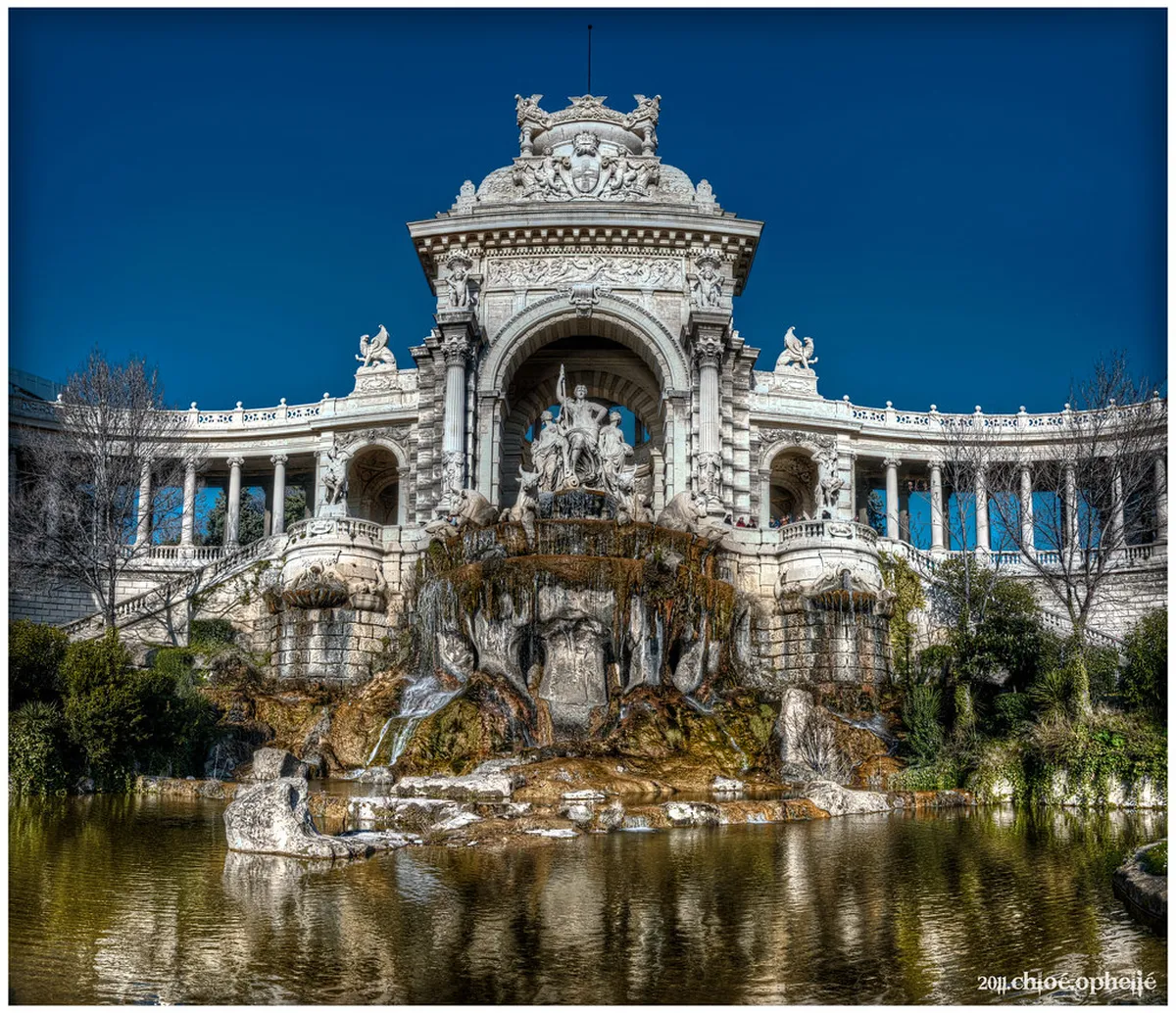
The central water tower is the most impressive part of the entire palace complex. It features a massive fountain designed by the famous French sculptor named Pierre Cavelier. Four large bulls lead the water down several tiers into a very large stone basin below. These powerful figures represent the strength and agriculture of the surrounding areas of the Provence land.
At the very top of the fountain three female statues stand proudly above the water. The central figure represents the Durance River which provides life to the dry city of Marseille. Two other women stand beside her to represent the local products of wheat and grapes. You can find many Palais Longchamp architectural details by looking at the statues near the base.
The fountain features several important figures that represent the prosperity of the entire French region:
- The central female figure represents the Durance River which provides water to the dry city.
- Two other women stand for the local products of wheat and grapes from the nearby hills.
- Four large bulls represent the strength and agriculture of the surrounding areas of Provence land.
Water cascades over the stone basins to create a very cooling effect in the Marseille heat. This movement adds a sense of life and energy to the static stone of the palace. The fountain is especially beautiful during the late afternoon when the sun hits the spraying water. It is a perfect spot to take photos of the intricate carvings and the grand scale.
Architectural Rhythm of the Hemicycle
Two grand wings stretch out from the central fountain to form a stunning semi-circular shape. This design is known as a hemicycle and it creates a sense of harmony for the palace. The colonnades consist of elegant stone pillars that support a series of beautiful arches above them. They frame the central fountain and lead the eye toward the two main museum buildings.
Walking under these colonnades offers a unique perspective of the city and the palace grounds. You will notice more Palais Longchamp architectural details if you look at the ceiling of the walkway. The shadows cast by the pillars change throughout the day to create a dynamic visual experience. This site is a great place to start your tour of the architecture in Marseille city.
The rhythm of the pillars creates a feeling of classical order and balance for the entire site. Each pillar is decorated with simple but elegant carvings that show the skill of the local masons. These walkways connect the Museum of Fine Arts with the Natural History Museum on the other side. This connection makes the entire complex feel like one single and very impressive work of art.
The hemicycle design was popular during the 19th century for grand public monuments and government buildings. It allows for a wide view of the surroundings while creating a protected space inside the curve. You can see how the architect used this shape to maximize the impact of the water tower. It remains a masterclass in how to combine different building functions into one beautiful and unified design.
Detailed Palais Longchamp Architectural Details
Every corner of the Palais Longchamp features intricate carvings and decorative elements for visitors to admire. If you look closely at the window frames you will find carved lions and floral patterns. These sculptures reflect the 19th-century interest in the natural world and the beauty of the wild. The Palais Longchamp architectural details are truly remarkable when you see them up close in person.
The grand staircases that lead to the museums also feature impressive stone work and decorative railings. Master craftsmen used traditional techniques to create these sharp and lasting lines in the local limestone. You can find many hidden symbols that represent the history of Marseille and its connection to the sea. These details make the palace feel like a living museum of French decorative arts from the 1860s.
The roofline of the palace is decorated with stone vases and classical statues that look over the park. These elements add height and a sense of grandeur to the already massive structure of the palace. You can see these Palais Longchamp architectural details clearly from the main garden path in the park. Each museum wing has its own unique decorations that reflect the collections housed inside the buildings.
The Museum of Fine Arts facade features names of famous artists carved into the stone for all to see. On the other side the Natural History Museum displays carvings of animals and plants from around the world. These ornamental details help to tell the story of the knowledge and culture stored within the palace walls. It is worth taking your time to walk around the entire building to see everything clearly.
Legacy of the Historic Zoological Garden
The Palais Longchamp sits within a large public park that has a very interesting and long history. Behind the main palace building you will find the site of the old Marseille zoological garden. The zoo opened in 1854 and was home to many exotic animals from across the French empire. Today the animals are gone but the historic structures and cages still remain in the park.
Some of the old animal pavilions feature unique designs that match the style of the main palace building. You can find the giraffe house and the elephant pavilion while walking through the green garden paths. These cages provide a unique look at the industrial heritage architecture Marseille once used for animals. They have been preserved as historical monuments and are now used for art and education.
The old cages have been painted in bright colors and filled with funny statues of plastic animals today. This modern touch makes the park a fun place for families to visit in the year 2025. You can still see the original stone work and iron bars from the mid-nineteenth century zoo era. It is a strange but beautiful blend of historic architecture and modern public art installations.
The park also contains several old kiosks and small buildings that once served the visitors of the zoo. These structures show how the park was designed for leisure and the study of the natural world. Many people enjoy resting in the shade of these historic buildings during the hot summer months. The legacy of the zoo adds another layer of interest to the Palais Longchamp architectural details.
Hidden Grotto and Romantic Park Design
Directly behind the central fountain is a hidden grotto that features a very romantic and natural design. This artificial cave was built using large rocks to create a wild and rugged look for visitors. It contrasts with the formal and geometric lines of the main palace and the grand colonnade wings. The grotto adds a sense of mystery and discovery to the overall experience of visiting the palace.
Inside the grotto you will find more Palais Longchamp architectural details that look like natural stalactites and caves. Water drips from the ceiling to create a cool and damp environment that feels like a real cavern. This naturalist style was very popular during the romantic era of garden design in the 19th century. It was intended to show the harmony between human engineering and the beauty of the natural world.
The surrounding gardens are filled with winding paths that lead through old trees and colorful flower beds. You can find many quiet spots to sit and enjoy the view of the palace from a distance. In 2025 the park remains a favorite place for local residents to exercise and relax every day. The landscaping was designed to complement the grand architecture of the water tower and the two museums.
Visitors can also enjoy a small observatory and a botanical garden located within the larger park grounds. These sites reflect the scientific purpose of the palace complex and its focus on learning and nature. You should plan to spend at least half a day exploring both the palace and the gardens. The Palais Longchamp is a perfect example of how architecture can improve the life of a city.
Frequently Asked Questions
How much does it cost to visit Palais Longchamp?
Entry to the park and the central fountain area is completely free for everyone to enjoy. You only need to buy a ticket if you want to visit the two indoor museums. Adult tickets usually cost about six euros for each museum during the 2025 tourist season here. Local students and large groups can often get a small discount on these specific entry prices.
When is the best time to see the fountain?
The best time to see the fountain is during the late afternoon in the spring or summer. The golden sun makes the Palais Longchamp architectural details glow against the blue sky of Marseille. The fountain usually runs from early morning until the park closes in the evening every single day. Most visitors find that two hours is enough time to explore the fountain and the gardens.
Is the Palais Longchamp accessible for everyone?
The main garden paths and the lower fountain area are accessible for people using wheelchairs or strollers. However there are many stone stairs that lead to the upper terraces and the museum entrance areas. You should check the official website for updates on elevator access during your 2025 visit to the city. The park remains a very popular spot for families with young children and elderly visitors.
Can I see all the Palais Longchamp architectural details?
You can see most of the exterior Palais Longchamp architectural details for free by walking around the building. To see the interior decorations you will need to enter the Museum of Fine Arts or the Natural History Museum. Both museums feature beautiful grand halls with high ceilings and many more historic carvings to admire. Don't forget to look at the roofline from the gardens to see the statues and stone vases.
Palais Longchamp is a truly unique place that every traveler should visit while in Marseille city. The amazing Palais Longchamp architectural details will leave you feeling inspired by 19th-century French art. Plan your visit for 2025 to experience the history and the beauty of this water palace. It remains a highlight of any trip to the south of France for fans of architecture.
Key Takeaways
- Visit the central fountain in the late afternoon for the best photography lighting.
- Look for the Palais Longchamp architectural details on the museum window frames and cornices.
- Enjoy the free public park and the historic animal pavilions from the old zoo.
Related reads: architecturebycity.com, opera de marseille art deco style, rue de la republique building facades.