
Sou Fujimoto Architecture Montpellier: L'Arbre Blanc Guide
Explore Sou Fujimoto architecture in Montpellier. Learn about the iconic L'Arbre Blanc building design, costs, and 2025 visiting tips in this expert guide.
On this page
The stunning L'Arbre Blanc building serves as a prime example of modern Japanese design in southern France today. Sou Fujimoto architecture Montpellier focuses on the delicate relationship between human-made structures and the surrounding natural world. Visitors can witness how light dances across the white steel balconies during the golden hour in Montpellier. This residential tower stands as a bold testament to the city's commitment to world-class contemporary design.
Fujimoto collaborated with several local French architectural firms to bring this complex organic vision to life in 2019. The project represents a fusion of cultures that prioritizes the outdoor Mediterranean lifestyle for all its local residents. You can easily spot this towering white structure from many different vantage points across the Lez River banks. It has become an essential stop for any traveler interested in the evolving landscape of L'Arbre Blanc building architecture.
The Vision Behind L'Arbre Blanc
Sou Fujimoto architecture Montpellier began with the idea of a tree growing in the middle of a vibrant city. The architect wanted to create a vertical structure that felt as organic and light as a living plant. Every design choice supports the concept of reaching out toward the sunlight and the fresh river air. This approach creates a unique silhouette that contrasts sharply with the traditional stone buildings of the historic center.
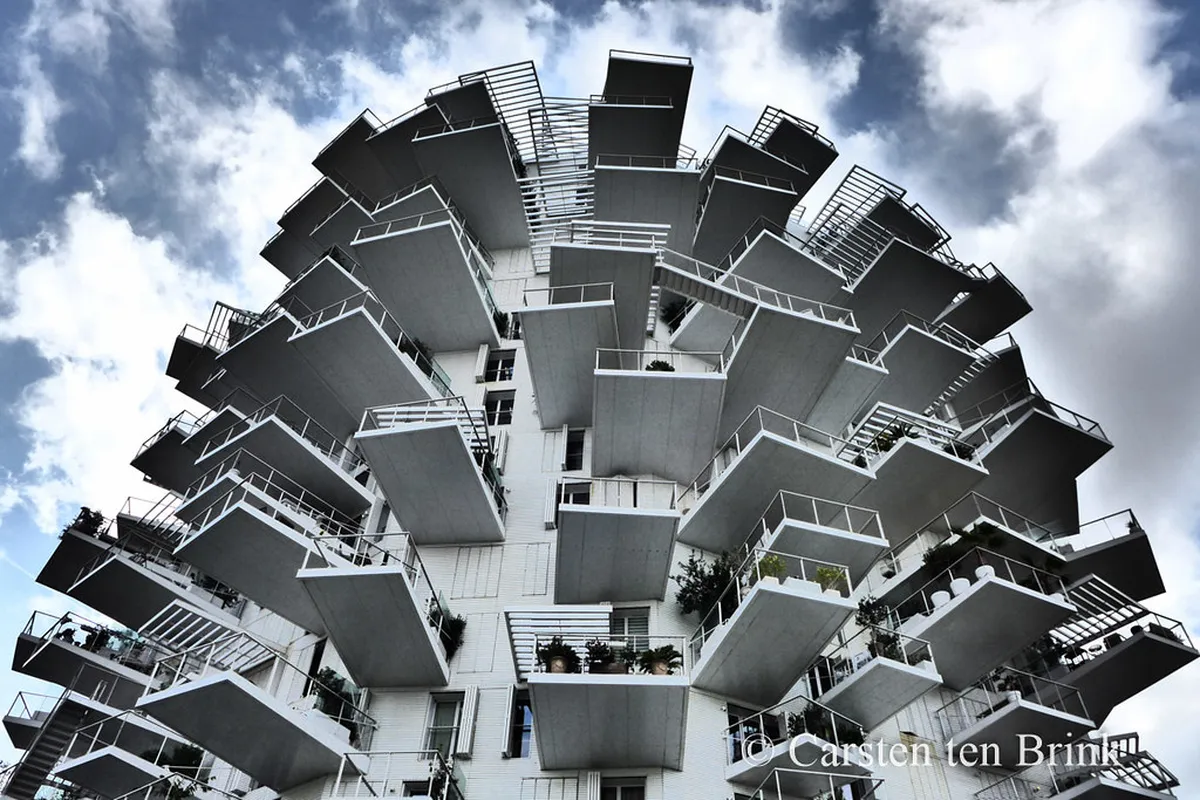
The tower reaches a height of 56 meters and houses 113 luxury apartments across its seventeen curved floors. Fujimoto used the concept of a pinecone or a tree to determine the placement of every single balcony. These outdoor spaces act as functional leaves that provide shade and privacy for the people living inside. The white color reflects the intense southern sun to keep the interior spaces cool during the hot summers.
Engineers worked closely with the architects to ensure the complex cantilevered system could support the massive steel balconies. This collaboration allowed for the creation of exceptionally long outdoor platforms without the need for visible vertical columns. Residents enjoy a seamless transition between their indoor living rooms and the expansive views of the French horizon. It represents a masterclass in how to integrate high-density housing with the beauty of the natural environment.
The base of the building is open to the public and features a trendy restaurant and art gallery. This design choice ensures that the building serves the entire community rather than just the private apartment owners. People gather here to admire the intricate steelwork that holds the entire structure together against the wind. It has successfully created a new social hub in the rapidly developing Port Marianne district of the city.
Walking around the base allows you to appreciate the sheer scale and complexity of the white steel branches. The shadows cast by the balconies create a dynamic pattern on the ground that changes throughout the day. Fujimoto has managed to make a massive concrete and steel tower feel weightless and almost ethereal in nature. This building remains one of the most photographed modern landmarks in all of France during the year 2025.
Technical Innovation in the Balcony Design
The defining feature of Sou Fujimoto architecture Montpellier is the collection of massive balconies that extend from the facade. Some of these steel platforms reach out nearly eight meters from the main body of the residential tower. They are arranged in a staggered pattern to ensure that every resident has a clear view of sky. This technical feat required advanced structural modeling to balance the weight across the central concrete core of the building.
The balconies are constructed from lightweight steel and finished with a durable white coating to resist coastal corrosion. Each platform is deep enough to hold outdoor furniture, potted plants, and even small dining tables for guests. This design encourages residents to spend more time outside while enjoying the famous sunny weather of the region. It effectively doubles the usable living space for many of the smaller apartments located within the tower.
Thermal performance was a major consideration during the planning phase of this ambitious French architectural project in 2019. The balconies provide natural shading for the glass windows located directly beneath them during the hottest parts of day. This reduces the need for expensive air conditioning and lowers the overall carbon footprint of the entire building. Sustainable design is a core tenet of everything Sou Fujimoto creates for modern urban environments around the world.
Safety and wind resistance were also critical factors in the engineering of these long and slender cantilevered steel platforms. The structures are designed to withstand the strong Mistral winds that occasionally blow through the Rhone Valley region. Specialized dampers are hidden within the steel frames to reduce any vibrations caused by the heavy coastal winds. Residents can feel completely secure even while standing on the very edge of these impressive outdoor architectural features.
- Cantilever Length: Up to 7.5 meters of extension from the facade.
- Total Balconies: Over 190 unique steel platforms attached to the tower.
- Material: High-strength structural steel with a protective white powder coating.
Visiting L'Arbre Blanc in 2025
Travelers can experience the majesty of Sou Fujimoto architecture Montpellier by visiting the dedicated public areas of the tower. The ground floor features a welcoming bar and restaurant that serves local Mediterranean cuisine to hungry visitors. You can enjoy a meal while looking up at the complex web of white steel branches above your head. The atmosphere is vibrant and modern, attracting a mix of local residents and curious international tourists every day.
The best way to see the city is by heading to the L'Arbre Blanc rooftop bar for sunset views. This exclusive space offers a 360-degree panorama of the city, the sea, and the distant mountain ranges. It is highly recommended to book a table in advance during the busy summer months of June and July. Prices for cocktails range from twelve to twenty euros depending on the complexity of your chosen drink order.
Photographers should visit the river banks located directly across from the building to capture the most iconic landscape shots. The morning light provides a soft glow that highlights the white surfaces without creating harsh and distracting dark shadows. You will often see groups of architecture students sketching the building from the nearby bridge during the academic year. It is a fantastic place to spend an hour observing the intersection of nature and modern human design.
Public transportation makes reaching the site very easy for those staying in the historic center of the city. Take tram line 1 or 3 and get off at the Place de l'Europe stop for a short walk. The walk along the river is pleasant and passes several other examples of modern architecture in the district. Visiting the building is completely free if you just want to admire the exterior from the public sidewalk.
Inside the ground floor lobby, you might find temporary exhibitions detailing the construction process of this famous white tower. These displays often include early sketches and scale models created by the Japanese design team and their local partners. It provides a fascinating look at how a simple drawing of a tree became a massive structural reality. Make sure to check the current opening hours of the gallery before you plan your visit in 2025.
Nature-Inspired Design Philosophy
Sou Fujimoto architecture Montpellier is rooted in the belief that buildings should mimic the complexity found in natural forests. He uses the term "primitive future" to describe his style of blending ancient organic forms with modern construction. This approach seeks to break down the walls between our indoor lives and the wild world outside our windows. The L'Arbre Blanc building is the most successful realization of this philosophy in a dense urban setting today.
The architect avoided rigid grids and standard rectangular shapes when designing the floor plans for this residential housing project. Each floor has a slightly different shape to allow for the irregular placement of the many white steel balconies. This variety ensures that the building looks different from every angle as you walk around its large base. It creates a sense of discovery that is often missing from contemporary high-rise developments in modern European cities.
Light and shadow play a crucial role in how the building interacts with the people living and working nearby. The white surfaces catch the sun and reflect it into the public spaces surrounding the base of the tower. This prevents the tall building from creating a dark and cold canyon effect on the street level below. It demonstrates a high level of social responsibility and careful consideration for the local urban microclimate in Montpellier.
Fujimoto often talks about the space "between" things as being the most important part of any architectural design. In this building, the balconies represent that intermediate space between the private home and the public city streets. They are not quite inside and not quite outside, creating a unique third space for human social interaction. This concept resonates deeply with the local culture of enjoying long evenings outdoors with friends and family.
The use of white is also a deliberate choice to connect the building to the traditional architecture of France. Many historic buildings in the region use light-colored stone that reflects the sun and keeps the interior rooms cool. By using modern white steel, Fujimoto pays homage to this tradition while looking firmly toward the technological future. It is a beautiful bridge between the history of the city and its modern architectural aspirations.
Port Marianne and Modern Development
The L'Arbre Blanc building is located in the heart of the Port Marianne district in the city of Montpellier. This area has become a playground for world-famous architects who want to push the boundaries of modern urban design. You can find works by Jean Nouvel, Zaha Hadid, and many other giants of the design world nearby. The neighborhood is characterized by wide boulevards, large parks, and a high concentration of Port Marianne starchitecture.
City planners designed this district to expand the urban core toward the Mediterranean Sea over the last few decades. It serves as a modern contrast to the medieval streets and narrow alleys of the historic city center nearby. Sou Fujimoto architecture Montpellier was chosen to be the crown jewel of this new and ambitious development phase. The building sits perfectly at the junction of the old city and the new green spaces along the river.
Investing in high-quality architecture has helped Montpellier attract a new generation of young professionals and creative international businesses. The L'Arbre Blanc building has become a symbol of this economic and cultural revival for the entire region. It proves that bold design can create a strong sense of place and identity for a newly developed neighborhood. Local residents take great pride in living near such a globally recognized and celebrated work of modern art.
The surrounding parks offer plenty of space for cycling, jogging, and picnicking along the banks of the Lez River. You can follow the water all the way from the city center down to the coastal beaches. Along the way, you will see how the city has carefully integrated new buildings with the existing natural ecosystem. The Port Marianne district represents a successful model for sustainable and attractive urban growth in the 21st century.
In 2025, the area continues to evolve with new residential projects and public infrastructure being added every few months. The tram system provides a fast and green connection between this modern district and the rest of the city. Visiting Port Marianne is a must for anyone who wants to see the future of French urban planning in action. It is a place where nature, water, and bold human creativity coexist in perfect harmony.
Cultural Impact and Local Reception
When the designs for L'Arbre Blanc were first revealed, they sparked a massive debate among the local residents. Some people loved the bold and unusual look, while others worried it would be too strange for the city. However, once the construction was finished, the building quickly won the hearts of almost everyone in Montpellier. It has since been named one of the most beautiful residential buildings in the world by several magazines.
The building has appeared in countless architectural journals and lifestyle magazines since its completion over five years ago. It has helped put Montpellier on the map for international tourists who specifically travel to see modern design. This increase in tourism has supported many local businesses, including cafes, shops, and boutique hotels in the area. The cultural impact of Sou Fujimoto architecture Montpellier extends far beyond the physical walls of the residential tower.
Local schools and universities often use the building as a case study for their engineering and design students. They study the cantilevered balcony system and the organic floor plans to learn about modern construction techniques and theory. The building serves as a giant classroom that inspires the next generation of French architects and urban planners. It is a living example of how to solve complex design problems with creativity and technical skill.
The success of the L'Arbre Blanc building has encouraged the city to continue commissioning bold and innovative architectural projects. It has set a high standard for quality that new developers must now try to meet or exceed. This healthy competition ensures that the city will continue to grow in a way that is visually interesting. Montpellier remains a leader in the French architectural scene thanks to the courage of its local government leaders.
Today, the building is a place where memories are made for both residents and visitors alike from around the world. People celebrate birthdays on the rooftop and take wedding photos in front of the striking white steel facade. It has become a beloved part of the local landscape and a symbol of the city's bright future. Sou Fujimoto has truly left an indelible mark on the soul of this historic French Mediterranean city.
Frequently Asked Questions
Why is the building in Montpellier called L'Arbre Blanc?
The name translates to The White Tree in English and refers to the building's organic design. The white balconies extend from the central tower like branches on a tree reaching for the sun. This name perfectly captures the architect's vision of creating a structure that feels like a living part of nature.
Can I go inside the Sou Fujimoto building in Montpellier?
You can visit the public areas on the ground floor and the rooftop bar on the seventeenth level. The residential apartments are private and not open to the general public for tours or walk-ins. However, the restaurant and bar offer plenty of opportunities to experience the unique architecture from the inside.
How much did it cost to build L'Arbre Blanc?
The total construction cost for the project was approximately 40 million euros when it was completed in 2019. This investment covered the complex steel engineering required for the cantilevered balconies and the high-quality interior finishes. It remains a premium residential development with apartment prices reflecting its status as a world-class architectural landmark.
Sou Fujimoto architecture Montpellier has redefined what is possible for modern residential design in a historic French city. The L'Arbre Blanc building stands as a spectacular bridge between Japanese minimalism and the vibrant Mediterranean lifestyle. Whether you are an architecture enthusiast or a casual traveler, this white tower is a must-see landmark in 2025. Plan your visit today to witness how this vertical forest has changed the skyline of Montpellier forever.
Key Takeaways
- Visit the rooftop bar for the best 360-degree views of Montpellier and the surrounding region.
- Use the tram line 1 or 3 to reach the Port Marianne district quickly and affordably.
- Photograph the building during the morning or golden hour for the best light on the white steel.
Related reads: architecturebycity.com, architecture in montpellier, contemporary folies of montpellier.