
Cours Saleya Historical Facades: A Nice Guide
Explore the stunning Cours Saleya historical facades in Nice. Our guide covers architecture, history, and tips for your 2025 visit. Start your walking tour today!
On this page
Nice is a city full of vibrant color and rich history. The Cours Saleya historical facades stand out as a primary attraction for travelers. These stunning buildings tell the unique story of the city’s complex past. You can see this on a Vieux Nice architectural walking tour this year.
The area served as a center for social life for many centuries. Local architects used traditional materials to build these grand structures. Every window and balcony has a unique story to tell the visitor. People often stop here to admire the intricate details of the plasterwork.
This guide explores the best architectural sites within the famous market. We will look at the specific styles and colors of 2025. You will learn how to identify different historical periods in the square. Prepare to see the true beauty of Mediterranean design firsthand.
The Cours Saleya remains the heart of the Old Town district. It connects the sea to the historic residential streets. Walking through the square feels like stepping back into the 18th century. Let us begin our detailed look at these magnificent building fronts.
The Palais des Rois de Sardaigne History
The Palais des Rois de Sardaigne is a major local landmark. It marks the western end of the Cours Saleya area. This building showcases a smooth transition into Neoclassical architecture. It was once the home of Sardinian royalty visiting Nice.
The facade features grand columns and very formal lines. Notice the perfect symmetry that defines this historical structure. Its stone surfaces contrast with the colorful buildings located nearby. This palace now serves as the Prefecture of the Alpes-Maritimes.
You can view the exterior from the public square easily. Guards often stand at the entrance during the daylight hours. The building looks especially beautiful during the golden hour in 2025. Photographers find many interesting angles around the tall windows.
Entry to the interior is usually limited to special events. However, the external detail remains a highlight for architecture lovers. Look for the decorative carvings above the main doorways. They reflect the high prestige of the former royal residents.
Chapelle de la Miséricorde Architectural Style
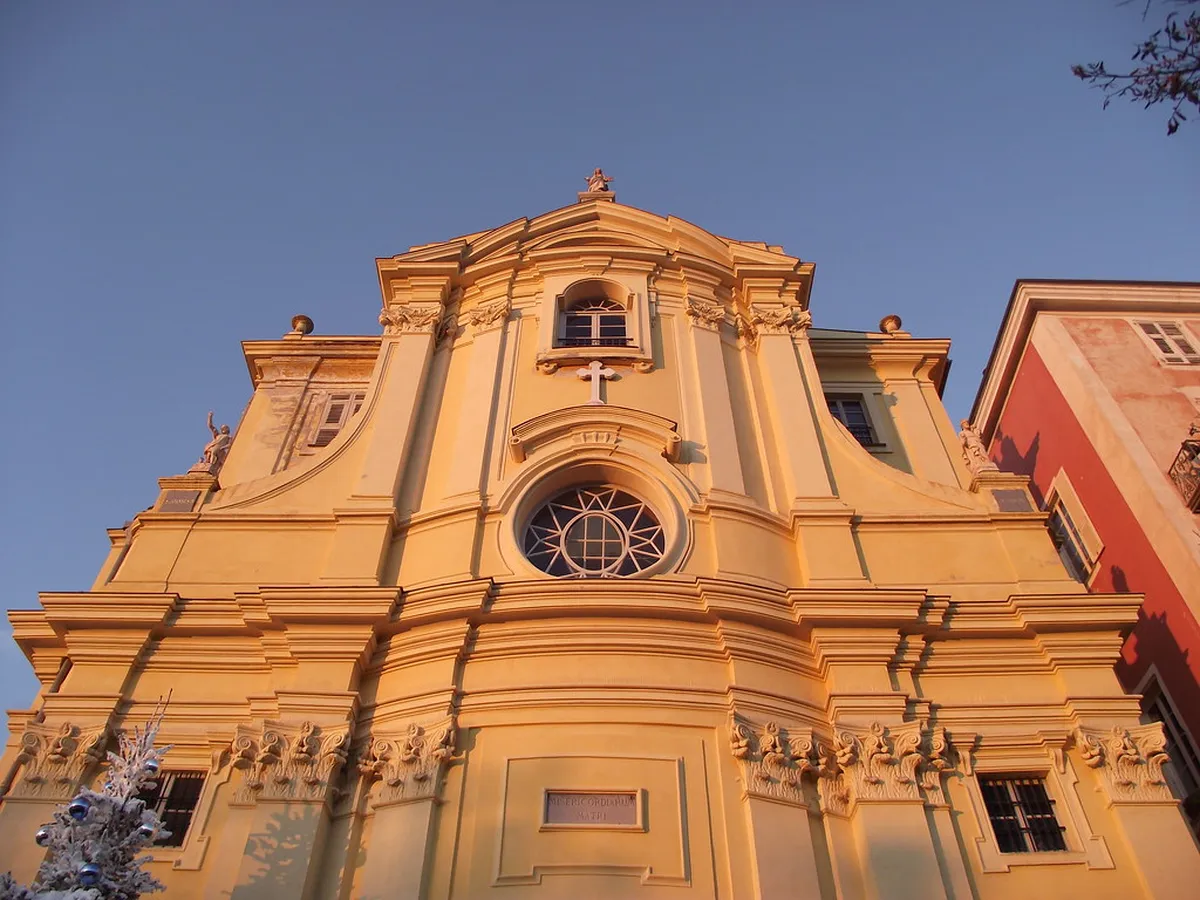
The Chapelle de la Miséricorde is a true Baroque masterpiece. It is one of the most significant Nicois Baroque churches today. The facade sits nestled between much taller residential buildings. Its curved lines create a sense of movement and grace.
This church was built in the middle of the 18th century. The architect used a unique oval floor plan for the interior. On the outside, you see complex patterns and detailed statues. The yellow plaster glows warmly under the bright French sun.
Many experts consider this a top architectural gem in France. The central portal features extremely fine sculptural details. It represents the height of religious design in Old Nice. Take a moment to look at the upper circular windows.
The church is often open for quiet visits during the day. Check the local schedule for 2025 opening times and services. Entry is free, though small donations are always welcome. Respectful silence is required inside this holy and historic space.
The Colorful Houses of the Northern Row
The northern side of the market features very tall houses. These buildings display the classic Mediterranean palette of colors. You will see shades of terracotta, ochre, and pale rose. Most structures date back to the 17th and 18th centuries.
One famous building is the former home of Henri Matisse. It is painted a deep and striking Venetian red color. You can find it at the eastern end of the square. This house is a favorite for those seeking Nice architecture photography spots in 2025.
Look at the traditional green shutters on the many windows. These shutters help keep the interiors cool during the summer. They are a functional part of local architectural history. Many balconies still feature the original wrought-iron railings.
The ground floors now host many busy cafes and shops. Tourists enjoy dining under the striped awnings found here. The contrast between commercial life and history is quite fascinating. It creates a vibrant atmosphere throughout the entire day.
Genoese Influence and Trompe l'Oeil Details
The architecture here shows strong ties to nearby Italy. Nice was part of the House of Savoy for long periods. You can see Genoese influence in the narrow building shapes. The use of trompe l'oeil painting is also very common.
Trompe l'oeil creates the clever illusion of 3D architectural details. Painters would add fake windows or moldings to flat walls. This technique allowed owners to show wealth without high costs. It is a clever part of the local building culture.
Walk slowly to spot these artistic illusions on the walls. Some fake windows look incredibly realistic from a short distance. They often include painted shadows to improve the visual effect. This style is typical of many buildings in Old Nice.
The roofs are covered in traditional red clay tiles. These tiles provide excellent protection against the harsh coastal elements. They complete the Mediterranean aesthetic found throughout the city. Observe the different heights of the various historical rooflines.
The Ancien Sénat and Local Governance
The Ancien Sénat is another important building in this square. It was the former court of justice for the city. The facade displays a more serious and restrained architectural style. It stands as a symbol of historical local governance.
Notice the large arched entrance at the ground level. The building materials include local limestone and durable plaster. It has survived many changes in government over the centuries. Today, it remains a vital piece of the historic fabric.
Information plaques are often located near the main entrance. They explain the history of the building in several languages. Spend a few minutes reading about the judicial past of Nice. The architecture reflects the stability required for a courthouse.
The building faces the bustling market stalls every single day. This creates a unique juxtaposition of law and daily trade. It is a perfect spot to observe the city's flow. The Ancien Sénat adds architectural variety to the Cours Saleya.
Practical Tips for Your Walking Tour
Planning your visit to Cours Saleya is very easy. The famous flower market operates Tuesday through Sunday each week. On Mondays, an antique market takes over the large space. Both markets offer great views of the surrounding facades.
The area is entirely pedestrian-friendly for architectural walking tours. Most visitors spend about two hours exploring the main square. Early morning is the best time for clear photos. The light hits the northern facades perfectly at 9:00 AM.
Local cafes offer plenty of seating for a quick break. Prices for a coffee range from three to five euros. You can watch the market bustle while studying the buildings. This is the best way to soak in the atmosphere.
Wear comfortable shoes for the uneven cobblestone streets. The square is flat, but side streets can be steep. Public transport stops are located just a short walk away. Look for the tram line 1 at Opéra-Vieille Ville.
Frequently Asked Questions
What architectural styles are seen on the Cours Saleya historical facades?
The facades primarily feature Baroque and Neoclassical architectural styles. You will see curved lines on the churches and formal symmetry on the palaces. The residential buildings display traditional Mediterranean designs with Genoese influences. Many facades also feature clever trompe l'oeil paintings.
When is the best time to photograph the architecture in Nice?
The best time for photography is during the early morning. Aim to arrive by 8:00 or 9:00 AM for the best light. The sun illuminates the northern facades of Cours Saleya beautifully at this time. Early visits also help you avoid the largest tourist crowds.
Can you visit the interior of the historical buildings on Cours Saleya?
Most of the residential buildings and the Prefecture are private. You can only admire their facades from the public square. However, the Chapelle de la Miséricorde is often open to the public. Check local 2025 schedules for specific opening hours for visitors.
Is there a cost to see the Cours Saleya historical facades?
Viewing the historical facades from the square is completely free. It is a public space that is open 24 hours a day. You only need to pay if you choose to dine at cafes. The architectural experience is accessible to everyone visiting Old Nice.
The Cours Saleya historical facades are a highlight of any trip to Nice. These buildings offer a deep look into the city's Mediterranean heritage. You will find beauty in the colors, shapes, and clever artistic details. Plan your 2025 walking tour to experience this history in person soon. Do not forget to bring your camera for the best views. Enjoy the unique charm of Old Nice on your next visit.
Key Takeaways
- Arrive early in the morning for the best architectural photography lighting.
- Look for trompe l'oeil paintings that create fake windows and moldings.
- Visit the Chapelle de la Miséricorde to see a Baroque masterpiece for free.
Related reads: architecturebycity.com, architecture in nice.