
Eiffel Tower Architectural Design: A Technical Guide
Explore the Eiffel Tower architectural design in detail. Learn about its engineering, materials, and 2025 visiting tips. Discover Paris history today!
On this page
The Eiffel Tower stands as a global symbol of France and modern engineering. Its unique Eiffel Tower architectural design revolutionized how we view iron in construction. Built for the 1889 World's Fair, it remains a masterpiece of precision. Today, millions of people visit this iconic landmark in Paris every year.
Understanding this structure requires looking at its complex metal framework. Many visitors appreciate the beauty but miss the technical genius behind the curves. The tower was originally meant to be a temporary structure for the city. You can explore more about architecture in Paris to see how it compares.
Gustave Eiffel faced many critics when he first proposed this bold metal tower. Traditionalists believed the iron design would ruin the classic Parisian skyline forever. However, the tower proved to be both stable and visually striking to many. It eventually became the tallest man-made structure in the world for four decades.
This technical guide explores the math and materials used to build the Iron Lady. We will examine the puddled iron, the rivets, and the foundations in 2025. You will gain a new appreciation for the science behind the art. Let us dive into the technical details of this iron giant.
Materials Used in the Eiffel Tower Architectural Design
The tower is not made of modern steel as many people often assume. Instead, Gustave Eiffel chose puddled iron for its strength and high durability. Puddled iron comes from a specific refining process that removes excess carbon during production. This material resists corrosion much better than many other iron alloys from that era.
Engineers used exactly 18,038 distinct iron parts to build the massive internal frame. Every single piece was designed and drawn to a precision of one-tenth millimeter. This level of accuracy ensured that the pieces fit together perfectly on the site. Each part was manufactured at a factory in Levallois-Perret before being moved.
Over 2.5 million rivets hold these 18,038 iron parts together in a tight bond. Only one-third of these rivets were actually installed directly at the construction site. Workers used heat to expand the rivets before hammering them into the iron holes. As the rivets cooled, they contracted to create an incredibly strong structural joint.
The total weight of the metal frame is approximately 7,300 tons today. If you include the elevators and shops, the total weight reaches 10,100 tons. This weight is surprisingly light for such a massive and tall structure. The pressure it exerts on the ground is similar to a person sitting.
Maintaining this iron requires a fresh coat of paint every seven years. This process uses about 60 tons of paint to prevent rust from forming. The color is specially mixed to match the Parisian landscape perfectly in 2025. Multiple shades are used to ensure the color looks uniform from the ground.
Innovative Structural Engineering and Wind Resistance
Wind resistance was the biggest challenge for the Eiffel Tower architectural design team. Gustave Eiffel was a master of bridge building and understood wind forces deeply. He designed the four curved legs to stand on a very wide base. This shape allows the tower to remain stable even during the strongest storms.
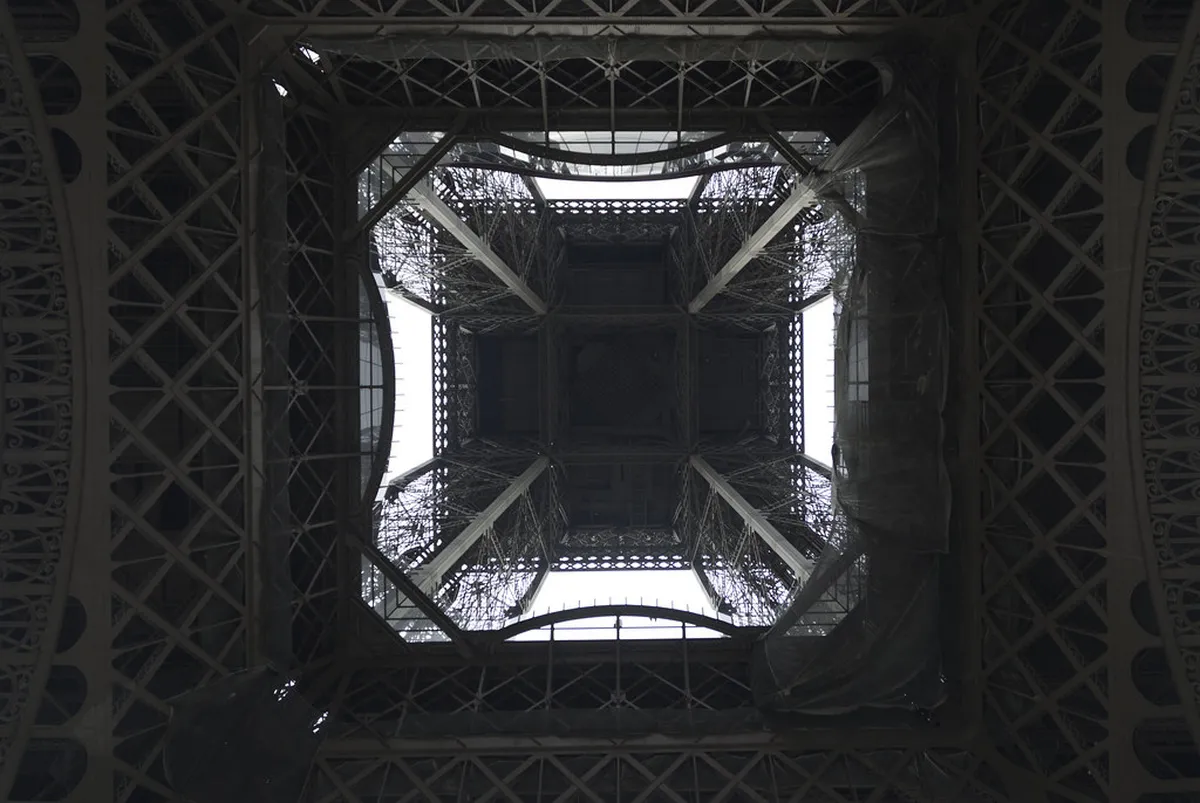
The open lattice structure is a key feature for managing heavy wind loads. Air flows through the gaps rather than pushing against a solid flat surface. This Eiffel Tower structural engineering approach keeps the tower safe. Even in high winds, the top only sways about seven centimeters maximum.
- The base forms a square measuring 125 meters on each side.
- Four massive pillars support the entire weight of the upper sections.
- The first level sits 57 meters above the ground for visitors.
- The second level is located at 115 meters for great views.
- The summit reaches a height of 330 meters including the antennas.
The curves of the tower follow precise mathematical formulas for maximum structural efficiency. These curves help distribute the weight of the iron down to the foundations. Mathematical precision allowed the tower to reach record heights without using excessive materials. It was the first structure to reach the 300-meter mark in history.
Thermal expansion also plays a significant role in the daily life of the tower. On hot summer days, the iron expands and the tower grows taller. The sun can cause the top to tilt away by up to 18 centimeters. This movement is a natural and safe part of the metal design.
Construction Methods and the Riveting Process
The construction of the tower began in early 1887 and took two years. Workers assembled the tower like a giant 3D puzzle using detailed technical blueprints. Gustave Eiffel employed a team of 150 to 300 workers for the assembly. They used wooden scaffolding and small steam cranes to lift the heavy iron.
Safety was a top priority for the Gustave Eiffel construction methods during the project. Only one worker died during the entire construction phase of the tower. This was an impressive safety record for a high-rise project in the 1880s. The workers used guardrails and screens to prevent falls from high levels.
Riveters worked in teams of four to install the 2.5 million rivets. One person heated the rivet until it glowed a bright cherry red. Another person held the rivet in place while others hammered the head. This repetitive process was essential for the integrity of the whole structure.
The assembly moved at a very fast pace for such a large project. It took only twenty-one months to complete the entire metal framework of the tower. This speed was possible because the parts arrived at the site pre-drilled. Every hole lined up perfectly thanks to the careful engineering and planning.
Cranes were mounted on the tracks that the elevators would later use for travel. These cranes moved up the tower as the construction progressed toward the sky. This clever use of the elevator tracks saved time and increased overall efficiency. The method allowed for a continuous flow of materials to the top.
Foundations and Underground Architectural Details
The foundations are the hidden heroes of the Eiffel Tower architectural design. The two pillars near the Seine River required extra care during the digging. Engineers used metal caissons and compressed air to work below the water level. This prevented the river water from flooding the construction site during the work.
Each of the four pillars rests on a massive block of solid masonry. These blocks are set deep into a layer of gravel and sand. The foundations distribute the 10,000 tons of weight evenly across the ground area. You can find more hidden architectural details of the Iron Lady below the surface.
Hydraulic jacks were originally placed under each of the four main pillars. These jacks allowed engineers to level the tower during the early construction. If one side was uneven, they could adjust it by a few millimeters. Once the first floor was level, the jacks were replaced by blocks.
The basement area also houses the machinery for the complex elevator systems. These systems have been updated many times since the tower opened in 1889. Some of the original hydraulic mechanisms are still maintained for historical value today. They represent a major step forward in vertical transport technology for Paris.
Visiting the lower levels gives you a sense of the massive scale involved. The pillars look like giant mountain roots anchoring the iron tree to Paris. The masonry is designed to last for centuries without shifting or cracking. It provides the steady base needed for such a tall and heavy spire.
Visiting the Eiffel Tower in 2025: Costs and Tips
Planning a visit in 2025 requires some advance preparation for the best experience. Ticket prices vary depending on how high you want to go today. A ticket to the summit by elevator usually costs around 29 Euros. Children and students can often get tickets at a significantly reduced price.
You should book your tickets online at least two months in advance. The tower is a very popular destination and slots fill up quickly. If you prefer a workout, you can take the stairs instead. Climbing the stairs to the second floor is cheaper and offers great views.
The tower is open every day of the year from 9:30 AM. During the summer, the hours extend until midnight for late-night city views. Sunset is the most popular time to visit for beautiful photography opportunities. Expect security checks which can take about thirty minutes during peak hours.
The second floor features the famous Jules Verne restaurant for fine dining lovers. Reservations are required and should be made several weeks before your trip. You can also find gift shops and small buffets on the lower levels. The summit offers a champagne bar for those celebrating a special moment.
Always check the local weather forecast before you head to the Champ de Mars. High winds or thick fog can occasionally close the summit for safety. Wear comfortable shoes if you plan to walk between the different levels. Bringing a light jacket is wise as it gets windy at the top.
Frequently Asked Questions
What makes the Eiffel Tower architectural design so unique?
The design uses a lattice system made from high-quality puddled iron. This allows wind to pass through the structure without causing any damage. The mathematical curves of the pillars provide incredible stability for the height. It was a pioneer in using metal as a primary building material.
How many rivets are in the Eiffel Tower structure?
The tower contains exactly 2.5 million rivets that hold the iron parts together. Each rivet was installed by hand using a team of four skilled workers. They ensure the 18,038 metal pieces stay connected under heavy pressure. Only a small fraction of these rivets have ever needed replacement.
Does the Eiffel Tower move or sway in the wind?
Yes, the tower is designed to sway slightly during heavy wind storms. It moves about six to seven centimeters at the very top summit. This movement is intentional and prevents the iron from snapping under high stress. It also expands up to 18 centimeters when the sun is very hot.
What is the best way to see the architecture up close?
You should book an architecture walking tour in Paris to see the details. Walking up the stairs to the second floor lets you see the rivets. You can touch the iron and see the complex lattice joints closely. A guide can explain the technical secrets of the construction process.
The Eiffel Tower architectural design remains a triumph of human creativity and math. It successfully combined industrial utility with an elegant aesthetic that defined a city. Gustave Eiffel created a legacy that has survived for over one hundred years. The Iron Lady continues to inspire architects and engineers around the world in 2025.
Visiting this landmark is more than just a simple photo opportunity for tourists. It is a chance to witness a pivotal moment in structural history firsthand. Make sure to look closely at the ironwork during your next trip to Paris. Take an architecture walking tour in Paris to learn more. Book your tickets now to see this engineering marvel for yourself.
Key Takeaways
- The tower is made of 18,038 puddled iron parts and 2.5 million rivets.
- Its curved lattice design provides excellent stability against high wind pressure.
- The tower sways and expands naturally due to wind and thermal changes.
- Regular painting every seven years is essential to prevent metal corrosion.
- Foundations use masonry and compressed air technology to remain perfectly stable.
Related reads: architecturebycity.com.