
Explore the Foujita Chapel Architectural Style
Discover the Foujita Chapel architectural style in Reims. Explore this 2025 guide to modern architecture in Reims and the spiritual art of Tsuguharu Foujita.
On this page
The Foujita Chapel architectural style offers a unique blend of Eastern and Western influences in Reims. It stands as a profound masterpiece within the landscape of modern architecture in Reims today. Visitors often seek this serene space for its spiritual beauty and intricate fresco designs. In 2025, it remains a top destination for travelers exploring the rich history of France.
This religious landmark showcases how different artistic cultures can come together in a single structure. The chapel provides a quiet place for reflection away from the busy city streets of Reims. Many art lovers visit this site to see the final work of the famous artist Tsuguharu Foujita.
The Origins of the Foujita Chapel Style
Tsuguharu Foujita designed this chapel in the mid-1960s after his personal conversion to Catholicism. The building reflects his unique spiritual journey and deep artistic commitment to his new faith. It is officially known as Notre-Dame-de-la-Paix, symbolizing peace after many difficult years of global war. This site showcases a distinct shift in modern architecture in Reims during that historic era.
The construction began in 1965 and was completed in a relatively short period of time. Foujita worked closely with the architect Maurice Clauzier to realize his specific vision for the space. They wanted to create a sanctuary that felt timeless yet contemporary for the local community. The result is a structure that feels both ancient and remarkably modern at the same time.
Foujita was over eighty years old when he took on this massive creative project in France. He dedicated the final years of his life to perfecting every detail of the chapel walls. His passion for the project is visible in every brushstroke and structural choice made here. The chapel serves as a physical manifestation of his late-life devotion and artistic brilliance.
The location of the chapel was chosen carefully to provide a sense of peace and privacy. It sits on land donated by the Mumm champagne family, who were close friends of the artist. This connection to the champagne industry is a common theme in the local history of Reims. Today, the chapel remains a private and sacred space that welcomes visitors from around the world.
Understanding the history of this building helps visitors appreciate the Foujita Chapel architectural style even more. It is not just a building, but a personal statement from a world-renowned Japanese artist. The blend of cultures makes it one of the most interesting sites in the entire region. It continues to inspire architects and artists who visit the city of Reims today.
Romanesque and Modern Structural Elements
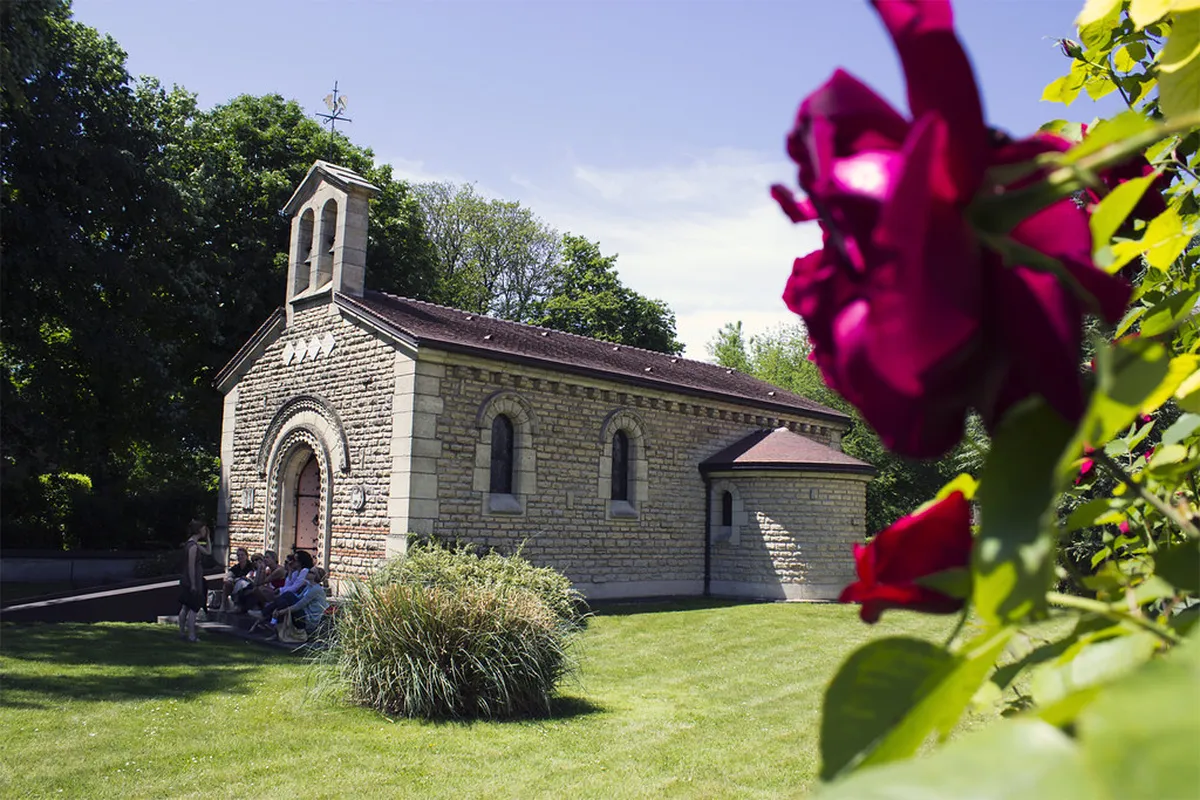
The Foujita Chapel architectural style draws heavily from the humble Neo-Romanesque tradition of Western Europe. You will notice thick stone walls and simple geometric shapes throughout the entire exterior structure. The roof features traditional tiles that blend perfectly with the surrounding historic neighborhood in Reims. These structural choices provide a sturdy and grounded feel to the overall chapel design.
Architects appreciate how Foujita used traditional forms to create a very contemporary sanctuary for prayer. The simplicity of the exterior acts as a humble shell for the complex art inside. This contrast is a key feature of the modern movement within religious building design. It emphasizes the internal spiritual experience over external showiness or unnecessary architectural decoration.
The windows are small and narrow, which is a classic characteristic of the Romanesque style. These openings allow controlled beams of light to enter and illuminate the frescoes at certain times. The play of light and shadow creates a dynamic atmosphere that changes throughout the day. It highlights the natural beauty of the stone and the rich colors of the paintings.
The floor plan follows a simple rectangular shape with a small apse at the eastern end. This layout is typical for small rural chapels found throughout the French countryside for centuries. By choosing this plan, Foujita honored the long history of religious architecture in Reims and France. It creates a sense of familiarity for those who know European church design.
Despite its traditional roots, the chapel feels modern because of its clean lines and minimalist approach. There are no grand columns or high vaulted ceilings to distract the visitor's eye. Instead, the focus remains entirely on the art and the quietness of the sacred space. This balance of old and new is what makes the chapel truly unique.
The Interior Frescoes and Artistic Detail
Foujita spent many months painting the interior walls with detailed and emotional religious scenes. His style blends Japanese ink techniques with European Christian iconography in a truly seamless way. Every inch of the 200 square meters of wall space tells a deep story of faith. The soft lighting enhances the delicate lines and gold leaf used in the various panels.
The frescoes cover topics such as the life of Christ and the Virgin Mary in detail. Foujita used a special technique that involved mixing traditional pigments with lime for a lasting finish. This method ensures that the colors remain vibrant and beautiful for many decades to come. Visitors are often stunned by the level of detail found in the faces of the figures.
One of the most striking parts of the chapel is the depiction of the Crucifixion scene. It shows a raw and powerful emotion that is characteristic of Foujita’s best artistic work. The use of fine black lines reveals his background in traditional Japanese calligraphy and ink drawing. This cross-cultural approach creates a visual language that is unique to this specific chapel.
In 2025, the preservation of these frescoes is a top priority for the local heritage authorities. The environment inside the chapel is carefully monitored to prevent damage from humidity or direct sunlight. You can see the artist’s signature on several panels, marking his personal touch on the work. It feels as if the artist just finished his work and left the room.
The stained glass windows were also designed by Foujita to complement the paintings on the walls. They feature simple patterns and colors that do not overwhelm the delicate nature of the frescoes. These windows filter the natural light to create a warm and inviting glow inside the chapel. Every element of the interior works together to create a unified artistic vision.
Integration with Reims' Architectural Heritage
Reims is famous for its grand cathedral and its wide variety of historic building styles. The Foujita Chapel provides a smaller and more intimate experience for those visiting the city. It highlights the city's ability to host both ancient ruins and mid-century modern designs. Planning a Reims architecture tour should always include this hidden gem on the itinerary.
While the Gothic cathedral dominates the skyline, this chapel offers a different perspective on local faith. It represents the reconstruction period of Reims when the city embraced new and creative ideas. The chapel stands near other modern buildings that show the post-war development of the northern districts. It is a vital piece of the puzzle in the architectural history of the region.
Many tourists find that the chapel offers a welcome break from the more crowded historical sites. Its quiet garden provides a peaceful setting for reflecting on the art you have just seen. The small scale of the building allows for a more personal connection with the architecture. You can easily walk around the entire site in a relatively short amount of time.
The chapel is now managed by the city as part of its extensive museum network. This ensures that the building is maintained to the highest standards for all future visitors. It serves as a bridge between the artistic communities of Japan and the nation of France. This international connection is celebrated through various cultural events held in Reims every year.
By visiting this site, you gain a deeper understanding of how modern art can transform architecture. The Foujita Chapel is a rare example of a building completely designed by a single visual artist. It challenges the traditional boundaries between the disciplines of painting, design, and structural engineering. This makes it an essential stop for any student of art or architecture history.
Practical Tips for Visiting in 2025
The chapel is located at 33 Rue du Champ de Mars in the city of Reims. Entry fees are quite modest, usually costing around 5 Euros for an adult visitor in 2025. Check the seasonal hours before you go, as they can vary during the colder winter months. It is often closed on certain holidays, so verify the schedule on the official website.
Photography is strictly restricted inside to help preserve the fragile frescoes for future generations to enjoy. You should plan to spend at least forty-five minutes to see everything in the chapel. The garden outside is a great place to take photos of the exterior stone walls. Respect the quiet atmosphere of the site, as it remains a place of spiritual significance.
You can reach the chapel easily by using the local tram system or by walking from the center. It is located near several famous champagne houses, making it easy to combine your visits. Many people choose to visit the chapel in the morning when the light is most beautiful. There is a small gift shop nearby where you can buy books about Foujita.
The chapel is accessible to most visitors, but the paths in the garden can be a bit uneven. Wear comfortable walking shoes to enjoy the stroll through the historic neighborhood surrounding the site. Consider taking a guided tour if you want to learn more about the specific fresco meanings. Guides can point out hidden details that you might miss when exploring on your own.
Visiting during the spring or fall offers the best weather for enjoying the outdoor garden area. The colors of the trees often complement the warm tones of the chapel’s exterior stone. Ensure you have your ticket ready at the entrance to make the process quick and easy. Enjoy the unique peace that this special architectural site brings to every visitor.
Frequently Asked Questions
What defines the Foujita Chapel architectural style?
The style combines simple Neo-Romanesque structural forms with detailed Japanese-inspired frescoes on the interior walls. It features thick stone masonry and small windows to create a focused spiritual environment. This mix of traditions makes the building unique in the city of Reims.
Who was the artist behind the Foujita Chapel?
Tsuguharu Foujita, a famous Japanese-French painter, designed the chapel and painted all the interior frescoes. He was a leading figure in the School of Paris before converting to Catholicism later in life. The chapel is considered his final artistic masterpiece and a gift to France.
Is the chapel part of modern architecture in Reims?
Yes, it represents a mid-century modern approach to religious design and intimate spiritual spaces. Completed in 1966, it reflects the artistic trends of that era while honoring ancient European forms. It is a key example of 20th-century heritage in the Champagne region.
Can I take photos inside the Foujita Chapel?
Photography is generally prohibited inside the chapel to protect the delicate frescoes from light damage. Visitors are encouraged to purchase postcards or books if they want images of the interior art. You are welcome to take photos of the exterior and the garden.
The Foujita Chapel architectural style is a testament to artistic passion and spiritual rebirth in Reims. It stands as a must-see landmark for anyone interested in the intersection of art and faith. Visit Reims in 2025 to experience this unique modern masterpiece for yourself. You will leave with a new appreciation for the diverse architectural heritage of France.
Key Takeaways
- The chapel blends Japanese artistic techniques with Western Romanesque architecture.
- Tsuguharu Foujita painted over 200 square meters of frescoes inside the building.
- Located in Reims, it is a key example of mid-century modern religious design.
- Visitors should respect photography bans to help preserve the historic 1960s artwork.
Related reads: architecturebycity.com, architecture in reims, jean michel wilmotte reims projects.