
Place Royale Reims Neoclassical Design Guide
Explore the Place Royale Reims neoclassical design. Learn about its 18th-century roots and urban impact. Plan your 2025 architecture tour today!
On this page
Reims offers some of the most stunning historical sites in France for travelers. The Place Royale Reims neoclassical design serves as a centerpiece of the city's urban layout. This grand square reflects the elegance and symmetry of 18th-century French architectural planning. It remains a vital stop for anyone interested in the rich history of European urban design.
Visitors in 2025 will find the square beautifully preserved and vibrant with local activity. It provides a perfect starting point for exploring the wider architectural heritage of the Champagne region. The site showcases how royal power was expressed through sophisticated stone masonry and orderly proportions. Walking through the square feels like stepping into a period of great artistic transition.
The Origins of Place Royale's Urban Vision
Place Royale stands as a testament to the vision of architect Jean-Gabriel Legendre. He designed the square in 1757 to honor King Louis XV. The layout reflects the Enlightenment ideals of order and public beauty. Today, it serves as a symbolic heart for the city of Reims.
Legendre wanted to create a space that felt both monumental and accessible to citizens. The construction began during a period of significant urban renewal across France. Architects during this era favored the Place Royale Reims neoclassical design for its timeless appeal. It successfully integrated the royal monument with the surrounding commercial streets.
The square replaced older, more chaotic medieval structures with clear geometric lines. This transformation allowed for better air circulation and movement within the city center. Engineers utilized high-quality limestone to ensure the durability of the new facades. These materials still glow warmly under the French sun during the late afternoon hours.
The central focus of the square was always meant to be the royal statue. This focal point creates a sense of gravity and importance for the entire district. It demonstrates how 18th-century designers used open spaces to emphasize political and social themes. Modern travelers can still feel this intended sense of grandeur while walking across the plaza.
Symmetry in the Place Royale Reims Neoclassical Design
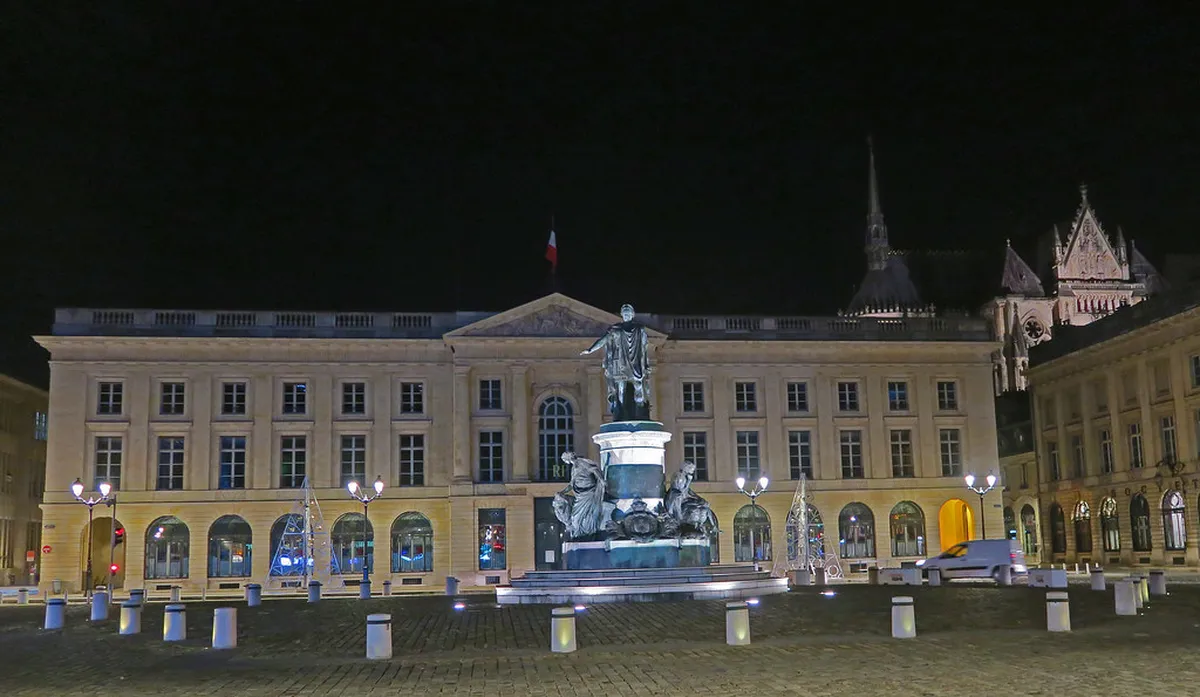
Symmetry is the most striking feature of this historic urban space. Every building surrounding the square follows a strict and repetitive architectural pattern. The facades feature elegant arcades on the ground floor for public use. These sheltered walkways provide a comfortable experience for shoppers and pedestrians alike.
The upper levels display a series of large windows decorated with subtle stone carvings. This uniformity is a key characteristic of the Reims city hall architecture found nearby. The use of pilasters and balustrades adds a layer of sophisticated detail to the structures. Each element is carefully calculated to maintain a perfect visual balance.
Architects avoided excessive ornamentation to focus on the purity of the neoclassical forms. The horizontal lines of the cornices create a continuous flow around the square. This design choice makes the space feel cohesive and intentionally planned. It represents a departure from the more decorative styles of the previous century.
The height of the buildings is kept consistent to avoid disrupting the skyline. This creates a sense of enclosure that is both protective and welcoming. Light and shadow play beautifully across the recessed arches throughout the day. Photographers often find the morning light best for capturing these rhythmic architectural details.
The Role of the Central Monument
The statue of Louis XV stands proudly at the center of the square. It was originally created by the famous sculptor Jean-Baptiste Pigalle. The monument represents the King as a peaceful and protective leader of his people. Two bronze figures sit at the base to symbolize commerce and government.
This central piece anchors the Place Royale Reims neoclassical design within the urban landscape. It provides a destination for the eye from every approaching street. The bronze details offer a sharp contrast to the pale limestone of the buildings. During the French Revolution, the original statue was destroyed by protesters.
A faithful replica was later installed to restore the square to its intended glory. The base of the monument features intricate reliefs depicting scenes of prosperity and peace. These details highlight the artistic craftsmanship prevalent in France during the 1700s. It remains one of the most photographed monuments in the city today.
The statue serves as a gathering point for local events and seasonal markets. In 2025, the area surrounding the base is often filled with flowers. Visiting the monument is free and requires about twenty minutes for close inspection. It is an essential stop for understanding the political history of the region.
Urban Impact and Navigating the City Center
The square functions as a major junction for several important city streets. It connects the administrative district with the commercial heart of the city. Planning a Reims architecture walking tour usually begins at this historic site. The surrounding streets are mostly pedestrian-friendly, making exploration very easy for tourists.
Many local cafes and shops are located under the protective stone arcades. This allows visitors to enjoy a meal while admiring the neoclassical surroundings. Prices for a coffee in the square range from three to five euros. It is a perfect spot for people-watching during a busy afternoon.
The square is also within walking distance of the famous Reims Cathedral. This proximity makes it easy to compare different architectural eras in one afternoon. The transition from Gothic heights to neoclassical order is visually fascinating for many visitors. You can reach the Cathedral in less than ten minutes by foot.
Public transportation links to the square are excellent and very frequent. The local tram system stops just a short walk away from the plaza. This accessibility makes it a convenient hub for travelers staying outside the city center. Most visitors spend at least one hour exploring the square and its shops.
Materials and Construction Techniques Used
The builders of Place Royale primarily used Courville limestone for the construction. This local stone is famous for its fine grain and durable properties. It allows for the sharp edges and precise details required for neoclassical buildings. The consistent use of this material across the square creates a unified look.
Traditional masonry techniques were employed to ensure the structures could last for centuries. Each block was hand-carved to fit perfectly within the geometric grid of the design. The roofs are typically made of slate, which provides a dark contrast to the stone. These materials were chosen for their quality and their status in French architecture.
The ground floor arcades were engineered to support the heavy weight of the upper stories. Master masons used arched construction to distribute the load effectively across the piers. This technical skill allows for the open and airy feel of the walkways. It is a testament to the engineering prowess of the 18th century.
Modern restoration efforts in 2025 continue to use these traditional materials. Skilled craftsmen work to replace weathered stones with identical limestone from local quarries. This ensures that the Place Royale Reims neoclassical design remains authentic for future generations. Preserving these techniques is vital for maintaining the historic character of the city.
Preserving Neoclassical Heritage into 2025
The city of Reims takes great pride in maintaining its architectural landmarks. Stricter building codes now protect the historic facades from modern alterations. This conservation ensures the square looks much as it did two centuries ago. It is a primary reason why the city remains a top travel destination.
New lighting systems have been installed to enhance the square during the night. The warm LED lights highlight the architectural details without causing any damage to the stone. Walking through the square after dark is a safe and magical experience for visitors. Many locals gather here in the evenings to enjoy the quiet atmosphere.
Educational plaques have been placed around the square to inform visitors of its history. These signs provide context about Legendre and the significance of neoclassical design in France. They are available in multiple languages to accommodate the diverse range of international tourists. This commitment to education helps visitors appreciate the subtle details of the square.
Future urban projects aim to further reduce car traffic near the historic plaza. This will create a more peaceful environment for those admiring the architecture. The city continues to invest in the beautification of the surrounding public gardens. These efforts ensure that Place Royale remains a crown jewel of French urban planning.
Frequently Asked Questions
What is the best time to visit Place Royale in Reims?
The best time to visit is during the early morning or late afternoon. The low sun creates beautiful shadows on the limestone facades of the square. These hours offer the best light for Reims architectural photography spots across the plaza. It is also less crowded before the main shopping hours begin.
Is there a fee to enter Place Royale?
No, the Place Royale is a public square and is completely free to enter. You can visit at any time of the day or night. It is an open space that serves as a functional part of the city. Visitors are welcome to walk around and take photos without any cost.
How long should I spend at Place Royale?
Most visitors find that thirty to sixty minutes is sufficient for a thorough visit. This allows time to admire the statue and walk under the arcades. You may want to stay longer if you plan to enjoy a coffee. The square is a perfect place for a relaxing break during your tour.
Is Place Royale accessible for people with disabilities?
Yes, the square is mostly flat and features paved surfaces for easy movement. The wide arcades provide plenty of space for wheelchairs and strollers. Most of the surrounding shops and cafes have ground-level entrances for accessibility. It is one of the more accessible historic sites in the city center.
What other sites are near Place Royale?
The Reims Cathedral is just a few minutes away by foot from the square. You can also visit the Palace of Tau and the Museum of Fine Arts nearby. The city hall is another great example of local architecture within a short walk. This makes the square an ideal hub for your daily sightseeing.
The Place Royale Reims neoclassical design is a masterpiece of 18th-century urban planning. It offers a perfect blend of royal history, artistic symmetry, and modern city life. Travelers to Reims in 2025 should not miss this iconic and elegant public space. Start planning your architectural journey today to experience the timeless beauty of this French treasure.
Key Takeaways
- Place Royale was designed in 1757 by Jean-Gabriel Legendre to honor King Louis XV.
- The square is a prime example of neoclassical symmetry with uniform limestone facades.
- It is free to visit and conveniently located near the Reims Cathedral and public transit.
- The central statue of Louis XV is a replica of an original masterpiece by Pigalle.
Related reads: architecturebycity.com, architecture in reims, hotel de ville reims renaissance style.