
Fontaine des Quatre Dauphins Architecture Guide
Discover the stunning Fontaine des Quatre Dauphins architecture in Aix-en-Provence. Plan your 2025 visit to see this Baroque masterpiece and urban icon.
On this page
The Fontaine des Quatre Dauphins architecture stands as a crowning jewel in historic Aix-en-Provence. This iconic landmark draws thousands of visitors to the elegant Quartier Mazarin district every year. You will find it at the intersection of Rue Cardinale and Rue du Quatre-Septembre. It serves as a perfect example of 17th-century French Baroque artistry.
Designed in 1667, the fountain showcases the grandeur of the city's rich architectural history. It remains one of the most photographed spots for travelers exploring southern France. The structure harmonizes perfectly with the surrounding private mansions known as hotels particuliers. Visitors in 2025 can still admire its intricate details and flowing water today.
This guide explores the unique design elements that make the fountain so special. We will examine its historical context within the larger city planning efforts. You will also find practical tips for visiting this site during your next trip. Understanding this fountain is key to appreciating the charm of old Provence.
The History of This Baroque Masterpiece
Sculptor Jean-Claude Rambot created this masterpiece during the expansion of the city. The project was part of a larger plan to modernize Aix-en-Provence in the 1600s. It represents the transition from medieval layouts to structured, artistic urban planning. Today, it remains a testament to the skill of Baroque craftsmen.
The fountain was officially completed and inaugurated in the heart of the newly developed district. It immediately became a focal point for local aristocrats living nearby. Its central location allowed residents to gather and enjoy the fresh spring water. This structure reflects the wealth and power of the Provencal elite during that era.
Over the centuries, the fountain has survived numerous urban changes and historical events. Careful restoration efforts have preserved the original stonework and delicate dolphin carvings. You can see the original intent of the designer in every curve of the stone. The site continues to inspire artists and architects from around the world.
Records show that the fountain survived the turmoil of the French Revolution mostly intact. Local citizens protected the landmark because of its practical use as a water source. It has undergone several cleaning processes to remove mineral deposits from the thermal water. These efforts ensure that future generations can enjoy its aesthetic beauty.
The fountain is now classified as a historical monument by the French government. This status ensures that the surrounding area remains protected from modern commercial development. It keeps the historical character of the square consistent with its 17th-century roots. Walking here feels like stepping back into a grander period of history.
Integrating With Quartier Mazarin Urban Design
The fountain is central to the overall Quartier Mazarin urban design project. Archbishop Michel Mazarin commissioned this district to create a prestigious living area for the nobility. He utilized a strict grid pattern that was revolutionary for French cities at the time. This layout emphasized symmetry, order, and grand perspectives.
Streets in this neighborhood intersect at perfect right angles to create clear sightlines. The Fontaine des Quatre Dauphins sits exactly at one of these major intersections. It breaks the monotony of the straight streets with its circular basin and flowing shapes. This placement ensures that the fountain is visible from several blocks away.
Surrounding the fountain are some of the most beautiful historic buildings in the city. These limestone structures feature ornate balconies and heavy wooden doors typical of the period. The architecture of the fountain complements the golden hues of the neighboring stone walls. It creates a cohesive aesthetic that defines the southern part of Aix-en-Provence.
Urban planners in the 17th century wanted to create a sense of harmony between nature and stone. They used fountains to provide movement and sound within the static urban environment. The Fontaine des Quatre Dauphins serves as the beating heart of this organized district. Its presence softens the hard lines of the grand mansions surrounding the square.
You can easily walk from the Cours Mirabeau to reach this peaceful intersection. The transition from the busy main boulevard to the quiet Quartier Mazarin is striking. Most visitors notice an immediate change in the atmosphere as they approach the fountain. The urban design encourages a slower pace of life and careful observation.
Artistic Features and Symbolic Details
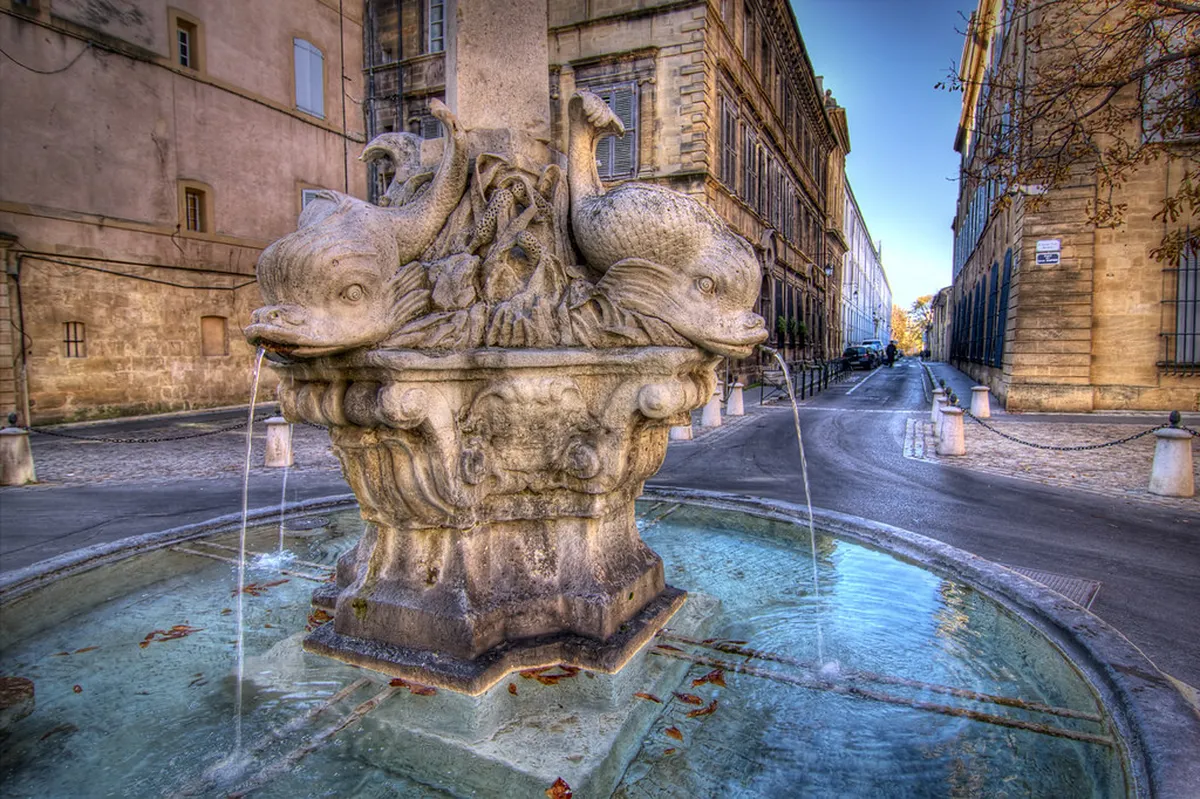
The most striking feature of the fountain is the four stone dolphins. These creatures face the four cardinal directions and appear to support the central obelisk. Each dolphin is carved with immense detail, showing scales, fins, and expressive faces. Water flows gracefully from their mouths into the large circular basin below.
An obelisk rises from the center of the fountain to provide verticality and grace. This feature was common in Baroque designs to draw the eye toward the sky. The combination of water and stone creates a soothing sound in the quiet neighborhood. It offers a peaceful atmosphere for anyone taking a leisurely stroll through the streets.
The basin itself is wide and constructed from local limestone known as Pierre de Calissanne. This material is famous for its warm color and durability against the elements. You will notice how the stone glows during the golden hour in the late afternoon. It provides a sturdy foundation for the delicate carvings resting above it.
Dolphins were a popular symbol in 17th-century art and often represented the sea. In landlocked Provence, they symbolized the vital importance of water and travel. The choice of these creatures adds a touch of whimsical fantasy to the grand square. Their playful forms contrast with the serious and heavy architecture of the nearby homes.
The water flow is carefully balanced to create a consistent and gentle splash. This engineering feat was impressive for the time and used natural gravity. Modern pumps now help maintain the pressure to ensure the fountain never runs dry. The sound of the water masks the noise of the city and provides tranquility.
Influence of Baroque Style in Provence
Baroque architecture in the south of France has a very specific character. It combines the grandeur of Italian styles with local Provencal materials and sensibilities. The Fontaine des Quatre Dauphins is a primary example of this unique cultural blend. Its theatrical design creates a sense of movement within the static stone.
You will notice the use of curves and dynamic forms throughout the structure. These elements are designed to catch the light and create interesting shadows. This style was intended to impress visitors and demonstrate the sophistication of the city. It remains a highlight for anyone studying the history of European design.
The fountain's proportions are carefully calculated to fit the scale of the square. It does not overwhelm the space but serves as a graceful centerpiece. Local architects often look to this fountain as a model of perfect urban balance. Its influence can be seen in many other monuments across the region.
Ornamentation is a key part of the Baroque experience at this site. Every surface of the sculpture features careful detailing and artistic flourishes. These decorations served to display the skill of the artist to the public. They also reflected the high social status of the people living in the district.
The use of light and shadow is particularly effective on the dolphin carvings. As the sun moves across the sky, different parts of the sculpture are highlighted. This creates a changing visual experience for those who visit at different times. The Baroque style thrives on this sense of drama and visual variety.
Discovering Hydraulic Heritage in the City
Aix-en-Provence is often called the City of a Thousand Fountains for a good reason. Water has played a vital role in the city's development since Roman times. You can explore many other historic fountains and hydraulic architecture landmarks nearby. Each fountain tells a unique story about the neighborhood where it stands.
The water used in these fountains often comes from natural thermal springs. This constant flow helped maintain public health and cleanliness in previous centuries. Today, the fountains serve as decorative landmarks and cool meeting spots during hot summers. They are essential to the cultural identity of this Provencal city.
Walking from one fountain to another is a popular activity for tourists. You will see grand monumental fountains and small, moss-covered basins hidden in quiet corners. The Fontaine des Quatre Dauphins remains the most elegant example of this hydraulic heritage. It captures the artistic spirit that defines the entire region.
The local government invests heavily in the maintenance of these water structures. Skilled workers regularly clean the pipes and check the stone for damage. This dedication ensures that the city maintains its reputation as a water-rich oasis. The fountains remain functional pieces of art that people use every single day.
Many of these fountains served as washing places for local residents in the past. You can still see some of the larger basins used for laundry nearby. The Fontaine des Quatre Dauphins was always intended to be purely decorative and grand. It stood as a symbol of luxury rather than just a utility.
Planning Your 2025 Trip to the Landmark
Visiting this architectural gem is easy because it is located in a walkable area. Most travelers arrive on foot while exploring the southern part of the city center. There is no entrance fee to view the fountain since it sits in a public space. You can visit at any time of day or night throughout the year.
For the best photography, aim to arrive early in the morning. The morning light hits the fountain directly and creates minimal shadows on the carvings. You will also avoid the larger groups of tourists that arrive later in the day. The quiet atmosphere allows you to appreciate the sound of the falling water.
Take time to explore the nearby cafes and boutiques after your visit. Many local shops offer handmade crafts and traditional Provencal treats like calissons. You can also find detailed architecture photography spots in Aix-en-Provence within a short walk. This area is perfect for those who enjoy slow travel and historic charm.
Consider visiting during the spring or fall months for the best weather. Temperatures in 2025 are expected to be mild and perfect for long walking tours. The trees in the Quartier Mazarin add a beautiful green frame to the fountain's stone. Wear comfortable shoes as the cobblestone streets can be uneven in some places.
Public transport in Aix-en-Provence is efficient and stops near the Quartier Mazarin entrance. You can also find parking garages within a ten-minute walk of the fountain. Most visitors spend about thirty minutes admiring the structure and taking photos. It is an essential stop on any walking tour of the city.
Frequently Asked Questions
Who designed the Fontaine des Quatre Dauphins architecture?
The famous sculptor Jean-Claude Rambot designed the fountain in 1667. He was a prominent artist in the Provencal region during the Baroque era. His work helped define the artistic style of the newly built Quartier Mazarin.
Where is the fountain located in Aix-en-Provence?
You will find the fountain at the intersection of Rue Cardinale and Rue du Quatre-Septembre. This location is in the heart of the historic Quartier Mazarin. It is a short walk from the famous Cours Mirabeau boulevard.
Is there a cost to visit the Fontaine des Quatre Dauphins?
No, there is no cost to visit this landmark. It is located in a public square that is open 24 hours a day. You can enjoy the Fontaine des Quatre Dauphins architecture for free at any time.
What is the best time of day to take photos of the fountain?
The best time for photography is during the early morning or late afternoon. The soft sunlight brings out the warm colors of the limestone. You will also find fewer people in the square during these hours in 2025.
Can I drink the water from the fountain?
It is generally not recommended to drink the water from decorative fountains. While the water comes from natural sources, the pipes and basin may not be potable. Look for specific drinking fountains located throughout the city for fresh water.
The Fontaine des Quatre Dauphins architecture remains a highlight of any trip to Aix-en-Provence. Its blend of Baroque style and smart urban design offers a glimpse into the city's golden age. Make sure to include this stunning landmark on your 2025 travel itinerary. You will truly enjoy the peaceful beauty of this historic Provencal square.
Key Takeaways
- Visit early in the morning for the best photography lighting.
- Explore the surrounding Quartier Mazarin to see grand 17th-century mansions.
- The fountain is free to visit and accessible at all times.
- Look for the intricate details on the four stone dolphin carvings.
Related reads: architecturebycity.com, architecture in aix en provence, architectural walk through quartier mazarin.