
Saint-Maurice Cathedral Architecture in Angers
Explore the Saint-Maurice Cathedral architecture in Angers. Discover stunning Gothic vaults and historical glass. Plan your 2025 visit to this iconic site now.
On this page
The Saint-Maurice Cathedral architecture stands as a magnificent masterpiece in the heart of historic Angers, France. This impressive building represents a unique transition between the Romanesque and Gothic periods of European design. Visitors in 2025 can admire the massive stone walls and the intricate details of its tall facade. The structure serves as a symbol of the spiritual and political power held by medieval bishops.
Angers is home to many beautiful buildings that reflect the rich history of the Maine-et-Loire region. This cathedral stands as the most impressive example of medieval craftsmanship found within the old city walls. Its long history began in the eleventh century when the local bishop decided to rebuild the church. Visitors can see how the architectural styles shifted as the construction process continued for many decades.
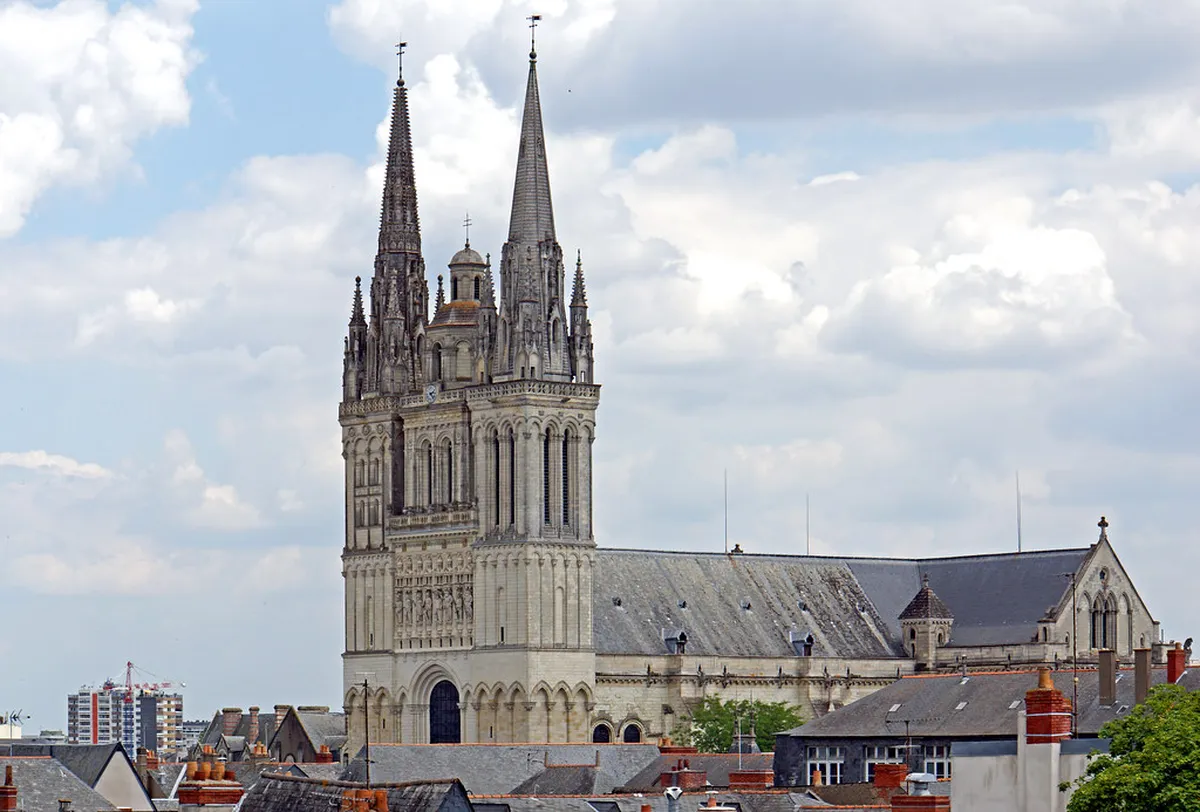
The cathedral dominates the skyline with its two massive spires and central baroque lantern tower. This building remains a central part of the religious and cultural life of people in Angers. The Saint-Maurice Cathedral architecture shows the unique transition from Romanesque shapes to Gothic height. You will find that every stone tells a story about the artistic evolution of western France.
The Evolution of Saint-Maurice Cathedral Architecture
The history of the cathedral began with a fire that destroyed the previous structure in early 1032. Bishop Hubert de Vendôme started the reconstruction process to create a larger and more durable house of worship. This early phase focused on traditional Romanesque elements that were common throughout the French countryside at that time. You can still see traces of this solid masonry in the lower parts of the main walls.
By the twelfth century, the local builders began experimenting with new ways to support the massive stone roof. These innovative craftsmen developed a style that would eventually become known as the Angevin Gothic movement. This period saw the addition of pointed arches and ribbed vaults that allowed for much larger interior spaces. The detailed Romanesque portal serves as a bridge between these two distinct architectural eras.
The construction was not a quick process and required several generations of skilled laborers to complete the work. Master masons used local limestone to carve the intricate figures that decorate the western entrance of the building. These statues represent various biblical figures and historical kings who influenced the growth of the local church community. The craftsmanship remains remarkably preserved despite the many centuries of exposure to the elements and urban pollution.
Today, the building stands as a testament to the endurance of medieval engineering and the creativity of French artists. The interior space feels open and bright because of the lack of heavy columns found in older churches. This design choice was revolutionary for the time and influenced many other cathedrals built across the northern region. It highlights how the architects in Angers were leading the way in European structural innovation during the 1100s.
The Beauty of the Angevin Gothic Vaults
The interior of the cathedral is famous for its unique vaulting system which differs from standard French Gothic. These specific structures are often called Plantagenet vaults because of their connection to the ruling family of the time. They feature a very pronounced dome shape that rises much higher than the transverse and wall arches. This specific Angevin Gothic style creates a sense of immense vertical space for every visitor who enters.
Standard Gothic vaults are usually flatter and require heavy external buttressing to keep the stone walls from pushing outward. The vaults in Angers use a clever design that distributes the weight more evenly across the thick exterior walls. This allowed the architects to build without the need for flying buttresses which were becoming popular in Paris. The result is a clean and smooth exterior silhouette that distinguishes this cathedral from its northern neighbors.
Each bay of the nave is covered by a single large vault that spans the entire width of the room. These stone ribs meet at a central point that is decorated with colorful carvings and religious symbols of power. The height of the central nave reaches nearly twenty-seven meters from the floor to the top of the ceiling. This scale was truly impressive for the twelfth century and remains a significant feat of engineering even today.
Walking through the nave allows you to appreciate the rhythmic pattern created by these massive stone overhead structures. The light from the high windows hits the curved surfaces of the vaults to create soft shadows and highlights. This atmosphere creates a peaceful environment that encourages quiet reflection and admiration for the medieval builders of France. Most travelers find that the interior feels much larger than it appears from the narrow streets outside.
Historical Stained Glass and Artistic Heritage
One of the most valuable features of the cathedral is the collection of medieval glass that survives today. These vibrant stained glass windows date back to the mid-twelfth century and are among the oldest in France. The glass painters used deep blues and rich reds to depict scenes from the lives of the saints. These artworks provided a visual bible for the many people who could not read during the Middle Ages.
The rose window in the transept is a particularly fine example of late medieval artistic skill and color theory. It features a complex geometry that allows light to flood the interior with a spectrum of beautiful glowing colors. The glass has undergone careful restoration to ensure that the original colors remain as bright as they were centuries ago. This work ensures that future generations can still enjoy the beauty of these ancient and fragile glass panels.
In addition to the windows, the cathedral houses a famous set of tapestries that are displayed on special occasions. These textile works depict the Apocalypse and are considered some of the finest examples of medieval weaving in existence. The intricate details of the threads show the high level of skill possessed by the weavers in the 1300s. They add another layer of cultural significance to the already rich Saint-Maurice Cathedral architecture found within these walls.
The combination of stone, glass, and fabric creates a complete sensory experience for anyone interested in historical art forms. Each element was designed to work together to inspire awe and devotion in the hearts of the faithful people. The cathedral acts as a living museum where you can see the best of French medieval art in context. This artistic heritage is a primary reason why the building remains a top destination for travelers in 2025.
The Twin Spires and External Facade Details
The western facade of the cathedral is dominated by two elegant spires that reach toward the French sky. These towers were built at different times, which explains the subtle differences in their overall design and stone carving. The history of the twin spires shows the long duration of the construction projects during the medieval era. They provide a landmark that can be seen from almost any high point throughout the modern city.
Between the two towers sits a smaller third tower that was added during the Renaissance period of the sixteenth century. This central lantern tower features a more ornate style that contrasts with the simpler lines of the older spires. It contains a series of statues representing the local saints who have protected the city over the many years. This mixture of styles reflects the continuous evolution of the site as a center of religious life in Angers.
The main portal features a series of carvings known as the Royal Portal because of the figures depicted there. You can see Christ in Majesty surrounded by symbols of the four evangelists carved into the hard local stone. The detail in the clothing and faces of the statues shows the incredible talent of the twelfth-century stone masons. This entrance served as the primary gate for royal visitors and high-ranking church officials during the Middle Ages.
Strong stone walls support the weight of the massive towers and the wide roof above the central nave area. The masonry shows the different layers of history as various sections were repaired or expanded by the local community leaders. In 2025, the facade remains a popular spot for photographers who want to capture the essence of medieval French design. The exterior beauty of the cathedral is matched only by the incredible treasures found hidden deep inside.
Interior Treasures and Religious Significance
The high altar is a focal point of the interior and features ornate decorations from the eighteenth century period. It is made of fine marble and gilded wood that shines brightly when the morning sun hits the chancel. This area of the cathedral is where the most important religious ceremonies and daily masses have taken place for centuries. The surrounding choir stalls are carved from dark oak and show scenes from the history of the local diocese.
The pulpit is another masterpiece of wood carving that stands out against the pale stone walls of the nave. It features complex spiral designs and figures that seem to come to life when viewed from the floor below. This structure was used by priests to deliver sermons to the large crowds that gathered here on holy days. It reflects the importance of oral tradition and teaching in the life of the medieval and early modern church.
Several side chapels line the walls of the cathedral and contain the tombs of former bishops and local noble families. Each chapel has its own unique decorations and small altars dedicated to different saints of the Christian faith. These spaces offer a more intimate look at the personal devotion of the people who lived in Angers centuries ago. They are filled with small details like wrought iron gates and delicate wall paintings that have survived the years.
The Saint-Maurice Cathedral architecture also includes a grand pipe organ that sits high above the western entrance of the nave. This instrument has been rebuilt many times but still contains pipes that date back several hundred years in history. The sound of the organ filling the vaulted space is an experience that many visitors find deeply moving and powerful. It adds a musical dimension to the architectural beauty of this grand and historic religious site in France.
Practical Guide for Planning Your 2025 Visit
Visiting the cathedral in 2025 is an easy and rewarding experience for travelers exploring the beautiful Loire Valley region. The building is located in the center of the city and is within walking distance of the main castle. Most visitors find that spending one or two hours is enough time to see the main architectural highlights inside. You should check the official schedule for mass times to ensure the building is open for tourists.
The cathedral is generally open every day from the early morning until the early evening for the general public. There is no entrance fee to enter the main nave, but donations are always welcomed to support building maintenance. You should remember to dress respectfully as this is an active place of worship for the local Catholic community. Many people also enjoy exploring the diverse architecture in Angers found in the surrounding narrow streets.
Photographers will find the best light on the western facade during the late afternoon as the sun begins to set. The interior light is most dramatic in the morning when the stained glass windows are fully illuminated by the sun. You can find several small cafes and shops nearby where you can rest after your tour of the site. The local tourism office also offers maps that highlight the best walking routes through the historic center of town.
Accessibility has improved in recent years with ramps and smoother paths for those with mobility challenges to use easily. Information plaques are available in multiple languages to help you understand the history and significance of the various features. Plan to visit during the weekdays to avoid the larger crowds that often arrive during the busy summer weekends. A visit to this cathedral is a highlight of any trip to the historic city of Angers.
Frequently Asked Questions
When was the Saint-Maurice Cathedral in Angers built?
The construction of the current Saint-Maurice Cathedral architecture began in the early twelfth century around the year 1148. It was built on the foundations of an older Romanesque church that was destroyed by a fire in 1032. The main structure was largely completed by the middle of the thirteenth century after decades of hard labor. Additional features like the towers and central lantern were added during the following centuries.
What makes the Angevin Gothic style unique?
The Angevin Gothic style is famous for its highly curved and domed vaults that differ from standard French designs. These vaults are much more rounded and rise higher than the arches that support them at the wall. This design allowed builders to create wide interior spaces without the need for large external flying buttresses. It represents a specific regional evolution of Gothic architecture that is primarily found in the western Loire region.
Can I see the famous Apocalypse Tapestry at the cathedral?
The Apocalypse Tapestry is usually housed in the nearby Chateau d'Angers for better preservation and display to the public. However, the cathedral itself still holds many other religious treasures and historical artifacts for visitors to see today. On special occasions, some textile works are brought to the cathedral for specific liturgical events or large exhibitions. You should visit both the castle and the cathedral to see the full artistic heritage of the city.
Are there guided tours available for the Saint-Maurice Cathedral?
Local guides often provide walking tours that include a detailed look at the Saint-Maurice Cathedral architecture for interested groups. You can book these tours through the Angers tourist office located near the main train station and the castle. Many tours focus on the transition between Romanesque and Gothic styles and the history of the stained glass. Private tours are also available if you want a more in-depth look at specific architectural details.
The Saint-Maurice Cathedral architecture remains one of the most significant historical sites in western France for any traveler. Its unique blend of Romanesque strength and Gothic elegance provides a fascinating look into the medieval mind and spirit. Visitors in 2025 will find a building that is both a historical monument and a living center of faith. Plan your trip to Angers today to experience the beauty and history of this incredible stone masterpiece. You will certainly leave with a deeper appreciation for the artistic traditions of the Maine-et-Loire region.
Key Takeaways
- Observe the unique domed Angevin Gothic vaults which define the interior space.
- Admire the twelfth-century stained glass windows which are among the oldest in France.
- Compare the different architectural styles found in the three distinct towers on the facade.
- Visit during the late afternoon to capture the best photos of the western Royal Portal.
- Check the local mass schedule to ensure you have plenty of time for tourist exploration.
Related reads: architecturebycity.com, medieval half timbered houses in angers, chateau dangers architectural features.