
Antibes Cathedral Facade Details: A Visual Guide 2025
Explore unique Antibes Cathedral facade details in our 2025 visual guide. Learn about Romanesque and Baroque styles on your next French Riviera trip.
On this page
The Antibes Cathedral facade details reveal a rich history in the heart of the Old Town. This stunning structure stands as a testament to centuries of changing artistic styles in France. Visitors often marvel at the unique blend of Romanesque and Baroque features on the exterior. It remains a must-see landmark for anyone exploring architecture in Antibes during their 2025 visit.
Romanesque Origins of the Cathedral Entrance
The base of the cathedral reflects its medieval roots from the late twelfth century period. These early elements show the simplicity of the Romanesque style within the Provence region today. Builders used local stone to create a solid foundation that survives into the modern era. You can still see some of these ancient features near the lower sections now.
The portal area shows how the structure evolved over several hundred years of local history. Small windows and thick walls characterize this initial construction phase of the historic town church. These design choices provided strength and protection during more turbulent times in the ancient past. This section represents the soul of Romanesque and Baroque churches in Antibes quite perfectly.
The heavy stone blocks offer a visual anchor for the more decorative upper architectural levels. Observation reveals the precise craftsmanship of medieval masons who worked on this sacred French site. They focused on durability and function rather than the elaborate ornamentation seen in later centuries. This sturdy foundation has allowed the cathedral to withstand the salty Mediterranean air for ages.
Visitors should look for the subtle marks left by ancient tools on the weathered stone surfaces. These small details provide a direct connection to the people who built the original Romanesque walls. The simplicity of the lower facade highlights the transition to the more flamboyant Baroque upper styles. It creates a fascinating layers of time that everyone can appreciate during their visit.
Detailed Antibes Cathedral Facade Details in Baroque Style
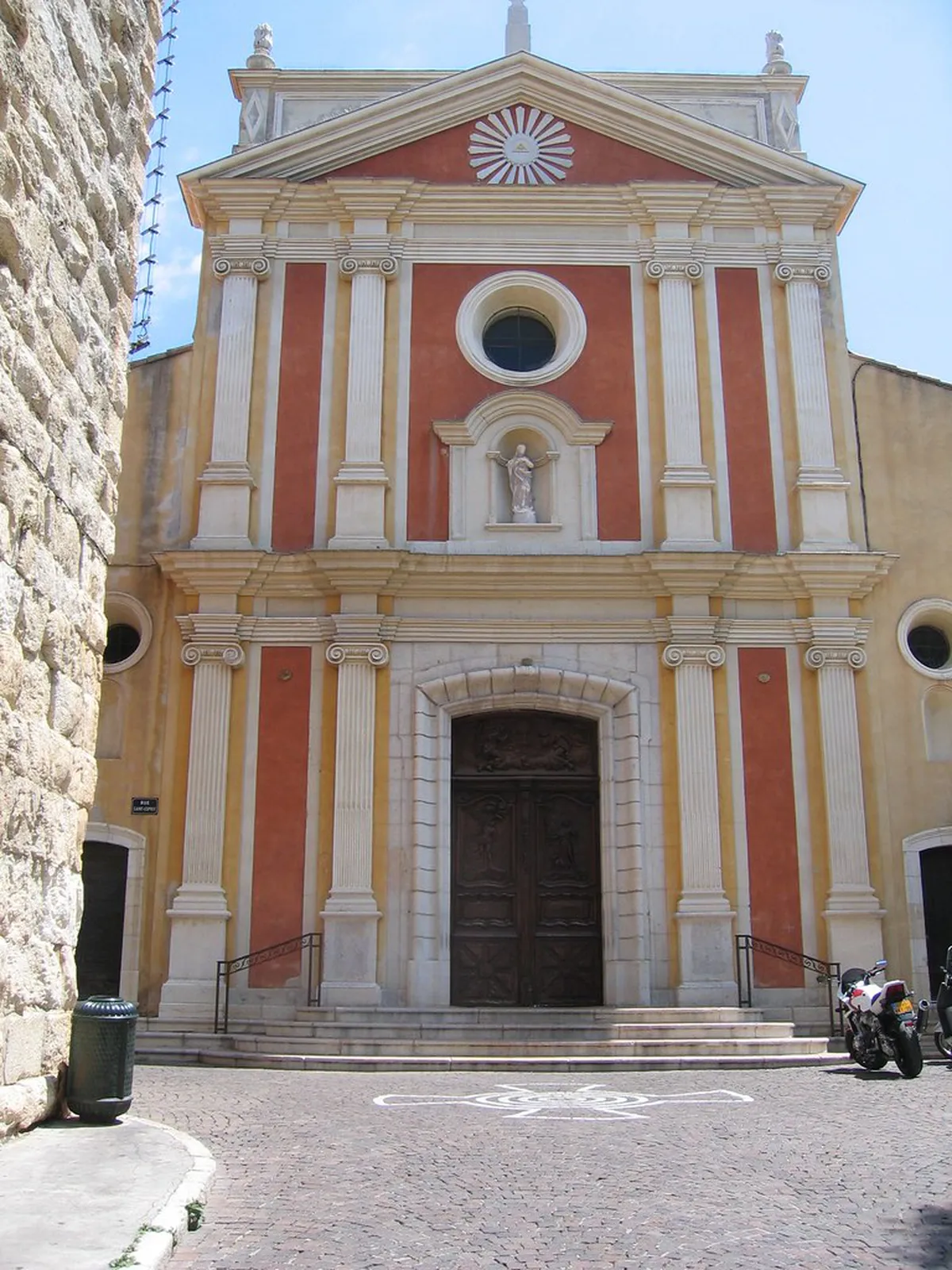
In the eighteenth century the facade received significant Baroque updates and many decorative artistic changes. This period introduced the vibrant colors that visitors see when walking through the public cathedral plaza. The Italian influence is clear in the ornate moldings and the elegant curves of the front. These additions created a more dramatic appearance for the main religious site of the town.
The upper levels of the facade showcase classical pilasters and very symmetrical design decorative elements. These features create a sense of height and grandeur for the main cathedral entrance today. Master craftsmen added intricate carvings that catch the sunlight beautifully during the warm afternoon hours. You will notice the contrast between the old stone and the newer decorative plaster pieces.
Baroque design emphasized movement and emotion through the use of complex shapes and visual depth. This architectural shift reflected the growing wealth and religious importance of the region during that time. The facade became a canvas for expressing the glory of the church through sophisticated artistic techniques. It remains one of the finest examples of this style on the French Riviera.
The harmonious balance between the windows and the pilasters creates a very pleasing visual rhythm. This design choice guides the eye upward toward the religious symbols at the very top. Architects of the time wanted to inspire awe and devotion through these impressive structural details. The result is a facade that feels both welcoming and grand to all visitors.
The Iconic Color Palette of the Exterior
The facade features a striking ochre and reddish hue that defines its Mediterranean character and style. This warm color palette makes the building stand out against the deep blue French sky. Local artisans used traditional pigments to achieve this classic Southern French aesthetic for the historic church. The paint glows with a soft golden light during the late sunset hours each day.
Maintenance teams regularly refresh these colors to preserve the visual impact of the famous religious site. The current appearance reflects the restoration work completed over the past few decades for the public. This vibrant exterior makes it one of the most photographed spots in the entire coastal city. It captures the essence of coastal life in Antibes during the summer of 2025.
- Traditional ochre pigments are used to maintain the historical accuracy of the building.
- The reddish tones reflect the natural colors found in the surrounding Provencal landscape.
- Frequent repainting protects the structural materials from the harsh effects of the sea salt.
The contrast between the warm paint and the white stone trim adds extra visual depth. This layering technique was common in Mediterranean architecture to highlight specific decorative elements on facades. The bright colors serve as a landmark for locals and tourists navigating the narrow stone streets. It brings a sense of joy and vitality to the historic center of town.
Photos taken during different times of the day show how the colors change with the light. Morning light brings out the yellow tones while the evening sun emphasizes the deep red hues. This dynamic quality makes the cathedral a favorite subject for artists and professional photographers alike. You should plan your visit according to the light for the best possible pictures.
Decorative Sculptures and Architectural Motifs
Detailed sculptures of saints decorate the niches flanking the main cathedral entrance on the front. These figures add a layer of religious narrative to the external stone walls for all observers. Each statue shows careful craftsmanship from the era of the major Baroque renovation in town. They represent the artistic dedication of the local community throughout the many years of history.
Look closely at the lintels and door frames for smaller carved motifs and traditional symbols. These subtle Antibes Cathedral facade details often escape the notice of many casual daily tourists. You might find floral patterns or traditional religious icons etched into the weathered local stone. These minor elements contribute to the overall complexity of the main building front and entrance.
The central doorway serves as the focal point for the entire decorative scheme of the facade. Ornate carvings frame the entrance to welcome worshipers and visitors into the sacred interior space. These details tell stories of faith and local history through the medium of carved limestone. They have been meticulously preserved to ensure that future generations can enjoy their artistic beauty.
Small scrolls and decorative brackets support the ledges and cornices across the various levels. These functional elements are disguised as art to enhance the overall beauty of the cathedral exterior. Each piece was hand-carved by specialists who understood the nuances of the Baroque artistic movement. This attention to detail is what makes the facade a masterpiece of regional architecture.
Practical Tips for Viewing the Facade
The best time to view the cathedral facade is during the early morning or late afternoon. The light hits the colorful surface at an angle that emphasizes the architectural depth and carvings. You can find the cathedral located next to the Picasso Museum in the heart of town. Most visitors spend about thirty minutes admiring the external details before heading inside the church.
Admission to view the exterior of the cathedral is free for all members of the public. This makes it an excellent stop on an Antibes Old Town architectural walking tour this year. The surrounding plaza offers several benches where you can sit and study the building in peace. Please remember to be respectful as this remains an active place of worship for locals.
You should wear comfortable shoes because the streets leading to the cathedral are made of cobblestone. The area can become quite busy during the peak summer months of July and August in 2025. Visiting during the shoulder seasons of spring or fall offers a much quieter and relaxed experience. Local cafes nearby provide the perfect spot to enjoy a coffee while viewing the site.
Guided tours are often available for those who want to learn more about the specific history. These tours provide deep insights into the materials and techniques used during the different construction phases. You can book these sessions at the local tourist office located near the port area. Learning the stories behind the stone makes the visit much more meaningful for everyone.
Frequently Asked Questions
When were the Antibes Cathedral facade details completed?
The current facade details were largely completed during the eighteenth century Baroque renovation period. However the base of the structure dates back to the twelfth century Romanesque era of construction. This mix of styles reflects the long and complex history of the cathedral building.
Is there a cost to visit the Antibes Cathedral facade?
Viewing the exterior facade and the cathedral interior is completely free for all visitors in 2025. It is one of the best free architectural sites to explore in the Old Town area. Donations are always welcome to help with the ongoing maintenance of the historic building.
What are the best Antibes Cathedral facade details to photograph?
Photographers should focus on the vibrant ochre paint and the intricate Baroque carvings around the main door. The contrast between the colorful church and the gray medieval watchtower also makes for a great shot. Late afternoon provides the most flattering natural light for capturing the warm colors.
The Antibes Cathedral facade details offer a beautiful window into the artistic heritage of the French Riviera. From its Romanesque roots to its Baroque flourishes the building tells a story of local resilience. Make sure to visit this iconic site during your next architectural journey through France in 2025. You will leave with a deeper appreciation for the unique history of this Mediterranean gem.
Key Takeaways
- Identify the mix of Romanesque foundations and Baroque decorative elements.
- Observe the iconic ochre and red color palette used in the restoration.
- Visit during the late afternoon to see the facade in the best light.
Related reads: architecturebycity.com, chapelle de la garoupe architecture, baroque altars in antibes churches.