
Discover the Iconic Hôtel Belles Rives Architecture
Explore iconic Hôtel Belles Rives architecture and Juan-les-Pins Art Deco history today. Book your 2025 luxury stay at this French Riviera gem right now!
On this page
The Hôtel Belles Rives architecture stands as a beacon of luxury in the heart of Antibes. This stunning building captures the essence of 1920s glamour with remarkable accuracy and style. Visitors flock here to see the legendary Juan-les-Pins Art Deco history through its elegant corridors. You can feel the spirit of F. Scott Fitzgerald in every room of this property.
This landmark hotel offers a unique look into the artistic movements that defined the French Riviera. The property maintains its historical integrity while offering world-class services to every guest in 2025. It serves as a living museum of design and social history for architectural enthusiasts worldwide. Experience the charm of a bygone era in one of the world's most beautiful locations.
The History of Villa Saint-Louis
The hotel began its existence as the private Villa Saint-Louis during the mid-nineteen twenties era. It served as a glamorous summer retreat for several famous American writers and their families. The architectural style reflects the bold and adventurous spirit of the early Jazz Age perfectly. Many guests enjoy exploring the jazz age buildings in Juan-les-Pins during their stay.
The structure maintains its original charm through careful and consistent preservation efforts by the current owners. Owners have kept the iconic white facade and elegant balconies in perfect condition for years. This attention to detail makes it a true masterpiece of modern French design and heritage. It represents a successful transition from private villas to world-class luxury hotels on the coast.
Walking through the entrance feels like stepping back into a more refined period of human history. The builders used local stone and high-quality plaster to create a lasting and impressive structure. You can see the evolution of coastal living through the various renovations performed over time. The villa remains a central piece of the local cultural landscape in the Antibes region.
Its transformation into a hotel in 1929 marked a significant turning point for local tourism. New owners added more guest rooms while respecting the original footprint of the historic villa. This balance between expansion and preservation is a key feature of the site's ongoing success. Travelers today still admire the seamless integration of old-world charm and modern hospitality standards.
Defining Juan-les-Pins Art Deco History
Juan-les-Pins became a global hub for modern design during the vibrant and roaring twenties period. The Hôtel Belles Rives remains the most famous example of this movement in the area. Geometric patterns and streamlined shapes define the hotel's exterior and various interior design elements. These features are hallmarks of the Juan-les-Pins Art Deco history movement today.
Architects used reinforced concrete to create thin and very elegant curves on the main building. This specific technique was considered revolutionary for coastal buildings during that early twentieth-century period. The hotel features beautiful wrought-iron railings and grand entrance ways that command your immediate attention. Every corner of the property tells a compelling story of artistic innovation and creative freedom.
The Art Deco style emphasized symmetry and the use of bold lines to create movement. You can see these principles applied to the windows and the various decorative moldings outside. The building stands out against the natural backdrop of the Mediterranean Sea and green pines. It remains an essential stop for anyone interested in the history of European modernism.
Preserving these details requires constant work and a deep understanding of traditional construction methods. The local government supports the protection of such significant architectural landmarks in the French Riviera. This commitment ensures that future generations can appreciate the beauty of the original Art Deco vision. The hotel serves as a primary example of successful historical conservation in a modern world.
Interior Design and Luxe Materials
Inside the hotel, the Art Deco theme continues with vibrant colors and very rich textures. You will see authentic period furniture and intricate mosaic floors throughout the main lobby area. The grand lobby features original chandeliers that glow with soft and warm light every single evening. These elements highlight the richness of Hôtel Belles Rives architecture for all visiting guests.
The guest rooms blend historical style with modern 2025 luxury comforts for a perfect stay. Designers used high-end materials like polished marble and dark wood accents in every single suite. Every room offers a unique perspective on Mediterranean coastal living and classic French elegance. You will find bespoke wallpaper designs and plush velvet seating in the common guest areas.
The bathrooms often feature classic tiling patterns that mirror the original designs from the nineteen twenties. Modern fixtures have been integrated carefully to maintain the vintage aesthetic without sacrificing guest convenience. Luxury is evident in the weight of the doors and the quality of the fabrics used. Each design choice was made to evoke a sense of timeless sophistication and comfort.
Many rooms feature private balconies that extend the living space into the fresh coastal air. These outdoor areas use traditional ironwork that matches the rest of the historic building's facade. Staying here allows you to experience the physical history of luxury through sight and touch. The interior design remains as relevant and beautiful today as it was a century ago.
Coastal Architecture and Sea Access
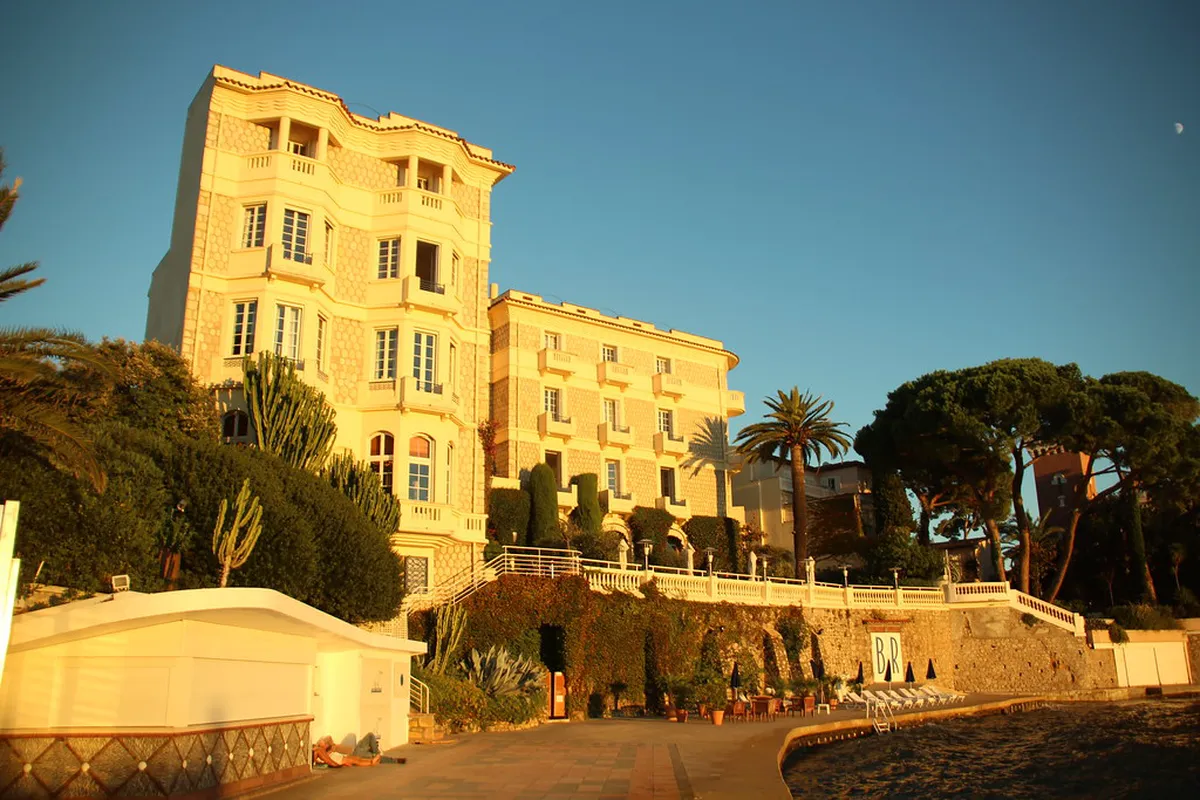
The hotel sits directly on the rocky coastline of the sparkling Mediterranean Sea in France. Its clever design maximizes views of the blue water from almost every public vantage point. Wide terraces and large windows invite the natural light into the building during the day. This connection to nature is vital for architecture in Antibes currently.
The private dock adds a functional yet very stylish architectural element to the southern property. Guests can arrive by boat directly at the hotel's edge for a truly grand entrance. This feature emphasizes the property's exclusive and luxurious nautical character in the Juan-les-Pins area. It remains one of the few places with such direct and private sea access today.
The terrace uses light-colored stones that stay cool under the hot summer sun of France. Green parasols and classic outdoor furniture create a comfortable space for guests to relax outdoors. The panoramic views are framed by the building's own structural columns and elegant arches. This design creates a seamless transition between the built environment and the natural world.
Coastal erosion is a challenge that the architectural team manages with great care and expertise. They use specialized materials to protect the foundation from the salt air and the waves. The longevity of the building is a testament to the quality of its original construction. It stands as a permanent fixture on the changing shoreline of the French Riviera.
Preserving the Iconic Hotel Facade
The bright white exterior of the hotel is its most recognizable and famous physical feature. Regular painting and cleaning are necessary to keep the facade looking fresh and brilliant year-round. Specialized craftsmen work on the decorative elements to ensure they do not lose their sharp edges. This maintenance ensures the Hôtel Belles Rives architecture remains a focal point for the city.
Wrought iron balconies require specific treatments to prevent rusting from the nearby salty sea air. These balconies provide a rhythmic pattern that gives the building its distinct and classy appearance. Looking up from the beach, the structure appears like a grand ship anchored on the shore. The architectural silhouette is iconic and appears in many travel magazines and films today.
Preserving the original windows was a priority during the most recent building renovation cycles. They used modern glass to improve energy efficiency while keeping the original frame shapes intact. This approach allows the hotel to meet modern environmental standards without losing its historic soul. It is a model for other historic hotels looking to modernize their infrastructure.
The lighting design at night highlights the architectural features of the building from the street. Soft spotlights emphasize the columns and the horizontal lines that define the Art Deco style. This nocturnal view is just as impressive as the building looks during the daylight hours. Local residents and tourists alike appreciate the beauty of the illuminated hotel facade.
The Bar Fitzgerald Design Legacy
The Bar Fitzgerald is perhaps the most famous interior space within the entire hotel property. It features original hand-painted murals that depict scenes of coastal life and jazz age celebration. The club chairs are upholstered in rich leather that has aged beautifully over many decades. This room serves as the social heart of the hotel for guests and locals.
Designers used warm wood paneling to create an intimate and very sophisticated atmosphere for drinking. The bar itself is a masterpiece of woodworking with polished surfaces and elegant brass details. You can imagine the famous writers of the past sitting here and discussing their latest works. The architecture of the bar supports a sense of privacy and quiet luxury.
Large windows in the bar area offer stunning sunset views over the Esterel mountains nearby. The transition from the dark interior to the bright sky creates a dramatic visual effect. The ambiance is unmatched in Juan-les-Pins due to this careful and deliberate design balance. Every element in the room contributes to a feeling of deep historical immersion.
Live music often fills the space, echoing the traditions of the early twentieth-century jazz era. The acoustics were considered during the design phase to ensure music carries well through the room. It remains a place where architecture and culture meet in a very harmonious way. Visiting this bar is a mandatory experience for any architecture lover in 2025.
Frequently Asked Questions
What is the architectural style of Hôtel Belles Rives?
The hotel is a premier example of the Art Deco style from the nineteen twenties. It features geometric shapes, streamlined curves, and elegant wrought iron details throughout. The design emphasizes symmetry and luxury through high-quality materials and innovative construction.
When was the Hôtel Belles Rives originally built?
The building started as the Villa Saint-Louis in 1925 for a private family. It was later converted into a luxury hotel in 1929 by the Estène family. The structure has been carefully preserved to maintain its original Jazz Age character.
Can I visit the hotel to see the architecture without staying there?
Yes, visitors can experience the architecture by visiting the Bar Fitzgerald or the terrace restaurant. These public spaces showcase the original murals, furniture, and stunning coastal views of the property. It is a great way to enjoy the design without a room booking.
Is the Hôtel Belles Rives architecture protected by law?
The hotel is recognized as a significant historical site within the French Riviera region. Local preservation laws ensure that any renovations respect the original Art Deco design and materials. This protection helps maintain the cultural heritage of Juan-les-Pins for all.
What makes the hotel's location architecturally unique?
The hotel is built directly on the water's edge, which is rare for the region. Its design incorporates a private pier and terraces that blend into the rocky coastline. This creates a unique relationship between the building and the Mediterranean environment.
Hôtel Belles Rives architecture remains a timeless treasure on the sun-drenched French Riviera. It offers a unique window into the glamorous and artistic past of Juan-les-Pins. Plan your 2025 visit to experience this stunning architectural marvel for yourself. Discover why this hotel continues to inspire artists and travelers from all over the world.
Key Takeaways
- Hôtel Belles Rives is a masterpiece of 1920s Art Deco architecture.
- The building was originally the Villa Saint-Louis, home to F. Scott Fitzgerald.
- The hotel features original murals and furniture in the famous Bar Fitzgerald.
- It is one of the few luxury hotels with direct private sea access.
- The property is meticulously preserved to maintain its historic Jazz Age charm.
Related reads: architecturebycity.com, art deco facade preservation antibes, fort carre vauban design.