
Saint-Jean-Baptiste Church Bastia: Visit This Icon
Explore the Saint-Jean-Baptiste Church Bastia in 2025. Discover Corsica's largest church and its stunning Baroque architecture. Plan your visit today!
On this page
Saint-Jean-Baptiste Church Bastia stands as the tallest religious building on the island of Corsica. This massive structure overlooks the Old Port and serves as a major city landmark. Its towering presence defines the skyline for travelers arriving by sea or land. You will find it in the heart of the historic district.
Construction of this site began in 1636 and lasted for several decades. It represents the height of Genoese influence on local religious life. The church is dedicated to Saint John the Baptist, the patron saint of the city. Visiting this site is essential for anyone exploring the rich history of Bastia.
Today, the church remains an active place of worship for the local community. It also attracts thousands of tourists who admire its grand facade and art. In 2025, the building continues to be a centerpiece of cultural events and religious festivals. You can enjoy the surrounding cafes after a quiet walk through the nave.
The Architectural Legacy of Terra Vecchia
Saint-Jean-Baptiste Church Bastia sits within the ancient Terra Vecchia district urban layout near the water. This neighborhood is the oldest part of the lower city. The narrow streets around the church reflect centuries of dense urban development. You can feel the history in every stone as you approach the main doors.
The architects chose a site that once housed a much smaller chapel. They needed more space to serve the growing population of the bustling port city. Work progressed slowly because of the massive scale of the foundations. The church was finally completed in 1666 after thirty years of steady labor.
The building belongs to the impressive group of Genoese baroque churches of Bastia found throughout the region. Its style focuses on grandeur, light, and theatrical interior spaces. Genoese masters brought these trends from Italy to the island during the 17th century. This influence is visible in the choice of materials and decorative motifs.
Local families and wealthy merchants funded the long construction process through generous donations. They wanted a church that reflected the prosperity of the maritime trade. The result is a structure that looks more like a cathedral than a parish church. It remains a testament to the city's golden age of commerce.
Walking through the area reveals how the church anchors the entire neighborhood. The surrounding buildings are tall and crowded, making the church seem even larger. You can see the facade from almost any point in the harbor. It provides a constant reference point for lost visitors and locals alike.
The Iconic Twin Bell Towers
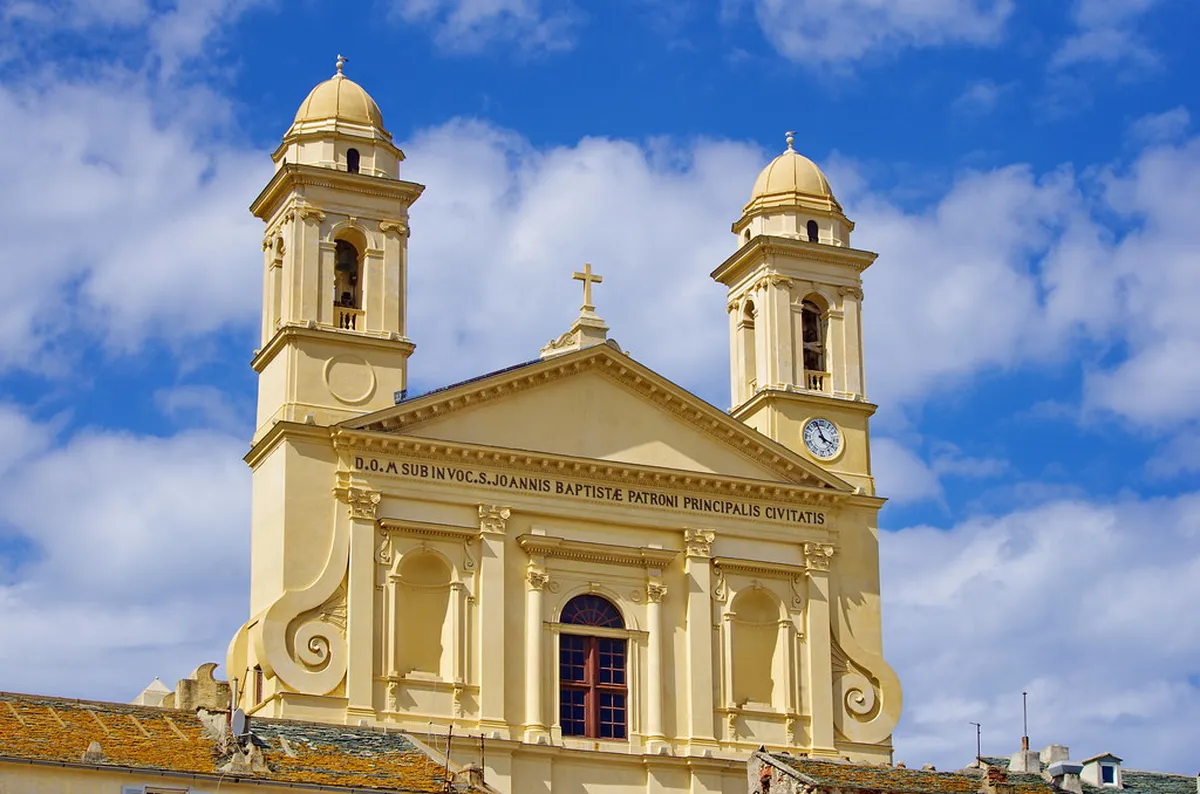
The most recognizable feature of the church is its pair of high towers. These twin bell towers architecture elements were added later in the 19th century. The first tower was finished in 1810 to match the original plans. A second matching tower was added in 1864 to complete the symmetrical look.
These towers rise high above the rooftops of the old town buildings. They are visible from many miles away on the Mediterranean Sea. Each tower features classic details that blend perfectly with the older facade. The bells still ring out to signal time and religious services today.
The symmetry of the towers creates a sense of balance for the entire square. Visitors often spend time photographing the facade from different angles in the port. The golden stone of the towers glows beautifully during the sunset hours. It is a favorite spot for professional and amateur photographers in Bastia.
Climbing the towers is not always possible for the general public during the year. However, their exterior beauty is enough to impress any passing traveler. They stand as a symbol of the city's resilience and growth over centuries. The towers have survived many storms and local conflicts throughout their long history.
Architects in 2025 still study the towers for their classical proportions and style. They use a mix of local stone and traditional lime-based mortar. This construction helps the building withstand the salty air from the nearby sea. The towers remain the highest points in the historic district of the city.
Exploring the Baroque Interior Art
The interior of the church offers a stunning display of wealth and artistic skill. You will find high ceilings decorated with elaborate gold leaf and deep colors. The main nave is wide and allows light to flood the entire space. It creates a powerful atmosphere for prayer or quiet contemplation during your visit.
Many of the walls feature incredible trompe loeil paintings in Saint Jean Baptiste that fool the eye. These murals create the illusion of three-dimensional carvings on flat surfaces. Artists used this technique to add grandeur without the weight of heavy stone. It is a hallmark of the Baroque style seen across Europe.
The high altar is made from various types of rare and expensive marble. It was crafted in the 18th century by skilled artisans from Italy. The altar serves as the focal point for the entire interior design. You can see detailed carvings of saints and floral patterns in the stone.
Side chapels line the edges of the main nave with unique decorations. Each chapel was often dedicated to a specific guild or local wealthy family. They contain private altars and historical paintings of significant religious scenes. Take your time to walk through each one to see the variety.
The lighting inside changes throughout the day as the sun moves across the sky. High windows allow beams of light to hit the golden decorations at certain hours. This effect was carefully planned by the original builders to inspire the faithful. It makes the interior feel alive and constantly changing for visitors.
The Historic Organ and Choir Design
One of the true treasures of the church is the magnificent musical instrument. The Saint Jean Baptiste organ loft design is a masterpiece of woodworking and engineering. It was built in the 18th century and later restored to its original glory. The organ produces a rich sound that fills the large stone building.
The loft features intricate carvings of musical instruments and celestial figures in dark wood. It sits high above the main entrance to project sound throughout the nave. The pipes are arranged in a decorative pattern that matches the church's style. It is considered one of the finest organs in all of France.
Concerts are often held here to showcase the organ's unique and powerful voice. These events attract music lovers from across Corsica and the mainland. Hearing the music in such a large space is a memorable experience. Check local listings for performance times during your stay in the city.
The choir area also features beautifully carved wooden stalls for the local clergy. These seats were made for long religious services and choral performances. The wood has developed a deep patina over many years of regular use. You can see the marks of history in the fine details of the carvings.
Behind the altar, the choir space provides a quiet area for the church's singers. The acoustics here are perfect for traditional Corsican polyphonic singing styles. This type of music is deeply rooted in the local culture and history. Many visitors find these performances to be the highlight of their trip.
Planning Your Visit in 2025
Visiting the Saint-Jean-Baptiste Church Bastia is easy for most travelers to the island. Entry to the church is free for all visitors throughout the year. However, donations are always welcome to help with the ongoing maintenance of the building. Please remember to dress modestly and remain quiet during active church services.
The church is usually open daily from early morning until the early evening. It may close for a few hours during the midday lunch break in summer. Most visitors spend about thirty to sixty minutes exploring the interior and facade. It is best to visit in the morning to avoid the heat.
You will find the church at the Place du Marche in the old town. This location is within walking distance of the ferry terminal and main hotels. The area is pedestrian-friendly but features many steep stairs and narrow cobblestone paths. Wear comfortable walking shoes to enjoy the stroll through the historic neighborhood.
There are several small shops nearby selling local crafts and religious souvenirs. You can also find many excellent seafood restaurants overlooking the old port. After your visit, sit at a cafe and enjoy the view of the towers. It is the perfect way to spend a sunny afternoon in Bastia.
Check for special religious holidays like the Feast of Saint John in late June. The church becomes the center of a major celebration with parades and fireworks. These events offer a unique look at local traditions and communal life. Plan your 2025 trip accordingly if you wish to see these festivals.
Frequently Asked Questions
Where is Saint-Jean-Baptiste Church Bastia located?
The church is located in the Terra Vecchia district of Bastia. It sits right next to the Old Port and the Market Square. You can easily walk there from the center of the city. Most people find it by looking for the twin towers.
Is there an entrance fee for the church?
No, there is no fee to enter the Saint-Jean-Baptiste Church Bastia. It is free for both tourists and worshippers to enjoy. Donations are accepted to help with the high cost of repairs. You can find donation boxes near the main entrance doors.
What are the opening hours for visitors?
The church usually opens at 8:00 AM and closes around 6:00 PM. It sometimes closes between 12:00 PM and 2:00 PM for a break. These hours can change during special religious holidays or local festivals. It is best to visit during the morning hours.
Can I take photos inside the church?
Photography is allowed but you must be respectful of people praying. Flash photography is usually discouraged to protect the old paintings and art. Avoid taking photos during active mass or other religious services. Always keep your phone on silent while you are inside.
Saint-Jean-Baptiste Church Bastia remains a vital part of Corsican history and culture. Its grand Baroque interior and twin towers make it a must-see landmark. Whether you come for the art or the peace, you will leave impressed. Plan your visit in 2025 to experience this architectural gem for yourself. For more details on the city, check out our guide on architecture in Bastia today.
Key Takeaways
- Admission to the church is free for all visitors in 2025.
- The twin bell towers are the tallest structures in the historic district.
- Look for the trompe loeil paintings that create 3D visual illusions.
- The church is located in the Terra Vecchia district near the Old Port.
- Visit during the morning to see the interior art in the best light.