
Beaune Romanesque Church Features and Architecture
Discover unique Beaune Romanesque church features at Notre-Dame. Learn about Cluniac designs and medieval artistry in France. Visit this 2025 landmark today!
On this page
The town of Beaune holds a hidden architectural gem in Burgundy. This site is the Collegiale Notre-Dame de Beaune. It serves as a masterpiece of 12th-century design. You can see many Beaune Romanesque church features here today.
This church shows the deep history of religious construction in France. Construction began around 1120 to serve the local community. It reflects the power of the Burgundian dukes. Builders used local limestone to create a lasting monument. Most of the structure remains intact for visitors in 2025.
The building follows a traditional basilican plan with massive walls. These walls support the heavy stone roofs of the era. You will notice the balance between light and stone. It is a perfect place for an architectural analysis. Exploring the Collegiale Notre-Dame de Beaune architecture reveals medieval secrets. The site is open daily for public tours.
The Powerful Cluniac Influence on Beaune
The design of this church did not happen in isolation. It draws heavily from the famous Abbey of Cluny. This was the largest church in Christendom for centuries. Architects in Beaune copied the grand Cluniac style. You can see this in the three-aisle layout.
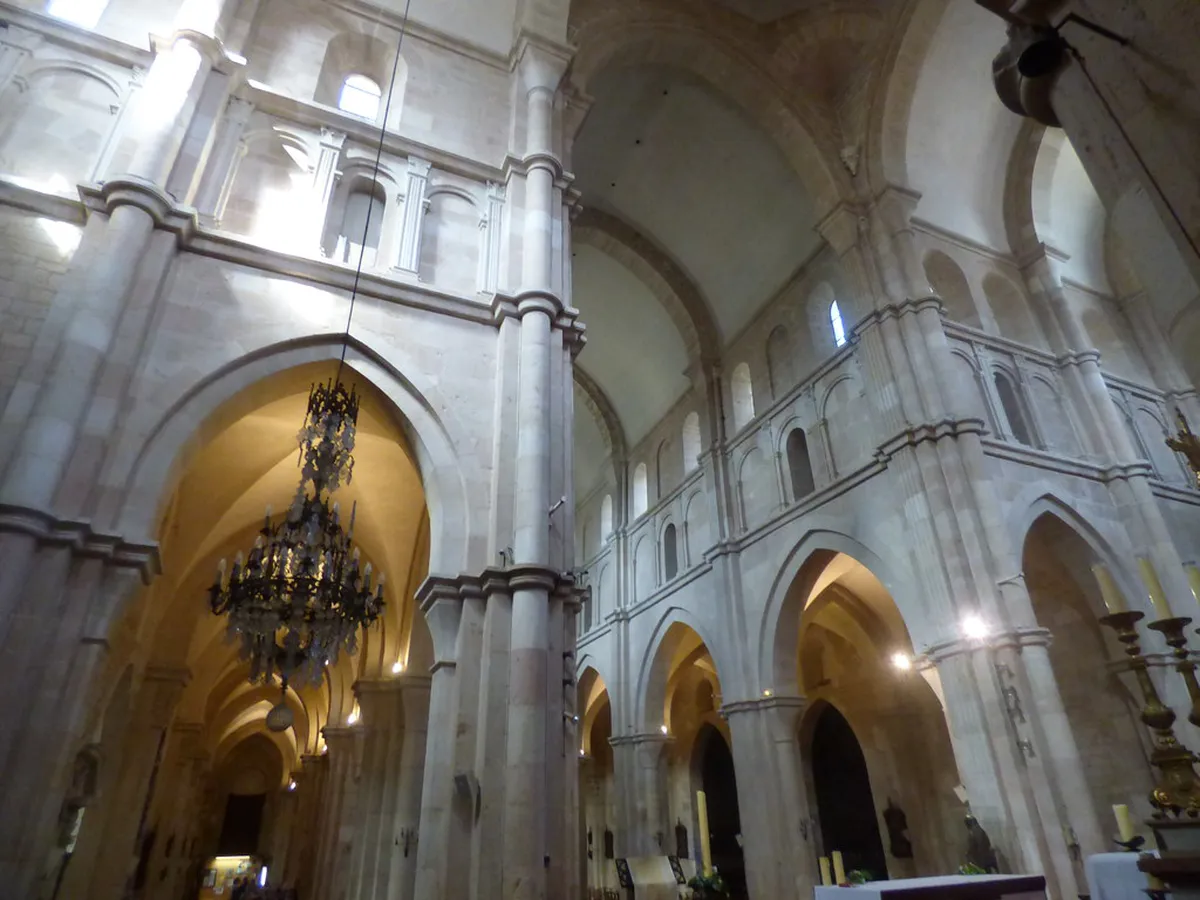
The use of fluted pilasters is a key Cluniac trait. These decorative columns line the high walls of the nave. They mimic ancient Roman styles found in the region. This connection helped spread the Romanesque movement across Europe. It gave the town a sense of religious prestige.
The Cluniac influence on Beaune churches is very visible here. Look at the pointed arches in the main nave. These arches allowed for taller and thinner walls. This was a major leap forward for 12th-century engineers. It paved the way for future Gothic developments.
Pilgrims often traveled through Burgundy to reach Spain. They brought new ideas and artistic styles with them. Beaune benefited from this cultural exchange during the Middle Ages. The church served as a safe haven for these travelers. It remains a quiet place for modern reflection.
Structural Characteristics of the Main Nave
The nave of Notre-Dame demonstrates incredible structural strength. Heavy barrel vaults cover the central space of the church. These vaults are made from solid local stone. They create a rhythmic pattern along the ceiling. The height reaches over twenty meters in some areas.
Thick pillars support the weight of the massive stone roof. These pillars have square bases with rounded corners. They are designed to resist the lateral pressure of vaults. Builders used precise geometry to ensure the building stood firm. You can still see the original chisel marks. Many visitors find the stone work very impressive.
The side aisles are much lower than the central nave. This allows for small windows to sit high up. These windows are known as the clerestory level. They bring natural light into the dark stone interior. The light changes throughout the day in 2025. It creates a peaceful atmosphere for all visitors.
Every block of stone was carved by hand centuries ago. Masons spent years perfecting the alignment of the arches. The precision of the 12th-century work is quite remarkable. You can feel the weight of history in this space. It is a true testament to medieval craftsmanship.
The Romanesque Apse and Exterior Elements
The eastern end of the church features a semi-circular apse. This is a classic Beaune Romanesque church feature. Five small radiating chapels surround the main altar area. This layout allowed many priests to say mass simultaneously. It was a very practical design for the time. Pilgrims could walk around the choir without disturbing services.
The exterior of the apse shows beautiful stone carvings. Look for the corbels shaped like human faces. Some depict mythical animals or floral patterns. These carvings served as moral lessons for the illiterate. They are still remarkably clear after many centuries. Professional photographers love the afternoon light on these stones.
The central tower rises proudly above the crossing point. It has undergone some changes over the last 800 years. The base remains purely Romanesque in its solid form. However, the upper levels show later Renaissance additions. This mix of styles is common in historic French towns. It tells a story of constant local growth.
- Radiating Chapels: Five small semi-circular prayer spaces.
- Corbels: Decorative stone brackets under the roof line.
- Ambulatory: A curved walkway behind the high altar.
- Blind Arches: Decorative arches that do not have openings.
Sculptural Details and Medieval Symbolism
The capitals on the columns tell biblical stories. Each carving has a specific meaning for the faithful. You might see scenes from the life of Mary. Other carvings show the battle between good and evil. These details are essential for architectural analysis. They represent the mindset of the 12th century.
Many capitals feature intricate leaf patterns and scrolling vines. These designs reflect the natural beauty of the Burgundy region. The local limestone was soft enough for detailed work. However, it was hard enough to resist erosion. This is why the details are still visible today. Take a moment to look at the pillars.
Inside the choir, the artistry continues with famous textiles. You should view the Notre-Dame de Beaune tapestries and choir area. These tapestries date back to the 15th century. They complement the older Romanesque stone work perfectly. The colors remain vibrant and tell sacred stories. It is a highlight of any visit.
The flooring also contains ancient stones and memorial slabs. Some mark the graves of local noble families. These families often funded the church's various expansions. Their history is tied to the very foundation of Beaune. Respect the quiet nature of these sacred spaces. Admission to the church is usually free.
The Evolution from Romanesque to Gothic
Architecture in Beaune did not stay the same forever. By the 13th century, Gothic styles became more popular. You can see these changes in the front porch. The porch features large pointed arches and tall windows. This area was added to protect the main entrance. It creates a grand transition from the street.
The transition shows how builders learned to manage weight. They used flying buttresses on the exterior walls. This allowed them to make the windows much larger. The result is a brighter interior for the congregation. It represents a shift in religious and social values. Modern engineers still study these historical changes.
Even with Gothic additions, the Romanesque core remains strong. The thick walls of the nave provide a solid base. This combination of styles makes the church very unique. It is a living timeline of French building techniques. Visitors can compare the two styles in one building. It is a great lesson for students.
The roof of the church is also very distinctive. It features the famous glazed tiles of Burgundy. These tiles create bright geometric patterns in many colors. They shine brightly under the French sun in 2025. This tradition started in the late Middle Ages. It is now a symbol of the entire region.
Frequently Asked Questions
What are the main Beaune Romanesque church features to see?
Look for the rounded arches and thick limestone walls. The semi-circular apse with radiating chapels is also key. Do not miss the carved stone capitals on columns. These elements define the Burgundian Romanesque style perfectly. They have survived for over 800 years.
When was the Collegiale Notre-Dame de Beaune built?
Construction on the church started around the year 1120. Most of the Romanesque structure was finished by 1150. Builders added later Gothic parts in the 13th century. It remains one of the oldest buildings in town. You can visit it easily in 2025.
Is there a fee to enter the Romanesque church in Beaune?
Entry to the main church is generally free for visitors. There might be a small fee for special exhibits. This includes the famous 15th-century tapestry collection in the choir. Always check local hours before you plan your trip. It is a budget-friendly historical landmark.
How long does a tour of the church architecture take?
A detailed walk through the church takes about one hour. This allows time to see the nave and apse. You should also spend time looking at the exterior. Add thirty minutes if you want to see tapestries. It is a great stop on a walking tour.
The Collegiale Notre-Dame is a vital piece of French history. Its Beaune Romanesque church features provide a window into the past. You can see the influence of Cluny in every stone. The blend of styles creates a unique atmosphere for all. It stands as a proud monument in the heart of town.
Plan your visit to this site during your next trip. It is located near the famous Hospices de Beaune. The church offers a quiet break from the busy streets. You will appreciate the skill of the medieval master masons. Their work has lasted for many centuries already. It will likely last for many more.
Take plenty of photos of the intricate stone carvings. Share your discovery with other fans of historic architecture. Burgundy has many treasures, but this church is special. Start your journey into the medieval world today. You will not regret exploring this stone masterpiece. See you in Beaune very soon!
Key Takeaways
- Identify the Cluniac influence in the nave layout.
- Observe the transition from Romanesque to Gothic styles.
- View the 12th-century stone carvings on the pillar capitals.
- Appreciate the unique semi-circular apse and its five chapels.
- Visit the interior to see the famous medieval tapestries.
Related reads: architecturebycity.com, architecture in beaune, hospices de beaune architectural history.