
Best Views of Hotel-Dieu Roof: Photography Guide
Discover the best views of Hotel-Dieu roof in Beaune for 2025. Learn the top photography spots and tips in this guide. Start your visual tour today!
On this page
The Hotel-Dieu in Beaune is a world-famous landmark located in the heart of Burgundy, France. Visitors travel from across the globe to see its stunning and iconic polychrome glazed tile roof. Finding the best views of Hotel-Dieu roof requires careful planning and a bit of perfect timing. This guide explores the top spots for architectural photography in the historic city for 2025.
The Hospices de Beaune serves as a masterpiece of 15th-century Flamboyant Gothic architecture and design. Its roof features intricate geometric patterns made from green, red, yellow, and black glazed tiles. These vibrant colors symbolize the prestige and the immense wealth of the Burgundy region during the Middle Ages. You will find that every angle offers a unique perspective on this remarkable historical structure.
Capturing the Best Views of Hotel-Dieu Roof from Inside
The most iconic and direct views are found within the interior courtyard of the Hospices building. You must purchase a ticket to enter the courtyard and experience the full scale of the tiles. Entry fees typically cost around twelve euros for adults during the busy 2025 tourist season. This perspective allows you to see the intricate patterns and the dormer windows up close.
The courtyard offers several vantage points that highlight the steep pitch of the famous Burgundy roof. Stand in the center to capture the symmetrical beauty of the colorful geometric tile designs. You should look for the hospices de beaune architectural history to understand the cultural significance of these patterns. The wooden galleries provide a dark contrast against the bright and reflective surfaces of the roof.
Wide-angle lenses are essential for capturing the expansive roofline from within the confined courtyard space. Try shooting from the corners to create leading lines that draw the eye toward the decorative peaks. You can also focus on the small details of the lead ridge ornaments and the weather vanes. These elements add a layer of historical texture and depth to your architectural photography collection.
Visit early in the morning when the sun first hits the southern side of the interior court. The light creates a warm glow that makes the glazed tiles appear almost like liquid gold. Afternoon light can cast long shadows across the courtyard which might obscure some of the finer details. Plan your visit for at least ninety minutes to explore every corner of this historic site.
Vantage Points from the Historic Beaune Ramparts
You can find unique and elevated views of the roof by walking along the ancient city walls. These ramparts encircle the old town and offer glimpses of the roof rising above the surrounding buildings. This walk is free to the public and provides a different context for the hospital building. You will see how the colorful tiles dominate the skyline of the medieval city center.
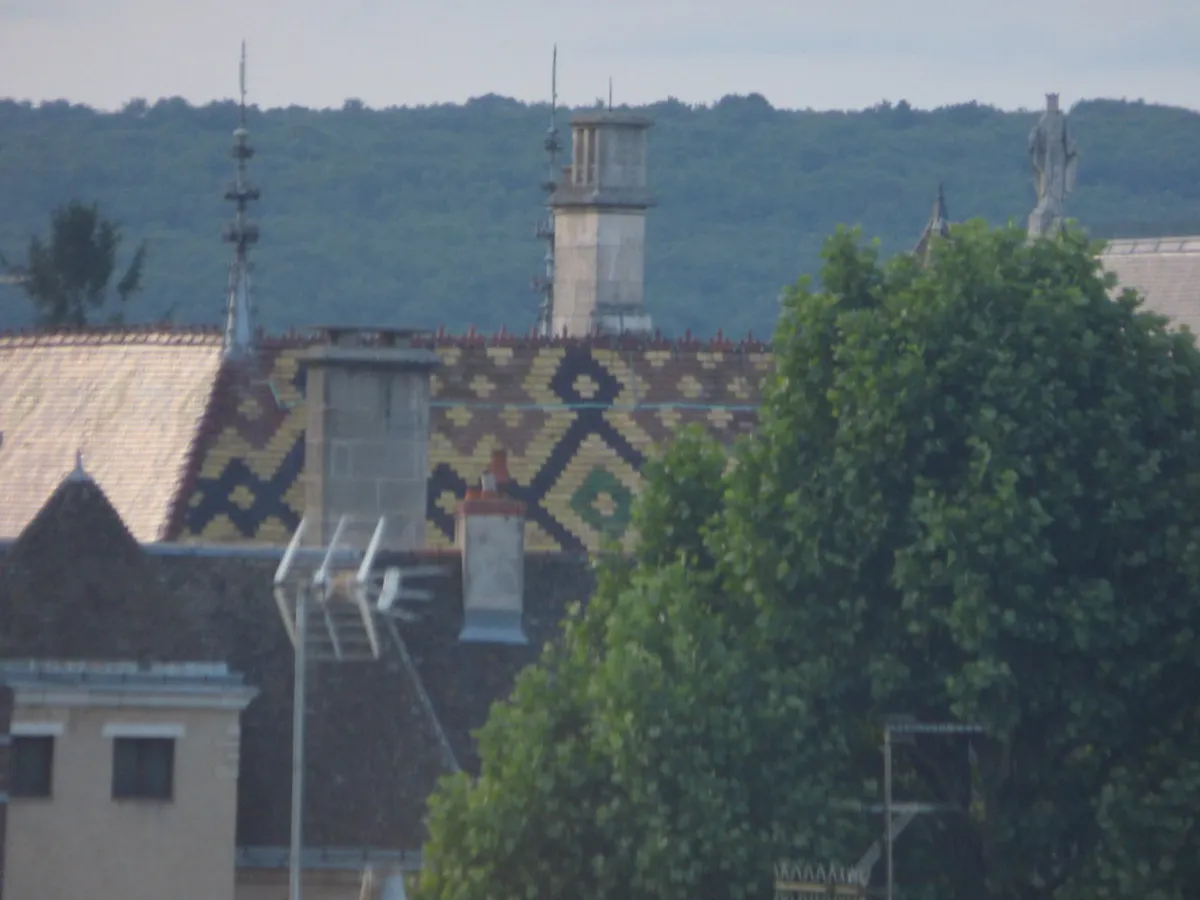
The walk along the remparts de beaune walking tour reveals the sheer size of the Hotel-Dieu structure. Look for openings between the trees and neighboring houses to frame the roof against the clear sky. These distant views are perfect for using a telephoto lens to compress the layers of architecture. You can capture the contrast between the gray stone walls and the vibrant roof tiles.
- Walk from the Porte Saint-Nicolas toward the southern edge of the ramparts for better angles.
- Look for the spot near the Square des Lions for a clear view of the spires.
- Visit during the golden hour to see the tiles sparkle under the setting sun rays.
The ramparts provide a peaceful environment away from the main tourist crowds within the hospital itself. You can take your time to set up a tripod for the sharpest possible architectural images. Please respect the privacy of local residents whose gardens border the historic stone city walls. This elevated perspective is essential for understanding the urban layout of the ancient town of Beaune.
Essential Tips for Architectural Photography in Beaune
Successful photography in Beaune requires an understanding of how light interacts with glazed and reflective surfaces. The tiles are highly reflective and can cause glare if the sun is directly overhead at noon. Use a polarizing filter to manage reflections and to enhance the natural saturation of the colors. This tool is vital for getting the best views of Hotel-Dieu roof in your photos.
You should explore other architectural photography spots in beaune to complement your shots of the hospital roof. The narrow streets surrounding the Hotel-Dieu offer tight frames and interesting shadows during the late afternoon. Look for reflections of the colorful tiles in the windows of nearby shops and historic cafes. These creative compositions add a modern twist to your travel and architecture photography portfolio.
Check the local weather forecast to plan for clear skies or soft and even cloudy light. Overcast days are actually excellent for capturing the true colors of the tiles without harsh highlight clipping. Rain can also make the tiles look even more vibrant by adding a shiny layer of moisture. Always bring a micro-fiber cloth to keep your camera lens clean in damp or misty weather.
Consider the height of your camera to change the perspective of the steep and sloping rooflines. Shooting from a low angle can make the building look more imposing and grand in your images. Conversely, shooting from eye level provides a more documentary style that captures the reality of the scene. Experiment with different apertures to keep the entire roof in sharp focus from front to back.
Seasonal Considerations for Visiting the Hotel-Dieu
Spring and autumn offer the most pleasant weather for exploring the outdoor sites and the city ramparts. In May, the fresh green leaves of the trees provide a beautiful frame for the colorful tiles. October brings a crisp air that often results in very clear visibility for long-distance photography shots. These shoulder seasons are less crowded than the busy summer months of July and August.
Winter provides a unique opportunity to see the roof tiles dusted with a light layer of white snow. The contrast between the white snow and the red and gold tiles is absolutely breathtaking to behold. However, be aware that the sun remains lower in the sky during the winter months in France. This results in shorter shooting windows and longer shadows throughout the day in the city center.
Summer visitors should arrive exactly when the gates open to avoid the large groups of tour buses. The heat in Burgundy can be quite intense during the middle of the day in late July. Wear comfortable walking shoes as the cobblestone streets in Beaune can be very uneven and challenging. Always carry water and wear sunscreen while you are scouting for the perfect photography vantage points.
The Hotel-Dieu holds a famous wine auction every November which brings a festive atmosphere to the city. During this time, the building is often illuminated with special lights during the evening and night hours. Night photography can reveal the textures of the tiles in a completely different and dramatic light. Check the official calendar for any special events that might restrict or enhance your access.
Frequently Asked Questions
What time of day is best for photographing the Hotel-Dieu roof?
The best time is early morning or late afternoon during the golden hour for warm light. Mid-morning offers the most even illumination for the interior courtyard patterns without creating very harsh shadows. Avoid midday when the sun is directly above as it creates flat and uninteresting lighting conditions.
Do I need a special permit to take photos inside the Hospices?
Standard photography for personal use is allowed with your paid entry ticket to the historic site. However, the use of tripods is often restricted during busy hours to ensure the safety of visitors. You should always check with the staff at the entrance for the most current photography rules.
Can I see the roof for free from the street?
You can see portions of the roof from Rue de l'Hotel-Dieu and the surrounding public squares. However, the most famous and elaborate patterns are only visible from inside the private interior courtyard. Walking the ramparts provides the best free elevated views of the spires from a distance.
What lens is best for capturing the roof tiles?
A wide-angle lens like a 16-35mm is perfect for capturing the scale within the courtyard area. A telephoto lens such as a 70-200mm is better for detail shots from the city ramparts. Having both options will allow you to capture the full variety of architectural perspectives available.
The Hotel-Dieu roof remains one of the most stunning architectural sights in all of France and Europe. By following this guide, you can find the best views of Hotel-Dieu roof for your 2025 trip. Remember to explore both the interior courtyard and the external ramparts for a complete photography experience. Plan your visit today to witness the incredible history and artistry of the Burgundy region.
Key Takeaways
- Enter the interior courtyard early in the morning for the best light on the tiles.
- Walk the city ramparts for free elevated views of the iconic colorful roofline.
- Use a polarizing filter to reduce glare and enhance the vibrant colors of the roof.
Related reads: architecturebycity.com, architecture in beaune, hidden courtyards for photography in beaune.