
Victor Louis Buildings in Bordeaux: A Local Guide
Discover the stunning Victor Louis buildings in Bordeaux. Explore Neoclassical masterpieces like the Grand Théâtre in 2025. Read our expert guide today!
On this page
Victor Louis completely transformed the urban streets of Bordeaux during the final decades of the late 1700s. His masterful work represents the absolute peak of French Neoclassical architecture in this very historic port city. Many modern travelers visit these iconic sites to admire their timeless elegance and stone details in 2025. These Victor Louis buildings in Bordeaux remain essential stops for every single architecture enthusiast visiting France today.
The city underwent a massive architectural renovation during the Enlightenment period under the direction of skilled designers. Victor Louis emerged as the most influential figure during this era of rapid growth and urban development. His buildings reflect the wealth and sophistication of a city that was then a global trading hub. Today, these limestone structures provide a beautiful backdrop for the modern life of the local French citizens.
The Life and Vision of Victor Louis
The famous architect Victor Louis was born in the city of Paris in the year 1731. He studied his craft at the prestigious Royal Academy of Architecture located in the heart of the capital. His very early success eventually earned him the famous and highly coveted Prix de Rome scholarship award. This important honor allowed him to study many classical ruins throughout the beautiful country of Italy.
Louis returned to France with a fresh and bold vision for modern urban design and civic structures. He wanted to combine ancient Roman styles with the functional elegance required by the French ruling elite. His professional reputation grew very quickly among the highest levels of French royalty and the wealthy merchant class. This fame eventually brought him to the bustling and prosperous port city of Bordeaux for major projects.
The governor of the Guyenne region invited Louis to lead several massive construction projects in the city center. Bordeaux was experiencing a golden age of international trade and immense wealth at that specific time. The city truly needed grand buildings to reflect its new status as a major player in global commerce. Louis arrived ready to implement his ambitious Bordeaux Neoclassical architecture plans for the local government.
His unique style featured grand columns, perfect symmetry, and very clean geometric lines across every single facade. He carefully avoided the heavy decorations found in earlier Baroque or Rococo designs from the previous century. Louis focused on the balance and harmony between the building and the surrounding urban environment at all times. This sophisticated approach created a very refined atmosphere throughout the entire historic center of the city today.
He also traveled to the country of Poland to work on several royal projects for the king there. These international experiences shaped his versatile architectural style and helped him master the use of classical proportions. He brought these global ideas back to his French commissions and refined them for the local climate. This amazing diversity made him a clear leader in the growing Neoclassical movement across all of Europe.
The Grand Théâtre Masterpiece
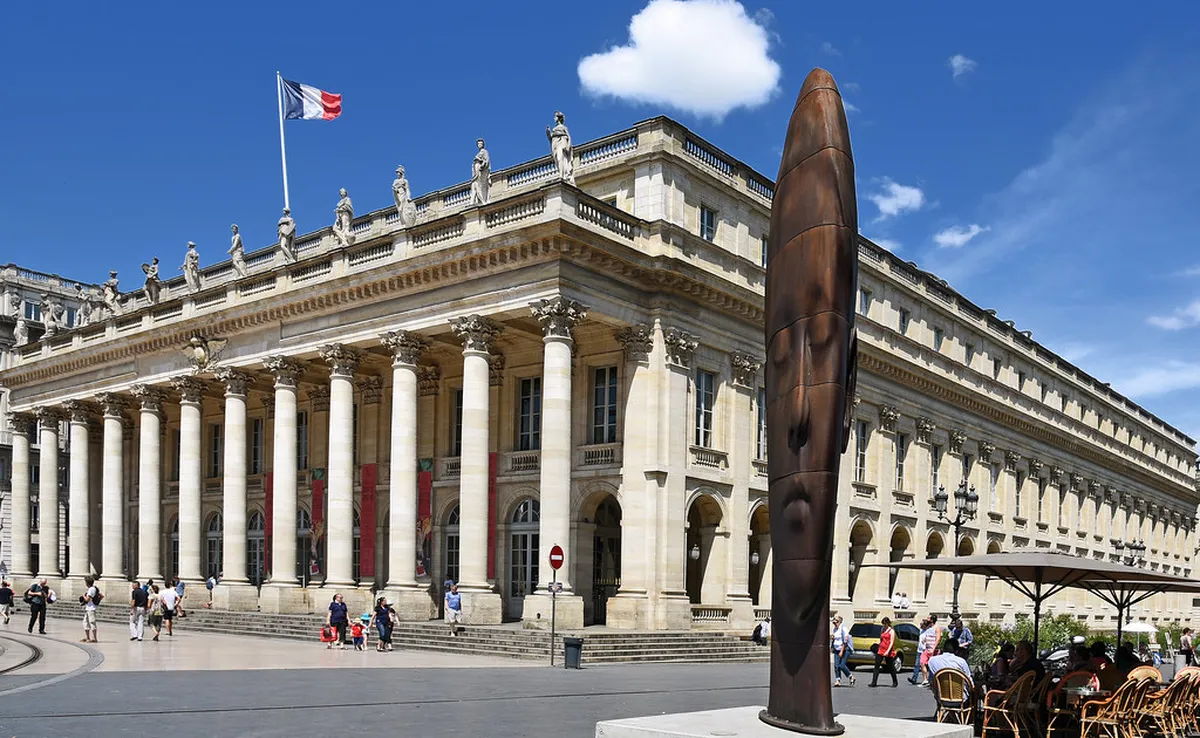
The Grand Théâtre is undoubtedly the most famous and iconic work completed by the architect Victor Louis. It officially opened in 1780 after several years of very complex and expensive construction for the city. This stunning building sits proudly at the heart of the beautiful and lively Place de la Comédie. It remains one of the oldest and most well-preserved wooden frame opera houses in all of Europe.
Twelve massive Corinthian columns decorate the stunning front facade of this theater and create a grand entrance. Statues of the nine Muses and three goddesses stand proudly above these columns in a very dramatic line. These classical figures represent the arts and ancient mythology in great detail for every passing visitor to see. The exterior design sets a high standard for Grand Théâtre de Bordeaux architecture and local style.
Inside the building, the grand staircase served as a direct inspiration for the famous Paris Opera house later. Louis used innovative engineering techniques to improve the acoustics for every single guest in the large auditorium. The blue and gold interior provides a very regal setting for modern opera and ballet performances in 2025. Visitors can still attend world-class shows in this space to experience the original 1780s atmosphere and charm.
Tickets for guided tours usually cost between 10 to 15 Euros per person for a full visit. These tours provide exclusive access to the backstage areas and the private boxes used by the royal family. It is best to book these tours online at least one week early to ensure your spot. The theater is easily accessible via the local tram lines B and C at any time of day.
The entire building underwent extensive restoration recently to maintain its original eighteenth-century appearance and structural integrity. Experts used traditional materials and techniques to preserve the delicate interior paintings and the bright gold leaf details. This commitment to history ensures the theater remains the cultural crown jewel of the entire Aquitaine region. It stands as a timeless testament to the genius and technical skill of the architect Victor Louis.
Victor Louis and Private Mansions
Louis did not limit his local work to just grand public civic buildings and large opera houses. He also designed several luxury private residences for the very wealthy merchant class living in the city. These hôtels particuliers showcased the owner's high status through refined architectural details and very expensive stone materials. Many of these impressive structures still stand in the historic city center for tourists to admire today.
The Hôtel de la Marine is a primary example of his exceptional residential design skills and classical taste. This building features a very delicate courtyard and a perfectly balanced facade facing the main city street. It demonstrates how Louis adapted grand temple styles for private domestic use in a very practical way. Most of these mansions use the beautiful local cream-colored limestone that gives the city its unique glow.
These private buildings often include hidden internal gardens and very ornate wrought iron balconies on the upper floors. Louis mastered the art of maximizing limited space on the narrow and irregular city street lots of Bordeaux. His designs allowed for plenty of natural light to reach every main room in the house during the day. This focus on resident comfort made his work highly popular among the local elites during his long career.
You can find many of these historic houses near the Public Garden area in the northern city center. Walking through these quiet neighborhoods feels exactly like stepping back into the late eighteenth century for a while. Use Bordeaux architecture walking tours to find these hidden and often overlooked architectural gems. Many facades have been carefully restored to their original 1780s glory by the current private owners.
The interiors of these mansions often feature grand entryways and polished marble floors that reflect the bright sunlight. Louis selected every single detail to create a cohesive sense of luxury for the families living inside. Even the smallest decorative elements reflect his very strict Neoclassical principles of balance and ancient Roman order. These homes remain some of the most sought-after and expensive addresses in the city center in 2025.
Innovative Urban Planning Legacy
Victor Louis influenced the broader layout of the entire city through his visionary approach to urban planning. He believed that grand buildings required large open spaces to be truly appreciated by the general public. He worked closely with city officials to create wide boulevards and symmetrical squares for the local population. This transformed Bordeaux from a cramped medieval maze into a modern and organized eighteenth-century metropolis.
His vision emphasized the strong relationship between public monuments and the beautiful Garonne riverfront area of the city. He helped align the new theater with existing landmarks to create a better visual flow for pedestrians. This planning ensured that the city felt cohesive and was very easy for both locals and visitors to navigate. The results of his work contributed greatly to the city's eventual status as a UNESCO World Heritage site.
Louis also designed functional spaces like the local bread markets and covered galleries for the growing merchant class. He understood that a rapidly expanding city needed practical infrastructure to serve the needs of its many citizens. His designs were often far ahead of their time regarding natural ventilation and modern safety standards for crowds. These projects improved the daily lives of thousands of Bordeaux residents during the late 1700s and beyond.
Modern urban architects still study his master plans for the city center to understand classical urban design principles. His influence can be clearly seen in the perfect symmetry of the main squares throughout the historic district. The harmony between solid stone and open space remains his greatest and most lasting urban planning legacy today. This careful balance makes Bordeaux one of the most beautiful and organized cities in all of modern France.
The wide sidewalks he championed allow for the vibrant and active cafe culture seen by visitors in 2025. People can walk comfortably between the major monuments thanks to his foresight and focus on the pedestrian experience. His urban designs created a truly walkable city long before this term became popular in modern planning circles. This accessibility is a major draw for international tourists who visit the city every single year.
Bordeaux Neoclassical Heritage in 2025
The influence of Victor Louis extends far beyond the physical borders of the city of Bordeaux itself. His work at the Palais Royal in Paris also gained him international acclaim among European architects and royalty. However, his most complete and impressive collection of work remains located in the Southwest of France today. He is widely considered the true father of the distinct Bordeaux Neoclassical style of the eighteenth century.
Conservation teams work tirelessly to protect his stone masterpieces from the negative effects of modern pollution and weather. In 2025, several major restoration projects are active throughout the historic city center to preserve these landmarks. These efforts ensure that future generations can enjoy his architectural genius and the beauty of the limestone. The buildings require specialized cleaning every few decades to stay bright and maintain their original historic appearance.
Students from all around the world visit Bordeaux to study his specific construction techniques and classical design principles. Louis proved that ancient classical forms could be successfully adapted for any modern or civic purpose in society. His legacy is celebrated through various exhibitions at the local architecture museum and the city archives every year. His name remains a powerful symbol of elegance and timeless French design for architects across the globe.
Local festivals often highlight the fascinating history of these historic eighteenth-century buildings through light shows and tours. You can attend expert lectures about his life and work during the annual European Heritage Days each September. These events provide deep insights into the construction methods and tools used over two hundred years ago. It is a wonderful way to learn about the man behind the stone monuments we see today.
Photographers flock to his buildings to capture the beautiful play of light on the porous local limestone facades. The clean lines of his designs create perfect compositions for modern digital media and social platform sharing. Louis would likely be very surprised by his lasting fame and relevance in the modern digital age today. His work continues to inspire artists and designers in many different fields around the entire world.
Visiting the Historic Buildings Today
Start your architectural journey at the Place de la Comédie early in the morning for the best views. This location offers the perfect light for photographing the grand facade of the theater without heavy tourist crowds. The surrounding area is bustling with charming cafes that offer great views of the historic stone columns. Enjoy a fresh croissant while admiring the massive stone Corinthian details of the theater's front entrance.
Wear comfortable walking shoes because the historic city center has many uneven cobblestone streets and long pedestrian paths. Most of the Victor Louis sites are located within a very short walking distance of each other. You can easily see all the main highlights of his work in about four hours of walking. The city is very flat, which makes these architectural walking tours pleasant for visitors of all ages.
Always check the official opening hours for any interior visits well before you start your day in Bordeaux. The Grand Théâtre has very specific times for public guided tours during the middle of the week. Some private mansions are only viewable from the exterior street side to respect the privacy of the residents. Respect the local residents while taking photos of the historic facades and the ornate wrought iron balconies.
Consider visiting during the shoulder seasons of late spring or early autumn for the best overall travel experience. The weather is usually mild and the crowds are much smaller than during the peak summer months. You will have more space to admire the fine architectural details in peace and quiet during these times. This timing allows for a much more intimate and personal experience with the historic city and its stone.
Use the local tram system to reach any sites that are located slightly further away from the center. The tram lines are very efficient and extremely easy for international tourists to navigate with a simple map. Tickets can be purchased at any station using a standard credit card or a mobile payment app. Public transport is a great way to see the entire city like a local French resident.
Frequently Asked Questions
Which is the most famous Victor Louis building in Bordeaux?
The Grand Théâtre is widely considered his most significant and famous masterpiece in the entire city. It stands as a primary symbol of the local cultural heritage and the Neoclassical movement in France. Most visitors start their exploration of his work at this iconic central location on the main square.
Can you visit the interior of the Grand Théâtre in 2025?
Yes, the interior is open for guided tours and scheduled opera or ballet performances throughout the year. It is highly recommended to book your tickets online to secure a specific time slot for your visit. Tours offer a rare look at the stunning grand staircase and the ornate blue and gold auditorium.
How long should I spend touring the Victor Louis sites?
A dedicated walking tour of his major works usually takes around four hours to complete at a steady pace. This allows enough time to admire the facades and visit at least one interior location during the day. You can easily combine this tour with a lunch break at a local bistro in the center.
Are the Victor Louis buildings accessible for all visitors?
Most public buildings like the Grand Théâtre offer modern accessibility options for guests with limited mobility or wheelchairs. However, some smaller historic mansions may still have original stone steps or very narrow entryways for visitors. The city squares surrounding these buildings are generally flat and very easy to navigate for everyone.
Victor Louis left an indelible and beautiful mark on the urban landscape of the city of Bordeaux. His Neoclassical designs continue to define the elegance and sophistication of this French port city today. Make sure to explore these historic treasures during your next trip to France in 2025 for a treat. Experience the timeless beauty of his architectural work by visiting the Grand Théâtre as soon as you can.
Key Takeaways
- Visit the Grand Théâtre for the best example of Neoclassical style in the city.
- Book interior tours in advance to avoid long wait times during the tourist season.
- Wear comfortable shoes for walking between the different historic sites in the city center.
Related reads: architecturebycity.com, architecture in bordeaux, place de la bourse design history.