
Explore the Sant'Antonino Medieval Layout in 2025
Discover the Sant'Antonino medieval layout in Corsica. Learn about Balagne hilltop village architecture and plan your 2025 visit with our expert guide.
On this page
Sant'Antonino stands as a stunning jewel within the famous Balagne region of Northern Corsica. This ancient settlement offers a perfect example of a Sant'Antonino medieval layout for modern travelers. Visitors in 2025 can explore its winding alleys and unique stone structures throughout the year. The village sits perched high on a granite peak above the coastal city of Calvi.
Evolution of the Sant'Antonino Medieval Layout
The historic village was founded in the ninth century by an exiled count from Rome. Its circular structure provided a natural defense against invading pirates from the nearby Mediterranean Sea. The Sant'Antonino medieval layout follows the steep and rocky contours of this high granite outcrop. Every ancient building fits perfectly into the beautiful natural landscape of the local Corsican hillside.
Architects designed the town as a spiral to confuse and slow down any unwanted visitors. This defensive strategy is a hallmark of Balagne hilltop village architecture from that turbulent era. You will see how the tall houses lean against one another for essential structural support. This style creates a solid wall of granite that surrounds the entire village core today.
The layout maximizes the limited space available on the narrow and rugged mountain summit area. Residents built their homes vertically to accommodate growing families over several successful centuries of habitation. Basements were often carved directly into the hard granite bedrock to provide cool food storage. These dark spaces kept precious olive oil and wine cool during the hot summer months.
In 2025, you can still see the original stone pathways leading to the central square. These narrow routes served both military and agricultural purposes for the vibrant local mountain community. The central square remains the highest point of the entire medieval village building complex. It offers a spectacular 360-degree view of the surrounding green plains and the distant sea.
Defensive Features and Narrow Passageways
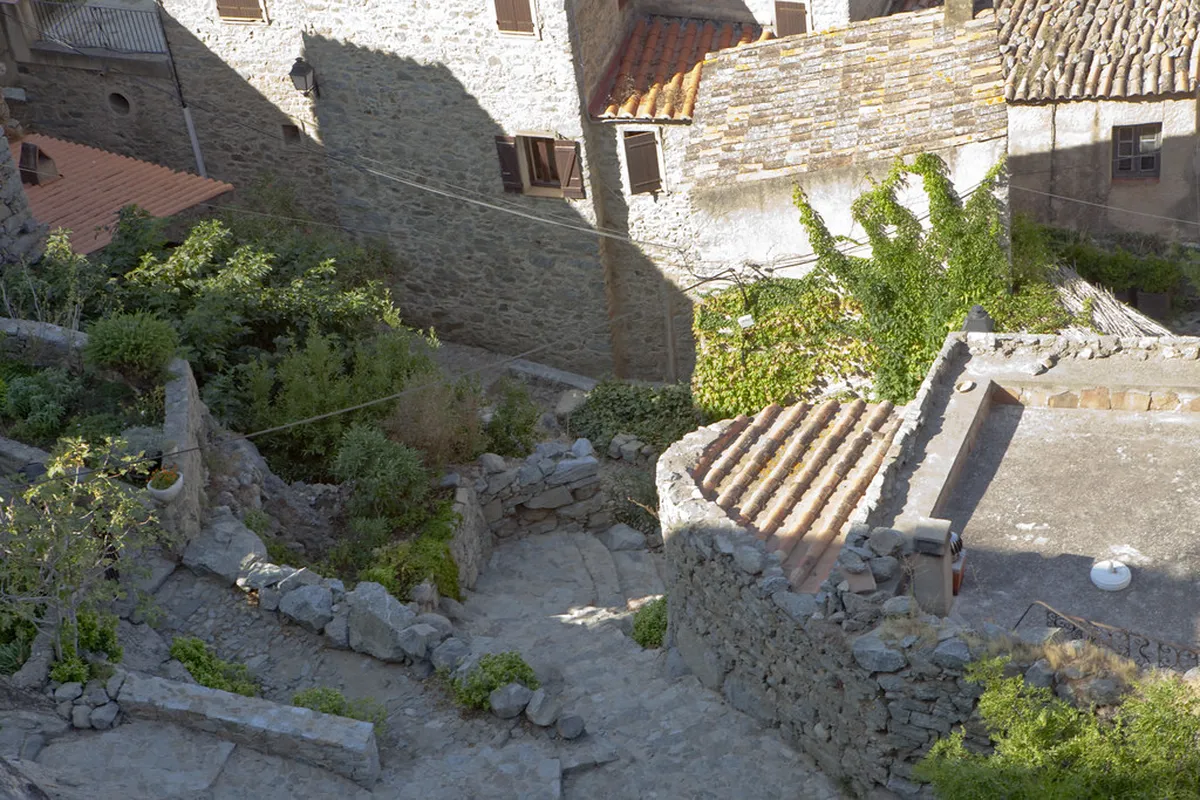
The narrow streets are a defining feature of the historic design of this mountain village. Most alleys are only wide enough for a single pack mule to pass through safely. This intentional restriction slowed down attackers during the frequent conflicts of the long Middle Ages. Walking through these lanes feels like stepping back a thousand years in time for visitors.
Covered passages, known locally as vouts, connect many of the ancient houses in the village. These stone arches provide essential structural stability against the frequent and high mountain winds. They also offer welcome shade for residents moving through the town during the peak summer. You can find unique architectural details hidden under these ancient and sturdy vaulted ceilings.
The stone staircases were built with varying heights to trip any unfamiliar or rushing intruders. Each step was carefully crafted from local rock to blend with the rugged natural environment. These stairs connect the different levels of the village in a complex and fascinating web. Exploring them requires a good pair of walking shoes and plenty of energy for travelers.
Small windows and thick walls characterize the traditional Corsican residential styles found throughout this area. These features kept the interiors warm in winter and cool during the bright summer days. Most windows face inward toward the village or toward the safer and more protected valleys. This design prioritized total protection over the scenic views that we value so much today.
Materials and Craftsmanship in Balagne
Granite is the primary building material used throughout the entire hilltop settlement of Sant'Antonino. Builders sourced this heavy stone from the immediate surroundings of the high and rocky peak. The result is a village that looks like a natural extension of the mountain itself. The warm grey tones change color beautifully during the evening golden hour in the summer.
Mortar made from local earth and lime binds the massive stone blocks together very securely. This traditional construction method has survived the harsh Corsican elements for many long centuries. Craftsmen in 2025 still use these old techniques for various restoration projects in the village. You can see the precision required to fit these irregular stones into strong vertical walls.
Wooden beams made from chestnut or oak support the heavy slate roof tiles on houses. These materials were historically abundant in the lush forests surrounding the entire Balagne region area. The roofs overlap to channel precious rainwater into communal cisterns located under the paved streets. Water management was a critical part of the original and clever town planning process.
Wrought iron details often decorate the small balconies and heavy doors of the larger homes. These elements reflect the wealth of the olive oil merchants who once lived here centuries ago. You can admire the intricate patterns that represent various local and important family lineages. These small details add a layer of elegance to the rugged and functional stone structures.
Religious Architecture in the Layout
The Church of the Annunciation serves as a central focal point for the local community. It sits at a slightly lower elevation than the main defensive summit of the village. This 11th-century structure blends Romanesque simplicity with later and more decorative Baroque additions. Its tall bell tower is visible from many miles away across the flat Balagne plains.
Inside the church, you will find impressive organ work and many historical religious paintings. The layout of the square around the church allowed for large and important public gatherings. This space acted as the social heart of the Sant'Antonino medieval layout for generations. It remains a popular spot for visitors to rest and soak in the quiet atmosphere.
Small chapels are scattered throughout the lower parts of the village outskirts and hiking trails. These religious buildings often mark the start of ancient donkey paths leading into the valley. They provided spiritual protection for farmers heading out to tend their many local olive groves. Each chapel features unique stonework that matches the main village aesthetic and local building style.
The cemetery is located just outside the main defensive walls of the ancient hilltop village. Its architecture reflects the same stone-heavy style seen in the residential areas of the town. Ornate family tombs stand as a testament to the village's long and very rich history. Visiting the cemetery offers a quiet moment to reflect on the past centuries of life.
Visiting Sant'Antonino in 2025
Sant'Antonino is located about 15 kilometers from the popular coastal city of Calvi in Corsica. You can reach the village by car or through a scenic hiking trail from Aregno. Parking is available at the base of the village for a small and reasonable daily fee. In 2025, expect to pay around 4 euros for a full day of secure parking.
The climb into the village core is quite steep and involves many ancient stone stairs. Most visitors spend about two to three hours exploring the entire layout and taking photos. Wear comfortable shoes and bring plenty of water during the hot and sunny summer months. The village is most peaceful in the early morning or during the late afternoon.
Small boutiques and cafes offer local products like wild honey and fresh lemon juice. Be sure to try the famous citron pressé at one of the terrace bars here. These establishments provide some of the best views of the architectural viewpoints in Calvi bay. Prices for drinks are reasonable given the spectacular and unique setting of the village.
Guided tours are available for those who want deeper historical and architectural insights during their visit. Local experts explain the complex engineering behind the ancient defensive walls and the hidden cisterns. These tours usually depart from the main parking area during the peak summer travel season. Booking in advance is recommended for groups visiting during the busy months of July.
Frequently Asked Questions
Why is Sant'Antonino called an eagle's nest?
The village sits on a high rocky peak at 500 meters above sea level. This position resembles an eagle's nest because it provides a clear view of everything below. It allowed residents to spot potential invaders from very long distances across the island.
Are there entrance fees for the village?
There is no entrance fee to walk through the streets of the village. You only need to pay for parking at the base of the hill. Most of the churches and public areas are free for everyone to explore.
Is the village accessible for people with mobility issues?
The Sant'Antonino medieval layout is unfortunately not very accessible for those with mobility issues. The streets are steep and filled with many uneven stone steps and narrow paths. Visitors with limited mobility may find it difficult to reach the highest village points.
What is the best time of year to visit?
Spring and fall are the best times to visit for pleasant walking temperatures. May and September offer beautiful weather and much smaller crowds than the summer peak. The winter months are very quiet but many local shops may be closed then.
Can you find modern amenities inside the medieval layout?
The village has preserved its ancient character but offers some modern amenities like cafes. You will find small shops selling local crafts and public restrooms near the entrance. However, there are no large supermarkets or modern shopping malls inside the historic core.
Sant'Antonino offers a rare look into the defensive architectural history of the Balagne region. Its unique Sant'Antonino medieval layout has survived for over a thousand years through careful preservation. Plan your 2025 trip to experience this vertical granite wonder for yourself this year. The village remains an essential stop for anyone interested in traditional Corsican building styles.
Key Takeaways
- The layout follows a circular defensive spiral for protection.
- Granite and local stone are the primary construction materials used.
- Visiting requires sturdy shoes for the steep and uneven paths.
- The village offers some of the best panoramic views in Corsica.
Related reads: architecturebycity.com, architecture in calvi, pigna stone craftsmanship.