
Le Suquet Historic Architecture Guide
Explore the Le Suquet historic architecture in Cannes. Discover medieval towers and ancient streets in this 2025 travel guide. Plan your historic walk today!
On this page
Le Suquet is the oldest and most charming neighborhood located in the heart of Cannes. Travelers from across the world visit this hill to admire the Le Suquet historic architecture. This district features steep paths and winding staircases that tell a long and fascinating story. You can easily find the best architecture in Cannes by starting your journey here. The area provides a stark contrast to the modern luxury found on the nearby Croisette.
The history of this neighborhood dates back to the Roman times when soldiers guarded the coast. Later, the monks of Saint Honorat built strong fortifications to protect the local residents. These early builders created a layout that survives almost perfectly in the current year of 2025. Every stone wall and doorway offers a unique glimpse into the medieval past of France. Walking through these streets feels like stepping back into a much older and simpler time.
Today, the neighborhood remains a vibrant part of the city for both locals and tourists alike. You will find traditional restaurants tucked into small corners of the very ancient stone buildings. The atmosphere is peaceful during the morning but becomes quite lively as the sun begins to set. It is essential to wear comfortable shoes because the terrain is very steep and uneven. Preparing for your visit will help you appreciate the rich heritage of this famous site.
The Origins of Le Suquet Architecture
The story of Le Suquet began when Roman settlers first recognized the strategic value of this hill. They built a small camp to overlook the bay and protect the vital trade routes. Eventually, the monks from the Lérins Islands took control of the land in the eleventh century. They constructed several religious and defensive buildings that defined the Le Suquet historic architecture for centuries. These structures were designed to withstand heavy attacks from pirates and rival European nations.
Medieval builders utilized local limestone to create the massive walls you see throughout the district today. This material was strong enough to support high towers and narrow residential buildings alike. Most of the early homes were built very close together to maximize the limited space. This dense construction helped create a natural thermal mass that kept the interiors cool in summer. You can still see original carvings on some of the oldest lintels and doorways.
The defensive nature of the hill dictated where the main buildings were placed for maximum safety. High walls surrounded the settlement to provide a clear view of any approaching enemy ships. These fortifications were improved during the fourteenth century as tensions grew in the Mediterranean region. Today, these ruins serve as a beautiful reminder of the strength of the early Cannes community. Visitors can touch the weathered stones and feel the history of the legendary French Riviera.
Medieval Street Layouts and Design
The narrow roads of the district are a primary feature of the medieval street layouts found here. These paths were never intended for modern vehicles and remain mostly pedestrian in the year 2025. Rue Saint-Antoine is the most famous street, featuring many colorful houses and traditional flower boxes. The buildings lean toward each other, creating a sense of intimacy and historical mystery. This layout served to confuse invaders who were not familiar with the steep terrain.
You will notice that many streets have small gutters running down the center of the path. These channels were originally designed to drain rainwater and waste away from the residential homes. Modern restoration projects have preserved these features while making the paths safe for modern foot traffic. The use of cobblestones adds to the authentic feeling of the historic French neighborhood. Small lanterns now light the way, mimicking the soft glow of ancient oil lamps.
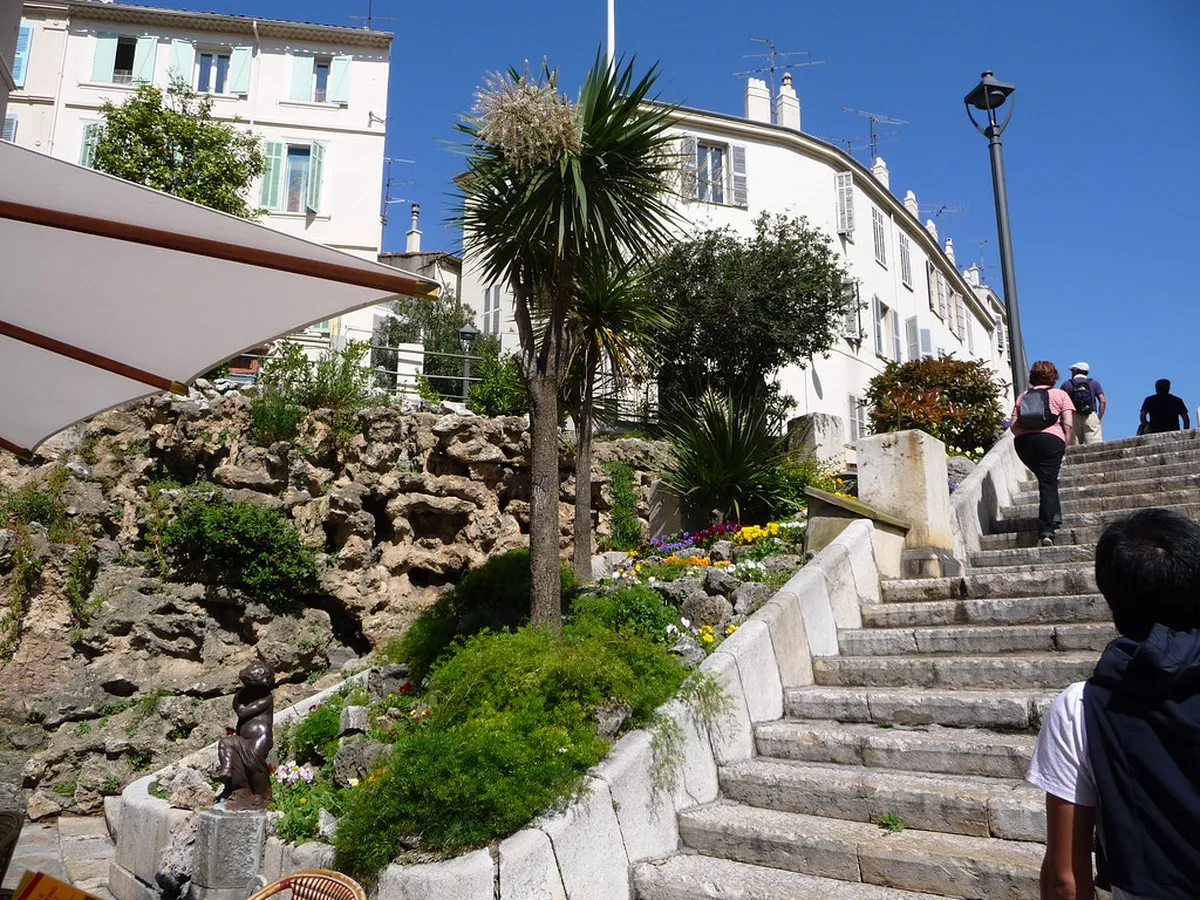
Architectural details such as vaulted ceilings and arched doorways are common in this historic neighborhood. Many ground floors were originally used as stables or storage areas for local fishing equipment. You can see how the residents adapted their homes as the fishing industry grew larger. The stairs are often carved directly into the natural rock of the steep Mont Chevalier. This integration of nature and masonry is a hallmark of the local building style.
The Watchtower and Castre Museum
The most iconic structure on the hill is the square watchtower built in the eleventh century. It stands tall as a symbol of the Castre Museum watchtower and historical defense. This tower was the highest point in Cannes for many centuries after its initial completion. It allowed guards to signal the arrival of ships from the nearby Lérins Islands. The masonry is remarkably well-preserved despite the harsh coastal weather and many centuries of use.
Next to the tower sits the former castle of the monks, which now houses a museum. The museum contains a vast collection of art and artifacts from diverse Mediterranean cultures. Its architecture features high arched ceilings and thick stone walls that keep the galleries very cool. You can explore the inner courtyard where religious ceremonies once took place in complete privacy. The view from the top of the tower provides a 360-degree look at the city.
Visitors must climb 109 steps to reach the very top of this historic watchtower building. The entrance fee is approximately six euros, making it an affordable highlight for any travel budget. It is best to visit during the early morning hours to avoid the largest tourist crowds. Seeing the bay from this height explains why the monks chose this specific location. The tower remains a masterpiece of medieval engineering and a must-see for all history lovers.
The Church of Our Lady of Hope
The Church of Notre-Dame d'Espérance is a stunning example of late Gothic style in Le Suquet. Construction on this significant religious building began in 1521 and took over a century to finish. Its facade is simple but elegant, reflecting the humble nature of the local fishing community. The interior features a grand altar and beautiful stained glass that illuminates the stone walls. This church remains an active place of worship for the residents of Cannes today.
The bell tower of the church is a prominent part of the Le Suquet historic architecture. Its chimes can be heard throughout the old town every hour of the day and night. Inside the church, you will find several chapels dedicated to the patron saints of sailors. These details highlight the strong connection between the local architecture and the sea. The large wooden doors are decorated with intricate carvings that depict various biblical scenes.
A small square sits in front of the church, offering a place for quiet reflection. This plaza is often used for outdoor concerts and cultural festivals during the summer months. The acoustics against the stone walls of the church are considered excellent by many performers. Entrance to the church is free, but visitors should remain respectful during the scheduled services. It is a peaceful escape from the busy shopping streets located further down the hill.
The Stone Masonry of Old Cannes
Builders in the old town relied heavily on the traditional stone masonry techniques of the region. They used a mixture of lime, sand, and local water to create a durable mortar. This material has successfully held the massive stone blocks together for many hundreds of years. You can see the hand-chiseled marks left by craftsmen who worked on these walls. Each stone was carefully selected to fit perfectly into the rugged hillside of the district.
The thickness of the walls often exceeds one meter in the oldest parts of the city. This design provides excellent insulation against the heat of the Mediterranean sun during the summer. It also makes the buildings incredibly sturdy and resistant to the strong mistral winds. Small windows were used to keep the interiors dark and cool throughout the day. These architectural choices show a deep understanding of the local climate and environment.
Restoring these historic walls requires specialized knowledge that is still practiced by modern French stonemasons. They use traditional tools and materials to ensure the new repairs match the ancient aesthetic perfectly. Preserving the visual harmony of the neighborhood is a top priority for the local government. You can often see small teams of workers carefully repointing the old stone joints. This dedication ensures that the heritage of Cannes will survive for many future generations.
Photography Tips for Historic Buildings
Capturing the beauty of the old town requires visiting during the golden hour of the morning. The soft sunlight hits the yellow and ochre walls, creating a warm and inviting glow. You can find excellent angles by exploring the steep staircases that connect the different levels. Many photographers prefer to use a wide-angle lens to capture the narrowness of the streets. A professional walking tour can help you find the best hidden spots.
Look for interesting textures like the weathered wood of old doors and the rough stone walls. Contrasting the ancient buildings with the blue Mediterranean sea provides a very powerful visual image. The flowers that spill over the balconies add a vibrant splash of color to your photos. Make sure to include some of the local residents to give your pictures a sense of life. Shadows play an important role in defining the shapes of the medieval arches and paths.
The square at the top of the hill offers the best panoramic views of the harbor. You can see the luxury yachts parked directly next to the ancient stone harbor walls. This juxtaposition is a favorite subject for travelers who visit the French Riviera in 2025. Be sure to check the opening times for the museum tower to get higher shots. Using a tripod might be difficult in the narrowest streets due to the many pedestrians.
Frequently Asked Questions
What is the best time to visit Le Suquet for architecture?
The best time to visit is during the spring or early autumn months. The weather is mild and the light is perfect for viewing the historic stone walls. Early morning visits allow you to explore the narrow streets without the large afternoon crowds.
Are there any fees to see the historic buildings?
Walking through the streets of the neighborhood is completely free for all visitors. However, the Castre Museum and the watchtower require a small entrance fee of six euros. Most of the churches are open to the public for free throughout the day.
How difficult is the walk up to the old town?
The walk is quite steep and involves many sets of stone stairs. It takes about fifteen minutes to reach the top from the port area. Travelers with mobility issues should consider taking the local bus that travels up the hill.
Can I take an architecture tour of the area?
Yes, many local guides offer a specialized architecture tour that covers the medieval history. These tours provide deep insights into the construction techniques used by the monks and Romans. Booking in advance is recommended during the busy summer season.
Le Suquet stands as a beautiful testament to the long and varied history of Cannes. The Le Suquet historic architecture offers a peaceful retreat from the modern glitz of the city. From the medieval watchtower to the winding stone streets, there is much to discover here. We hope this guide helps you appreciate the ancient masonry and clever urban design. Plan your visit today to experience the magic of the oldest neighborhood in the French Riviera.
Key Takeaways
- Wear comfortable walking shoes for the steep and uneven stone paths.
- Visit the Castre Museum tower for the best views of the city.
- Explore the neighborhood in the morning to enjoy the best photography light.
- Look for the hidden details in the medieval stone masonry and doorways.
- Respect the local residents while walking through the narrow residential streets.
Related reads: architecturebycity.com.