
Théâtre Jean-Alary Architecture: Art Deco in Carcassonne
Explore the stunning Théâtre Jean-Alary architecture in Carcassonne. Discover Art Deco details and plan your 2025 visit to this historic French landmark.
On this page
The Théâtre Jean-Alary architecture stands as a vibrant masterpiece in southern France. This building represents the bold Art Deco style within the city of Carcassonne. It sits in the lower town known as the Bastide Saint-Louis. Visitors often admire its unique design and historical significance during their tours.
This theater is one of the most famous Art Deco buildings in Carcassonne today. It offers a sharp contrast to the nearby medieval fortress walls. The structure serves as the primary cultural hub for local residents and tourists. Its elegant facade captures the spirit of 1930s French artistic innovation perfectly.
Architect Gabriel Delaire designed this municipal theater with great precision and care. He replaced an older structure to provide a modern venue for the arts. Today, it remains a protected monument that celebrates the heritage of the region. Architecture lovers should not miss this gem during their visit in 2025.
The History of Théâtre Jean-Alary Architecture
The site originally housed a Dominican convent during the medieval period. The city later converted the space into a theater in the 1800s. However, the original building faced several structural issues over many decades. Officials decided to rebuild the entire facility during the early 1930s era.
Gabriel Delaire won the commission to design the new municipal theater in 1933. He embraced the modern Art Deco movement for this important public project. The reconstruction finished quickly to meet the growing cultural needs of the city. It opened its doors to the public with great fanfare and local pride.
The building represents a shift toward modernism within the traditional Bastide Saint-Louis urban planning layout. It replaced the old-fashioned style with clean lines and geometric shapes. This change reflected the optimistic spirit of France between the two World Wars. The theater still maintains its original charm almost a century later.
In the 1990s, the theater underwent a significant renovation to improve safety. Workers carefully preserved the historical architectural details during this vital modern update. It received the official label of a twentieth-century heritage site shortly after. This status ensures the building remains protected for many future generations to enjoy.
External Facade and Art Deco Design
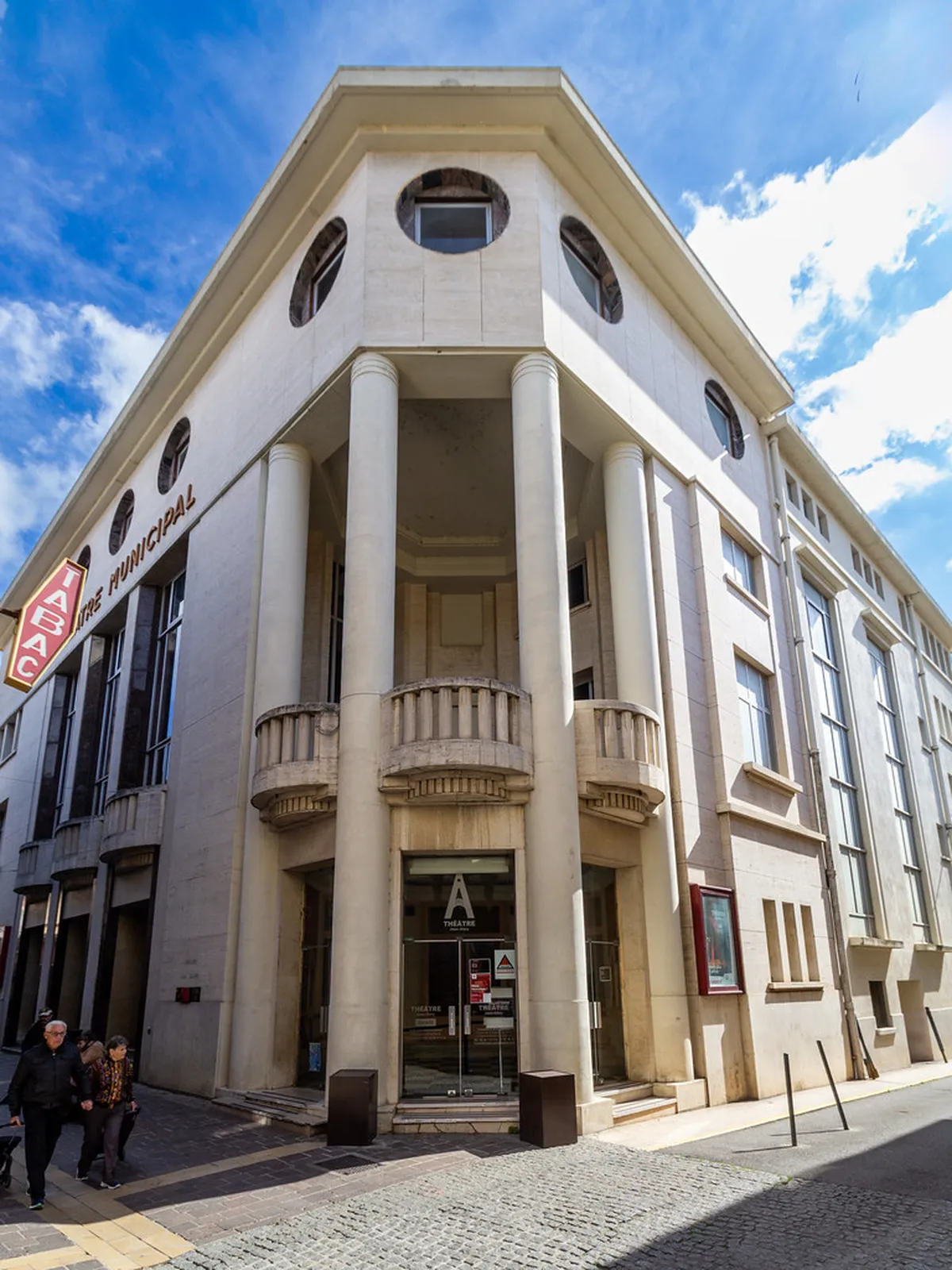
The exterior of the theater is a classic example of French Art Deco style. Its facade features strong vertical lines and symmetrical window arrangements throughout. Three large arched windows dominate the upper portion of the main entrance wall. These windows allow soft natural light to enter the grand interior lobby space.
The stonework displays subtle decorative motifs that are typical of the 1930s period. You can see geometric patterns carved into the upper corners of the building. The entrance doors feature ornate ironwork that adds a touch of classic elegance. This design choice creates a sophisticated atmosphere for theater guests arriving at night.
The building sits prominently on Rue Courtejaire near the busy central pedestrian zone. Its white stone surfaces glow beautifully during the sunny afternoons in southern France. The architecture stands out because it lacks the heavy ornamentation of earlier eras. Instead, it focuses on balance, proportion, and simple aesthetic beauty.
Architectural photographers often visit this spot to capture the clean shadows and light. The theater serves as a perfect subject for those studying 1930s European urban design. Its compact footprint fits perfectly into the dense street grid of the lower city. It remains a highlight of any walking tour focused on modern French history.
Interior Murals and Artistic Details
The interior of the theater is just as impressive as the external facade. Local artist Jacques Ourtal painted the stunning murals found inside the main hall. These paintings depict various scenes of regional life and traditional French cultural activities. The warm colors create a welcoming environment for all theater patrons and guests.
Gold leaf accents decorate the ceiling and the edges of the balconies inside. The seating area accommodates approximately 400 people in a very intimate setting. Red velvet chairs provide a classic touch that complements the modern Art Deco lines. Every corner of the auditorium displays meticulous craftsmanship and artistic vision.
The grand staircase in the foyer is another notable architectural feature to see. It uses high-quality materials to convey a sense of luxury and civic importance. Strong geometric patterns appear in the floor tiles and the wall fixtures. These small details contribute to the overall cohesive design of the entire building.
Visitors can see the murals more closely during scheduled guided tours of the facility. The artwork reflects the pride of the Occitanie region through its beautiful imagery. It is rare to find such well-preserved interior decor from this specific era. The murals remain bright and clear thanks to careful conservation efforts over years.
Cultural Importance in Carcassonne Today
The theater serves as the heartbeat of the local arts scene in Carcassonne. It hosts a wide variety of performances including plays, operas, and music concerts. The acoustics within the hall are excellent for both spoken word and song. Many famous French performers have graced this stage since its opening in 1935.
The venue provides a vital space for professional artists and local community groups alike. It helps maintain the artistic traditions of the city throughout the entire year. Residents often gather here to celebrate seasonal festivals and special national holidays. This building is much more than just a beautiful piece of historic architecture.
You can find a diverse range of architecture in Carcassonne to explore during your stay. The theater offers a unique perspective compared to the medieval ramparts and towers. It shows how the city evolved and modernized during the early twentieth century. It remains a symbol of the city's commitment to public cultural education.
The theater is often the centerpiece of the annual Festival de Carcassonne events. During the summer, the city comes alive with music and dramatic performances. The building provides a professional indoor setting for high-profile international touring acts. It ensures that the city remains a top destination for cultural tourism in France.
Planning Your Visit in 2025
Visiting the theater is quite easy because it is in the city center. The main entrance is located at 6 Rue Courtejaire in the Bastide neighborhood. It is within walking distance from the train station and local hotels. Most tourists visit the exterior during their afternoon walks through the shopping district.
Performance tickets usually cost between 15 and 50 Euros depending on the show. You should book your seats online in advance to ensure a good view. The box office is typically open on weekday afternoons for in-person inquiries. Check the official city website for the most current schedule of 2025 events.
- Location: 6 Rue Courtejaire, 11000 Carcassonne
- Tickets: 15€ to 50€ per person
- Best Time: Evening performances or afternoon tours
- Style: Pure French Art Deco
Guided tours of the interior are often available during the European Heritage Days. These tours provide deep insights into the history of the Jacques Ourtal murals. Otherwise, you can experience the architecture by attending a live performance or show. Dress comfortably but neatly for an evening at this elegant French municipal venue.
Frequently Asked Questions
What is the architectural style of the Théâtre Jean-Alary?
The theater is a prime example of the Art Deco architectural style. It was rebuilt in 1933 by the architect Gabriel Delaire. The design focuses on symmetry, geometric patterns, and clean vertical lines. It represents the modern era of French civic construction.
Where is the Théâtre Jean-Alary located in Carcassonne?
It is located at 6 Rue Courtejaire in the Bastide Saint-Louis area. This is the lower part of the city, not the medieval fortress. It is very close to the central Place Carnot square. Most visitors can walk there easily from anywhere in the city center.
Can I tour the interior of the theater?
The interior is primarily open to the public during scheduled performances and concerts. However, special guided tours are sometimes offered during national heritage events. These tours allow you to see the famous murals by Jacques Ourtal. You should check the local tourism office for specific 2025 tour dates.
The Théâtre Jean-Alary architecture remains a significant cultural landmark in southern France. Its Art Deco design provides a wonderful contrast to the city's ancient history. Visiting this site in 2025 allows you to appreciate the elegance of 1930s style. Make sure to include this beautiful theater on your next architectural tour of Carcassonne.
Key Takeaways
- The theater is a masterpiece of 1933 Art Deco design by Gabriel Delaire.
- Inside you will find stunning regional murals painted by artist Jacques Ourtal.
- It is located in the Bastide Saint-Louis neighborhood near Place Carnot.
- The venue still hosts active performances with tickets ranging from 15 to 50 Euros.
Related reads: architecturebycity.com, hotel de ville facade details.