
Cathédrale Saint-François-de-Sales Interior Architecture
Explore Cathédrale Saint-François-de-Sales interior architecture. See amazing Chambéry trompe-l'œil paintings in 2025. Visit this French gem with our guide.
On this page
Cathédrale Saint-François-de-Sales interior architecture offers a unique glimpse into the artistic history of Savoie. The building serves as a primary example of 19th-century restoration techniques used in France. You will find this historic cathedral located in the very heart of the beautiful city of Chambéry. Its exterior appears modest compared to the grand treasures hidden within its large stone walls.
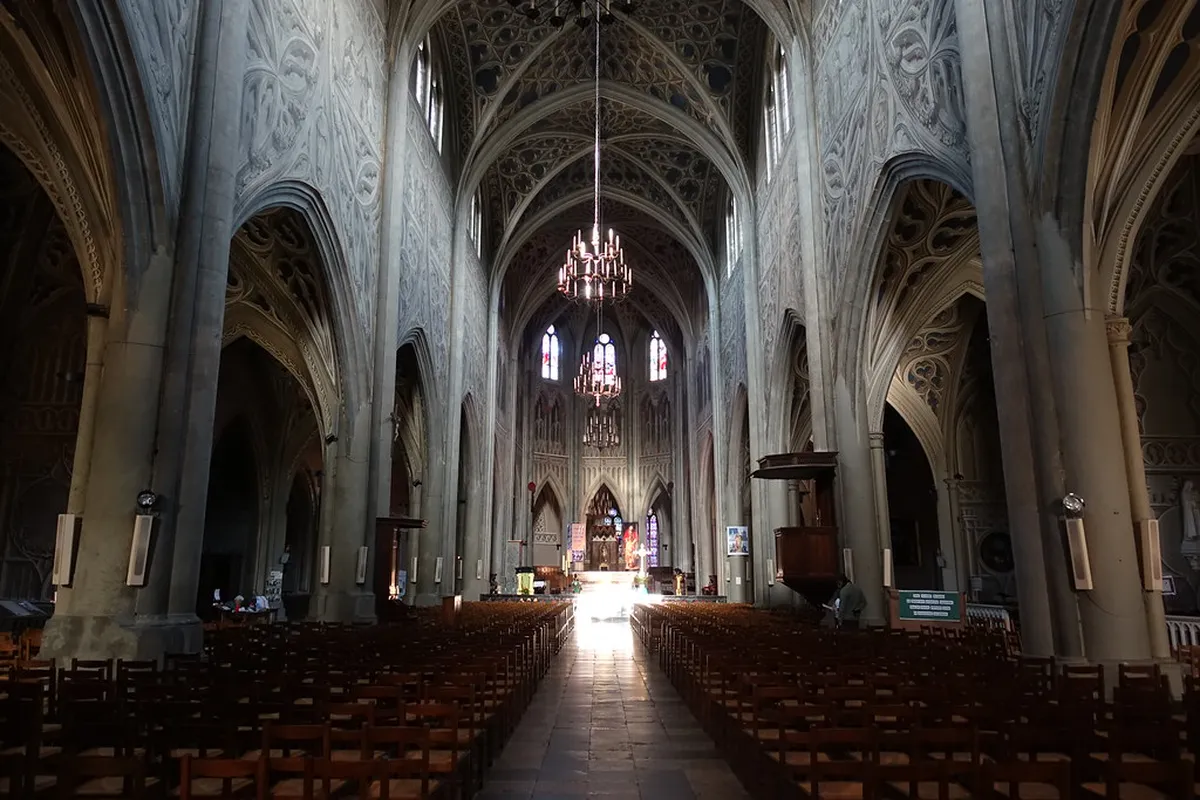
Visitors often feel a sense of wonder when they first step inside this religious monument. The interior features the most extensive collection of Chambéry trompe-l'œil paintings in all of Europe. These masterful works create a stunning illusion of three-dimensional space on every flat surface. This site remains a must-visit destination for any traveler exploring the Savoy region in 2025.
The Magic of Chambéry Trompe-l'œil Paintings
The cathedral interior showcases an incredible display of artistic skill through massive painted surfaces. Artists covered nearly 6,000 square meters with detailed scenes that trick the human eye. These paintings mimic stone carvings and complex gothic ribs using only flat paint and shadows. You will notice how the ceilings appear to soar much higher than they actually do.
This decorative style became very popular during the 19th century in this specific region of France. Local craftsmen mastered the history of Italian trompe-l'œil in Savoie to decorate their churches. They used subtle shades of grey and ochre to simulate the look of expensive building materials. This technique allowed the church to look much more opulent without spending excessive funds.
Walking through the nave feels like moving through a gallery of intricate architectural sketches. Every arch and pillar features painted details that look like real stone moldings from a distance. The perspective remains consistent no matter where you stand within the central part of the church. This careful planning demonstrates the high level of mathematical precision used by the 19th-century artists.
Modern visitors often mistake these paintings for real masonry until they touch the cold stone walls. The preservation of these works is exceptional despite the passing of many decades. Savoie heritage experts work hard to keep the colors vibrant for future generations to enjoy. You should take a moment to look directly up at the central vault for the best view.
Late Gothic Roots and Franciscan History
The site originally served as a church for the local Franciscan community in the 15th century. Its layout follows the traditional Latin cross plan typical of medieval religious architecture in Chambéry today. The foundations rest on hundreds of wooden piles driven deep into the swampy soil. This engineering feat was necessary because the area was quite wet during the middle ages.
The exterior architecture reflects a simplified Late Gothic style with very little outward decoration. It lacks the flying buttresses often seen on the larger cathedrals of northern France. This modesty reflects the Franciscan order's commitment to living a simple and humble lifestyle. However, the interior transformation happened much later when it became a cathedral in 1779.
The transition from a humble friary to a grand cathedral required significant aesthetic changes. Workers added new side chapels and expanded the main sanctuary to fit its new status. These changes created the vast surfaces that now hold the famous trompe-l'œil paintings. You can still see some of the original Gothic stonework near the lower choir stalls.
The blend of medieval structure and 19th-century art creates a unique atmosphere for all visitors. It represents the historical evolution of Chambéry from a small town to a regional capital. Many pilgrims stop here to reflect on the long history of the Catholic Church in Savoie. The building survives as a silent witness to the various political changes in the region.
Examining the Masterpiece of Casimir Vicario
Artist Casimir Vicario led the massive project to paint the cathedral interior in 1834. He spent years meticulously planning the geometry required to create perfect optical illusions for every viewer. His team used mineral-based pigments to ensure the paintings would last for many centuries. Vicario was already famous for his work on other buildings in the Kingdom of Sardinia.
The paintings depict scenes from the Bible alongside complex architectural elements that do not exist. Vicario added painted statues in niches that appear perfectly round to the naked eye. He also included fake windows that seem to let in soft light from the outside world. This level of detail requires visitors to look very closely at the textures he created.
One of the most impressive sections is the vaulting over the main nave area. Vicario painted intricate lace-like patterns that look like carved stone bosses and intersecting ribs. These designs mirror the Gothic style found in other major European cathedrals of the same period. The shadows are so realistic that they seem to change as the sun moves.
Vicario’s work transformed a plain interior into a masterpiece of the Romantic era. His influence can be seen in many other historic homes and churches across Chambéry. Art historians consider this cathedral to be his greatest achievement and his most complex design. You can find his signature discreetly placed near one of the side altars.
Lighting and Perspective in the Nave
Natural light plays a vital role in how we perceive the cathedral's internal space. Large stained glass windows allow colorful light to dance across the painted stone surfaces. These colors often blend with the grey tones of the trompe-l'œil to create a warm glow. The effect is particularly beautiful during the late afternoon hours on a clear sunny day.
The placement of the windows helps to enhance the three-dimensional feel of the wall paintings. Shadows painted by Vicario align with the actual light sources found within the building. This attention to environmental detail makes the illusions feel much more grounded and believable. You will notice that the depth of the arches seems to shift as you walk.
Perspective is the secret weapon used by the artists who decorated this massive sacred space. They used a technique called anamorphic projection to ensure the scenes look correct from the floor. If you look at the paintings from a sharp angle, they might appear slightly stretched. However, from the central aisle, every element looks perfectly proportional and real.
The nave provides a wide and open space that allows for excellent visibility of the ceiling. There are no heavy columns blocking your view of the upper reaches of the vault. This open design helps the trompe-l'œil effect cover the entire ceiling without any visual breaks. It makes the cathedral feel much larger than its external dimensions would suggest.
Visiting Chambéry’s Cathedral in 2025
The Cathédrale Saint-François-de-Sales is located at Place Saint-Léger in the historic old town. Entry to the cathedral is free for all visitors throughout the entire year. It is generally open daily from 8:30 AM until 6:00 PM for public viewing. Please remember to remain quiet as this is still an active place of worship.
Guided tours are often available through the local tourism office for a small fee. These tours provide deep insights into the hidden symbols found within the various paintings. You can expect to pay around 6 Euros for a standard adult tour ticket. Prices for children and students are usually lower if you show a valid ID card.
The cathedral stays cool during the hot summer months due to its thick stone walls. It serves as a perfect escape from the heat while you explore the city center. You should allow at least forty-five minutes to see the interior details properly. Make sure to bring a camera that performs well in low light conditions.
Accessibility is good for most visitors as the main entrance has a flat stone threshold. There are many small cafes and shops located just outside the cathedral doors. You can enjoy a coffee while looking at the humble facade of this architectural giant. Most people find the contrast between the outside and inside to be very surprising.
Frequently Asked Questions
Is there an entry fee for the Chambéry Cathedral?
Entry to the cathedral is completely free for the public in 2025. You may choose to give a small donation to help with building maintenance. Guided tours from the city office do require a paid ticket.
What are the opening hours for the cathedral?
The cathedral usually opens at 8:30 AM and closes around 6:00 PM daily. These hours might change during religious holidays or special local events. Always check the local tourism board website for the most current schedule.
How large are the trompe-l'œil paintings inside?
The paintings cover an area of approximately 6,000 square meters. This makes it the largest collection of its kind in a European cathedral. The entire ceiling and many of the walls are fully decorated.
Who painted the interior of the cathedral?
The primary artist was Casimir Vicario who completed the work in the 1830s. He was a master of perspective from the neighboring Piedmont region. A team of skilled assistants helped him finish this massive project.
Cathédrale Saint-François-de-Sales interior architecture is a true marvel of the Savoy region. Its blend of Gothic structure and 19th-century artistic illusion creates a unique experience. You will leave the building with a new appreciation for the skill of historic painters. Plan your visit to Chambéry today to witness these incredible paintings in person.
Key Takeaways
- The cathedral houses 6,000 square meters of trompe-l'œil paintings.
- Entry is free for all visitors to the cathedral in 2025.
- The interior art was created by Casimir Vicario in the 1830s.
Related reads: architecturebycity.com, architecture in chambery, europes largest cathedral trompe lil collection.