
Guide to Chartres Choir Screen Sculptures
Explore the stunning Chartres choir screen sculptures. Discover Renaissance elements of Chartres Cathedral in this 2025 guide. Visit France today!
On this page
Chartres Cathedral remains a top destination for art lovers in 2025. This historic site houses the incredible Chartres choir screen sculptures. These stone carvings tell complex biblical stories with great detail. You will find them inside the heart of the cathedral. They represent a major shift in French artistic styles. The screen serves as a bridge between two eras. It showcases the famous Renaissance elements of Chartres Cathedral for all visitors. This guide will help you appreciate this stone masterpiece. Let us look closer at the history and beauty of these statues.
History of the Chartres Choir Screen
The construction of the choir screen began in the early 16th century. Master mason Jehan de Beauce started this project in 1514. He wanted to create a beautiful barrier for the sacred space. The screen took over two hundred years to complete fully. Many different artists contributed their skills to the work over time. This long timeline shows how art styles changed in France. You can see the shift from late Gothic to Renaissance styles. The project finally reached its conclusion in the 18th century. It remains one of the most complete screens in the world. It survived the French Revolution with very little damage today.
Jehan de Beauce designed the ornate stone framework first. He used local limestone from the Eure region for the structure. This stone allowed for extremely fine and delicate carving details. The framework looks like lace made of solid white stone. It features tiny spires and decorative floral patterns throughout. These elements show the high level of craft in 1514. The screen was built to protect the clergy during services. It also provided a visual path for the pilgrims walking around. This ambulatory path allowed people to pray near the main altar. The screen acted as a silent teacher for the faithful.
As decades passed, the sculpture styles became more realistic. The early statues show some late medieval stiffness in their poses. Later figures display the fluid motion of the High Renaissance. You can trace this growth by walking around the choir. The southern side contains some of the oldest carved scenes. The northern side features works from later centuries and artists. This mix makes the screen a living museum of French art history. It shows how the architecture in Chartres evolved over several generations. Every king of France admired this work during their visits. It stands as a symbol of national pride and devotion.
The Life of Christ in Stone Narrative
The screen features forty distinct groups of life-sized stone figures. These scenes depict the life of the Virgin Mary and Jesus. The narrative begins with the announcement of Mary's birth. It ends with the coronation of Mary in the heavenly realm. Each scene sits within a beautifully carved stone niche. The artists focused on creating emotional depth in every face. You can see the joy in the Nativity scene clearly. The sorrow of the Passion is also carved with great skill. This visual story helped people learn the Bible stories easily. It served as a stone book for those who could not read.
The scene of the Visitation is a highlight for many visitors. It shows Mary meeting her cousin Elizabeth with great warmth. Their stone robes appear to flow like real heavy fabric. The artists carved deep folds to catch the natural light. This technique creates realistic shadows and highlights on the figures. Notice the intricate details on the hands and feet of statues. Each fingernail and wrinkle is visible upon close inspection. The background of each niche also contains small architectural details. These tiny houses and trees add depth to the biblical scenes. You will feel like you are stepping into the story.
Another famous section is the Adoration of the Magi. Three kings bring gifts to the infant Jesus in the manger. Their crowns and robes feature incredible Renaissance patterns and textures. This scene highlights the Renaissance elements of Chartres Cathedral through its costumes. The artists depicted the wealth of the kings using stone textures. You can see the difference between fur, silk, and gold. Even the animals in the stable look lifelike and alert. These details were meant to impress and inspire the viewers. The craftsmanship remains unmatched in many other French cathedrals today. It is a true highlight of any 2025 visit.
Renaissance Elements of Chartres Cathedral
The choir screen is the most famous example of the Renaissance here. It contrasts sharply with the High Gothic architecture of the nave. The Gothic style focuses on height and pointed arches throughout. In contrast, the screen features classical motifs and balanced symmetry. You will see shells, scrolls, and leafy cornucopias in the stone. These are classic signs of the Renaissance influence from Italy. The figures have more natural proportions than earlier Gothic statues. Their expressions are more human and less stylized than before. This change marked a new way of thinking about art.
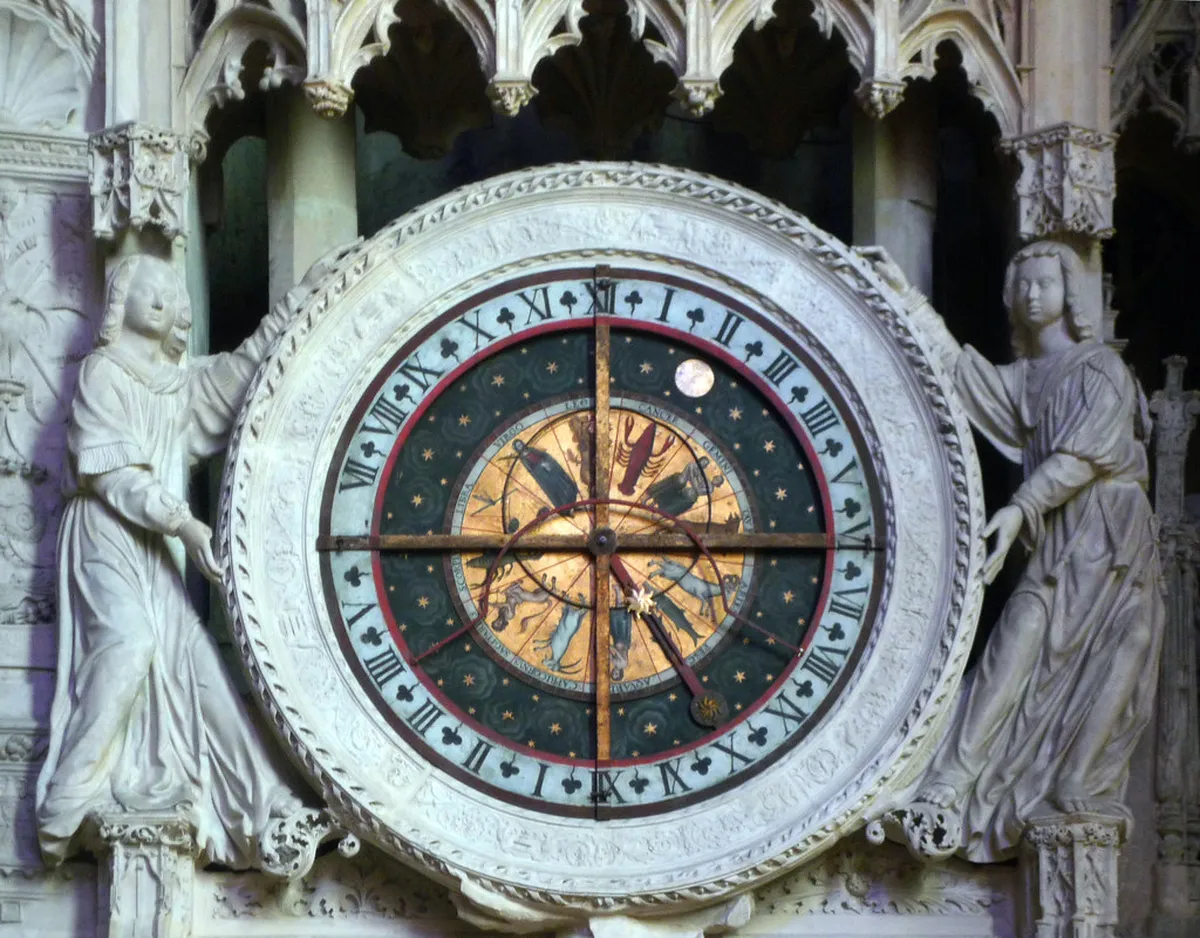
The clock on the screen is another Renaissance marvel to see. It was installed in 1520 by the master Jehan de Beauce. This clock shows the time, the day, and the moon phases. It features a beautiful gold and blue face with Roman numerals. The surrounding carvings include figures of the four evangelists in stone. This mechanical wonder combined science with religious art perfectly. It shows the Renaissance interest in technology and the natural world. Many visitors miss this detail because the statues are so large. Look for it on the southern side of the screen. It still captures the imagination of modern travelers in 2025.
The pillars supporting the niches also show classical Greek influence. They feature Corinthian and Ionic style capitals at the top. This was a major departure from the older Gothic pillar styles. The use of perspective in the background carvings is also new. Artists tried to create a sense of three-dimensional space in stone. This technique became popular during the 16th century across Europe. It makes the scenes feel like theatrical performances on a stage. The Renaissance elements of Chartres Cathedral are best studied on this screen. It provides a perfect lesson in architectural transition and growth.
Tips for Visiting the Choir Screen in 2025
The cathedral is open daily from 8:30 AM to 7:30 PM. Admission to the main cathedral floor is free for everyone. You do not need a ticket to see the screen. However, a small donation is always appreciated for building maintenance. Try to visit early in the morning for the best light. The morning sun hits the southern side of the choir screen. This light brings out the fine details in the limestone. Avoid visiting during the main Sunday mass at 11:00 AM. Certain areas may be restricted to worshippers during that time. Plan for at least one hour to see the screen.
Bring a small pair of binoculars for your visit today. Some of the stone canopies are very high and hard to see. You will want to look at the tiny carvings above. Many niches have hidden details like small birds or flowers. These were the personal touches of the individual stone carvers. Taking photos is allowed but you must not use a flash. The bright light can damage the old stone surfaces over time. Respect the silence of the cathedral while you walk around. Many people come here for prayer as well as art. Walking quietly helps preserve the peaceful atmosphere for all.
You can join a guided tour for more expert knowledge. Tours usually cost between 10 and 20 Euros per person. Expert guides explain the hidden meanings behind the different scenes. They can point out the specific artists who carved each section. This is the best way to understand the complex history. You can find the tour desk near the north portal. Tours are available in English and French most days in 2025. After seeing the screen, explore the rest of the cathedral. The stained glass and the labyrinth are also world-famous sights. Chartres offers a full day of historical discovery for travelers.
Frequently Asked Questions
Who carved the Chartres choir screen sculptures?
Master mason Jehan de Beauce designed the initial structure in 1514. Many other artists and workshops continued the work over two centuries. This includes famous sculptors like Jean Soulas and Francois Marchand. Each artist added their own style to the biblical scenes.
How many scenes are on the choir screen?
There are forty individual groups of statues on the screen. These scenes tell the stories of Mary and Jesus in order. You can follow the story by walking around the choir. Each scene is housed in its own decorative stone niche.
Is the choir screen part of the original Gothic cathedral?
No, the choir screen was added much later than the nave. The main cathedral is Gothic from the 12th and 13th centuries. The screen represents the Renaissance style of the 16th to 18th centuries. It is a beautiful addition to the older structure.
Can I take photos of the choir screen?
Yes, you can take photos for personal use in 2025. You must turn off your flash to protect the stone. Using a tripod is usually not allowed inside the cathedral. Try to use a high ISO setting for best results.
The Chartres choir screen sculptures are a true wonder of French art. They showcase the transition from Gothic to Renaissance styles with grace. You will be amazed by the detail in the limestone carvings. Plan your visit to Chartres Cathedral in 2025 to see them. These statues tell a timeless story through expert human craft. The Renaissance elements of Chartres Cathedral will leave a lasting impression on you. Do not miss the chance to see this historic stone masterpiece. It is a highlight of any trip to northern France.
Key Takeaways
- Visit in the morning to see the best natural light.
- The screen features 40 scenes from the life of Jesus.
- Look for the Renaissance clock made in 1520.
- Admission to view the choir screen is currently free.
- Follow the narrative in a circle around the main choir.
Related reads: architecturebycity.com, jehan de beauce clock tower, renaissance transition in eure architecture.