
Hôtel de Savaron Architectural Details Guide
Explore the historic Hôtel de Savaron architectural details in Clermont-Ferrand. Learn about Renaissance art and plan your 2025 French visit today!
On this page
Clermont-Ferrand holds many hidden treasures within its historic walls and narrow streets. One such treasure is the remarkable Hôtel de Savaron located in the city center. This mansion showcases many Hôtel de Savaron architectural details from the early sixteenth century. Travelers visiting in 2025 will find this site incredibly well-preserved and visually striking.
The building stands as a premier example of domestic architecture from the French Renaissance period. It is famous for its dark volcanic stone and intricate decorative carvings. Every corner of the property tells a story about the city's wealthy past. You will find it located in the heart of the historic district near the cathedral.
The History and Heritage of Hôtel de Savaron
Jean de Savaron commissioned this grand residence in 1513 for his personal family use. He served as a prominent magistrate and intellectual within the Auvergne region during his life. This building reflects the wealth and social status of elite families in Clermont-Ferrand. You can see his influence in the sophisticated design and expensive building materials.
The structure stands as a testament to the transition between two major artistic periods. It combines the strength of medieval design with the elegance of the emerging Renaissance style. Local historians often study this site to understand the city's growth during the early 1500s. The preservation of the mansion allows us to see authentic sixteenth-century craftsmanship today.
Walking through the entrance feels like stepping back into a very different era of French history. The walls tell a story of local power and the evolution of urban domestic architecture. Many scholars believe the mansion influenced other Hôtels Particuliers and Renaissance mansions nearby. This cultural significance makes it a primary stop for any architectural tour.
The Savaron family maintained the property for generations before it became a protected national monument. This status ensures that the original layout and artistic flourishes remain intact for future visitors. It serves as a vital link to the historical identity of the Clermont-Ferrand community. Exploring the history helps visitors appreciate the finer details found on every stone surface.
Distinctive Volcanic Stone and Exterior Elements
One cannot discuss the Hôtel de Savaron architectural details without mentioning the unique building material. Most of the mansion consists of dark volcanic stone known locally as Pierre de Volvic. This durable stone comes from the nearby Chaîne des Puys volcanic mountain range. It gives the building its distinct dark gray appearance that characterizes the city.
The use of volcanic stone allowed masons to carve incredibly intricate patterns and sturdy structures. This material resists weathering much better than the softer limestones found in other French regions. Architects in the Auvergne region favored this stone for its strength and prestigious visual appeal. You can find similar materials in many volcanic stone fountains and public monuments nearby.
The facade features several decorative elements carved directly into this tough volcanic rock surface. Look closely at the window frames to see the precise moldings and decorative lintels. These features highlight the skill required to work with such a difficult and heavy material. The dark color creates a dramatic contrast with the bright French sky on sunny days.
Over the centuries, the volcanic stone has developed a beautiful patina that adds historical depth. It requires specialized cleaning methods to maintain its integrity without damaging the delicate Renaissance carvings. Modern conservation efforts focus on protecting these stone surfaces from urban pollution and natural erosion. The result is a facade that looks almost exactly as it did centuries ago.
The Renowned Renaissance Courtyard and Staircase
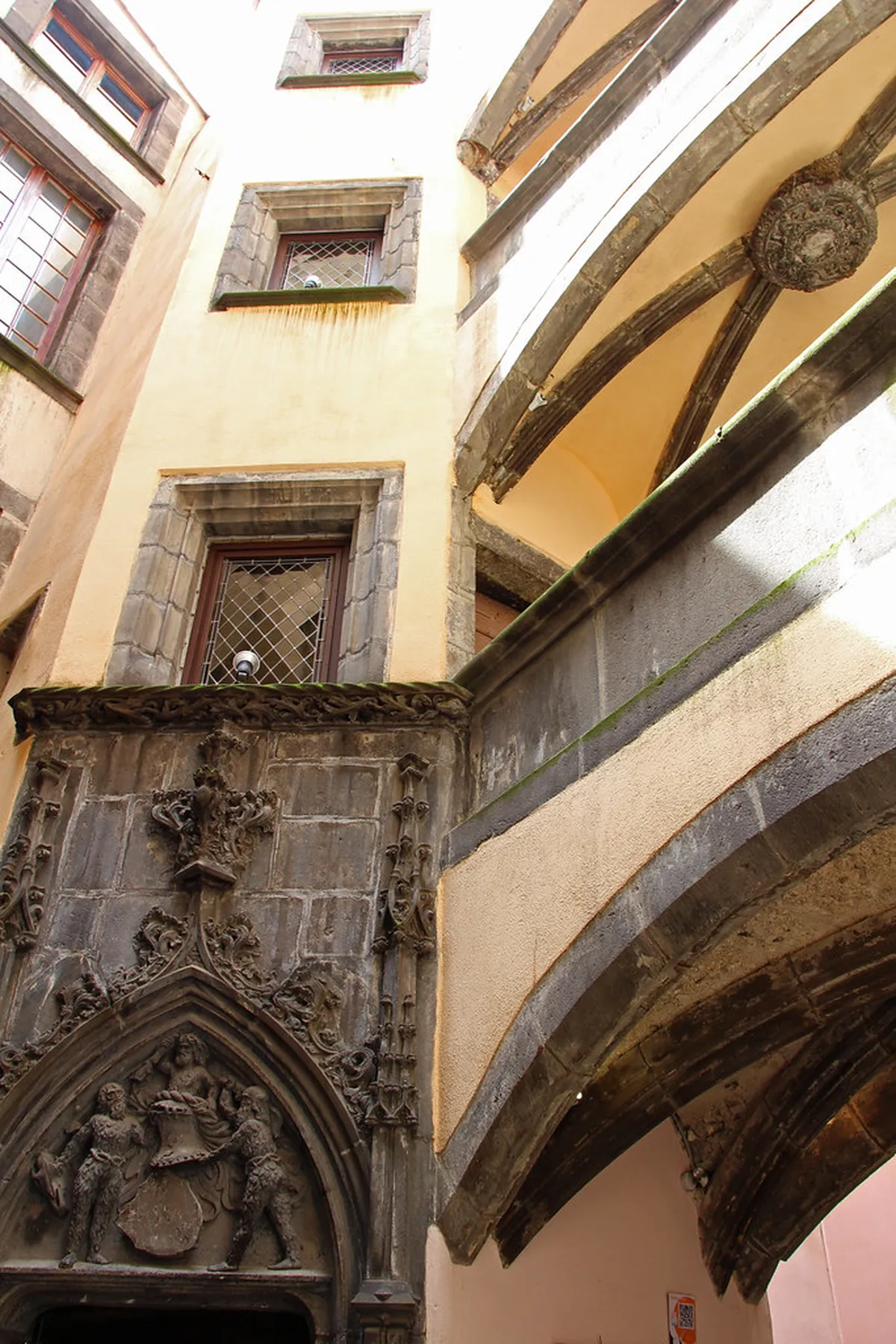
The central courtyard houses one of the most significant Hôtel de Savaron architectural details ever built. A stunning spiral staircase serves as the focal point of the inner courtyard area. This architectural feature represents the height of Renaissance innovation in the early sixteenth century. It connects the various levels of the mansion while providing a dramatic visual center.
The staircase design allows light to filter down into the lower levels of the building. Each step is carefully carved to create a smooth and elegant upward spiraling motion. You will notice the intricate balustrades that line the edges of the stone steps. This work is among the best examples of Renaissance staircases in Clermont-Ferrand today.
The geometry of the staircase reflects the mathematical precision valued by Renaissance architects and builders. It demonstrates a move away from the purely functional stairs seen in earlier medieval towers. This staircase was designed to impress guests and showcase the owner's modern artistic tastes. It remains a favorite subject for photographers visiting the city's many historic courtyards.
Above the staircase, the vaulting displays impressive technical mastery and artistic flair from the period. The intersections of the stone ribs create a beautiful pattern that draws the eye upward. This ceiling work protects the staircase from the elements while adding another layer of beauty. It is a masterpiece of stone engineering that has survived for over five hundred years.
Interior Craftsmanship and Sculpted Woodwork
The interior of the mansion features several rooms with original layouts and artistic decorations. One of the most famous Hôtel de Savaron architectural details is the sculpted wooden door. This door is located within the tympanum of the main entrance in the courtyard. It features three distinct figures that represent various virtues or historical allegories.
The wood used for these doors has been treated to survive for many centuries without rot. Craftsmanship on the panels shows deep relief carving that was very popular during the 1510s. Visitors can see the transition from Gothic pointed arches to Renaissance rounded forms here. These doors served as a secure and beautiful entry point for the Savaron family.
Inside the main hall, the ceilings often feature exposed beams or decorative plasterwork from later periods. The windows are large for the time, allowing plenty of natural light into the living spaces. Each room was designed to provide comfort while maintaining a sense of formal grandeur. You can imagine the lively intellectual discussions that once took place here.
The fireplaces throughout the mansion are also worth noting for their impressive size and decoration. Many feature large stone mantels with heraldic symbols or floral motifs carved into the sides. These hearths provided necessary warmth during the cold winters in the Auvergne highland region. They remain as functional artistic pieces that define the character of the internal rooms.
Visiting Tips for Historic Architecture Lovers
Planning a trip to see these Hôtel de Savaron architectural details requires a bit of preparation. The mansion is located on Rue des Chaussetiers, which is a narrow and pedestrian-friendly street. It is best to visit during the morning hours to avoid the largest tourist crowds. This timing also provides the best natural lighting for taking photos of the courtyard.
The entrance to the courtyard is sometimes restricted to guided tours or specific opening hours. Check with the local tourism office in Clermont-Ferrand for the most current visiting schedule. Most tours last about forty-five minutes and provide deep insights into the mansion's history. Wear comfortable walking shoes as the historic stone floors can be somewhat uneven.
The costs for entry are generally very reasonable for adults and often free for children. Some special events in 2025 might offer evening access with atmospheric lighting throughout the site. This provides a completely different perspective on the dark volcanic stone and intricate carvings. Always bring a camera with a wide-angle lens to capture the tight courtyard spaces.
After your visit, take a stroll through the surrounding neighborhood to see more historic sites. The area is filled with charming cafes and small boutiques that reflect local French culture. You will find many other Renaissance buildings just a few minutes away on foot. This district remains the heart of the city's rich and diverse architectural heritage.
Frequently Asked Questions
What is the best time to see the Hôtel de Savaron?
The best time to visit is during the morning when the light hits the courtyard. You should aim for weekdays to avoid the peak tourist crowds in Clermont-Ferrand. Spring and autumn offer the most comfortable weather for walking through the historic district.
Is the Hôtel de Savaron accessible for people with disabilities?
The courtyard is accessible, but the upper floors and the staircase may be difficult. The historic stone flooring can be uneven for wheelchairs or those with limited mobility. It is best to contact the tour provider in advance for specific accessibility details.
Why is the building so dark in color?
The mansion is built using Pierre de Volvic, which is a local volcanic stone. This material is naturally dark gray or black and is very durable against the weather. It is a signature architectural feature of many historic buildings throughout the entire city.
How much does it cost to visit the mansion?
Entry fees vary depending on the season and whether you choose a guided tour. Typically, tickets cost between five and ten euros for adults in 2025. Discounts are usually available for students, seniors, and large groups visiting the site.
Can I take photographs inside the courtyard?
Yes, photography is generally allowed within the courtyard for personal and non-commercial use. However, you should avoid using a flash to protect the delicate stone and wood carvings. Always check for any updated signage regarding photography when you first enter the property.
The Hôtel de Savaron architectural details provide a unique window into the French Renaissance in Auvergne. From the volcanic stone walls to the elegant spiral staircase, every element showcases expert craftsmanship. Plan your visit to Clermont-Ferrand in 2025 to experience this historical masterpiece in person. You will leave with a deeper appreciation for the beauty and history of French architecture.
Key Takeaways
- Hôtel de Savaron was built in 1513 using durable dark volcanic stone.
- The central spiral staircase is a masterpiece of Renaissance geometry and design.
- The mansion is located on Rue des Chaussetiers in historic Clermont-Ferrand.
- Entry costs are affordable, and morning visits offer the best light for photos.
Related reads: architecturebycity.com, architecture in clermont ferrand, clermont ferrand historic courtyard tours.