
Fontaine Roesselmann Design: A Bartholdi Icon
Explore the Fontaine Roesselmann design by Bartholdi in Colmar. Learn about its 2025 history and art in this French monument profile. Visit now!
On this page
Colmar is a town full of artistic treasures. The Fontaine Roesselmann design stands out as a true masterpiece. It honors a brave local hero from the 13th century. You can find it in the charming Little Venice district.
This monument is essential for any 2025 visitor. It captures the spirit of the Alsatian region perfectly. Many travelers stop here to admire the intricate bronze work. The fountain adds a touch of historical elegance to the square.
The Hero Behind the Monument
Jean Roesselmann was a provost who saved the city. He died defending Colmar against the Bishop of Strasbourg. This happened back in 1262 at the Porte de Bâle. The city wanted to honor his bravery forever.
They commissioned Frédéric Auguste Bartholdi for this important project. Bartholdi was already a world-famous sculptor at the time. He wanted to create a symbol of local resistance. The monument serves as a permanent tribute to civic duty.
Roesselmann represents the strength of the Colmar people. He is often seen as a guardian of the city. His sacrifice ensured the independence of the local council. Visitors today can still feel this historic weight.
Analyzing the Fontaine Roesselmann Design
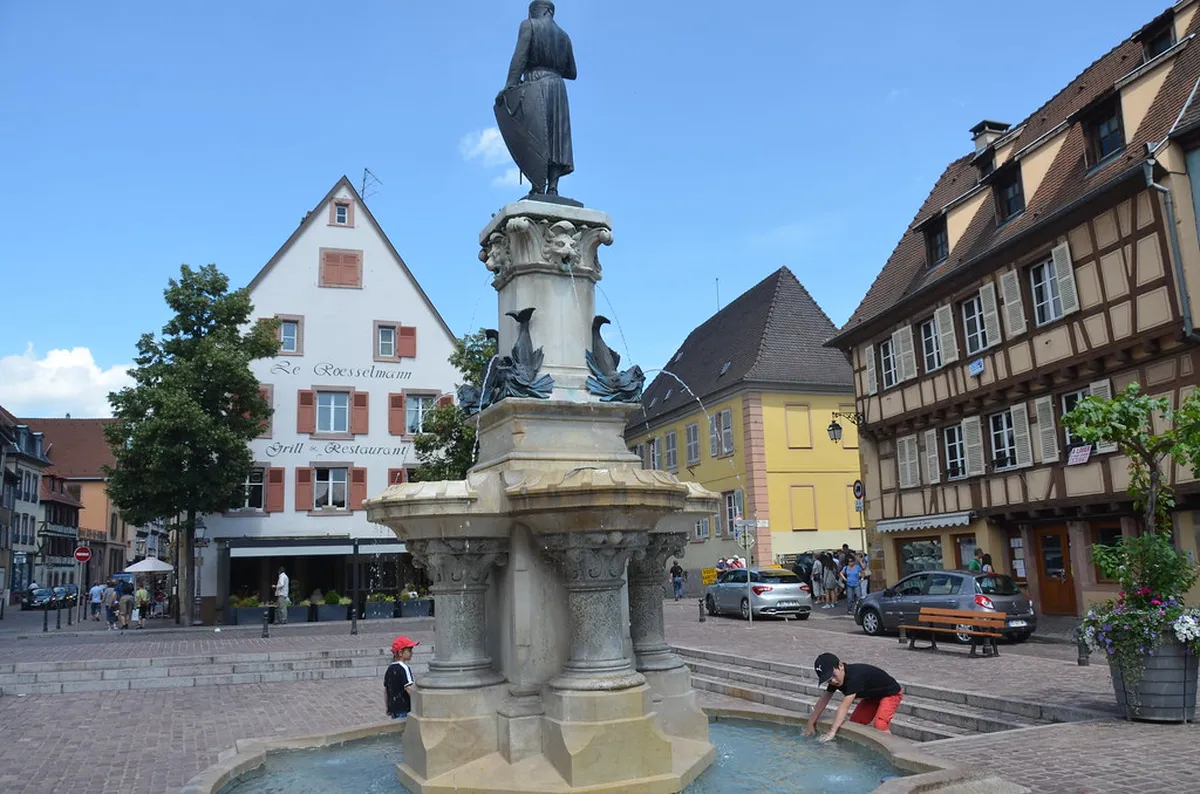
The Fontaine Roesselmann design features a grand bronze statue. It sits atop a pedestal of white Vosges sandstone. Roesselmann is depicted in his traditional medieval armor. The details on the metalwork are quite impressive.
Bartholdi used a realistic and powerful style for this piece. The provost holds a banner while looking over the square. His posture suggests a man ready for battle. This creates a sense of movement within the heavy stone.
The base includes several decorative water spouts. Water flows gently into a large stone basin below. This sound creates a peaceful atmosphere for passing tourists. The combination of metal and stone is visually striking.
Bartholdi chose high-quality bronze for the main figure. The metal has developed a beautiful green patina over time. This adds to the historic feel of the sculpture. You can see the fine details on the armor plates.
Part of Frédéric Auguste Bartholdi Colmar Monuments
This work is part of the Frédéric Auguste Bartholdi Colmar monuments collection. Bartholdi is most famous for the Statue of Liberty. However, his local works show his deep civic pride. Each piece tells a story of Alsatian history.
You can see his evolution as a sculptor here. He focused on public art that inspired the community. His statues often feature grand scales and noble themes. This fountain is one of his most beloved local creations.
The artist was born in Colmar in 1834. He remained deeply connected to his roots throughout his life. This monument was one of his final gifts to the city. It was inaugurated shortly before the turn of the century.
Location in the Heart of Little Venice
The fountain sits in the Place des Six-Montagnes-Noires. This square is a central part of the Little Venice colmar urban layout area. It is surrounded by colorful half-timbered houses. The location makes it a popular spot for photographers.
In 2025, the square remains a vibrant public space. You can find several small cafes nearby. It is the perfect place to sit and relax. The water provides a cool mist on warm summer days.
The proximity to the Lauch River adds more charm. You can easily walk to the Turenne bridge from here. Many guided tours stop at the fountain for history lessons. It is a key landmark in the old town.
Visiting Colmar in 2025: What to Expect
The monument is free to visit at any time. It is well-lit for those visiting after sunset. The surrounding streets are mostly pedestrian-friendly now. You can enjoy the Colmar architecture without worrying about heavy traffic.
Most visitors spend about fifteen minutes at the fountain. It is a great starting point for city walks. You can find several information plaques near the base. These explain the history of the provost in detail.
Winter visits are also quite magical in Colmar. The fountain is often decorated during the Christmas season. The pink sandstone glows under the festive city lights. It is a year-round attraction for all ages.
Preservation and Architectural Legacy
Local authorities maintain the fountain with great care. The bronze is cleaned to prevent unwanted corrosion. They ensure the water pumps function properly throughout the year. This preservation keeps the history of Colmar alive.
The fountain serves as a bridge between eras. It connects the 13th century with the late 19th century. Today, it remains a symbol of European urban art. Scholars often study the pedestal for its masonry techniques.
The use of local sandstone reflects regional building traditions. This material is seen in many historic French buildings. It stands strong against the changing weather of Alsace. The monument will endure for many more generations.
Frequently Asked Questions
Is there an entry fee for the fountain?
No, the monument is free to visit at all times. It is located in a public square for everyone to enjoy. You do not need a ticket to take photographs here.
Where is the Fontaine Roesselmann located exactly?
It is situated at the Place des Six-Montagnes-Noires. This square is near the famous Little Venice area. You can easily walk there from the city center.
When was the Fontaine Roesselmann first built?
The fountain was originally inaugurated back in 1888. Frédéric Auguste Bartholdi designed it to honor local history. It remains a preserved piece of French cultural heritage today.
The Fontaine Roesselmann is a must-see in Colmar. It combines historical depth with beautiful artistic design. Make sure to visit this Bartholdi masterpiece in 2025. It is the perfect way to experience Alsatian culture.
Key Takeaways
- The fountain honors Jean Roesselmann from 1262.
- It was designed by the famous Frédéric Auguste Bartholdi.
- The statue is located in the beautiful Little Venice area.
- Visitors can view the monument for free in 2025.
Related reads: architecturebycity.com.