
Grand Théâtre de Dijon Architecture: 19th Century Gem
Discover the Grand Théâtre de Dijon architecture. Learn about 19th century neoclassical design in Dijon today. Explore this French landmark for your 2025 trip!
On this page
The Grand Théâtre de Dijon architecture stands as a masterpiece of the 19th century neoclassical style in France. This iconic landmark serves as the primary venue for opera and theater in the historic city of Dijon. Visitors from around the world come to admire the grand scale and elegant proportions of this famous building. It represents a significant era of urban development during the restoration period of the French monarchy in 1828.
Exploring this site offers a unique glimpse into the cultural heritage of the beautiful Burgundy region today. You can find this impressive structure right in the heart of the city near the main shopping streets. The theater remains a vibrant part of the local community with many performances scheduled throughout the year 2025. It is truly an essential stop for anyone interested in historical European design and classical artistic styles.
Grand Théâtre de Dijon Architecture History
Jacques Cellerier designed this building in 1810 after receiving a formal decree from the Emperor Napoleon I. Construction faced many difficult delays due to the political instability of the various Napoleonic Wars in Europe. The project finally reached completion in 1828 under the careful supervision of the local architect named Vallot. This long timeline allowed for many refinements to be made to the original structural plans of the theater.
This theater replaced a much smaller and older venue located within the nearby Palace of the Dukes. The city government needed a larger and more modern space to host professional performing arts for the public. It cost the city around 1.5 million gold francs to finish this ambitious project during the 19th century. Today, it remains one of the most prestigious and recognizable cultural hubs in the entire city of Dijon.
You can see a perfect blend of history and art when you stand before this massive limestone structure. The building has survived several major political shifts and social changes throughout the long history of France. It represents the enduring stability and significant wealth of the Burgundy region during the busy 19th century period. Visitors often admire the incredible strength and durability shown by this well-preserved historical French monument today.
Many local residents consider this theater to be the true heart of the city’s active artistic life. It has hosted thousands of operas and classical plays since its grand opening nearly two centuries ago now. The very first performance in 1828 set a high standard for artistic excellence that continues to this day. It is a place where history and modern performance come together in a truly spectacular way for all.
Exterior Design and Neoclassical Features
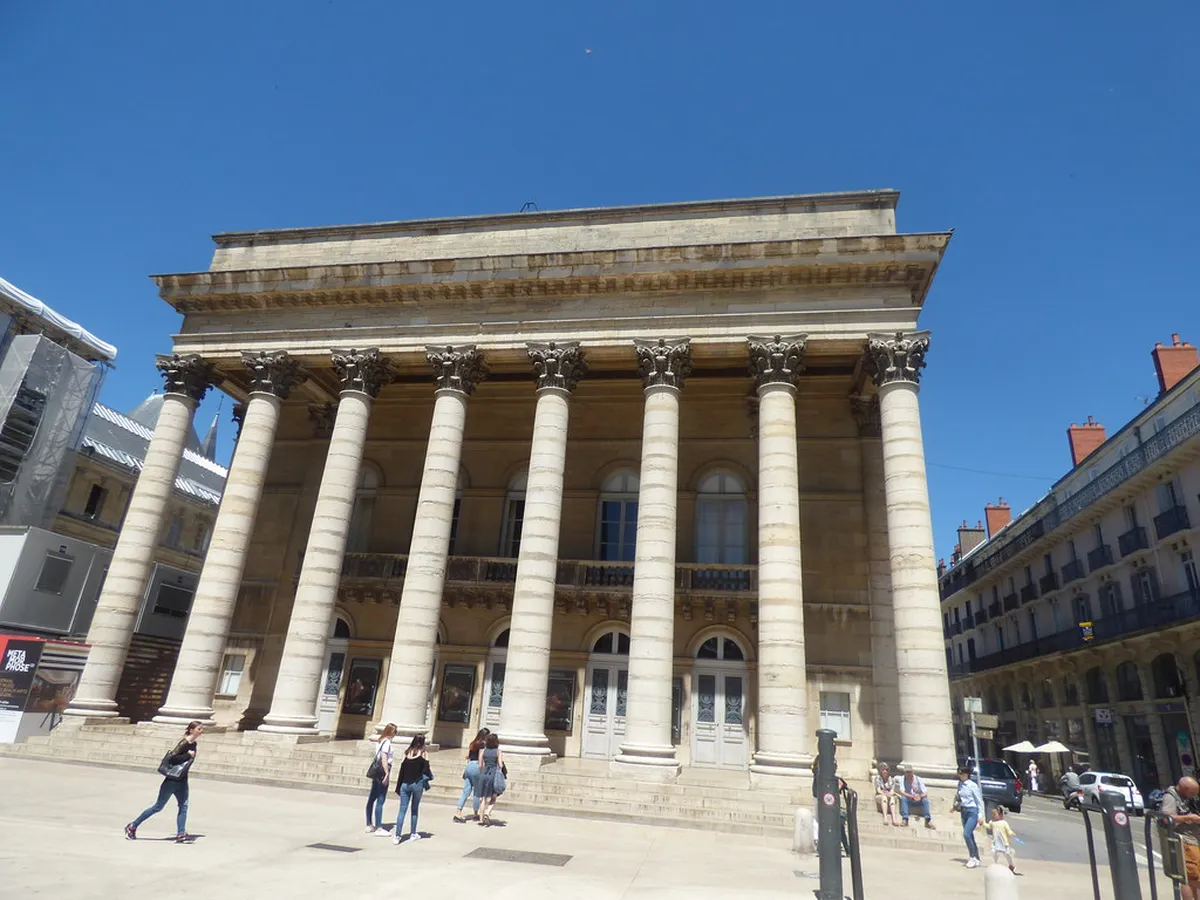
The Grand Théâtre de Dijon architecture features a striking facade that captures the attention of every passing traveler. You will immediately notice eight massive Corinthian columns that stretch across the front entrance of the building. These stone columns support a large and decorated triangular pediment at the very top of the main structure. This specific design choice mimics the grand temples of ancient Greece and the powerful monuments of old Rome.
The exterior of the building is constructed entirely from high-quality local limestone harvested from the Burgundy region. This specific type of stone gives the entire building a very warm and beautiful golden glow during sunset. Sculptures on the facade depict various muses and artistic symbols that represent the many performances held inside daily. These intricate details showcase the high level of craftsmanship available to builders during the early 19th century.
This famous landmark is a prime example of 19th century neoclassical Dijon design styles. The strict symmetry and balanced proportions create a deep sense of order and calm for the urban landscape. Many professional architects study these specific lines today because they offer a sense of truly perfect visual balance. It stands out prominently even when compared to the many other historic sites found throughout the city center.
The theater is perfectly located in the busy heart of the city for easy access by all visitors. You can find it standing proudly right near the historic and popular Place de la Libération in Dijon. It acts as a symbolic gateway to the protected UNESCO historic district of this famous French mustard capital. Photography fans especially love the soft morning light that hits the facade and highlights every single architectural detail.
Interior Layout and Acoustic Excellence
Step inside the main entrance to find a classic and beautiful horseshoe-shaped auditorium for the modern audience. This specific layout ensures that every single guest has a clear view of the stage from any seat. The interior walls feature rich red velvet fabrics and intricate gold leaf accents for a truly luxurious feel. It feels like stepping back into the height of the 19th century when opera was the main entertainment.
The ceiling of the main hall is a true work of artistic mastery and a highlight for visitors. A massive and sparkling chandelier hangs from a beautifully painted dome directly above the central seating area today. This elaborate artwork depicts scenes related to classical music and traditional theater from the various Greek mythological stories. It adds a final layer of sophisticated luxury to the overall theater experience for every guest who visits.
Acoustics play a vital role in the overall Grand Théâtre de Dijon architecture and its lasting professional reputation. The clever use of wood within the structure helps sound travel clearly to the very back of the hall. Performers often praise the natural resonance of the room during rehearsals for their upcoming grand opera seasons here. You do not need modern microphones for most of the classical operas performed in this specific historic space.
Modern upgrades have greatly improved the overall comfort of the seats for the theater guests in recent years. Each row now offers plenty of legroom and better lumbar support for long performances during the busy season. New ventilation systems keep the air fresh and comfortable even during the hottest summer months in the city. It perfectly blends historical charm with the high standards of comfort expected by travelers in the year 2025.
Restoration Efforts and Modern Maintenance
Keeping the Grand Théâtre de Dijon architecture pristine requires a significant amount of constant care and expert attention. Major restoration work took place during the late 20th century to ensure the building would last for centuries. Experts carefully cleaned the stone facade to remove many years of urban pollution and dark environmental grime today. They also meticulously restored the gold leaf decorations found within the auditorium to their original and bright shine.
In the year 2025, the building remains in excellent structural condition due to these very consistent maintenance efforts. Specialized maintenance crews check the integrity of the roof and plumbing systems on a regular and scheduled basis. These efforts help to preserve the incredible beauty of architecture in Dijon for future generations. The city government continues to invest heavily in this important cultural treasure to keep it functioning for all.
New lighting systems now illuminate the entire exterior of the building during the dark evening and night hours. These modern LED lights are very energy efficient and have a minimal impact on the local environment today. They highlight the intricate architectural details of the facade without causing any heat damage to the old limestone blocks. It makes for a truly beautiful and romantic sight during a late-night walk through the historic city streets.
Improving accessibility has become a major priority for the current management team of this historic French theater venue. New ramps and modern elevators now allow every visitor to enjoy the grand performances regardless of their physical abilities. The helpful staff provides personal assistance to those with limited mobility to ensure a safe and pleasant visit. This commitment ensures that the theater remains an inclusive space for all lovers of the performing arts today.
Visiting the Theater and Nearby Landmarks
The grand theater is located very close to the famous Palace of the Dukes of Burgundy architecture. You can easily walk between these two iconic landmarks in less than five minutes through the pedestrian city streets. This specific area of Dijon showcases the fascinating evolution of French building styles from the medieval to modern eras. It is the perfect starting point for any traveler interested in a comprehensive architectural walking tour of the city.
Many charming local cafes and restaurants surround the theater square and offer views of the grand stone columns. You can enjoy a fresh coffee while viewing the neoclassical architecture and watching the local residents pass by today. These spots offer some of the best views of the vibrant street life in this part of Burgundy. It is a very relaxing and pleasant way to spend a sunny afternoon while exploring the city center.
The surrounding narrow streets feature many beautiful limestone townhouses from various periods of French history and design style. These private buildings complement the grand style of the theater and create a cohesive look for the entire neighborhood. You will notice very intricate ironwork on many of the balconies that look out over the busy public squares. These small details reflect the significant wealth and status of the city during the prosperous 19th century era.
Local tour guides often choose to start their comprehensive city walks at the front of the grand theater. It serves as a very easy and recognizable meeting point for tour groups and independent travelers alike today. The central location makes it highly accessible from the main train station by using the efficient local tram system. You can arrive here easily by foot or by public transport from almost any part of the city.
Frequently Asked Questions
Can I take a guided tour of the building?
Yes, the city of Dijon offers several guided tours that explore the beautiful interior of the theater. These tours explain the fascinating history and the neoclassical design in great detail for all interested visitors today. You should check with the local tourism office to find the current 2025 schedule for these group tours.
How much do tickets for performances cost?
Ticket prices for performances will vary depending on the specific show and the seating area you choose today. Most opera and theater tickets cost between 15 and 80 euros for a standard adult admission price now. Significant discounts are often available for students and senior citizens who wish to enjoy the local cultural scene.
Is the theater open to the public every day?
The main lobby of the theater is usually open during standard business hours for ticket sales and inquiries. However, you will need a valid performance ticket or a tour booking to see the main auditorium hall. Joining a guided tour is definitely the best way to see the architecture without attending a show.
What is the best time for taking photos?
The soft morning light typically hits the main facade directly which is perfect for taking clear architectural photos. Late evening also offers spectacular shots when the new LED lights illuminate the columns against the dark night sky. You should try to avoid the mid-day sun because it can create very harsh shadows on the stone.
The Grand Théâtre de Dijon architecture is a stunning reminder of the artistic ambition of the 19th century period. It remains a vital part of the city's cultural identity and a must-see landmark for every visiting traveler. Whether you attend a performance or simply admire the facade, the experience will surely be a memorable one. Plan your visit to this neoclassical gem in 2025 to discover the true heart of the Burgundy arts.
Key Takeaways
- Built in 1828, it is a prime example of 19th-century neoclassical design in France.
- The interior features a horseshoe-shaped auditorium with exceptional natural acoustics for opera.
- Located near the Palace of the Dukes, it is easily accessible for architectural walking tours.
Related reads: architecturebycity.com, place darcy gate and design, evolution of rue de la liberte facades.