
Palace of the Dukes of Burgundy Architecture Guide
Discover the stunning Palace of the Dukes of Burgundy architecture in Dijon. Learn about its history and design in this 2025 guide. Visit today!
On this page
The Palace of the Dukes of Burgundy architecture defines the heart of Dijon, France. This historic site blends Gothic and Neoclassical styles beautifully. Visitors flock to this landmark to witness centuries of French heritage. It remains one of the most impressive structures in the Burgundy region today.
The palace once housed the powerful Dukes who ruled this wealthy territory. It now serves as the town hall and a world-class art museum. Exploring its halls offers a deep dive into European political history. You can start your journey at the iconic Place de la Libération nearby.
Walking through the palace allows you to feel the power of medieval France. The stone walls tell stories of royal ceremonies and architectural shifts. In 2025, the site continues to draw thousands of global tourists. It stands as a symbol of Dijon’s lasting architectural influence.
The Gothic Origins of the Ducal Palace
The palace began as a simple fortress during the 14th century. Duke Philip the Bold initiated major Gothic expansions during his reign. These early structures focused on defensive strength and royal comfort. Most of the original medieval walls remain hidden within the later additions.
The Great Hall is a primary example of this early construction phase. It features high vaulted ceilings and massive stone fireplaces for warmth. These elements represent the height of medieval luxury for the ruling class. You can still see the intricate masonry work on the older pillars.
Many visitors explore the Burgundy Gothic architecture style throughout the palace complex. This style emphasizes verticality and light through tall, pointed arches. The stonework often includes detailed carvings of local flora and heraldic symbols. It reflects the artistic ambitions of the Valois Dukes of Burgundy.
The palace kitchen is another fascinating relic from the Gothic era. Built in 1433, it features six huge fireplaces for massive banquets. The central chimney system was an engineering marvel for its time. It shows how the palace functioned as a self-sustaining royal household.
Today, these Gothic sections provide a stark contrast to later styles. They remind us of the palace's role as a medieval seat of power. Preservation efforts ensure these stone structures remain stable for future generations. Walking through these halls feels like stepping back into the Middle Ages.
Neoclassical Transformations in the 17th Century
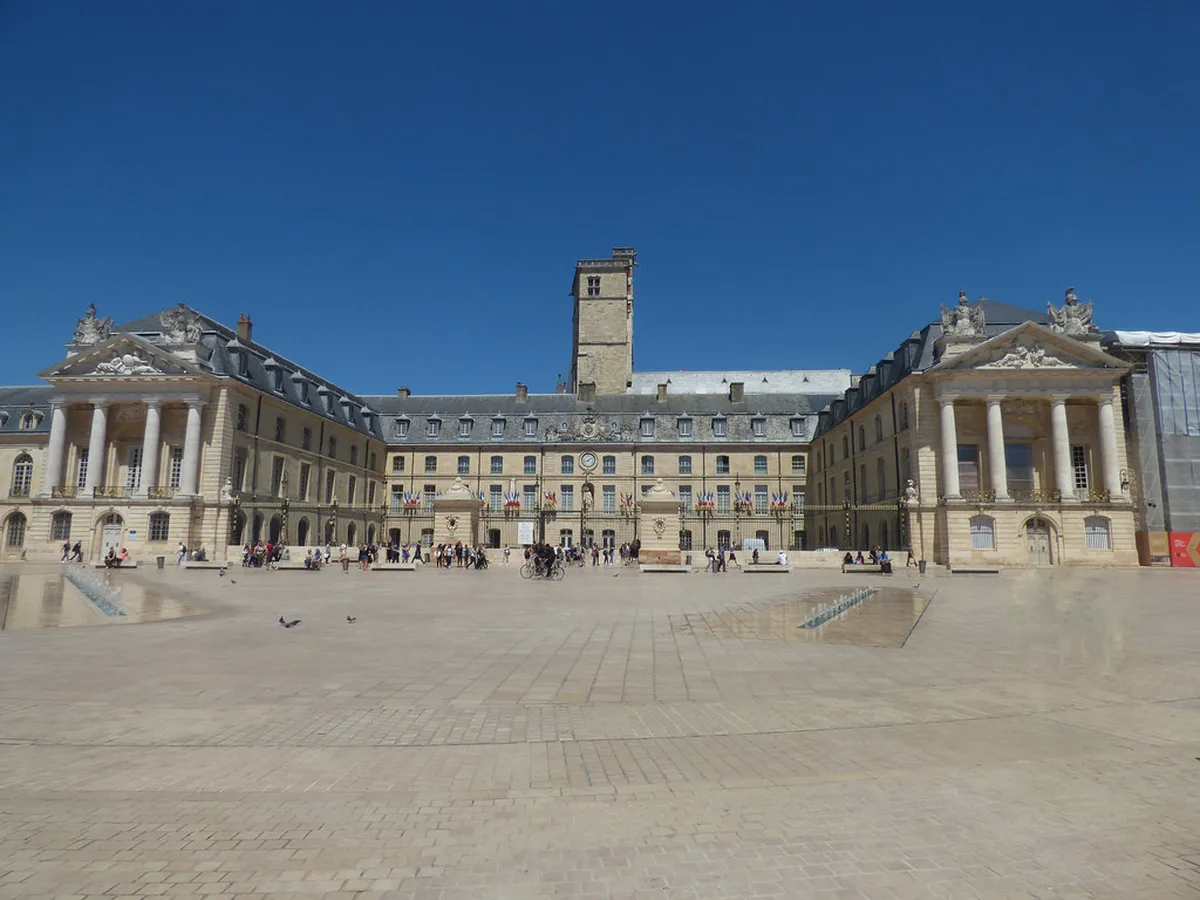
In the 17th century, the palace underwent a massive Neoclassical renovation. Renowned architect Jules Hardouin-Mansart designed the new classical facade. This update integrated the older Gothic elements into a cohesive royal square. The Palace of the Dukes of Burgundy architecture reflects this blend of eras.
The facade faces the grand Place de la Libération in a semicircle. It features elegant columns and symmetrical windows that define the Neoclassical style. This design was intended to mimic the royal splendor found in Versailles. It helped transform Dijon into a modern administrative center for the region.
Hardouin-Mansart focused on creating a sense of order and balance here. The use of light-colored limestone makes the entire structure glow at sunset. This stone was quarried locally and is characteristic of the Burgundy region. It provides a clean and sophisticated look to the entire city center.
The East and West wings were added to house regional officials. These wings follow the same rigorous classical proportions as the central building. They frame the courtyard and create a sense of enclosed royal space. This layout encouraged public gatherings while maintaining a sense of elite authority.
During this period, many of the old defensive features were removed. The palace shifted from a fortress to a grand civic residence. This change signaled the growing stability of the French monarchy in Burgundy. The resulting structure is what visitors mostly see from the exterior today.
The Tower of Philip the Good Architectural History
The Tour Philippe le Bon rises high above the historic center. It reaches a height of 46 meters after 316 stone steps. Climbing the tower costs about five euros for an adult ticket in 2025. It offers the most complete panoramic view of the city of Dijon.
This tower was built between 1450 and 1460 to show power. It served as a watchtower and a symbol of the Duke's reach. The architecture combines military strength with the elegance of a royal residence. Its terrace allows you to see the glazed tile roofs of the city.
For more history, read about the Tour Philippe le Bon architectural history before visiting. The spiral staircase inside is a masterpiece of medieval stone carving. Each step is perfectly balanced to support the massive weight of the tower. It remains one of the best-preserved medieval towers in all of France.
The views from the top extend to the vineyards of the Côte d'Or. On clear days, you can even spot the distant peaks of the Alps. This strategic vantage point was essential for the security of the medieval dukes. It now serves as the perfect spot for architectural photography enthusiasts.
Safety railings and modern lighting make the climb accessible for most visitors. However, the narrow stairs can be a challenge for some travelers. It is best to visit early in the morning to avoid crowds. The tower closes during extreme weather for the safety of all guests.
Artistic Interiors and the Salle des Etats
The interior of the palace is just as grand as its exterior. The Salle des États features incredible wood paneling and marble details. This room once hosted the regional assembly of the Burgundy Estates. It was designed to impress visiting dignitaries with its immense scale.
The ceiling of the hall is decorated with ornate paintings and gold leaf. These artworks depict the glory of the French crown and regional history. The room remains a functioning space for official ceremonies in Dijon today. It represents the height of 17th-century French interior decoration and design.
Discover more about the Salle des Etats interior design during your indoor tour. The acoustics in this hall are perfect for public speaking and music. Visitors often remark on the sheer size of the doorways and windows. These features were scaled to match the ego of the ruling class.
The palace also contains several hidden chapels with unique architectural features. These small spaces offer a quiet contrast to the massive public halls. They feature delicate stained glass and intricate floor tiles from the Renaissance. These details show the personal religious devotion of the Burgundian court.
Many of the original furniture pieces are still on display in the palace. These items help visitors visualize how the rooms were used centuries ago. From velvet chairs to heavy oak tables, the craftsmanship is truly exceptional. Every corner of the interior reflects the wealth of the Dukes.
The Palace as a Modern Museum Space
The palace wings house the famous Musée des Beaux-Arts of Dijon. This museum is one of the oldest and largest in France. Admission to the permanent collection is free for all visitors in 2025. It preserves the tombs of the Dukes within the great vaulted hall.
The renovation of the museum space was completed only a few years ago. Architects successfully blended modern glass and steel with ancient stone walls. This design allows for better lighting and climate control for the artworks. It is a brilliant example of modernizing a historic landmark sensitively.
The Great Hall of the museum contains the tombs of Philip the Bold. These monuments are carved from black marble and white alabaster stone. They feature small figures called 'pleurants' that show incredible detail and emotion. These tombs are considered masterpieces of late medieval European sculpture.
The museum layout guides you through different eras of Burgundy's artistic history. You can see primitive paintings alongside modern abstract works by local artists. This variety makes the palace a central hub for culture in Dijon. The gift shop and cafe provide a nice break during your visit.
The integration of the museum into the palace has saved the structure. Constant use ensures that the building receives the funding needed for maintenance. It proves that historic buildings can evolve while keeping their original charm. The palace remains a living part of the city's daily life.
The Palace in the UNESCO Historic District
The palace serves as the anchor for the local UNESCO district. Its surrounding streets feature many other UNESCO Dijon old town district landmarks. Walking around the palace allows you to see centuries of building styles. The semi-circular square in front provides the best view of the facade.
The Place de la Libération was designed as a setting for the palace. It features fountains that dance in the sunlight during the summer months. Locals and tourists gather here to enjoy the atmosphere and outdoor cafes. It is widely considered one of the most beautiful squares in France.
Street performers often play music near the palace entrance on weekends. This lively energy contrasts with the quiet dignity of the stone buildings. The square is mostly car-free, making it safe for families to explore. It serves as the perfect starting point for any city walking tour.
From the palace, you can easily walk to the nearby Notre-Dame de Dijon. This church features unique gargoyles and a famous stone owl carving. Many visitors touch the owl for good luck as they pass by. These sites are all part of the protected historic core of the city.
In 2025, the palace area remains the most photographed spot in Dijon. The combination of history, art, and public space is truly unique. It is a place where history feels accessible and very much alive. No trip to Burgundy is complete without visiting this architectural giant.
Frequently Asked Questions
What is the best time to visit the palace?
The best time to visit is during spring or autumn. The weather is mild and the crowds are smaller than in summer. You can explore the architecture in Dijon comfortably during these seasons. Sunset offers the best lighting for photographing the limestone facade of the palace.
Is the Palace of the Dukes of Burgundy free to enter?
Entering the Musée des Beaux-Arts inside the palace is free for everyone. However, climbing the Philippe le Bon tower requires a small fee. This fee is usually around five euros for adults in 2025. Guided tours of the private halls also have an additional cost.
How long does a tour of the palace take?
Most visitors spend about two to three hours exploring the entire site. This includes the museum galleries and the historic courtyard. If you climb the tower, add another forty-five minutes to your visit. It is a large complex with many details to discover in every room.
Can I take photos inside the palace and museum?
Photography is allowed in most areas of the palace and the museum. However, you must turn off your flash to protect the ancient artworks. Some specific temporary exhibitions may have stricter rules about taking pictures. Always check for signage or ask a staff member before snapping a photo.
The Palace of the Dukes of Burgundy architecture remains a triumph of French design. It tells the story of Dijon from a medieval fortress to a modern cultural hub. Visitors in 2025 will find a site that is both historic and vibrant. Plan your visit today to see this incredible landmark in person. Exploring this palace is the best way to understand the rich heritage of Burgundy.
Key Takeaways
- The palace features a unique blend of Gothic and Neoclassical architectural styles.
- Entry to the permanent collection of the Musée des Beaux-Arts is free.
- The Tour Philippe le Bon offers the best panoramic views of Dijon's skyline.
- The Salle des États is a masterpiece of 17th-century French interior design.
- The palace is a central part of Dijon's UNESCO World Heritage site.
Related reads: architecturebycity.com, renaissance mansions in dijon.