
Exploring the UNESCO Dijon Old Town District in 2025
Visit the UNESCO Dijon old town district. Discover medieval streets and grand palaces in Burgundy. Plan your 2025 French getaway with our expert guide today.
On this page
Welcome to the beautiful UNESCO Dijon old town district located in the heart of Burgundy. This historic area offers a stunning blend of ancient history and world-class French art. Plan your 2025 trip to see these ancient streets and magnificent stone buildings today.
The city was once the grand home to the powerful and wealthy Dukes of Burgundy. Their political influence shaped the massive and elegant buildings you see throughout the district. Many of these structures are now part of a protected and vital heritage site.
You will find charming pedestrian streets filled with local shops and very cozy cafes. The district is perfect for walking tours during the pleasant spring and summer months. Discover why this French city remains a top destination for travelers from around the world.
Grand Architecture of the Ducal Palace
The Palace of the Dukes of Burgundy is a massive landmark in the city center. It showcases the incredible power of the former rulers of the Burgundy region. The oldest parts of the palace date back to the early 14th century.
Most visitors can explore the Palace and the museum during the daylight hours. Much of the historic site now houses the city's famous Fine Arts Museum. Admission to the main permanent collection remains free for all visitors in 2025.
In front of the palace lies the beautiful and historic Place de la Libération. This iconic semi-circular square is a true masterpiece of classic French urban planning. It features several dancing fountains and many lively outdoor cafes for local people.
The Place de la Libération urban planning creates a grand entrance to the ducal home. Architect Jules Hardouin-Mansart designed this elegant space during the late 17th century period. It remains the most popular meeting spot for friends in the whole city.
Medieval Timber-Framed Houses in Dijon
Narrow cobblestone streets wind through the heart of the UNESCO Dijon old town district. Many alleys feature exceptionally well-preserved and unique medieval timber-framed houses from the past. These historic buildings date back to the middle of the 15th and 16th centuries.
One famous example of this style is the Maison Millière on Rue de la Chouette. It displays classic wooden beams and the slanted walls typical of the medieval era. This building now houses a very charming tea room and a local craft shop.
The medieval timber-framed houses in Dijon are very photogenic for modern travel photographers. They show how common merchant people lived during the busy years of the Middle Ages. The wooden frames were often filled with colorful brick or strong lime plaster.
Walking through these ancient streets feels like traveling back in time to another century. Look for the Rue des Forges for the best and most intact wooden examples. These structures survived centuries of urban change and the various European wars remarkably well.
Religious Sites and Burgundy Gothic Style
Dijon is often called the city of a hundred steeples by many local residents. Its religious buildings show unique regional styles that are not found anywhere else. The Burgundy Gothic architecture style is evident in several large and impressive city churches.
The church of Notre-Dame de Dijon is a must-see site for every curious traveler. Its vertical facade is decorated with three rows of very strangely carved stone gargoyles. People often visit the small stone Owl carving on the building's exterior wall.
The Cathedral of Saint-Bénigne offers another fascinating view into the long local religious history. Its vast underground crypt dates back over a thousand years to the early church. The tall spire dominates the entire city skyline at over ninety-three meters in height.
These holy buildings are open to the general public for free throughout the year. Please remember to remain quiet during the active religious services held during the week. Guided historical tours are available for a small fee during the 2025 summer season.
Renaissance Influence in the Old District
Beyond the medieval wood, the district features many elegant and tall stone private mansions. These Renaissance mansions in Dijon belonged to the wealthy judges and high-ranking officials. They feature intricate stone carvings and very grand courtyards hidden behind large doors.
The Hôtel de Chambellan is a prime and beautiful example of this artistic style. It has a stunning spiral staircase made of stone and highly detailed carved wood. You can enter the internal courtyard for free during regular business hours today.
Look for the famous Maison des Cariatides located on the Rue Chaudronnerie street. Its exterior facade is covered in many detailed stone figures from the old world. These decorations show the artistic and cultural growth of the busy 16th century period.
Many of these historic buildings now house modern fashion boutiques or private luxury apartments. The district preserves the original spirit and beauty of these former private residences well. They add a visible layer of luxury and wealth to the historic city streets.
Famous Glazed Tile Roofs of Burgundy
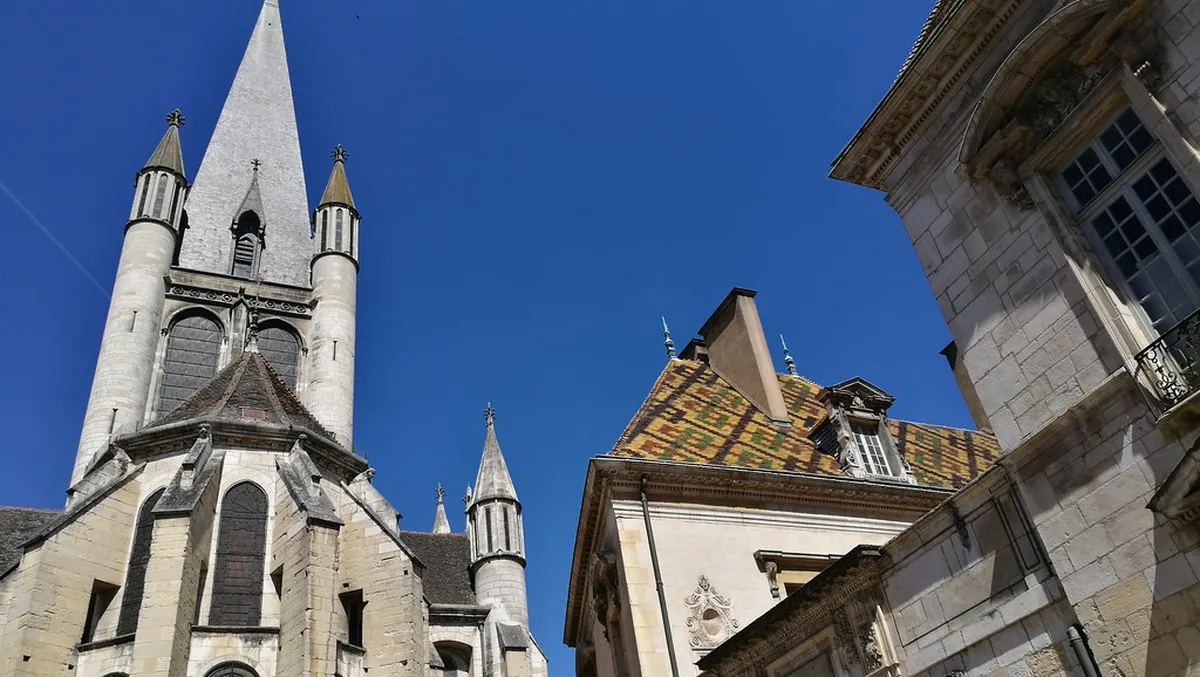
Bright colors and patterns decorate many roofs within the UNESCO Dijon old town district. These iconic glazed roofs are world-famous symbols of the beautiful and rich Burgundy region. They use green, yellow, black, and deep red terracotta tiles in geometric patterns.
The patterns usually form complex geometric shapes or colorful heraldic designs for the owners. You can see these unique roofs on the historic Hôtel de Vogüé building. This private mansion is a true jewel of the middle 17th century architecture.
Artisans crafted these expensive tiles to show off the great wealth of the owners. They protect the buildings from rain while looking like beautiful and massive woven tapestries. You will find them on both public monuments and private residential buildings alike.
Take photos of these roofs from the top of the Philippe le Bon tower. The tower climb costs about five Euros for adults during the 2025 season. It provides the best aerial views of the entire historic district and rooftops.
Planning Your Visit to Dijon in 2025
Dijon is very easy to reach by the fast high-speed TGV train system. The journey from the center of Paris takes only ninety minutes on the train. The main train station is just a short walk from the historic district.
Always wear comfortable walking shoes for the uneven and ancient cobblestone city streets. Most of the UNESCO Dijon old town district is currently restricted to pedestrian traffic. This makes exploring the area on foot very safe and relaxing for all families.
The best time to visit the city is from late May to early October. The weather is usually warm and perfect for enjoying the many outdoor dining spots. Expect more tourist crowds during the busy summer school holidays in July and August.
Stop by the main Tourist Office located near the grand Ducal Palace building. They offer helpful maps for the famous Owl's Trail self-guided walking route today. This simple tour covers all major historic landmarks and many hidden city gems.
Frequently Asked Questions
What is the Owl's Trail in Dijon?
The Owl's Trail is a marked walking path through the UNESCO Dijon old town district. It follows twenty-two numbered steps to show visitors the most important historical sites. You can buy a guide book at the Tourist Office for a few Euros.
Are the museums in Dijon free to enter?
Most municipal museums in Dijon offer free entry to their permanent collections in 2025. This includes the famous Museum of Fine Arts located inside the Ducal Palace. Temporary exhibitions may require a small separate ticket fee for entry during your visit.
Where can I see the best glazed tile roofs?
The best glazed roofs are at the Hôtel de Vogüé and the Cathedral of Saint-Bénigne. You can also see them on many private buildings along the Rue de la Chouette. Climb the Philippe le Bon tower for the best view from above.
Is the Dijon old town accessible for visitors?
The historic district is mostly flat and very easy to navigate on foot. Many streets are pedestrian-only zones which makes walking much safer and more pleasant. Some older buildings may have small steps or narrow doorways for wheelchair users.
The UNESCO Dijon old town district is a true treasure of French history and culture. You can spend several days exploring its museums, churches, and very ancient streets. Book your 2025 trip now to experience the magic of this historic Burgundy city.
Key Takeaways
- Follow the Owl's Trail for an easy self-guided walking tour.
- Visit the Fine Arts Museum inside the Palace for free.
- Look up to see the colorful and historic glazed tile roofs.