
Medieval Timber-Framed Houses in Dijon: A 2025 Guide
Explore the medieval timber-framed houses in Dijon with our 2025 guide. Learn about the history and architecture of this French gem today!
On this page
Dijon stands as a crown jewel in the heart of the Burgundy region of France. This city boasts a stunning collection of medieval timber-framed houses in Dijon that tell ancient stories. Walking through the narrow cobblestone streets feels like stepping back into the 15th century. You will discover incredible craftsmanship and unique structural designs around every corner in the UNESCO Dijon old town district area.
These historic buildings represent the power and wealth of the former Duchy of Burgundy during the Middle Ages. The structures have survived wars and modernization to provide a glimpse into the architectural past of Europe. Visitors from around the world come to admire the intricate woodwork and the charming atmosphere of the streets. You can find these architectural treasures clustered primarily within the pedestrian-friendly zones of the central city district.
The History of Medieval Timber-Framed Houses in Dijon
Medieval timber-framed houses in Dijon represent the wealthy heritage of the former capital of the Great Dukes. Master carpenters used heavy timber frames to create stable structures that have survived for over five centuries now. Most of these historic homes date back to the late Middle Ages when wood was a primary material. You can still see the original markings left by craftsmen on the massive beams during the assembly process.
The construction of these buildings relied on sturdy oak beams harvested from the dense local forests of Burgundy. Builders filled the gaps between the wooden frames with a mixture of clay, straw, and small stones. This technique provided excellent insulation for the residents during the cold winters of the eastern French plains. Many houses also featured overhanging upper floors to protect the lower wooden beams from damaging rainwater and rot.
During the 15th century, the design of these houses reflected the social status of the merchant families living inside. Intricate carvings on the corner posts often depicted religious figures, mythical creatures, or scenes from daily village life. These decorative elements served both as artistic expressions and as protective symbols for the households within the city. You can find many of these detailed carvings while walking through the oldest parts of the historic center.
The preservation of these wooden structures is a primary focus for the local government of Dijon in 2025. Specialized artisans use traditional methods to restore the beams while ensuring the buildings remain safe for modern residential use. This careful balance between historical accuracy and modern safety helps maintain the authentic medieval atmosphere of the city. Visitors can enjoy the unique visual harmony created by these ancient wooden frames against the limestone masonry walls.
Walking Through the Famous Rue de la Verrerie
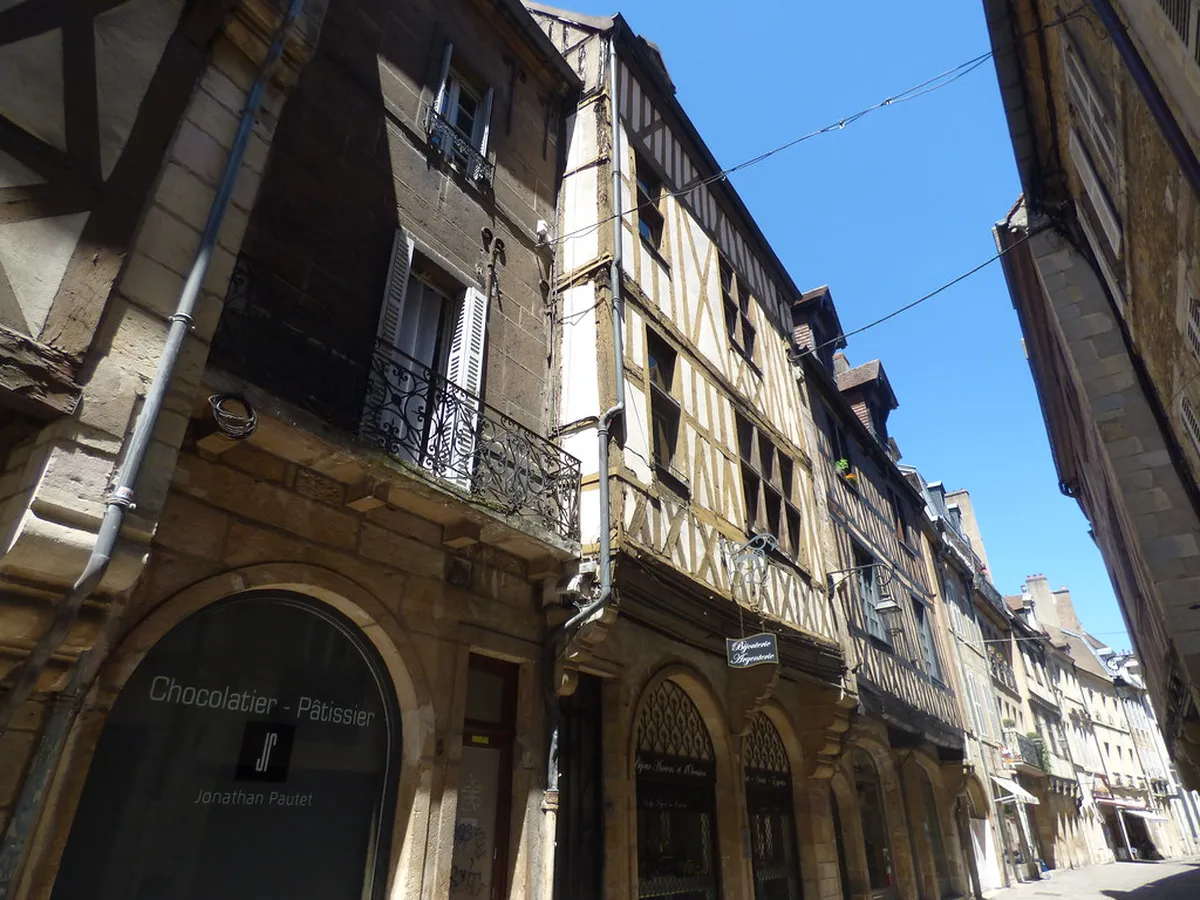
The Rue de la Verrerie half-timbered structures offer some of the most photographic views in the entire city of Dijon. This narrow street remains one of the best-preserved examples of a medieval thoroughfare in the whole of France. Tall buildings lean toward each other, almost touching at the top, which creates a cozy and intimate atmosphere. You will feel the weight of history as you walk past the antique shops and local artisan boutiques.
Many of these houses served as both shops and residences for the glassmakers and merchants of the Middle Ages. The ground floors typically featured large openings to display goods, while the families lived in the upper wooden levels. Today, these spaces house charming galleries and traditional craft stores that keep the local commercial spirit very much alive. The street is a pedestrian-only zone, which makes it perfect for a slow and detailed architectural exploration.
Look closely at the facades to see the different patterns of the wooden braces used in the frame construction. Some houses display simple vertical posts, while others feature complex X-shaped patterns known as the cross of Saint Andrew. These structural elements were essential for resisting the forces of wind and the weight of the heavy tiled roofs. The diversity of these patterns adds a rich visual texture to the streetscape of the historic district.
Visiting Rue de la Verrerie is completely free and accessible at any time of the day or the night. However, the early morning light provides the best conditions for capturing the details of the wood without heavy crowds. You might see local residents opening their wooden shutters as the city wakes up for a new day. It is an essential stop for anyone interested in the medieval timber-framed houses in Dijon during their visit.
The Architectural Masterpiece of Maison Millière
The Maison Millière 15th century architecture is perhaps the most famous timber-framed building located in the city center. Built in 1483 by a wealthy merchant named Guillaume Millière, it has retained its original charm for centuries. The building features a stunning facade with intricate wooden carvings and large windows that once served as shop counters. It stands near the Church of Notre-Dame and remains a focal point for tourists and architecture students alike.
The roof of Maison Millière is a spectacular example of the traditional style found throughout the Burgundy region of France. It features several small dormer windows and a very steep pitch that was common during the late medieval period. On the roof, you can even spot a small stone cat and an owl sculpture which are local icons. These small details make the building one of the most recognizable landmarks within the historic heart of the city.
Today, the house serves as a traditional tea room and a boutique selling local Burgundy products and craft items. You can enter the building to see the interior wooden structure and enjoy a meal in a historic setting. The interior retains the low ceilings and heavy beams that were standard for domestic architecture during the 15th century. It offers a rare opportunity to experience the atmosphere of a medieval home from the inside while visiting.
The building underwent significant restoration in the 20th century to ensure its survival for future generations of visitors to enjoy. Experts carefully cleaned the wood and reinforced the structural elements without changing the original design of the merchant house. This site is a perfect place to rest your feet after a long day of walking and exploring. Make sure to try some traditional gingerbread or local mustard while you sit inside this historic wooden treasure.
Timber Frames and Glazed Tile Roofs
A unique feature of many timber-framed houses in Dijon is the combination of wood with colorful glazed tile roofs. These vibrant roof patterns are a signature style of Burgundy architecture and provide a striking contrast to the wood. The tiles are often arranged in geometric designs using shades of green, yellow, black, and deep terracotta red. This combination creates a visual feast that is unique to this specific region of eastern central France.
While the timber frames provided the structure, these expensive tiles showed the world the financial success of the homeowners. Only the wealthiest citizens could afford the kiln-fired glazed tiles during the peak of the Middle Ages period. You can see these roofs on several prominent houses located near the Place de la Libération and the old market. The reflection of the sun on the shiny tiles adds a magical glow to the city skyline during sunset.
Maintaining these roofs requires specialized knowledge that has been passed down through generations of local French roofing experts. Each tile must be placed by hand to ensure the geometric pattern remains perfect across the entire roof surface. In 2025, several historic buildings are undergoing roof maintenance to preserve the brilliant colors of the traditional glazed tiles. This commitment to heritage ensures that the medieval timber-framed houses in Dijon remain beautiful for years to come.
Walking through the streets, you will notice how the earthy tones of the wood complement the bright roof colors perfectly. The use of local materials creates a sense of harmony between the buildings and the surrounding natural Burgundy landscape. Photography enthusiasts will find endless inspiration in the mix of textures, colors, and ancient shapes found in this district. It is this combination of elements that makes the architecture of Dijon so memorable for every traveler.
Practical Tips for Your Architectural Tour
Planning a Dijon architectural walking tour is the best way to see these medieval timber-framed houses in Dijon properly. Most of the historic sites are located within a small area that is easy to navigate on foot alone. You should wear comfortable walking shoes as many of the streets still feature their original medieval cobblestone surfaces. Start your journey at the tourist office located near the Palace of the Dukes for the best maps.
The city has created a special trail marked by small brass owls on the ground to guide your exploration easily. Following the Owl's Trail will lead you past all the major timber-framed buildings and other significant historic monuments. This self-guided tour allows you to set your own pace and spend more time at the locations you enjoy. Most visitors find that three to four hours is enough time to see the main architectural highlights comfortably.
For those who prefer a guided experience, several local companies offer expert tours led by professional historians and architects. These tours often provide access to private courtyards and interior spaces that are not usually open to the public. Prices for these guided walks typically range from fifteen to twenty-five Euros per person in the 2025 season. Booking in advance is recommended during the peak summer months when the city attracts many international travel groups.
If you visit during the winter, you can enjoy the medieval streets without the large crowds of the summer. The wooden houses look particularly beautiful when framed by holiday lights or a light dusting of fresh white snow. Many local cafes along the route offer warm drinks and snacks to keep you comfortable during your winter walk. No matter the season, the medieval timber-framed houses in Dijon provide a spectacular backdrop for your French holiday memories.
Frequently Asked Questions
Where are the oldest medieval timber-framed houses in Dijon located?
The oldest houses are primarily found on Rue de la Verrerie and near the Church of Notre-Dame today. These areas have preserved their medieval layout and contain buildings dating back to the 15th century. You can easily find them by following the famous Owl's Trail markings located on the city sidewalks.
Can you go inside the historic timber-framed buildings in Dijon?
Many of these historic buildings now house public shops, restaurants, or museums that you can enter during business hours. Maison Millière is a popular choice because it operates as a tea room and a local boutique for visitors. Always remember to be respectful as some timber-framed structures remain private residences for local families in the city.
How does the city keep these ancient wooden houses in good condition?
The city follows a strict program of preserving Dijons medieval wood frames through regular inspections and traditional repairs. Expert craftsmen use historical techniques to treat the wood and prevent damage from moisture or insects over many years. This careful maintenance ensures that the structures remain safe while keeping their authentic medieval appearance for future generations.
Are the timber-framed houses in Dijon free to view from the street?
Yes, you can view all the stunning facades of these historic buildings for free while walking through the city. The pedestrian zones make it very safe and easy to admire the architecture from the public cobblestone streets. It is one of the best free activities for travelers visiting the Burgundy region during their French vacation.
The medieval timber-framed houses in Dijon offer a unique window into the rich history of the Burgundy region. From the carvings on Rue de la Verrerie to the roofs of Maison Millière, these structures are truly remarkable. Plan your visit to this historic French city in 2025 to experience these architectural wonders for yourself today. You will leave with a deep appreciation for the skill and artistry of the medieval builders who created them.
Key Takeaways
- Visit Rue de la Verrerie for the best examples of concentrated medieval architecture.
- Follow the 'Owl's Trail' brass markers to find all major timber-framed houses easily.
- The 15th-century Maison Millière is a must-see for its carvings and historic tea room.
- Look for the colorful glazed tile roofs that represent traditional Burgundy wealth and style.
- Wear comfortable shoes for walking on the historic cobblestone streets in the city center.
Related reads: architecturebycity.com, architecture in dijon.