
Hôtel de Vogüé Courtyard and Roof in Dijon
Explore the stunning Hôtel de Vogüé courtyard and roof in Dijon. Our 2025 guide highlights this Renaissance gem and its colorful glazed tiles. Plan your trip now!
On this page
The Hôtel de Vogüé courtyard and roof represent the peak of French Renaissance style in Dijon. This historic mansion sits in the heart of the city's old town district. You will find it just steps away from the famous Notre-Dame Church. It remains one of the most beautiful Renaissance mansions in Dijon today.
Visitors are often struck by the mansion's grand scale and artistic detail. The building was constructed in 1614 for a wealthy local magistrate. It displays the power and status of the Burgundian elite from that era. Today, it serves as a public space for all to admire. You can enter the courtyard for free during regular business hours.
In 2025, the mansion continues to be a top destination for architecture lovers. The site offers a unique glimpse into the decorative tastes of the seventeenth century. From the intricate stonework to the vibrant roof, every corner tells a story. This guide covers everything you need to know for your visit.
History of the Hôtel de Vogüé Courtyard and Roof
Étienne Bouhier commissioned the construction of this grand mansion in 1614. He was an influential member of the Parliament of Burgundy. Bouhier wanted a home that reflected his high social standing. The resulting structure became a masterpiece of residential architecture in the region.
The mansion features a layout that was very modern for its time. It moved away from the narrow medieval styles of the past. Instead, it embraced the open and symmetrical designs of the Italian Renaissance. Architects used local limestone to create the ornate facades you see today.
The Vogüé family eventually took ownership of the property in the eighteenth century. They gave the mansion its current and famous name. During this period, the family maintained the building's historical integrity. They preserved the spectacular Hôtel de Vogüé courtyard and roof for future generations.
Today, the City of Dijon manages the building for administrative and cultural use. Much of the interior is used for municipal offices and local services. However, the external architectural features remain accessible to the public. You can walk through the main gates to see the artistry firsthand.
The Colorful Architecture of the Glazed Tile Roof
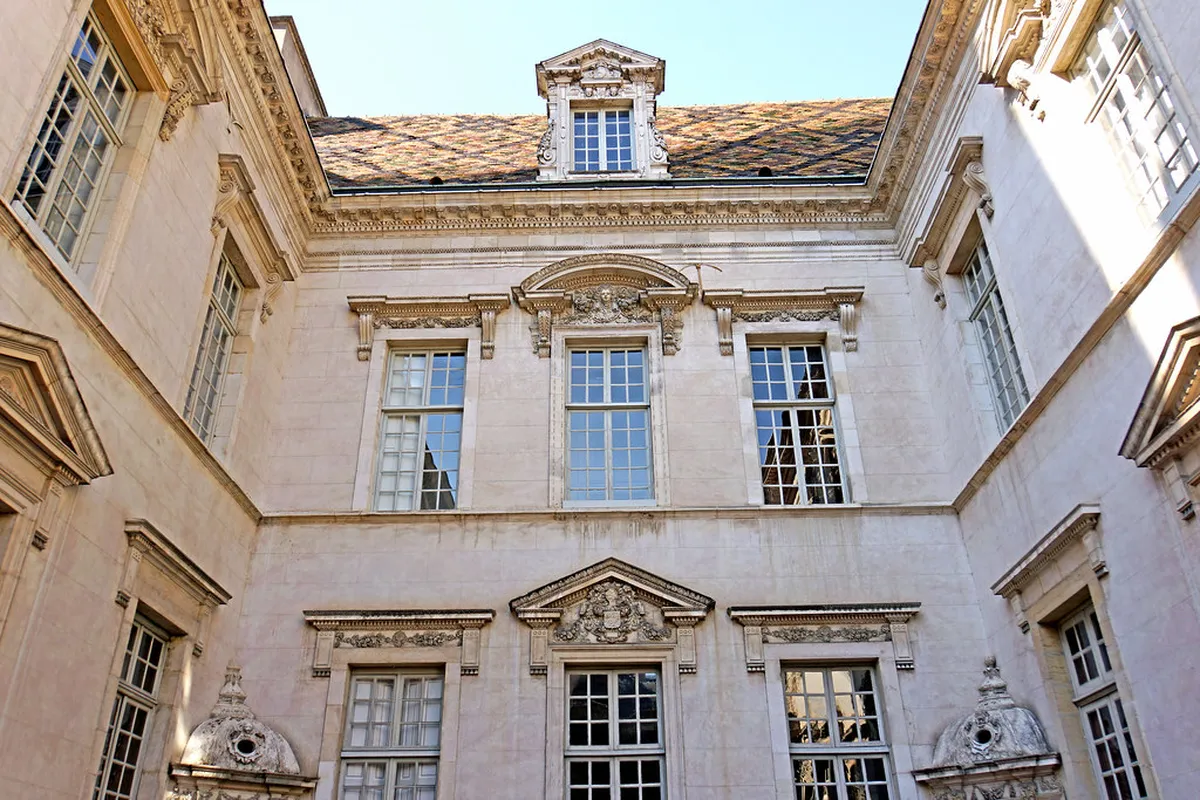
The roof of this mansion is a prime example of traditional Burgundian style. It features colorful glazed tiles arranged in complex geometric patterns. These tiles are a famous symbol of the region's wealthy architectural heritage. You can learn more about this style in our Dijon glazed tile roofs guide for more details.
The tiles are coated in lead or tin based glazes before firing. This process creates the vibrant greens, yellows, and blacks seen on the roof. The colors were historically a sign of great wealth for the owner. Only the most prominent citizens could afford such decorative roofing materials.
The patterns on the roof include diamonds and chevron shapes. These designs create a sense of movement and visual interest from the street. The roof contrasts beautifully against the cream-colored stone of the walls below. It is one of the most photographed features in all of Dijon.
In 2025, the roof remains in excellent condition thanks to careful restoration efforts. Specialized craftsmen maintain the tiles to ensure they keep their brilliant shine. The steep pitch of the roof helps shed rainwater quickly in the winter. This design protects the wooden structure of the mansion from damage.
Architectural Details of the Renaissance Courtyard
Stepping into the courtyard feels like entering a different century. The space is surrounded by three wings of the main building. A large ornamental wall with a grand portal encloses the fourth side. This design provides both privacy and a sense of grandeur for the inhabitants.
The courtyard walls feature a series of elegant arched arcades. These arches are supported by columns with detailed classical capitals. You will notice the heavy use of Italian-inspired decorative motifs throughout the space. Look for the stone garlands and floral carvings above the windows.
One of the most impressive features is the grand portico at the entrance. It serves as a transition point between the street and the private home. The portico is decorated with high-relief sculptures and symbolic figures. These details demonstrate the incredible skill of seventeenth-century French stone masons.
The windows facing the courtyard are tall and framed with decorative pediments. Many of these pediments are curved or triangular in the classical style. This repetition of shapes creates a harmonious and balanced visual appearance. The courtyard is a perfect place to study Renaissance mansions in Dijon up close.
Inside the Decorative Portals and Sculptures
The main entrance portal is a highlight of the Hôtel de Vogüé architecture. It features two large wooden doors flanked by monumental stone columns. Above the doors, you can see the coat of arms of the original owner. This heraldry served as a public mark of family pride and lineage.
Sculptures of mythological figures and local allegories adorn the courtyard facades. You might spot caryatids and atlantes supporting some of the decorative elements. These stone figures add a human element to the rigid architectural lines. They are carved with great attention to facial expressions and clothing textures.
The mansion also contains beautiful stone chimneys that rise high above the roofline. These chimneys are decorated with the same care as the main facades. They show that even functional parts of the home were meant to be beautiful. Such detail is rare in modern residential construction today.
Visit during the morning to see the sun light up the stone carvings. The soft shadows help highlight the depth and complexity of the relief work. You can spend quite some time identifying all the different characters in the stone. It is a true open-air museum for students of history.
Planning Your 2025 Visit to Hôtel de Vogüé
The Hôtel de Vogüé is located at 8 Rue de la Chouette in Dijon. This street is one of the most famous walking paths in the city. Access to the main courtyard is typically free for all visitors. It is an essential stop on any walking tour of the historic center.
- Opening Hours: Monday to Friday from 9:00 AM to 6:00 PM.
- Cost: Free entry to the courtyard and exterior views.
- Address: 8 Rue de la Chouette, 21000 Dijon, France.
- Best Time: Late afternoon for the best lighting on the roof.
Please remember that the building still contains active city offices. Visitors should keep noise levels low while exploring the courtyard area. Taking photos is allowed and encouraged for personal use. The mansion is very close to other visiting Dijon historic monuments like the Ducal Palace.
There is no need to book a ticket in advance for the courtyard. You can simply walk through the open gates when you see them. Expect to spend about twenty to thirty minutes admiring the details. It is a peaceful escape from the busier commercial streets nearby.
Frequently Asked Questions
Is the Hôtel de Vogüé courtyard open to the public?
Yes, the main courtyard of the Hôtel de Vogüé is open to the public. You can visit for free during standard business hours on weekdays. It is a great way to see Renaissance architecture without paying a fee.
What makes the Hôtel de Vogüé roof unique?
The roof is unique because of its colorful glazed Burgundian tiles. These tiles form intricate geometric patterns in yellow, green, and black. They represent the extreme wealth of the original owners from the seventeenth century.
Where is the Hôtel de Vogüé located in Dijon?
The mansion is located at 8 Rue de la Chouette in the historic center. It sits right behind the famous Notre-Dame Church of Dijon. Most visitors find it easily while following the city's Owl's Trail walking path.
The Hôtel de Vogüé courtyard and roof remain a shining example of Dijon's architectural glory. This 2025 guide highlights why this Renaissance mansion is a must-see for every traveler. The combination of colorful tiles and expert stone carvings is truly unique. Plan your visit to this historic site on your next trip to France.
Key Takeaways
- Admission to the stunning Renaissance courtyard is free for all visitors.
- The iconic glazed tile roof features traditional Burgundian colors and patterns.
- The mansion was built in 1614 for a powerful local parliament member.
- The site is located on the famous Rue de la Chouette near Notre-Dame.
Related reads: architecturebycity.com, architecture in dijon.