
Dijon Glazed Tile Roofs Guide: 2025 Travel Tips
Discover the best colorful roofs in Burgundy with our comprehensive 2025 Dijon glazed tile roofs guide. Plan your expert architecture tour in France today!
On this page
This comprehensive Dijon glazed tile roofs guide provides everything you need for your 2025 architecture journey. These colorful ceramic patterns define the identity of the historic Burgundy region in eastern France today. Travelers from around the world visit Dijon to admire these unique and intricate geometric roof designs. Understanding the cultural significance of these roofs will enhance your appreciation of French architectural history significantly.
You will find these stunning roofs on palaces, cathedrals, and wealthy mansions throughout the ancient city center. The bright colors represent the power and wealth of the medieval Dukes who once ruled this land. Most of these landmarks are located within easy walking distance of each other in the historic district. This visual guide will help you locate the most impressive examples during your next European vacation.
The History of Toits Bourguignons Patterns
The tradition of glazing ceramic tiles began in the late thirteenth century throughout the Burgundy region. These colorful patterns originally signaled the immense wealth and social status of the local ruling nobility. You can learn more about the history of toits bourguignons patterns by exploring the city's oldest districts. Modern restoration projects continue to preserve these beautiful historic designs for future generations of travelers.
Glazed tiles were once a luxury item that only the most powerful dukes could afford to buy. The influence of Flemish architecture helped shape the early development of these colorful geometric roof styles. Builders used these durable materials to replace traditional thatch and wooden shingles on important public buildings. This change improved the safety and appearance of the city during the late medieval period in France.
The popularity of these roofs spread across the entire Burgundy region during the fourteenth and fifteenth centuries. Many smaller towns near Dijon also adopted this striking style for their churches and wealthy private mansions. This architectural movement created a unique regional identity that remains very strong in the modern era. You will notice these patterns are now synonymous with the heritage of the historic province of Burgundy.
Preservation societies work hard to ensure that modern repairs use traditional methods and authentic ceramic materials. Visitors in 2025 can still see many original tiles that have survived for several hundred years. The continued use of these tiles ensures that the heritage of Burgundy remains visible to all travelers. These roofs stand as a testament to the artistic vision of medieval French architects and builders.
Best Locations to See Glazed Tiles in Dijon
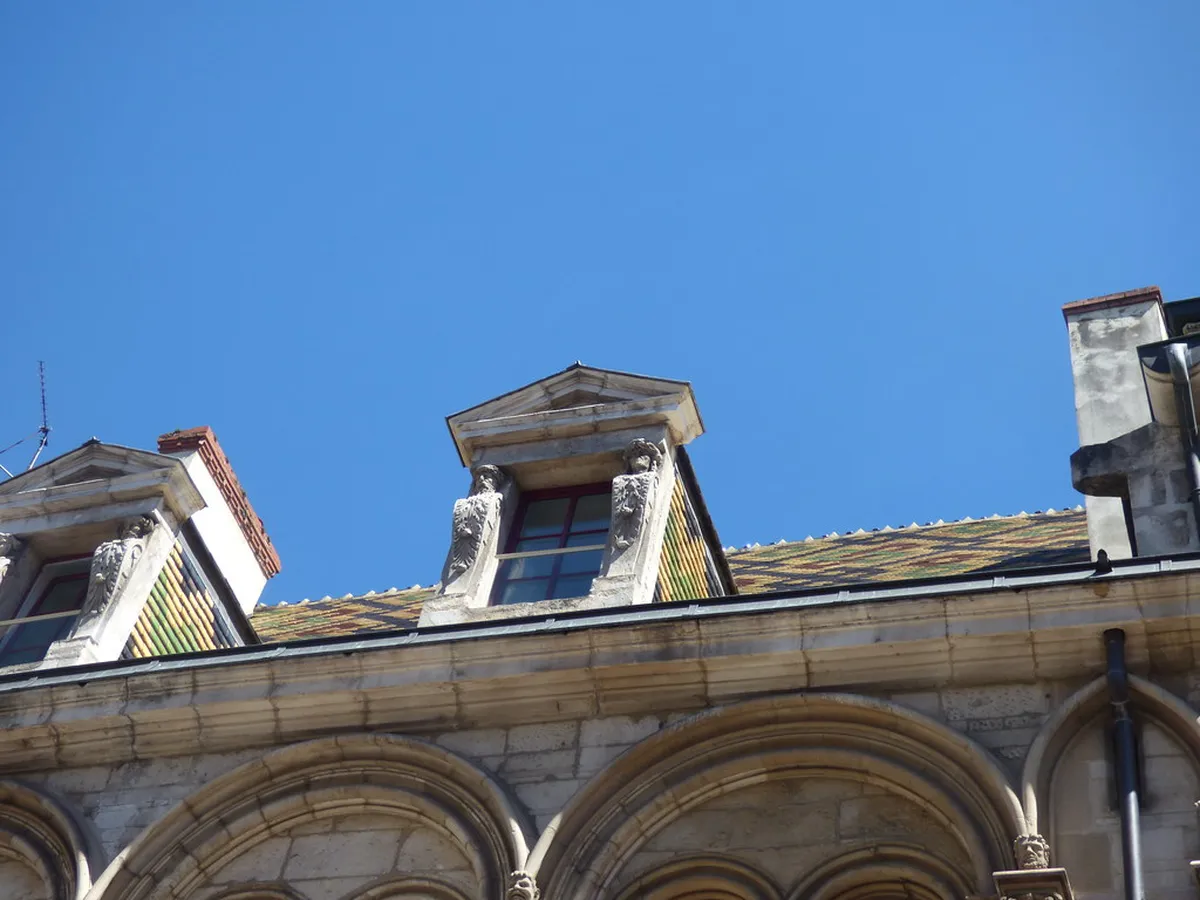
The most famous example of these roofs is found at the historic Palace of the Dukes of Burgundy architecture site. This massive complex features several buildings adorned with vibrant green, yellow, and black terracotta tiles. Visitors can enter the main courtyard for free during daylight hours to see the patterns closely. The geometric shapes create a striking visual contrast against the pale limestone walls of the palace.
Another spectacular location is the Hotel de Vogue which features some of the most intricate roof patterns. This seventeenth-century mansion displays a beautiful arrangement of colorful tiles that glow in the afternoon sun. You can find this building just a short walk away from the main square in Dijon center. The building is considered one of the most beautiful private residences in all of Burgundy today.
During your walking tour you should look for these iconic landmarks with colorful roofs throughout the city center:
- The Palace of the Dukes features some of the most famous patterns in Burgundy today.
- Hotel de Vogue displays very intricate designs that are perfect for your colorful travel photography.
- Cathedral of Saint-Benigne offers a massive expanse of patterned tiles that dominates the local skyline.
- Hotel de Chambellan provides a more intimate look at how local residents decorated their homes.
Many smaller houses in the medieval quarter also feature modest versions of these famous glazed ceramic roofs. Take time to look up while walking through the narrow cobblestone streets of the old town district. These hidden gems provide a more intimate look at how local residents decorated their homes long ago. Finding these lesser known examples is one of the joys of exploring the historic city center.
The Artisanal Process of Glazing Ceramic Tiles
Skilled craftsmen create these tiles using local clay that is fired at very high temperatures initially. A special glaze made from lead and metallic oxides provides the glossy finish and bright colors. This glazing process makes the tiles waterproof and resistant to the freezing temperatures of French winters. Each tile must be carefully placed by hand to ensure the complex geometric pattern remains perfectly symmetrical.
The colors are achieved by adding specific minerals like iron or copper to the clear lead glaze. Copper creates the iconic green hues while iron produces the warm yellow and brown tones seen everywhere. Each color requires a specific temperature range during the firing process to achieve the desired glossy effect. Master tilers must carefully monitor the kiln to prevent the delicate colors from fading or burning away.
The terracotta base of the tile is shaped by pressing wet clay into standard rectangular wooden molds. After the first firing the glaze is applied to the top surface before the second firing begins. This double firing process creates a permanent bond between the ceramic tile and the colorful protective glaze. It is this durability that has allowed the roofs to last for centuries in the harsh climate.
Modern factories in Burgundy still produce these tiles using techniques that have changed very little over time. This commitment to tradition ensures that restoration work matches the appearance of the ancient original structures. Protecting these artisanal skills is essential for maintaining the architectural character of the city of Dijon. Visitors can often find small samples of these tiles in local museum exhibits throughout the city.
Symbolism Behind the Geometric Roof Patterns
The intricate designs often reflect the prestigious heraldry and coat of arms of the original building owners. Diamond shapes and chevrons are the most common patterns found on roofs throughout the historic center. You will see an excellent example of this at the Cathedral Sainte-Benigne roof design today. These patterns served as a visual language to communicate power during the height of the Burgundian state.
The use of specific colors often indicated the religious or political affiliation of the building's wealthy owner. Green and yellow patterns were frequently associated with the powerful and influential House of Valois-Burgundy. These colors represented the fertile land and the golden wealth of the surrounding Burgundy wine country. Many local citizens still take great pride in these traditional colors during modern festivals and celebrations.
Some complex patterns were designed to resemble fine woven textiles and expensive tapestries from the medieval era. This visual link between fabric and architecture showcased the sophistication of the local craftsmen and artists. The repetition of geometric shapes creates a sense of order and harmony across the entire roof surface. This attention to detail is what makes the architecture of Dijon so unique and memorable.
Even the orientation of the tiles could have symbolic meaning related to protection and spiritual well-being. Scholars believe that certain arrangements were intended to ward off evil spirits and protect the occupants. Discovering these hidden meanings adds a layer of depth to your visit to this historic French city. Each roof tells a story about the hopes and beliefs of the people who built them.
How to Photograph Dijon Roofs in 2025
Finding the best photography spots for Dijon architecture requires exploring narrow streets and hidden inner courtyards. The best light for capturing the glossy finish of the tiles occurs during the golden hour. Use a telephoto lens to capture the fine details of the ceramic tiles from the ground level. You should try different angles to minimize the glare from the sun on the shiny tile surfaces.
Cloudy days provide soft lighting that reduces harsh reflections on the shiny surface of the glazed tiles. This even light allows the true colors of the ceramic to show up better in your photos. Avoid shooting during the middle of the day when the sun is directly overhead and very bright. Early morning is often the best time to avoid the crowds of tourists in the city center.
Climbing the Philippe le Bon tower provides an incredible panoramic view of the colorful roofs from above. This elevated perspective allows you to see the full extent of the patterns across the city skyline. Make sure to book your tickets in advance as the tower has limited capacity for visitors daily. The climb is steep but the visual reward for photographers is truly worth the physical effort.
Frame your shots with nearby stone statues or Gothic windows to give your photos a sense of scale. Experiment with different angles to see how the light changes the appearance of the glossy tile surfaces. Share your photos on social media to promote the unique architectural heritage of this beautiful French region. Your images will help other travelers discover the beauty of the traditional Burgundy roof style.
Frequently Asked Questions
When is the best time to see the colorful roofs in Dijon?
Spring and autumn offer the best natural lighting for viewing the colorful tiles in Dijon city center. The mild weather makes walking between the different landmarks very pleasant for most tourists during these seasons. You should avoid the heavy rain of winter which can make the shiny tiles look dull and dark.
Are there guided tours available to see the historic tile patterns?
You should consider booking a Dijon architectural walking tour to discover the most impressive hidden roof designs. Expert guides can provide detailed information about the history and symbolism of each unique pattern you see. These tours often include access to private courtyards that are normally closed to the general public.
How much does it cost to view the glazed roofs in Dijon?
Viewing the roofs from the streets is entirely free for all visitors exploring the city of Dijon. Most of the famous landmarks are public buildings that do not charge a fee for exterior viewing. You can enjoy a full day of sightseeing without spending any money on entrance tickets or fees.
Are the traditional glazed tiles still manufactured in Burgundy today?
Yes several local companies in the Burgundy region continue to manufacture traditional glazed tiles for modern use. These manufacturers use ancient techniques to ensure that the new tiles match the historic ones perfectly. This ongoing production is vital for the continued restoration of historic monuments throughout the entire French region.
Can I buy a traditional Burgundy tile as a souvenir?
Some local craft shops in the historic center sell decorative replicas of the famous Burgundy roof tiles. These small ceramic pieces make excellent souvenirs for travelers who want to remember their visit to Dijon. You can find them in various colors and patterns that match the roofs of the city.
The iconic glazed tile roofs of Dijon remain a powerful symbol of the city's rich medieval heritage. We hope this Dijon glazed tile roofs guide helps you plan an unforgettable trip to Burgundy in 2025. Take your time to explore the city and appreciate the incredible craftsmanship of these colorful historic landmarks. These roofs are a unique part of the cultural landscape that you will not find elsewhere.
Whether you are a fan of history or architecture these roofs offer a truly unique visual experience. Do not forget to bring your camera to capture the vibrant colors of this beautiful French city. Start planning your journey today to witness the magnificent beauty of the historic Burgundy region for yourself. You will certainly leave Dijon with a deeper appreciation for the artistic traditions of France.
Key Takeaways
- Visit the Palace of the Dukes for the most iconic examples of patterned roofs.
- Photograph the roofs during the golden hour for the best colors and minimal glare.
- Book a tower climb at Philippe le Bon for a panoramic view of the skyline.
Related reads: architecturebycity.com, architecture in dijon.