
La Vieille Bourse Design Analysis: Lille's Gem
Discover our expert La Vieille Bourse design analysis. Learn about this 2025 Lille landmark's Flemish Baroque style and history. Plan your visit today!
On this page
Our La Vieille Bourse design analysis explores a legendary architectural masterpiece located in the heart of historic Lille. This comprehensive 2025 guide examines the stunning beauty and intricate details of the famous Old Stock Exchange. Discover unique Flemish secrets that are hidden within the city center through this detailed and professional exploration. Experience the rich history of this iconic French building while walking through the streets of northern France today.
Flemish Baroque Architecture in Lille
The building represents the peak of seventeenth-century Flemish Baroque architecture in Lille for every curious traveler. Architect Julien Destrée designed the structure to compete with the grand merchant houses found in the Netherlands. It consists of twenty-four identical houses wrapped around a central rectangular courtyard space for business and social activities. This layout reflects the immense commercial power and artistic ambition held by the local French merchants.
Each individual house features separate entrances but shares a unified and highly decorated exterior skin for visitors. The design creates a seamless appearance that cleverly masks the individual commercial units located inside the building. Wealthy traders valued both high-end aesthetics and practical business functions during the seventeenth century in Lille. This combination makes it a premier example of regional architectural excellence for tourists visiting France in 2025.
Destrée utilized local materials like red brick and warm golden sandstone for the massive walls of the exchange. This specific color palette provides a striking contrast against the grey northern skies often found in France. The use of varied textures adds significant depth and visual interest to the large and imposing structure. Visitors often pause to admire the perfect balance between heavy stone and delicate brickwork on the façade.
Such attention to detail ensured that every angle of the exchange presented a beautiful view to the public. The building features several specific elements that highlight the high quality of the local seventeenth-century craftsmanship:
- Ornate corner scrolls that decorate the red brickwork with amazing precision and care
- Symmetrical window patterns that provide a balanced view across the entire stone façade
- Decorative roof dormers that crown the structure with elegant Flemish architectural style and grace
This design choice transformed a simple commercial building into a true work of art for the entire community. It demonstrates the immense pride that the merchants of Lille took in their local urban landscape.
Analyzing the Detailed External Façade
The exterior walls showcase a stunning display of wealth through dense and intricate ornamentation for all to see. Elaborate carvings of garlands and mythical creatures cover nearly every available square inch of the historic stone façade. These elements represent the prosperity and abundance that international trade brought to the growing city of Lille. You will notice a rhythmic pattern of windows that creates a sense of order across the entire building.
Each window frame features unique sculptures that tell stories of seventeenth-century life and commercial success in France. The cariatides of Vieille Bourse Lille are particularly famous among art historians and traveling architects today. These female figures act as decorative pillars while supporting the weight of the upper floors of the exchange. They symbolize the strength and beauty inherent in the local architectural traditions of the northern French region.
The roofline adds another layer of complexity to the overall structural profile for modern students and curious tourists. It features steep pitches and decorative dormer windows that are typical of the traditional Flemish style of building. Small golden accents catch the natural light and draw the eye upward toward the sky during the day. These details ensure that the building remains a focal point for tourists and residents in the Grand Place.
The placement of windows follows a strict grid that provides a sense of stability to the massive stone structure. Each glass pane reflects the surrounding buildings of the Grand Place to create a dynamic visual experience for visitors. The frames are carved from sandstone to ensure they remain durable against the wind and rain of northern France. This focus on long-lasting materials has allowed the building to survive for over three centuries in excellent condition.
The Magic of the Inner Courtyard
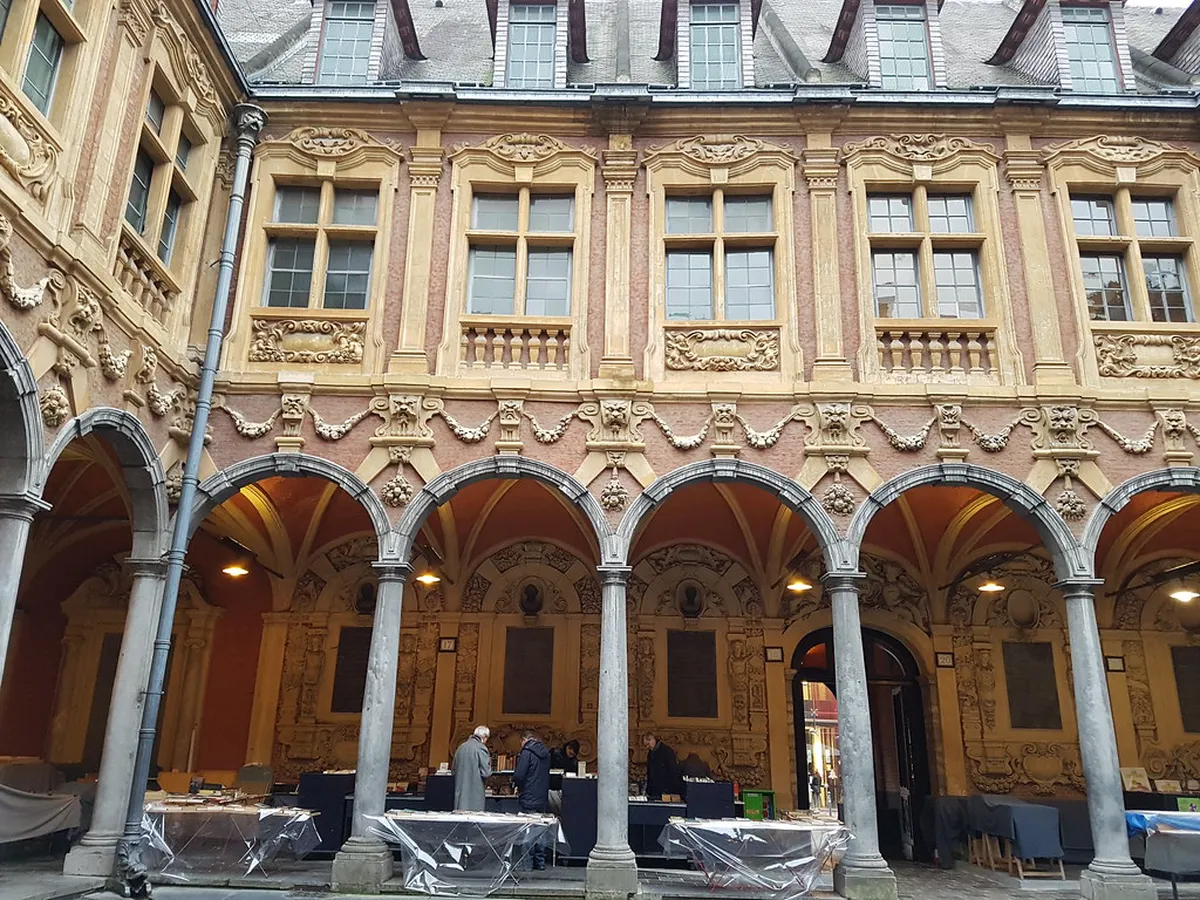
Stepping inside the building reveals the famous old stock exchange Lille courtyard for visitors to explore and enjoy. This open space provides a peaceful escape from the busy and crowded streets of the central Grand Place. The courtyard walls mirror the lavish decoration found on the exterior streetside façades of this historic French landmark. It serves as a vibrant hub for local book sellers and chess players every single day of the week.
The architectural symmetry within the courtyard creates a feeling of perfect harmony and balance for every single guest. Each side of the rectangle offers a repeating pattern of arches and detailed stone carvings for people to admire. This design encouraged merchants to gather and discuss business in a professional yet beautiful environment for many years. Modern visitors enjoy the quiet atmosphere while browsing through vintage books and old posters in the historic market.
Look closely at the columns surrounding the walkway to see even more specialized artistic details on the stone. These pillars feature different orders of classical architecture blended with local decorative motifs from the Flemish tradition. The stone floors show wear from centuries of footsteps by traders and modern-day tourists visiting the city center. This historical patina adds a layer of authenticity to the entire visiting experience in the heart of Lille.
The courtyard remains one of the most photographed locations in the city of Lille for modern travel influencers. Visitors can enjoy many activities within the walls of this historic and beautiful merchant exchange area:
- Browsing vintage books from local specialized sellers who gather in the courtyard every day
- Watching intense chess matches between the local residents who frequent this historic public space
- Photographing the detailed carvings that decorate the inner stone walls of this beautiful landmark
It remains a vital part of the city’s identity and a must-see destination for every architecture lover. Experience the unique culture of Lille by spending an afternoon in this peaceful and artistic setting.
La Vieille Bourse Design Analysis and Symbols
The building serves as a proud symbol of Lille’s transition from Spanish to French rule during the seventeenth century. Its design incorporates elements that celebrate the local identity of the Nord region of France for all visitors. You can find crests and symbols that represent the various guilds and merchant families of the historic city. Our professional analysis highlights these connections between fine art and local social history in Lille.
Lions and other regal animals appear frequently in the carvings to signify power and bravery for the merchants. These figures watch over the entrances and protect the commercial interests of the historic stock exchange building today. The craftsmanship required to create such detailed stone work remains impressive even by modern architectural standards in 2025. It demonstrates the high level of skill possessed by seventeenth-century Flemish stonemasons and dedicated local artists.
The use of Flemish ornamentation in Grand Place reaches its absolute peak within this specific landmark in Lille. Every cornucopia and floral wreath was carved with immense precision to impress international trade partners and local rivals. This visual language communicated that Lille was a sophisticated and wealthy center of European commerce for many centuries. Today these symbols continue to educate visitors about the city’s rich merchant heritage and architectural history in France.
Decorative shields representing the Spanish Netherlands remain visible on the walls to remind us of the city's past. These historical markers provide a physical timeline of the shifting political boundaries during the European wars of the past. Understanding these ancient symbols is essential for a complete appreciation of this famous and historic French landmark. The building acts as a living history book that tells the story of Lille through its very stones.
Comparing Historic and Modern Lille Design
While La Vieille Bourse is ancient it sits near modern hubs like the Euralille contemporary architecture hub. This contrast shows the dramatic evolution of urban planning and design within the city of Lille over time. The Old Stock Exchange uses heavy masonry while modern buildings favor glass and steel for their large structures. Both styles reflect the economic ambitions of their respective eras in French history for everyone to see today.
Visiting both sites provides a comprehensive look at how design philosophy has changed over several hundred years here. La Vieille Bourse focuses on decorative storytelling and traditional materials from the local northern French landscape. Modern structures in Lille emphasize transparency and global connectivity through minimalist architectural forms and new building technologies. Seeing them both during one trip offers a unique perspective on European urban development and historical design changes.
Architectural enthusiasts often enjoy visiting various sites to see these differences firsthand while walking through the city. The walk from the Grand Place to the modern district takes only a few minutes for the average visitor. This journey through time allows you to appreciate the enduring legacy of seventeenth-century Flemish design in the city. La Vieille Bourse remains the undisputed heart of the city’s traditional architectural identity and regional cultural pride.
The preservation of this landmark ensures that future generations can enjoy the beauty of traditional Flemish architecture in person. Lille manages to balance its historical treasures with modern urban growth to create a unique and vibrant city atmosphere. La Vieille Bourse stands as the perfect example of how heritage can thrive in a modern world in 2025. It remains a vital part of the city’s identity and a must-see destination for every architecture lover today.
Frequently Asked Questions
When was the historic La Vieille Bourse in Lille first constructed for the local public?
The building was constructed between 1652 and 1653 during the peak of the local merchant trade era. Architect Julien Destrée led the project to create a grand center for the city’s many wealthy commercial traders. It stands today as a perfectly preserved example of seventeenth-century construction techniques and artistic style.
Can tourists visit the inner courtyard of the Old Stock Exchange for free in 2025?
Yes, visitors can enter the courtyard for free during the regular daytime opening hours of the building. The space is open to the public from Tuesday through Sunday for everyone to explore and enjoy. You can browse the book stalls or watch local residents play chess in this beautiful historical setting.
What are the most important architectural features to see during a professional design visit?
You should look for the intricate stone carvings and the famous caryatids located on the external façades. The symmetry of the twenty-four identical houses wrapped around the inner courtyard is also a major highlight. Pay close attention to the use of red brick and sandstone which define the unique Flemish Baroque style.
Who was the primary architect responsible for creating the iconic Old Stock Exchange in Lille?
The primary architect was Julien Destrée who was a master stonemason and architect active in seventeenth-century Lille. He was commissioned by the local merchants to design a building that rivaled the stock exchanges of Amsterdam. His work successfully blended commercial functionality with the lavish decorative traditions of the southern Netherlands region.
La Vieille Bourse remains a timeless treasure that showcases the architectural brilliance of historic Lille for all visitors. Our detailed analysis proves that this building is much more than just a simple place of commerce. It is a cultural landmark that connects the city’s prosperous past with its vibrant and modern future. Plan your trip to Lille today to experience the magic of this Flemish Baroque masterpiece in person.
Key Takeaways
- Admire the unique Flemish Baroque style of the exterior and courtyard areas during 2025.
- Explore the inner courtyard where local book sellers and chess players gather every single day.
- Observe the detailed stone carvings and female caryatids that represent the wealth of Lille merchants.
Related reads: architecturebycity.com, architecture in lille.