
Old Stock Exchange Lille Courtyard: 2025 Guide
Visit the Old Stock Exchange Lille courtyard in 2025. Discover Flemish design, book markets, and chess games in this guide. Plan your perfect visit today!
On this page
The Old Stock Exchange Lille courtyard is a famous hidden gem located in northern France. This historic landmark sits right in the center of the busy Grand Place city square. It represents a stunning example of seventeenth-century Flemish architecture in this lovely city. Visitors from around the world love the vibrant atmosphere and the rich history here.
You will find this building at the intersection of local commerce and public life. The courtyard offers a quiet escape from the noise of the surrounding urban streets. It remains one of the most photographed spots in the entire Hauts-de-France region. Plan your visit to see the beautiful colors and the unique local culture today.
The History of La Vieille Bourse
Built between 1652 and 1653, this building served as a very busy local trade hub. The master architect Julien Destrée designed the structure for the many local merchants of Lille. It was a central place where local business and regional politics met every single day. The building stands as a proud symbol of the city's great mercantile history.
Lille was a prosperous city during the seventeenth century due to its textile trade. Merchants needed a formal place to conduct their financial business away from the rain. They requested a building that would showcase the great wealth of their local community. This led to the creation of the most beautiful monument in the city center.
The structure consists of twenty-four separate small houses that form a protective outer ring. Each house was owned by a different merchant who paid for its construction cost. This unique ownership model allowed the project to finish in a very short time. You can still see the individual identities of these houses in the design.
For centuries, this site was the heart of the financial world in northern France. It survived many wars and periods of change throughout the history of the country. The courtyard remained a public space even as the nature of trading evolved over time. Today, it serves as a peaceful cultural center for locals and tourists alike.
The preservation of this building is a top priority for the local government of Lille. It has been classified as a historic monument since the early twentieth century. Extensive restoration work has kept the red bricks and golden stones looking very bright. It remains a perfect bridge between the old world and the modern city.
La Vieille Bourse Design Analysis
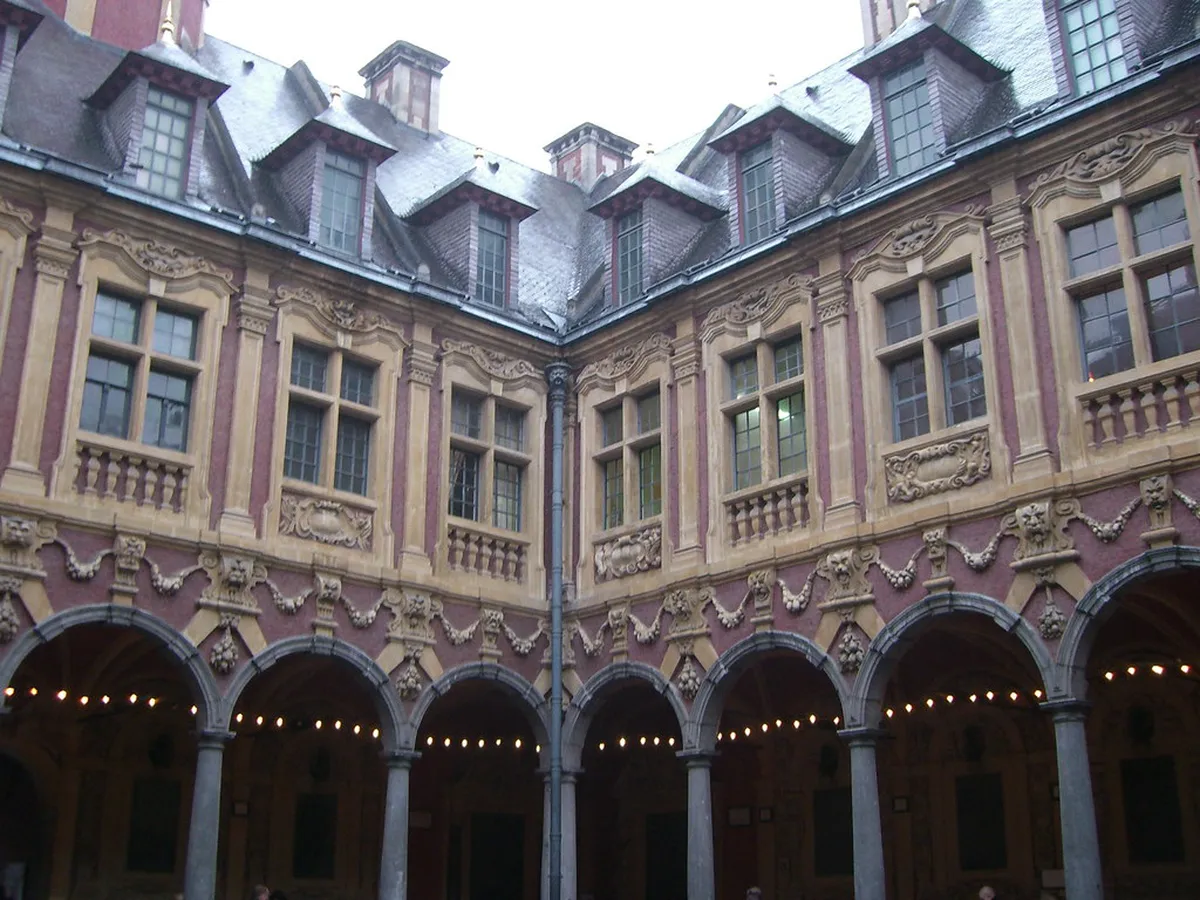
A detailed La Vieille Bourse design analysis shows the complexity of its Flemish Baroque style. The building features an incredible amount of ornamentation on every single exterior surface. You will notice a heavy use of red brick combined with decorative stone elements. This color palette is a classic characteristic of architecture found in the Flanders region.
The courtyard layout creates a perfect rectangle that feels very balanced and aesthetically pleasing. Four grand entrances lead visitors from the city squares into this quiet central sanctuary. Each entrance is decorated with the crests of the city and the trade guilds. The symmetry of the windows creates a rhythmic pattern across the four inner walls.
Architect Julien Destrée used the Mannerist style to create a sense of movement and energy. You can see this in the curved gables and the complex window frame carvings. The design was meant to impress visiting traders from London, Antwerp, and nearby Paris. It successfully established Lille as a major player in the European trade network.
The upper floors of the building feature smaller windows with very delicate stone surrounds. These levels were once used as offices for the many brokers and trade agents. Today, the shutters are often closed to protect the historic interiors from the sun. The contrast between the dark wood and bright stone is truly striking here.
Look up to see the ornate roofline that crowns the entire historic courtyard structure. The chimneys and decorative pots add a vertical element to the broad horizontal facades. Metal weather vanes often spin in the wind above the steep slate tile roofs. This level of detail shows the high quality of craftsmanship in the 1650s.
The Artistic Details of the Facades
The courtyard facades are covered in sculptures that tell stories of wealth and local success. You will find many carvings of exotic fruits, flowers, and heavy cornucopia symbols here. These images represented the abundance of goods passing through the busy Lille markets daily. Artists carved these details into the soft stone with amazing precision and great care.
Lion heads appear frequently as symbols of strength and the power of the local government. You can also spot small cherubs and mythical creatures hidden among the floral garlands. Each house along the courtyard has its own unique variations in these stone carvings. Spend some time looking closely at the different levels to find hidden details.
The caryatids are perhaps the most famous sculptural elements found within the inner courtyard walls. These female figures act as decorative supports for the heavy stone ledges above the windows. They are draped in classical clothing and show the influence of the Italian Renaissance. Their presence adds a touch of elegance to the sturdy brick and stone walls.
Gilding was used in the past to highlight the most important parts of the carvings. While some of the gold has faded, the richness of the textures remains clear. The shadows created by the deep carvings change throughout the day as the sun moves. This creates a dynamic visual experience for anyone sitting in the courtyard area.
Preservationists use special cleaning techniques to maintain the integrity of these delicate stone sculptures. They must remove pollution while protecting the original details carved over three centuries ago. This ongoing work ensures that future generations can enjoy the beauty of the site. It is a testament to the artistic heritage of the city of Lille.
Daily Life and the Book Market
The courtyard hosts a famous second-hand book market that is open almost every single day. Local sellers set up their wooden stalls under the shelter of the arched walkways. You can browse thousands of old books, vintage posters, and rare local newspapers here. The smell of old paper fills the air and creates a nostalgic mood.
Collectors often visit early in the afternoon to find the best literary deals available. You might find a first edition novel or a beautiful vintage map of France. The sellers are very knowledgeable and love to discuss the history of their items. It is one of the most relaxing shopping experiences in the entire city.
Aside from books, the courtyard is a popular spot for local people to play chess. You will often see intense games happening on small tables near the main entrances. The quiet atmosphere of the courtyard provides the perfect environment for deep concentration and focus. Spectators are usually welcome to watch as long as they remain very quiet.
Local students also use the space as a peaceful place to study or meet friends. The stone benches provide a cool place to sit during the warm summer months. You will hear the gentle hum of conversation mixing with the sound of turning pages. It is a living community space that belongs to the people of Lille.
Many people find that the Flemish ornamentation in Grand Place is best viewed from inside this space. You get a unique perspective on the surrounding buildings through the grand arched doorways. The transition from the busy square to this quiet market is a local highlight. Make sure to take your time while walking through the various book stalls.
Events and Cultural Significance
During the summer months, the courtyard becomes a stage for beautiful tango dancing events. Local dance schools organize these gatherings on Sunday evenings when the weather is quite warm. Couples dance across the old cobblestones while traditional music echoes off the stone walls. It is a magical sight that attracts many tourists and local passersby.
The building also serves as a focal point during the famous Braderie de Lille market. This massive flea market happens every September and brings millions of visitors to the city. The courtyard sellers offer special items and historical artifacts during this very busy weekend. It is the busiest time of the year for the Old Stock Exchange.
Photography exhibitions are occasionally held within the covered walkways of the historic courtyard area. These shows often highlight the architectural beauty of the region or local social history topics. The natural light filtering from above makes it an ideal gallery for viewing art. Check the local listings for specific dates of these temporary cultural events.
Official city ceremonies sometimes take place in this prestigious and highly symbolic urban location. The mayor of Lille uses the space to welcome important guests and celebrate local achievements. It remains a place of pride for the citizens who live in northern France. The courtyard connects the modern identity of Lille with its very long history.
You can learn more about these activities on Lille guided architecture tours offered throughout the year. Guides explain the cultural shift from a place of money to a place of art. This evolution shows how the city values its historic buildings for modern public use. It is a great example of successful urban heritage management.
Planning Your 2025 Visit to Lille
The Old Stock Exchange Lille courtyard is open from Tuesday to Sunday for all visitors. The standard opening hours are from 1:00 PM until 7:00 PM in the evening. There is no entrance fee to enter the courtyard or the book market area. It is a very budget-friendly stop on any walking tour of the city.
To reach the courtyard, you should head to the Grand Place in the city center. It is located right between the Grand Place and the Opera House on the square. Look for the building with the many small flags flying from the upper windows. The main entrance is a large wooden gate that stays open during market hours.
Visit during the late afternoon to see the sun hitting the upper parts of the walls. This creates a warm glow that makes the red bricks look incredibly vibrant and bright. If you want a quieter experience, try visiting on a Tuesday or a Wednesday. Weekends are usually much busier with local families and large groups of tourists.
Wear comfortable walking shoes because the courtyard floor is made of old and uneven cobblestones. Bring a light jacket as the stone walkways can stay cool even on sunny days. You should also carry some cash if you wish to purchase books or souvenirs. Most of the individual book sellers do not accept electronic payments at their stalls.
The year 2025 is a great time to visit because of new local exhibitions. The city is preparing several events to celebrate the building's long and very interesting history. You will find updated information plaques in several languages throughout the main courtyard area. It remains a top destination for anyone interested in European history and art.
Frequently Asked Questions
Is the Old Stock Exchange Lille courtyard open every day?
No, the courtyard and its book market are closed every Monday. It is open from Tuesday to Sunday, typically between 1:00 PM and 7:00 PM. Admission is free for all visitors throughout the year.
Can I play chess in the courtyard if I am a beginner?
Yes, people of all skill levels are welcome to join the chess games. You can usually find a table and a friendly opponent during the afternoon hours. It is a great way to meet local residents in a relaxed setting.
Where is the best entrance to find the book market?
The best entrance is located on the Grand Place side of the building. Look for the large arched gateway with ornate stone carvings and many small flags. This leads you directly into the heart of the book market stalls.
The Old Stock Exchange Lille courtyard is an essential stop for any traveler in 2025. It offers a unique combination of stunning Flemish architecture and vibrant local culture. You can spend hours exploring the book stalls or simply enjoying the peaceful atmosphere. Visit this historic site to experience the true heart and soul of Lille.
Key Takeaways
- The courtyard is open Tuesday to Sunday from 1:00 PM to 7:00 PM.
- Entry to the historic site and book market is completely free.
- The building is a prime example of 17th-century Flemish Baroque design.
- Bring cash if you plan to buy vintage items from market sellers.
Related reads: architecturebycity.com, architecture in lille, cariatides of vieille bourse lille.