
Visit UNESCO Belfries of Lille: A 2025 Guide
Discover the UNESCO belfries of Lille in 2025. Learn about history, architecture, and booking tips for your visit. Plan your French heritage trip today!
On this page
Lille features a skyline shaped by centuries of history. Two towers stand out as the UNESCO belfries of Lille. These structures represent civic freedom and architectural pride. They are essential stops for every heritage lover in 2025.
These belfries belong to a larger group of 56 towers. They are spread across Northern France and Belgium. UNESCO recognized them for their unique historical value. They symbolize the rise of independent city power.
A visit to Lille is incomplete without seeing these landmarks. They offer a window into the past of French Flanders. This guide covers everything you need to know. Enjoy a journey through stone, brick, and iron.
The Significance of UNESCO Belfries in Lille
Belfries are traditional symbols of municipal independence and authority. Unlike church steeples, these towers belonged to the local people. They housed bells used to announce major events. These sounds dictated the daily life of every citizen.
Lille’s towers were added to the UNESCO list in 2005. This honor highlights their role in European urban history. They represent the transition from feudalism to modern democracy. Each tower tells a story of local resilience and growth.
The towers are located within the historic center of Lille. They remain the tallest structures in the immediate city area. Visitors can see them from several miles away. They serve as reliable landmarks for modern travelers today.
Preservation efforts ensure these towers stay in great condition. They attract thousands of architecture fans every single year. You can learn about architecture in Lille through these majestic sites. They are prideful anchors of the regional identity.
The Magnificent City Hall Belfry in Lille
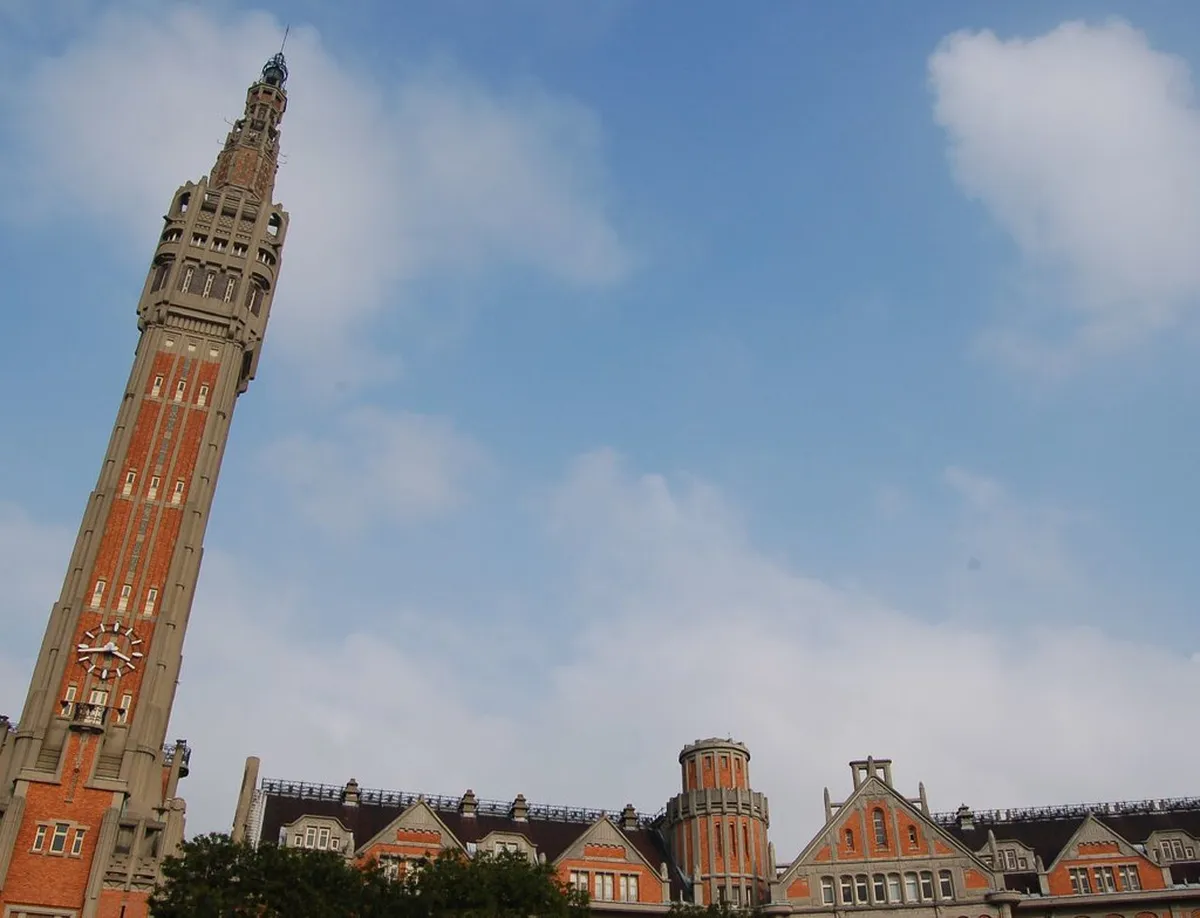
The City Hall tower is the most famous structure. It stands at a height of 104 meters. This makes it the tallest belfry in Northern France. It was designed by the talented architect Émile Dubuisson.
Construction took place between the years 1924 and 1932. The design uses reinforced concrete combined with red brick. This mixture creates a unique Art Deco appearance. It reflects the industrial spirit of the early twentieth century.
You must book your Lille City Hall belfry tickets in advance. The tower offers an elevator for the first stages. However, you must climb 100 stairs to reach the top. The effort is worth the breathtaking view you receive.
The base of the tower features statues of giants. These figures represent the mythical founders of the city. Lydéric and Phinaert stand guard at the entrance. They add a touch of local folklore to the site.
The Architectural Charm of the Chamber of Commerce
The Chamber of Commerce belfry is another stunning masterpiece. It is located near the Grand Place of Lille. Architect Louis-Marie Cordonnier designed this beautiful Neo-Flemish tower. It was completed just after World War I ended.
This tower stands 76 meters tall above the ground. It features a spectacular clock face with gold details. The roof is decorated with intricate stone carvings. You can find more Chamber of Commerce belfry details on our site.
One highlight is the carillon housed within the tower. It contains 76 bells that play melodic tunes hourly. The music resonates through the narrow streets of the city. It creates a magical atmosphere for shoppers and tourists.
The building itself serves as a hub for business. Its design mimics the style of the 17th century. Pink brick and white stone create a warm contrast. It remains one of the most photographed spots in Lille.
Materials and Construction Techniques Used in Lille
The belfries of Lille showcase diverse building materials. The City Hall belfry utilizes modern concrete and traditional brick. This combination allowed for its record-breaking height and stability. It was a revolutionary approach for its time period.
Local clay was used to produce the red bricks. These bricks define the look of Northern French architecture. They provide durability against the chilly and wet climate. The craftsmanship seen in the masonry is truly exceptional.
The Chamber of Commerce uses limestone for its ornaments. This stone was carved by hand into delicate shapes. It reflects light beautifully during the golden hour of sunset. The slate roofs provide a dark, elegant finish.
Structural engineering was a priority for these tall towers. They had to withstand strong winds and heavy bells. Iron supports were integrated into the internal framing systems. This ensures the belfries remain safe for visitors today.
Planning Your Visit to Lille's Iconic Towers
Visiting these UNESCO sites requires a bit of planning. The City Hall belfry is open nearly every day. Standard ticket prices usually range from five to eight euros. Discounts are often available for students and large groups.
The Chamber of Commerce belfry is mostly viewed from outside. Sometimes the interior is open for special heritage days. Check the local tourism office for the 2025 schedule. They provide the most accurate opening hours for tourists.
Wear comfortable walking shoes for your urban heritage exploration. The stairs in the towers can be quite steep. Bring a camera to capture the best belfry views in Lille. The lighting is best in the early morning.
Try to visit during the spring or fall months. The weather is usually mild and perfect for walking. Summer can be crowded with many tourist groups. Winter offers a festive backdrop with the Christmas markets.
Cultural Impact and Local Legend of the Towers
The belfries are more than just stone and mortar. they are the beating heart of the community. Locals view them as symbols of their unique heritage. They appear on many postcards and official city logos.
Ancient legends are often tied to these tall structures. Some say the bells protect the city from storms. Others believe they watch over the souls of citizens. These stories are passed down through many generations.
Events are often held at the foot of the belfries. You might see festivals or markets during your visit. The energy around these sites is always very vibrant. They connect the modern city to its medieval roots.
Preserving these sites is a priority for the French government. They receive regular funding for cleaning and structural repairs. This ensures the UNESCO status remains secure for decades. Future generations will continue to enjoy their majestic beauty.
Frequently Asked Questions
How many UNESCO belfries are in Lille?
There are two official UNESCO belfries located in Lille. These are the City Hall belfry and the Chamber of Commerce. Both are recognized for their historical and architectural value. You can see them on a Vieux Lille architectural walking tour.
What is the tallest belfry in Lille?
The City Hall belfry is the tallest in the city. It reaches a height of 104 meters. It is also the tallest belfry in Northern France. It provides a 360-degree view of the entire region.
Can you climb the belfries in Lille?
Yes, you can climb the City Hall belfry. It features an elevator for part of the way. Visitors must then climb 100 stairs to the top. The Chamber of Commerce is usually closed to climbers.
Are the belfries in Lille free to visit?
Viewing the belfries from the street is completely free. Climbing the City Hall belfry requires a paid ticket. Prices are generally affordable for most travelers in 2025. Always check the official website for current rates.
The UNESCO belfries of Lille are true architectural treasures. They offer a unique perspective on French history and design. Make sure to include them in your 2025 itinerary. You will not regret seeing these majestic towers in person.
Key Takeaways
- The City Hall belfry is 104 meters tall.
- Both towers are recognized by UNESCO.
- Tickets for City Hall should be booked early.
- The Chamber of Commerce features a 76-bell carillon.
- Spring and fall are the best times to visit.