
Jakob + MacFarlane Orange Cube Design in Lyon
Explore the Jakob + MacFarlane Orange Cube design in Lyon. Learn about this icon of Lyon Confluence contemporary architecture and its bold style in 2025.
On this page
The Jakob + MacFarlane Orange Cube design stands as a landmark in modern France. This striking structure revitalized the old riverfront docks in Lyon. It serves as a masterpiece of Lyon Confluence contemporary architecture for global visitors. The design uses bold colors and unique shapes to attract attention. You will find it situated along the scenic Saone River today. This article explores why this building changed the city's skyline forever.
The Vision of Jakob + MacFarlane
Architects Dominique Jakob and Brendan MacFarlane led this ambitious project. They wanted to create a building that looked like a giant sponge. The project was completed in 2011 as part of a renewal plan. This team is famous for pushing the limits of traditional design. They used advanced digital tools to model the complex geometry. Their goal was to blend art with functional office space.
The building represents a shift toward experimental architecture in Lyon today. It was one of the first major projects in the Confluence district. The architects focused on creating a dialogue with the surrounding water. This approach makes the structure feel alive and organic. It stands out against the more traditional gray buildings nearby. The design shows how color can define a modern urban identity.
The construction process involved high-tech engineering and careful planning. Builders had to support the massive voids within the cube shape. Every floor has a slightly different layout due to these holes. This complexity makes the building a true technical marvel in France. It remains a top study case for architecture students worldwide. You can see the precision in every metal panel today.
The Orange Cube houses the headquarters of the Cardinal Group. It also features a design showroom on the ground floor. This mix of uses brings people to the site daily. The architects ensured that the building served the local community well. It is more than just a beautiful object on the river. It is a working part of the city's economy.
The Iconic Orange Perforated Façade
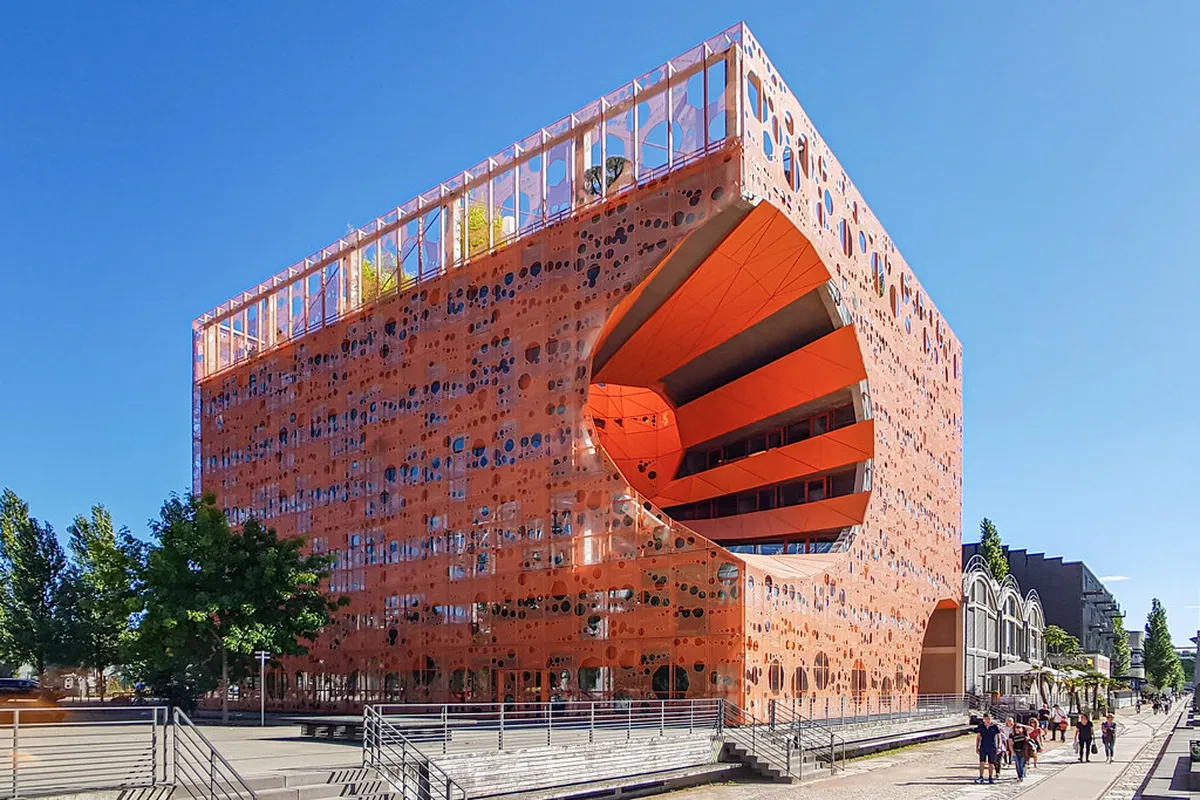
The most famous feature is the vibrant orange aluminum skin. This metal screen covers the entire exterior of the building. It features thousands of tiny holes in various sizes and patterns. These perforations allow light to filter into the interior offices. The orange color references the industrial history of the old port. It specifically evokes the lead paint used on harbor cranes.
This secondary skin helps with the building's overall energy efficiency. It acts as a sunshade to reduce heat during the summer. This design choice keeps the workspace cool without excessive air conditioning. The metal also protects the inner glass walls from the elements. It creates a beautiful play of shadows on the indoor floors. This functional art makes the building very sustainable for 2025.
Viewing the facade from a distance is a unique experience. The orange hue changes slightly depending on the time of day. Morning light makes the metal glow with a soft warmth. Sunset creates a deep and dramatic silhouette against the water. Many photographers visit the site to capture these shifting colors. It is truly a highlight of Lyon Confluence contemporary architecture for everyone.
The choice of aluminum makes the structure durable and lightweight. Metal panels are easy to maintain in the river environment. Engineers designed the screen to withstand strong winds near the water. The material choice reflects the industrial spirit of the neighborhood. It bridges the gap between the past and the future. This facade remains in excellent condition many years after construction.
The Giant Voids and Light Wells
Two massive circular holes pierce through the volume of the cube. These voids are the most radical part of the design. They look like giant eyes looking out toward the river. These openings allow natural light to reach the building's center. This reduces the need for artificial lighting during the day. It creates a bright and airy atmosphere for the workers.
The largest void cuts through the corner of the structure. It creates an open-air atrium that connects multiple office levels. People can step out onto balconies within this giant hole. This provides a unique outdoor space for meetings and breaks. It offers spectacular views of the Saone River and the hills. This connection to nature is rare in typical office buildings.
A second, smaller void sits on the roof of the cube. It acts as a skylight for the upper floors. This opening ensures that every desk has access to daylight. The architects used these voids to break the solid box shape. It makes the building feel light despite its massive size. This strategy creates a sense of movement throughout the interior.
Working inside the Orange Cube is a very special experience. The curved walls of the voids create interesting office layouts. Desks are arranged to maximize the view through the holes. You can feel the energy of the city from your seat. This design promotes creativity and collaboration among the staff. It is a benchmark for modern workplace design in Europe.
Integrating with Lyon Confluence
The Orange Cube is the heart of the Confluence district. This area was once an industrial wasteland for many decades. The city transformed it into a center for innovation and culture. The building serves as a visual anchor for this transformation. It sits near the point where two major rivers meet. This location is very symbolic for the growth of Lyon.
Other famous buildings surround the Jakob + MacFarlane Orange Cube design. You will find green cubes and metallic museums nearby. Each building has its own personality and bold architectural style. Together they create a gallery of modern design on the river. This neighborhood attracts millions of tourists every single year. It is the most modern part of the city today.
The Orange Cube helps link the river to the urban space. Public paths run along the water right next to it. People often sit on the docks to admire the architecture. The building contributes to the vibrant social life of the area. It is a key stop on any architecture tour of Lyon. You should consult a practical guide for Lyon architecture lovers before visiting.
The Confluence project is a model for green urban living. It prioritizes walking, cycling, and public transit for residents. The Orange Cube fits this mission with its sustainable features. It shows that bold design can also be environmentally friendly. The district continues to grow with new projects in 2025. It remains the most exciting area in Lyon for visitors.
Frequently Asked Questions
Can tourists go inside the Orange Cube in Lyon?
The building is primarily a private office space for local companies. You can visit the design showroom on the ground floor. This area is open to the public during business hours. The rooftop terrace is sometimes accessible for special events. Most people enjoy the building from the riverfront paths.
Why is the building orange?
The color orange was chosen to honor the industrial past. It represents the lead paint once used on harbor equipment. This choice makes the building stand out in the landscape. It also creates a beautiful contrast with the blue river. The color is now a famous symbol of the city.
Who designed the Orange Cube in Lyon?
The building was designed by the firm Jakob + MacFarlane. Dominique Jakob and Brendan MacFarlane are the lead architects. They are known for their innovative and experimental projects. Their work often features bold colors and complex geometric shapes. They have won many awards for this specific design.
What is the best way to see the Orange Cube?
The best view is from a river cruise boat. You can also walk along the Saone riverbank paths. The Confluence district is easily reached by the local tram. Visit during the late afternoon for the best lighting. This allows you to see the facade's true colors.
The Jakob + MacFarlane Orange Cube design is a triumph for Lyon. it perfectly blends industrial heritage with futuristic vision and style. This building proved that bold colors belong in historic European cities. It continues to inspire architects and travelers from around the world. You must see this landmark during your next trip to France. Experience the future of urban design at the Confluence docks today.
Key Takeaways
- The Orange Cube is a landmark of Lyon Confluence contemporary architecture.
- The building features a unique perforated aluminum facade and giant voids.
- The design honors the industrial history of the Lyon riverfront docks.
- It serves as a highly sustainable office space with natural light.
- The structure is a central part of Lyon's modern urban renewal.
Related reads: architecturebycity.com, musee des confluences architecture analysis.