
Religious Architecture of Saint-Jean Cathedral Lyon Guide
Explore the stunning religious architecture of Saint-Jean Cathedral in Lyon today. Learn about its history and visit this masterpiece in 2025 for an amazing trip.
On this page
The religious architecture of Saint-Jean Cathedral represents a long history in the heart of Lyon. This structure stands as a primary landmark in the historic district of Vieux Lyon. Visitors admire its mix of styles from the twelfth to the fifteenth centuries. This guide explores why this site remains a top destination for architecture lovers in 2025.
You will find the cathedral near the Saône River in a very beautiful setting. It serves as the seat of the Archbishop of Lyon and holds great power. The building showcases how styles changed over three hundred years of slow construction. Many people start their tour of architecture in Lyon at this specific religious site.
A Blend of Romanesque and Gothic Styles
The religious architecture of Saint-Jean Cathedral is famous for its unique structural transition. Construction began in 1175 on the site of older sixth-century ruins. The lower parts of the choir and the side chapels show Romanesque traits. These sections feature thick walls and rounded arches typical of the early medieval period.
As you look higher up the building, the style shifts into the Gothic era. The nave and the grand facade display pointed arches and flying buttresses. These elements allowed for taller walls and much larger windows for light. You can see more details about these Gothic and Romanesque elements in Lyon Cathedral during your next visit.
The blend of these two distinct styles creates a very interesting visual harmony. The transition reflects the changing tastes of master builders over several human generations. It took nearly three centuries to complete the entire structure as it stands. This slow progress makes the building a living timeline of French religious design.
Strong stone pillars support the massive weight of the vaulted ceilings inside. The interior space feels both heavy and light at the same time. This contrast is a hallmark of the transition between the two eras. It remains one of the best examples of this architectural shift in France.
The Famous Astronomical Clock Design
One of the most popular features inside the cathedral is the ancient astronomical clock. This mechanical marvel dates back to the fourteenth century and still functions today. It tracks the positions of the sun, moon, and earth with great precision. Visitors often wait to see the automated figures move during the striking hours.
The design of the Saint-Jean Cathedral astronomical clock is truly a masterpiece of engineering. It features a perpetual calendar that can calculate feast days for many years. The height of the clock reaches nine meters within the north transept area. It remains a highlight for anyone interested in historical scientific instruments.
Every day at noon, two, three, and four o'clock, the clock comes alive. Small mechanical figures perform a religious scene for the gathered crowds of tourists. This display adds a sense of wonder to the solemn religious atmosphere. It is a rare example of medieval technology still in use during 2025.
The clock has undergone several restorations to keep its gears moving smoothly. Expert horologists maintain the delicate bronze and iron components with great care. This ensures that the clock will continue to chime for future generations of visitors. It serves as a bridge between faith and science in the cathedral.
The Exterior Facade and Rose Windows
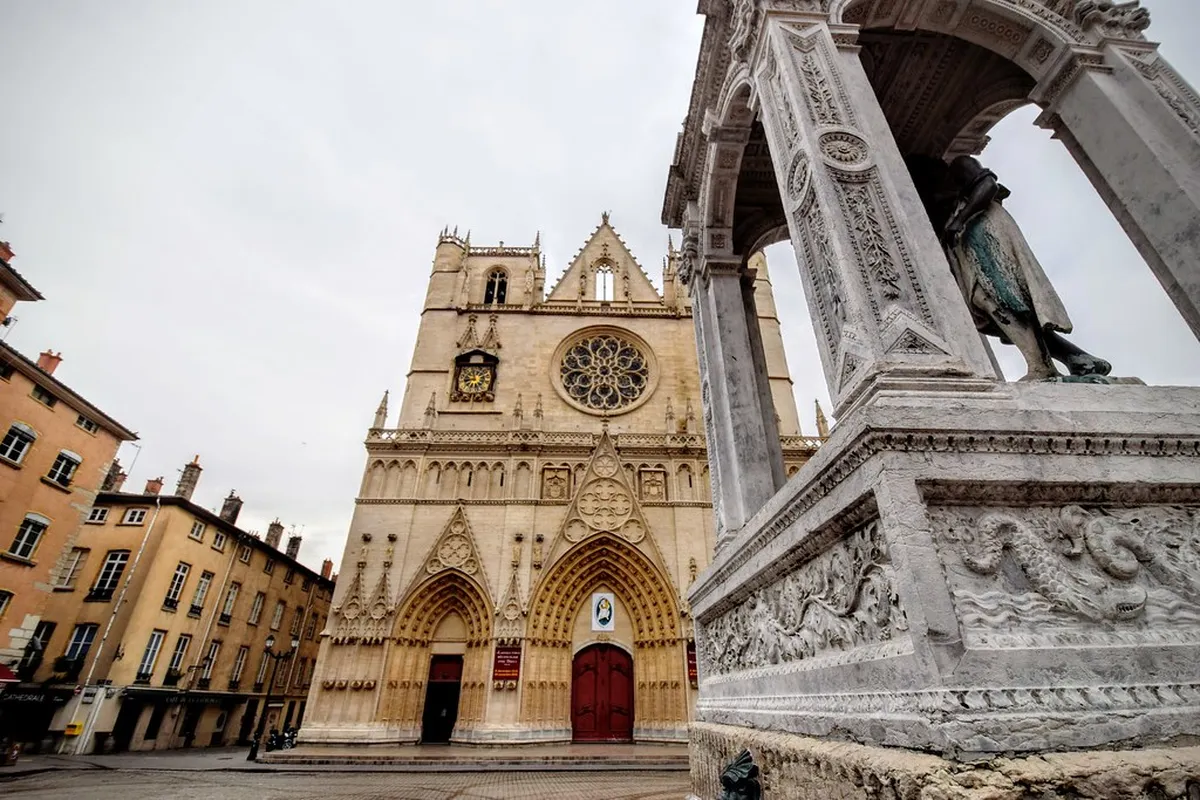
The western facade of the cathedral is a stunning display of stone carving. It features three large portals decorated with hundreds of small stone medallions. These carvings depict scenes from the Bible and various daily life activities. The detail is incredible and requires a close look to fully appreciate.
Above the central portal sits a massive rose window made of stained glass. This window was completed in 1392 and features vibrant colors and complex patterns. It floods the nave with colorful light during the late afternoon hours. The glasswork has survived many wars and remains in excellent condition today.
The exterior also includes statues of saints and kings that watch over the square. Many of these figures were damaged during the French Revolution but later restored. The building material consists largely of reused stone from older Roman structures. This connects the cathedral directly to the ancient history of the city of Lyon.
The facade faces the Place Saint-Jean, which is a busy public square. This area is perfect for admiring the Renaissance architecture in Vieux Lyon surrounding the church. The tall towers of the cathedral dominate the skyline of the old town. They provide a perfect backdrop for photography in any season of the year.
The Archaeological Garden of Saint-Jean
Directly next to the cathedral, you can find a unique archaeological site. This outdoor area contains the remains of two earlier churches and a baptistery. These ruins date back to the fourth century and show Lyon's early Christian roots. It is a quiet place to walk and reflect on the past.
The archaeological garden of Saint-Jean offers a look at the footprint of history. You can see the foundations of the Church of Saint-Etienne and Saint-Croix here. These structures once formed a large religious complex with the main cathedral. Today, only the stone outlines remain for the public to view.
Interpretive signs explain the history of the walls and the excavation process. The garden is free to enter and stays open throughout the day. It provides a peaceful escape from the busy streets of the old town. Many visitors find the contrast between the ruins and the cathedral very striking.
The baptistery ruins are among the oldest found in all of France. They show how people were welcomed into the faith over a thousand years ago. Seeing these ruins helps you understand the massive scale of the current cathedral. It represents the growth and endurance of the local religious community.
Tips for Visiting the Cathedral in 2025
Plan your visit during the morning to avoid the largest tourist crowds. The cathedral opens early for prayer and remains open until the early evening. Admission to the main nave and the archaeological garden is usually free. Please remember to dress modestly and keep your voice low inside.
Guided tours are often available in several languages including English and French. These tours provide deeper insight into the religious architecture of Saint-Jean Cathedral. You can learn about the hidden symbols carved into the stone walls. Check the official website for current tour times and any small fees.
- Location: Place Saint-Jean, 69005 Lyon, France.
- Best Time: Weekday mornings or late afternoons for the best light.
- Transport: Take the Metro Line D to the Vieux Lyon station.
- Nearby: Visit the funicular to see the Fourvière hill views.
The interior temperature remains cool even during the hot summer months. This makes it a great place to rest during a long walking tour. The cathedral is also a venue for frequent organ concerts and choir performances. These events allow you to experience the incredible acoustics of the space.
Frequently Asked Questions
What is the architectural style of Saint-Jean Cathedral?
The cathedral features a blend of Romanesque and Gothic architectural styles. The choir is Romanesque while the nave and facade are Gothic. This transition happened because construction lasted from 1175 to 1476.
Is there a fee to enter Saint-Jean Cathedral in Lyon?
Entry to the main cathedral and the archaeological garden is free for everyone. Some special guided tours or treasury exhibits may require a small fee. It is one of the most accessible landmarks in Lyon.
When does the astronomical clock perform its show?
The clock figures move at noon, 2:00 PM, 3:00 PM, and 4:00 PM daily. It is best to arrive a few minutes early to get a view. The show is a favorite for families and history fans.
How do I get to the cathedral using public transport?
You can easily reach the cathedral by taking Metro Line D. Get off at the Vieux Lyon station and walk two minutes. It is very close to the funicular station for Fourvière.
The religious architecture of Saint-Jean Cathedral is a must-see for any traveler in Lyon. It offers a rare look at how medieval styles evolved over three centuries. From the ancient clock to the stained glass, every detail tells a story. Plan your visit in 2025 to experience this historic treasure in person. Explore more of the city by taking a look at a Lyon architecture walking tour today.
Key Takeaways
- Saint-Jean Cathedral blends Romanesque and Gothic styles over 300 years.
- The 14th-century astronomical clock performs daily at specific hours.
- The archaeological garden features 4th-century ruins of older churches.
- Entry to the cathedral is free and easily reached by the metro.
- The stained glass rose window from 1392 is a masterpiece of light.