
Gare de Metz Architecture Guide: France's Grand Station
Explore the history and design of the Gare de Metz architecture. Plan your 2025 visit to see this Neo-Romanesque masterpiece in France. Read our guide now.
On this page
The Gare de Metz architecture stands as a powerful symbol of history and strength in eastern France. This massive stone railway station remains one of the most beautiful landmarks in the city of Metz. Travelers in 2025 often feel they are entering a cathedral instead of a modern transit hub. The building showcases the complex political past of the Moselle region through its heavy stone walls.
Construction of this impressive masterpiece began in 1905 during the period of German annexation. Architect Jürgen Kröger designed the structure to serve both civilian travel and rapid military deployment. It stretches over three hundred meters long to accommodate the needs of the imperial army. Visitors can easily spend hours admiring the intricate carvings and grand towers of this historic site.
The History of Gare de Metz Architecture
The Gare de Metz serves as the centerpiece of the famous imperial district. This area was developed to showcase German urban planning at the turn of the century. The station replaced an older wooden structure that no longer met the growing city needs. It stands today as a testament to the grand ambitions of Kaiser Wilhelm II.
The building process took three years to complete using high quality materials and labor. Workers finished the main structure in 1908 after intense efforts to meet the strict deadlines. The design reflects a departure from the traditional French styles seen in the city center. You can see how the Quartier Imperial Metz creates a unique atmosphere around the station.
Military strategy played a significant role in the layout of the large passenger platforms. The station needed to move thousands of soldiers toward the border within very short timeframes. Engineers included extra wide hallways and multiple exits to handle these massive crowds efficiently. This functional history remains visible in the sturdy design of the modern station today.
During the two world wars, the station became a vital point for regional control. It suffered minimal damage compared to other French cities during the heavy mid-century fighting. Careful restoration projects have preserved the original 1908 appearance for future generations to enjoy. The station now serves as a protected historical monument within the French national system.
Key Features of Neo-Romanesque Design
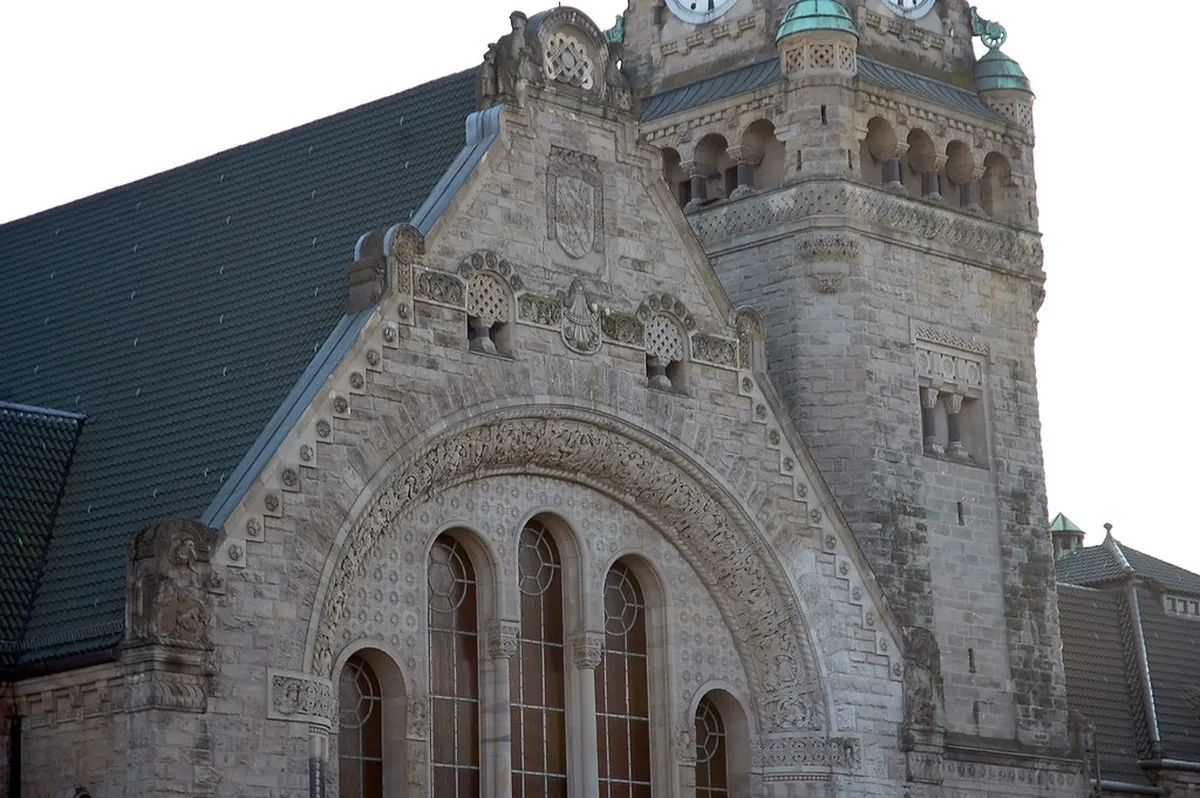
The architect chose the Neo-Romanesque style to represent stability and eternal German power. This style uses rounded arches and thick walls to create a feeling of immense weight. It stands in sharp contrast to the delicate Gothic spires of the nearby local cathedral. The Romanesque Revival details provide a sense of timelessness to the entire structure.
Unlike other local buildings, the station uses grey sandstone imported from the nearby Vosges mountains. Most historic Metz buildings feature the yellow Jaumont stone found in the local quarries. The choice of grey stone was a deliberate political statement by the imperial authorities. It helped the station stand out as a unique monument within the urban landscape.
Statues of famous knights and historic figures decorate the outer walls of the main building. These carvings tell stories of the Holy Roman Empire and its long military legacy. You can find hidden symbols of power tucked into the corners of the stone facade. These artistic choices make the exterior a fascinating subject for any curious traveler or historian.
The clock tower reaches forty meters into the sky and serves as a local landmark. It originally housed a water tank to supply the steam engines waiting at the platforms. This blend of decorative art and industrial function defines the brilliance of the original plan. It remains one of the most popular Metz architecture photography spots for visitors in 2025.
Inside the Imperial Passenger Hall
The interior of the station is just as grand as the massive stone exterior. High vaulted ceilings create an airy atmosphere for the thousands of daily commuters. Stained glass windows filter the light and add a touch of color to the grey stone. These windows often depict scenes of travel and local industry from the early twentieth century.
The former imperial apartments were built specifically for the Kaiser during his frequent visits. These private rooms featured luxurious wood carvings and expensive fabrics for the royal family members. While the apartments are rarely open to the public, their presence adds to the mystery. The grand staircase leading to these rooms is a marvel of early century craftsmanship.
You must visit the buffet area to see the most detailed interior decorations available. The imperial buffet interior still contains original woodwork and beautiful decorative tiles. It provides a glimpse into the lifestyle of elite travelers during the Belle Époque era. Many visitors stop here just to admire the ceiling before catching their regional trains.
Modern renovations have added glass and steel elements to the traditional stone halls. These contemporary updates allow for better accessibility and improved services for all modern passengers. The blend of 1908 stone with 2025 technology creates a very unique travel experience. It shows how historic buildings can evolve to meet the needs of a new era.
Planning Your Architecture Visit in 2025
Visiting the station is easy since it serves as the main transport hub for Metz. High speed trains connect the city to Paris in just eighty minutes several times daily. You should arrive at least one hour early to explore the building before your departure. This gives you enough time to walk the full length of the three hundred meter facade.
Guided tours are often available through the local tourism office during the summer months. These tours provide deep insights into the hidden meanings of the stone carvings and statues. You will learn about the secret tunnels used by the military during the Great War. It is a perfect activity for anyone interested in the broader architecture in Metz today.
The best time for photography is during the late afternoon when the sun hits the tower. The grey sandstone takes on a soft glow as the light fades over the city. You can capture stunning wide shots from the large plaza directly in front of the entrance. This open space allows you to appreciate the full scale of the station architecture.
- Location: Place du Général de Gaulle, 57000 Metz, France
- Opening Hours: Daily from 5:00 AM to 11:30 PM
- Entry Fee: Free to enter the public halls and the main platforms
- Accessibility: Full elevator access is available for all levels of the station
Frequently Asked Questions
What style is the Gare de Metz architecture?
The station features a Neo-Romanesque style which was popular in Germany during the early 1900s. This design uses rounded arches, heavy stone walls, and large towers to project power. It is often described as a cathedral for the railway age.
Who was the architect of the Metz train station?
Jürgen Kröger was the primary architect who won the design competition for the project. He worked closely with the German authorities to ensure the station met military requirements. His work remains a defining part of the city's modern identity.
Why is the station so long?
The building is over 300 meters long to accommodate entire military regiments at once. This length was necessary for the rapid movement of troops during the early twentieth century. It remains one of the longest station buildings in all of Europe.
The Gare de Metz architecture remains a must-see destination for any fan of European history. Its massive scale and intricate details offer a unique look into a complex political era. Whether you are catching a train or just exploring, the station will surely impress you. Plan your visit in 2025 to experience this beautiful French landmark for yourself soon.
Key Takeaways
- The station is a masterpiece of Neo-Romanesque design from the early 1900s.
- It was built using grey sandstone to contrast with local yellow Jaumont stone.
- The 300-meter length was originally designed for rapid military troop movements.