
Place d'Armes Metz Urban Design Guide 2025
Explore the Place d'Armes Metz urban design history. See how Blondel shaped this neoclassical French square. Plan your architectural tour for 2025 today.
On this page
Metz offers many stunning examples of classical beauty in eastern France. The Place d'Armes stands as a central gem for all visitors. The Place d'Armes Metz urban design reflects 18th-century brilliance and order. You will find this square right in the historic heart of the city.
Architect Jacques-François Blondel designed this space to modernize the urban landscape. He created a unified vision that still impresses travelers in 2025. This area serves as a perfect starting point for exploring the city. It showcases the transition from medieval chaos to neoclassical symmetry.
History of Place d'Armes Metz Urban Design
Blondel arrived in Metz during the peak of the Enlightenment era. He wanted to modernize the city center with clear architectural rules. His plan focused on order, balance, and grand civic spaces. This vision changed the way people moved through the city streets.
The project replaced many crowded medieval streets and old wooden houses. It created a wide and open space for public gatherings. This transformation defined the Enlightenment era urban planning in Metz perfectly. It signaled a new age of logic and beauty for the residents.
Blondel designed the buildings surrounding the square with great care. This included the City Hall and the local Parliament building. Every facade followed a strict neoclassical style to ensure visual unity. The architect wanted to create a sense of harmony for all citizens.
Construction took place between 1754 and 1788 under royal command. The work required removing an old cloister and several small shops. This cleared the path for a massive rectangular paved area. It became the most prestigious address in the entire city of Metz.
Today, the square remains a symbol of French royal power. It reflects the desire to organize the world through architecture. Visitors can still feel the historical weight of this grand design. It stands as a monument to the genius of Jacques-François Blondel.
The Beauty of Golden Jaumont Stone
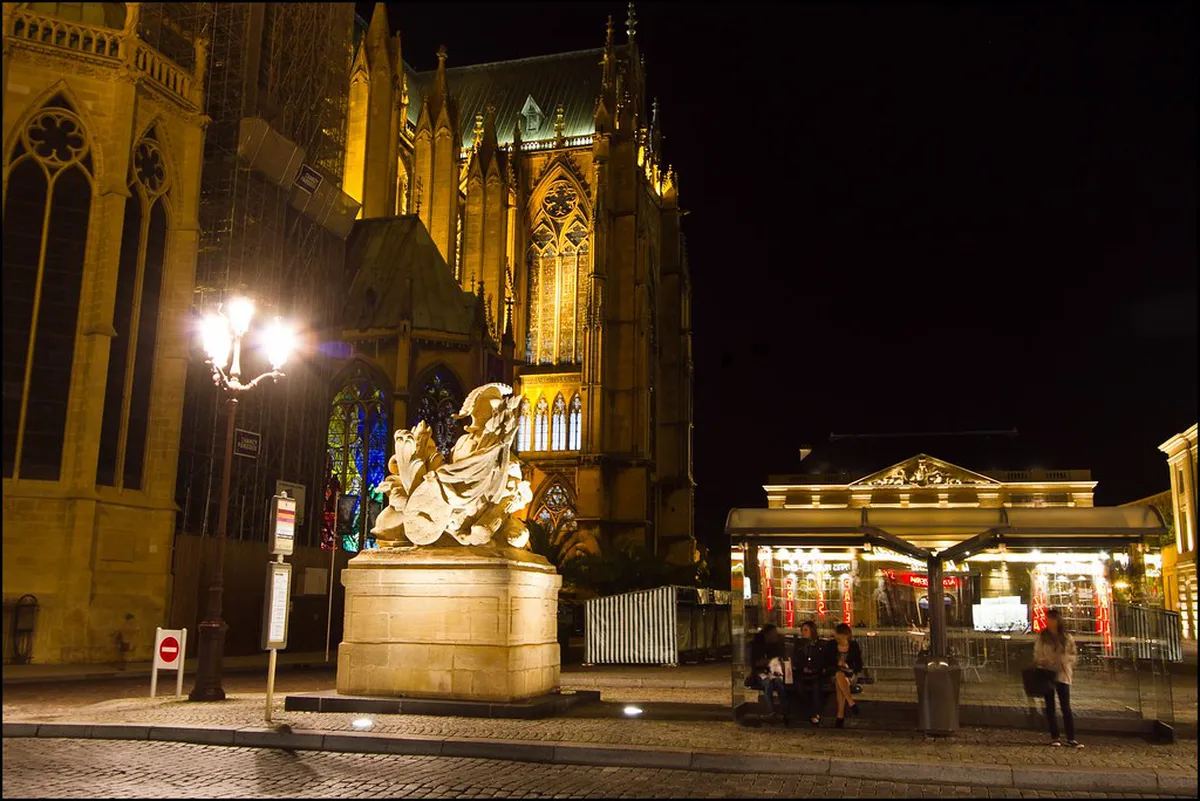
The choice of material defines the look of the entire square. Builders used the local golden Jaumont stone for every major structure. This limestone gives the city a warm and welcoming glow. It is the signature building material of the Lorraine region.
You can see this material on many Jaumont stone buildings nearby. It unifies the different structures visually across the city center. The stone looks especially beautiful when the sun sets over France. It creates a golden atmosphere that feels truly magical for photographers.
Sunlight makes the yellow stone look like solid gold at noon. It creates a cohesive look across the entire neoclassical plaza. This aesthetic remains a key part of the design for modern planners. The material resists weathering well and maintains its rich color over time.
The texture of the stone adds depth to the simple facades. It softens the strict lines of the neoclassical window frames. Architects in 2025 still admire this consistent use of local resources. It connects the buildings to the very earth beneath the city.
Walking across the square allows you to touch this history. The stone feels smooth and solid under the bright French sun. It provides a backdrop that makes the blue sky pop with color. No other material could represent Metz quite as well as this.
Integration with Saint-Etienne de Metz Cathedral
The square sits next to the massive Saint-Etienne de Metz Cathedral. Blondel had to balance this Gothic giant with his new design. He used neoclassical proportions to create a sharp visual contrast. The result is a unique blend of two different eras.
The low facades of the square allow the cathedral to loom. This creates a dramatic sense of scale for anyone standing nearby. Visitors feel the power of both religious and civic architecture here. The heights were carefully calculated to respect the older church structure.
The transition between Gothic and neoclassical styles feels very seamless. It shows the evolution of French architectural history over many centuries. This relationship is a masterpiece of clever urban planning and respect. Blondel managed to highlight the cathedral without letting it overwhelm the square.
One side of the square is actually the cathedral wall. Blondel designed a neoclassical portal to bridge the two styles. This portal helps the church fit into the symmetrical plaza. It is a brilliant solution to a difficult design problem.
Standing in the center provides a full view of both styles. You can see the flying buttresses and the tall windows. Then you turn to see the rhythmic windows of the City Hall. This dialogue between buildings creates a stunning architectural experience.
Modern Civic Life and Public Function
Today, the square serves many important public functions for residents. It hosts weekly markets, seasonal festivals, and military parades. Residents and tourists gather here throughout the entire calendar year. The space remains the heart of social life in Metz.
In 2025, the area remains a central hub for urban walkers. You can start a Metz architecture walking tour right in this spot. It connects the historic old town with the newer shopping districts. The layout encourages people to stop and enjoy the view.
Cafe seating spills onto the stone pavement during the summer. The square feels alive with modern energy and young families. It proves that classical design works well for modern daily life. The lack of cars makes it a safe pedestrian zone.
Events like the Christmas market bring thousands of visitors here. The open space allows for large stages and wooden stalls. Designers in the 1700s created a truly flexible urban room. It adapts to the needs of the city every single year.
The square is also a major site for official ceremonies. Dignitaries often meet in front of the grand City Hall. The formal design provides a sense of dignity to these events. It remains the primary stage for the identity of Metz.
Architectural Details of the City Hall
Look closely at the Metz city hall facade details for true beauty. Blondel included intricate carvings and perfectly balanced windows. These details show his mastery of the classical architectural orders. The building spans the entire length of the eastern side.
Symmetry is the guiding principle of this specific building layout. Each side of the entrance mirrors the other exactly. This creates a sense of peace and political stability. The long rows of windows create a rhythmic visual pattern.
The columns and pediments reflect a strong ancient Roman influence. This style was very popular during the middle 1700s. It symbolized power and civic pride for the French monarchy. Every element was designed to impress the viewer from afar.
The roofline features small statues and decorative stone urns. These elements break up the flat lines of the top floor. They add a touch of elegance to the massive stone structure. Architects spent years perfecting these small but vital artistic touches.
Inside the City Hall, the grand staircase continues the theme. It uses the same proportions found on the exterior facade. This consistency makes the building feel like a complete work. It is the crown jewel of the Place d'Armes design.
Frequently Asked Questions
Who was the architect of Place d'Armes in Metz?
The square was designed by Jacques-François Blondel. He was a famous architect during the 18th century. He focused on neoclassical rules and symmetry for the city center.
What is the best time to visit the square in 2025?
Spring and summer offer the best weather for walking. The golden stone glows beautifully during the long sunny evenings. You can enjoy the outdoor cafes from May until September.
What kind of stone is used in the Place d'Armes?
The buildings use a local limestone called Jaumont stone. It is known for its bright yellow or golden color. This stone is found in quarries near the city of Metz.
Are there any entrance fees for the square?
No, the Place d'Armes is a public urban space. It is free to visit at any time of day. You can walk through the plaza without any tickets.
Is the square accessible for travelers with disabilities?
Yes, the square is flat and paved with stone. It is easy for wheelchairs and strollers to navigate the space. Most surrounding buildings also have accessible entrances for visitors.
The Place d'Armes Metz urban design is a triumph of neoclassical art. It connects the history of the cathedral with the needs of the city. Visitors in 2025 will find a space that feels both historic and alive. Make sure to include this square on your next trip to France. It is the perfect place to experience the golden soul of Metz.
Key Takeaways
- The square was designed by Jacques-François Blondel in the 1700s.
- It features the iconic golden Jaumont stone found in the local region.
- The design balances neoclassical civic buildings with a Gothic cathedral.
- Place d'Armes is a car-free zone perfect for architectural walking tours.
- The City Hall is the primary architectural highlight of the plaza.