
Shigeru Ban Timber Roof Structure: A 2025 Guide
Explore the Shigeru Ban timber roof structure at Centre Pompidou-Metz. Learn about its engineering and design in our 2025 technical guide. Visit Metz today.
On this page
The Shigeru Ban timber roof structure stands as a modern marvel in Metz, France today. This masterpiece defines the skyline of the Centre Pompidou-Metz architecture for global visitors. Its complex weave showcases a perfect blend of artistic vision and advanced structural engineering. In 2025, architects still travel here to study this revolutionary wooden lattice design. This structure represents a significant shift toward using natural materials in large public buildings.
Metz has become a premier destination for those interested in contemporary European design and urbanism. The building acts as a beacon for the cultural regeneration of this historic French city. Shigeru Ban collaborated with Jean de Gastines to create this undulating and translucent roof. It protects the gallery spaces while allowing natural light to filter through the timber mesh. This design approach creates an inviting atmosphere for art lovers and tourists alike.
The Concept of the Hexagonal Timber Grid
The design of the Shigeru Ban timber roof structure was inspired by a traditional Chinese hat. This hat featured a woven pattern that offered both flexibility and incredible structural strength. Ban translated this organic form into a massive hexagonal grid using modern computing tools. The resulting shape covers a total surface area of approximately eight thousand square meters. This geometry allows the roof to span large distances without many internal supports.
The hexagonal pattern consists of three different layers of timber beams stacked on each other. These layers interlock to create a rigid mesh that can withstand heavy snow and wind. Each individual hexagonal cell measures nearly three meters across within the main structural framework. This scale allows the roof to maintain its integrity across the entire undulating surface. The complexity of the geometry required precise digital modeling during the initial design phase.
Engineers focused on the distribution of forces throughout the interlaced wooden members for maximum safety. Each joint in the grid helps to transfer loads efficiently down to the concrete supports. This creates a stable environment for the valuable art collections housed inside the museum. The roof appears to float above the ground despite its massive weight and complex engineering. It remains a benchmark for architecture in Metz and the wider region.
Material Selection and Sustainable Wood Use
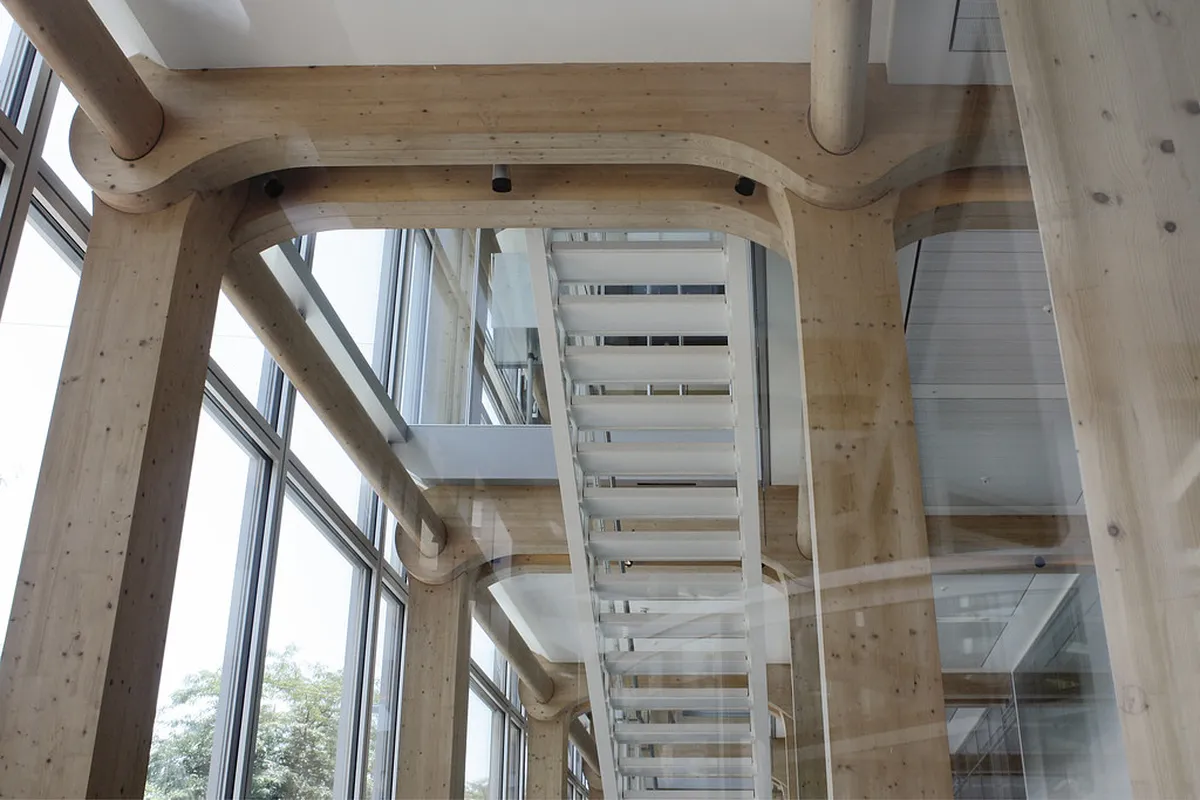
Shigeru Ban chose spruce and larch wood for the primary structural elements of the roof. These sustainable wood species provide the necessary flexibility for the curved shapes required in Metz. Larch is particularly valued for its natural resistance to moisture and decay in outdoor settings. Using timber significantly reduced the carbon footprint of the building compared to steel or concrete. This choice highlights the sustainable design features of Pompidou-Metz in 2025.
The wood was processed into glued laminated timber beams to increase its overall structural performance. Glulam allows for the creation of long, curved members that are much stronger than solid wood. Approximately eighteen kilometers of timber were used to complete the entire roof structure in Metz. This material creates a warm and natural aesthetic that contrasts with the white membrane. Visitors often feel a sense of calm when standing beneath the intricate wooden canopy.
Sustainability remains a core component of this project's legacy in the world of modern architecture. The use of wood helps to regulate the indoor climate through natural thermal properties. Timber also stores carbon, making it an environmentally friendly choice for large-scale urban construction projects. Architects continue to study the moisture management systems integrated into the wooden joints here. This ensures the roof remains in excellent condition for many decades to come.
The Protective PTFE Membrane Covering
A high-tech membrane covers the Shigeru Ban timber roof structure to provide essential weather protection. This translucent skin is made from fiberglass coated with a durable Teflon or PTFE material. It allows roughly fifteen percent of natural sunlight to penetrate into the museum spaces below. This creates a soft and diffuse lighting environment that is perfect for viewing contemporary art. The white surface also helps to reflect solar heat during the warm summer months.
The membrane is stretched tightly over the timber grid to maintain its smooth and undulating form. Specialized metal fixings secure the fabric to the wooden beams at specific intervals across the roof. These connections must accommodate the natural expansion and contraction of the wood during seasonal changes. In 2025, the membrane still maintains its brilliant white appearance thanks to its self-cleaning properties. Rainwater simply washes away dirt and debris from the smooth Teflon-coated surface.
- Material: PTFE-coated fiberglass fabric for durability and light transmission.
- Function: Provides weatherproofing while highlighting the underlying timber structure.
- Visuals: Creates a glowing effect at night when illuminated from within.
- Maintenance: Highly resistant to UV radiation and environmental pollutants in Metz.
The interaction between the timber mesh and the translucent membrane defines the building's unique character. During the day, the wood casts intricate shadows on the gallery floors and white walls. At night, the entire structure glows like a giant lantern in the center of Metz. This visual transformation makes the building a popular subject for architectural photography in 2025. The membrane acts as both a protective shield and a beautiful artistic element.
Structural Engineering and Joint Details
Creating the Shigeru Ban timber roof structure required solving numerous complex structural engineering challenges. Every intersection of the timber beams requires a custom-made steel connector for maximum stability. These joints must handle tension and compression forces simultaneously within the hexagonal grid pattern. Precise CNC milling was used to shape the timber ends for a perfect fit. This level of accuracy was necessary to ensure the roof's structural integrity over time.
The roof is supported by several large conical pillars that transfer loads to the ground. These pillars are made from reinforced concrete and integrated into the museum's floor plan. They act as the primary structural anchors for the vast wooden canopy in Metz. The transition from the rigid concrete to the flexible timber required careful engineering calculations. This hybrid approach allows the building to be both strong and visually lightweight.
Advanced software helped engineers simulate how the roof would react to extreme weather conditions. They tested the design against high wind speeds and heavy snow loads common in France. The flexibility of the timber grid allows it to absorb energy without causing structural failure. This resilience is a key feature of Shigeru Ban's innovative approach to modern engineering. The structure continues to perform exceptionally well fifteen years after its initial completion.
Construction Logistics and Assembly Process
Building the Shigeru Ban timber roof structure was a feat of modern construction logistics and planning. The timber components were prefabricated in a factory to ensure high quality and precise dimensions. This allowed for a faster assembly process once the materials arrived on the site. Workers used specialized cranes to lift the large timber segments into their final positions. The assembly required a high degree of coordination between different technical teams in Metz.
Temporary scaffolding supported the timber grid during the initial stages of the complex installation process. Once the hexagonal mesh was fully connected, the structure became self-supporting and very stable. The installation of the PTFE membrane was the final step in completing the roof. This process required calm weather conditions to ensure the fabric was tensioned correctly. The entire construction phase showcased the efficiency of modern timber building techniques.
The total cost of the project reflected the high level of innovation and craftsmanship. Budgeting for such a unique structure required careful management of materials and specialized labor costs. Today, the museum serves as a major economic driver for the entire Metz region. It proves that investing in high-quality architecture can provide long-term benefits for a city. The building remains a proud symbol of French cultural investment and engineering prowess.
Frequently Asked Questions
What is the primary material used in the Shigeru Ban timber roof structure?
The structure primarily uses glued laminated timber made from spruce and larch wood. These materials offer the flexibility and strength needed for the hexagonal grid design. The timber is covered with a translucent PTFE-coated fiberglass membrane for weather protection.
Who designed the Centre Pompidou-Metz roof?
The roof was designed by Japanese architect Shigeru Ban in collaboration with Jean de Gastines. They won an international competition to design the museum in the early 2000s. Their design was inspired by the woven patterns found in traditional Chinese hats.
How large is the timber roof in Metz?
The roof covers a massive surface area of approximately eight thousand square meters. It features undulating curves that reach a height of seventy-seven meters at the central spire. This height is a tribute to the original Centre Pompidou in Paris.
Can I visit the Shigeru Ban timber roof structure in 2025?
Yes, the Centre Pompidou-Metz is open to the public throughout the year 2025. Visitors can explore the galleries and see the intricate timber structure from inside. It is one of the most popular architectural landmarks in Eastern France today.
The Shigeru Ban timber roof structure remains a landmark of twentieth-century engineering and design. Its hexagonal grid and translucent skin create a unique environment for art and people. In 2025, this building continues to inspire architects to use sustainable timber materials. It stands as a testament to the power of creative collaboration and technical innovation. Visit Metz soon to experience this incredible wooden masterpiece for yourself today.
Key Takeaways
- The roof uses a unique hexagonal timber grid inspired by traditional weaving.
- Glued laminated spruce and larch provide the primary structural support.
- A translucent PTFE membrane protects the wood while letting in natural light.
- The structure is a prime example of sustainable large-scale architectural design.
Related reads: architecturebycity.com, hexagonal floor plan pompidou metz, saint etienne de metz cathedral.