
Palais de la Méditerranée Facade: Nice Art Deco
Explore the Palais de la Méditerranée facade in Nice. Discover Art Deco history and architecture on the Promenade des Anglais in 2025. Book your visit now!
On this page
The Palais de la Méditerranée facade stands proudly along the famous French Riviera. This structure represents the peak of French luxury from the early twentieth century. It remains one of the most famous Art Deco buildings in Nice today. Visitors admire its white marble and grand arches throughout the year.
This historic landmark tells a story of glamour and careful urban preservation. It defines the skyline of the city and attracts many architecture lovers. You can easily find this stunning building right on the Mediterranean coast. It offers a perfect starting point for exploring local heritage in 2025.
The History of a Great Art Deco Icon
Architects Charles and Marcel Dalmas designed this building during the late 1920s. It officially opened its doors to the public in early 1929. The palace served as a casino and a luxury hotel for years. It quickly became the center of social life for global travelers.
The original interior featured a massive theater and many elegant gaming rooms. Financial troubles forced the building to close its doors in the late 1970s. Most of the original structure was sadly destroyed during a major renovation. Only the protected facade and the grand lobby were saved from demolition.
Local heritage groups fought hard to keep this beautiful exterior for future generations. It stands as a symbol of the roaring twenties in southern France. The facade is now protected as an official historic monument of France. This preservation ensures that the building retains its classic Mediterranean charm today.
Today, the building houses a modern luxury hotel and a vibrant casino. You can see how the old facade blends with modern luxury living. The exterior remains a testament to the golden age of the Riviera. It continues to inspire architects from all over the world in 2025.
Architectural Features of the Grand Facade
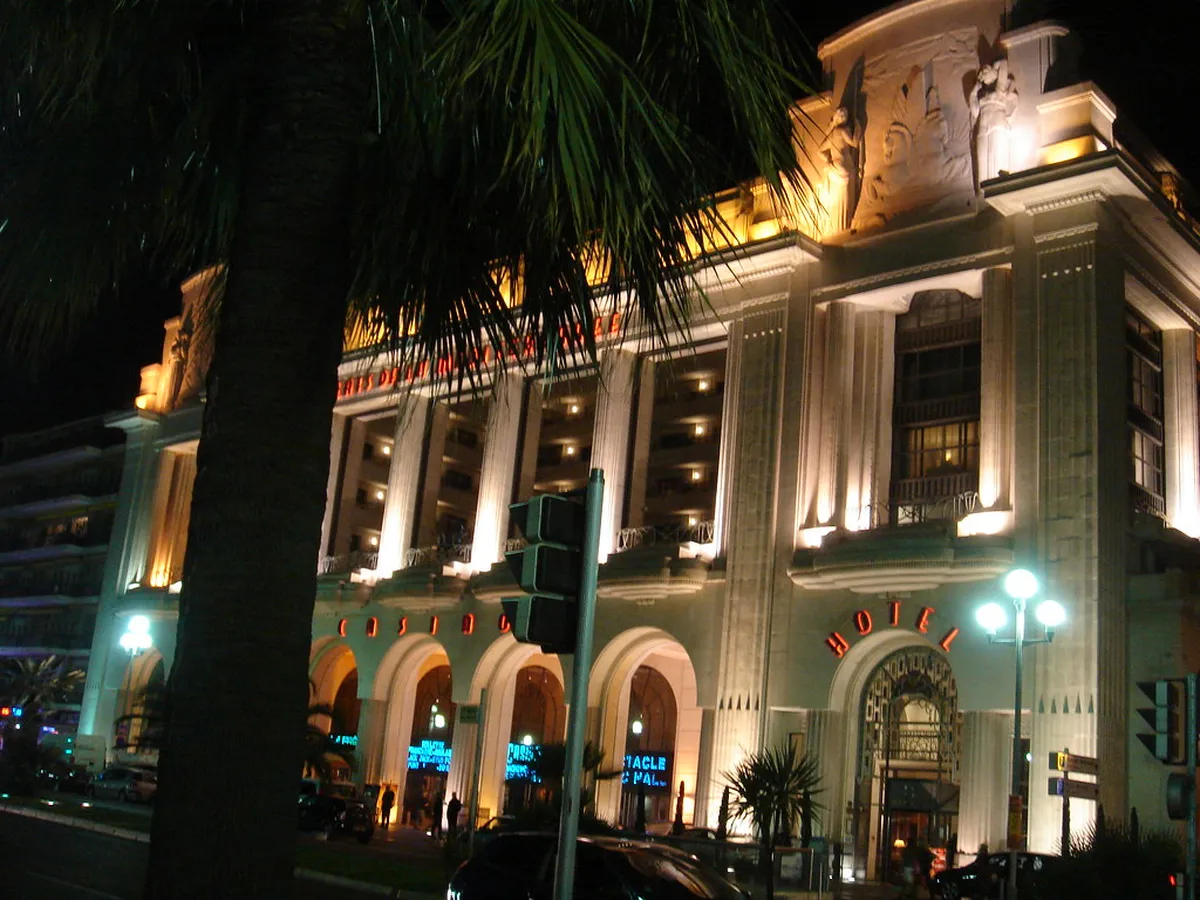
The Palais de la Méditerranée facade features massive arched windows and intricate carvings. You will see classic Art Deco motifs like stylized foliage and geometric shapes. These details reflect the glamour of the early twentieth century design style. The white limestone glows beautifully under the bright Mediterranean sunshine.
Two large bas-reliefs by sculptor Antoine Sartorio decorate the main front wall. These artworks depict scenes of maritime life and various mythological figures. They add a layer of deep artistic value to the entire building. The symmetry of the design creates a sense of balance and grandeur.
The building features tall columns that stretch toward the blue French sky. Each window is framed by elegant stone moldings and decorative ironwork. This attention to detail is typical of Promenade des Anglais architecture from that era. It creates a visual rhythm that draws the eye across the property.
The upper balcony offers sweeping views of the sparkling sea and beach. It was once a place for the elite to watch the world. The facade remains perfectly preserved to show off its original white color. This color contrasts beautifully with the blue waters of the Mediterranean Sea.
Preservation and the Modern Reconstruction
The reconstruction of the building was a major project for the city. Engineers had to support the old facade while building a new structure. This process required careful planning to avoid any damage to the stonework. The project successfully combined historic preservation with modern hotel needs.
The new hotel was built behind the original wall in the early 2000s. It features modern amenities like a swimming pool and luxury suites. However, the external appearance remains exactly as it was in 1929. This creates a unique experience for guests staying in this historic site.
Preservationists consider this project a great success for French architectural heritage. It shows how cities can save history while allowing for new growth. The building remains a key part of architecture in Nice for all to enjoy. It stands as a model for other historic cities worldwide.
Maintaining the facade requires regular cleaning and specialized stone restoration work. Experts use traditional methods to keep the limestone looking bright and new. This ongoing care ensures the building stays beautiful for decades to come. Visitors in 2025 can still see the original 1920s craftsmanship clearly.
Visiting the Promenade des Anglais Landmark
The Palais de la Méditerranée is located at 13 Promenade des Anglais. You can reach it easily by walking from the city center. Several tram lines and buses stop just a few minutes away. It is an ideal stop during a scenic seaside stroll.
The best time to view the facade is during the late afternoon. The setting sun creates a warm golden glow on the white stone. This light highlights the intricate carvings and the deep arched windows. You can take amazing photos from the sidewalk across the street.
While the hotel is private, the casino is open to the public. You must be over eighteen years old to enter the gaming area. Make sure to bring a valid ID for entry into the building. The lobby area often displays photos of the building’s long history.
Nearby attractions include the Jardin Albert 1er and many beach clubs. You can spend an entire afternoon exploring this historic coastal district. Many visitors enjoy a cocktail on the terrace to soak in the atmosphere. The building remains a focal point for tourism on the French Riviera.
Photography Tips for the Best Views
Start your photography session from the beach side of the main road. This wide angle allows you to capture the entire building width. Use a wide-angle lens to include the palm trees in your shot. The contrast between the trees and white stone looks very professional.
Focus on the bas-relief sculptures during the middle of the day. The high sun creates strong shadows that make the carvings pop. These details are perfect for close-up shots of the Art Deco style. You will find many interesting textures on the limestone surface.
- Use a tripod for sharp night photos of the illuminated facade.
- Wait for a clear blue sky to contrast with the white building.
- Shoot from a low angle to make the arches look massive.
- Capture the reflection of the building in the hotel pool area.
Night photography offers a completely different look for the historic Palais. Modern LED lighting highlights the architectural lines after the sun goes down. The building looks like a glowing crown along the dark sea coast. It is one of the most photographed spots in the city.
Frequently Asked Questions
Can I visit the interior of the Palais de la Méditerranée?
You can visit the public areas like the casino and restaurant. The hotel rooms are reserved for staying guests only. The grand lobby is open to anyone visiting the casino or dining. It provides a small glimpse into the luxury of the building.
When was the Palais de la Méditerranée facade built?
The original facade was completed in 1929 by the Dalmas architects. It survived the demolition of the rest of the building in 1990. The current structure behind the wall was finished in 2004. It remains a protected historic monument in France today.
Where is the best place to see Art Deco buildings in Nice?
The Promenade des Anglais features several iconic Art Deco structures. You can also find many examples in the Musicians' Quarter nearby. Walking tours often focus on these specific neighborhoods for architecture fans. The Palais de la Méditerranée is the most famous example.
The Palais de la Méditerranée facade is a true treasure of the French Riviera. It captures the spirit of the roaring twenties with its grand design. Make sure to visit this landmark during your next trip to Nice. It offers a unique look at the history of luxury and design.
Key Takeaways
- The facade is a protected historic monument from 1929.
- It features stunning bas-reliefs by sculptor Antoine Sartorio.
- The building is located directly on the Promenade des Anglais.
- Only the facade and lobby remain from the original structure.
Related reads: architecturebycity.com, church of sainte jeanne darc design.