
Perpignan Architecture Walking Tour: A 2025 Guide
Join our Perpignan architecture walking tour to see Gothic gates and Art Deco gems. Explore the best 2025 self-guided itinerary through France today!
On this page
Perpignan is a stunning city where French elegance meets vibrant Catalan culture. This 2025 Perpignan architecture walking tour guides you through centuries of unique building styles. You will find narrow medieval lanes, grand royal palaces, and modern artistic landmarks. The city sits near the Spanish border and reflects a rich Mediterranean history.
Walking through the old town feels like stepping back into the 14th century. You will see a blend of red brick and river stones in many structures. This self-guided journey focuses on the best architecture in Perpignan for every traveler. Wear comfortable shoes and prepare for a day of visual discovery.
Medieval Gates and the Icon of the City
Start your morning at the famous red brick gate known as Le Castillet. This 14th-century fortress once served as the main entrance to the city. It remains the most recognized symbol of Catalan heritage in France today. The structure features bold crenellations and a small tower for watching enemies.
You can climb the narrow steps inside Le Castillet architecture for a small fee. Tickets usually cost around 2 euros for adults in 2025. The top offers a panoramic view of the red-tiled roofs and the Pyrenees mountains. It is the perfect spot to begin your photography journey.
Adjacent to the gate is the Place de la Victoire, a lively public square. Look at the surrounding buildings to see classic Southern French balconies. Many of these structures utilize local clay bricks which glow during sunset hours. The area is always busy with locals enjoying coffee and fresh pastries.
Nearby you will find the Loge de Mer, built in the late Middle Ages. It served as a maritime court and a place for local trade. Notice the intricate stone carvings on the windows and the bronze weather vane. This building represents the city's historical importance as a Mediterranean trade hub.
Gothic Splendor of the Kings of Majorca
A short walk south leads you to the magnificent Palace of the Kings of Majorca. This massive fortress was built in the late 1200s for King James II. It features a unique blend of Romanesque and Gothic architectural styles. The high walls are made from river stones and local red bricks.
Explore the grand courtyards and the royal apartments within the Palace of the Kings of Majorca complex. The central courtyard is spacious and allows light into the surrounding galleries. You can see the distinct pointed arches typical of the Majorcan Gothic period. It is open daily from 10:00 AM to 5:00 PM.
The palace sits on a hill and offers strategic views of the entire Roussillon plain. You can walk along the ramparts to understand the city's old defense system. The gardens are beautifully maintained and provide a quiet escape from the city noise. Many visitors enjoy the cool breeze that flows through the stone halls.
Inside the chapel, look up to see the delicate rib vaulting on the ceiling. The stonework is remarkably preserved despite the many centuries of military use. You will feel the weight of history in these thick, ancient stone walls. This site is a highlight of any architecture tour in the region.
The Religious Heart and Pebble Walls
The Perpignan Cathedral of Saint-Jean-Baptiste is a masterpiece of the Southern Gothic style. Construction began in 1324 and took over two hundred years to complete. The exterior walls feature a striking pattern of pebbles and red brick layers. This building technique is very common across the historical Roussillon region.
Step inside to see the vast single nave which creates an airy atmosphere. The lack of side aisles allows for a clear view of the altar. You will notice several ornate altarpieces carved from dark wood and gold. The stained glass windows cast colorful patterns across the stone floors during midday.
Next to the cathedral sits the Campo Santo, one of the oldest cemetery-cloisters in France. It features white marble arches that surround a large open courtyard. Many local nobles were buried here during the peak of the Middle Ages. Today, it hosts outdoor concerts and cultural events throughout the summer months.
The surrounding Quartier Saint-Jean is filled with narrow, winding pedestrian streets. Look for small religious statues tucked into the corners of various buildings. The architecture here is intimate and reflects the crowded nature of medieval life. You can find many hidden workshops and artisan boutiques in this area.
Belle Époque Luxury and Art Deco Styles
As the city expanded in the 19th century, new artistic styles emerged. One of the most beautiful examples is the Hôtel Pams located on Rue Émile Zola. This private mansion was redesigned in the late 1890s for a wealthy industrialist. It showcases the transition from traditional styles to Art Nouveau elegance.
The Hôtel Pams interiors feature grand marble staircases and colorful wall murals. You will find a hidden garden courtyard filled with exotic plants and fountains. The glass roof allows natural light to illuminate the intricate gold leaf decorations. Entrance is often free, but check local schedules for specific opening times.
Continue your walk toward the Place de Catalogne to see Art Deco influences. Several apartment buildings from the 1920s feature geometric patterns and curved balconies. These structures represent the modern growth of Perpignan during the early 20th century. The bold shapes contrast sharply with the rounded arches of the old town.
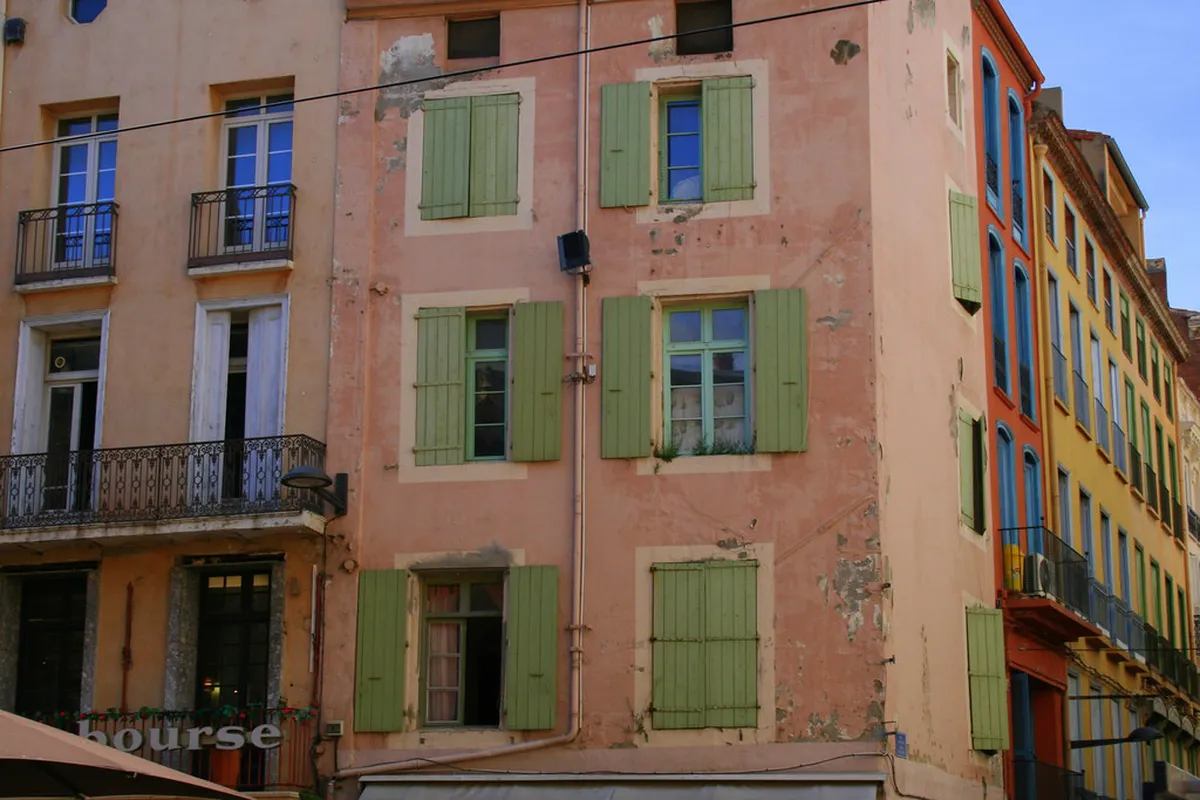
Many shops along the Quai Vauban also display beautiful 19th-century facades. Look for the colorful tiles and decorative ironwork on the window railings. This area along the Basse River is perfect for a scenic afternoon stroll. The combination of water and architecture creates a very romantic atmosphere.
Modern Landmarks and Future Designs
Finish your tour by visiting the striking Théâtre de l'Archipel near the river. This modern complex was designed by the famous architect Jean Nouvel. It consists of several distinct buildings that look like islands in a park. The most famous part is the large red "bubble" that houses the main stage.
The theater uses modern materials like glass, steel, and textured concrete. It stands as a bold contrast to the medieval brickwork found elsewhere. This design shows how Perpignan embraces the future while respecting its past. The surrounding plaza is a great place to sit and enjoy the modern view.
Another modern site is the renovated Perpignan Railway Station, famously called the center of the universe. Salvador Dalí claimed he had a vision of the universe at this very spot. The station features bright colors and surrealist elements in its interior design. It remains a functional and inspiring gateway for travelers arriving by train.
Pro Tip: Most of these sites are within walking distance of each other. Start early at Le Castillet to avoid the midday sun and crowds.
- Carry a water bottle for the walk.
- Use a digital map to find hidden alleys.
- Allow four hours for a full loop.
Frequently Asked Questions
How long does the Perpignan architecture walking tour take?
A full tour usually takes between three and four hours at a steady pace. This time includes stops for photos and a short coffee break. You may want extra time if you enter the palace or museums.
Is the architecture walking tour suitable for children?
Yes, children often enjoy the fortress towers and the colorful modern buildings. Most of the old town is pedestrian-only, making it safe for walking. The palace gardens are also a great place for kids to roam.
Are there many hills on the walking route?
Most of the city center is relatively flat and easy to walk. However, the walk up to the Palace of the Kings of Majorca is uphill. There are ramps and wide stairs to make the climb easier for visitors.
Perpignan offers a unique architectural journey that spans over seven centuries of history. From the red bricks of Le Castillet to the modern curves of the theater, there is something for everyone. This 2025 guide helps you see the best sites at your own pace. Start planning your trip today to see these incredible structures in person. Book your local tours early to experience the best of French and Catalan culture.
Key Takeaways
- Visit Le Castillet for the best panoramic views of the city.
- Explore the Palace of the Kings of Majorca to see Gothic royal style.
- Look for the unique pebble and brick patterns on the Cathedral walls.
- Do not miss the hidden Belle Époque beauty inside the Hôtel Pams.